Disclosure: As an Amazon Associate, we earn from qualifying purchases. If you click a link on this page and make a purchase, we may receive a small commission at no extra cost to you.
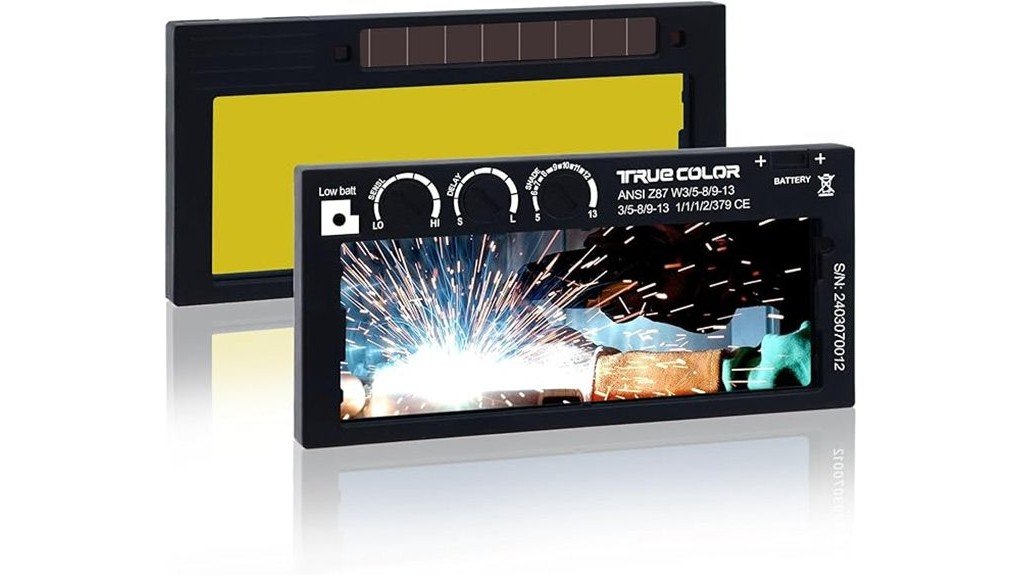
Changing from a clear view to a welding shade quickly and reliably is one of the main reasons you may consider an auto darkening welding lens. The lens reviewed here is described with a shade range of 5-13, two photoelectric sensors, and a stated darkening response of 0.12 to 0.2 milliseconds. Those features give you more control than a basic fixed-shade lens, especially when your work changes between different welding conditions. The main limitation is verification: the source does not identify a confirmed brand, certification, or exact battery specification, so you should check the current Amazon listing and your helmet fit before ordering.
Quick Verdict
Rating: Recommended with caveats
Best For: Welders who want a variable-shade replacement lens with fast automatic darkening and compatibility with common pancake or pipeliner-style welding shields.
Bottom Line: The stated 5-13 shade adjustment and dual-sensor response make this lens flexible for several welding situations. You should confirm the exact dimensions, helmet compatibility, power details, and safety certification on the current listing before treating it as a direct replacement for your existing filter.
Key Specifications
| Specification | Detail |
|---|---|
| Product type | Auto darkening welding lens |
| Stated shade range | Variable shade 5-13 |
| Stated darkening response | 0.12 to 0.2 milliseconds |
| Sensors | Two photoelectric sensors |
| Adjustments mentioned | Shade/transmittance, sensitivity, and delay |
| Protection described | UV and infrared protection |
| Sizes referenced | 4.25 x 2 inches and 2 x 4 inches are referenced in the source; confirm the exact selected variant |
| Compatibility mentioned | Most pancake helmets and pipeliner welding shields, depending on lens opening |
| Warranty | A specific verified warranty period is not stated |
| Buying check | Confirm dimensions, helmet fit, current specifications, and applicable safety markings before use |
Key Takeaways
- The lens is described with a fast 0.12 to 0.2 millisecond transition after its sensors detect welding light.
- A shade range of 5-13 gives you more adjustment than a single fixed-shade filter.
- Two photoelectric sensors are intended to detect the arc and trigger automatic darkening without requiring you to flip the lens manually.
- Adjustable sensitivity and delay settings can help you tune the response for different welding conditions.
- Fit matters as much as features. Measure the lens opening in your helmet before ordering.
- The source does not provide a verified brand, safety certification, exact battery specification, or clear warranty period, so those details deserve a final check on the current product listing.
What Is This Auto Darkening Welding Lens?
This product is a replacement-style auto darkening welding lens designed to remain easier to see through before an arc starts and then darken automatically when its sensors detect bright welding light. That design reduces the need to repeatedly raise and lower a conventional fixed filter while positioning your torch, electrode, or workpiece.
The main specifications described in the article are a variable shade range from 5 to 13, two light sensors, a 0.12 to 0.2 millisecond response, and adjustable sensitivity and delay controls. The article also describes UV and infrared protection and compatibility with common pancake and pipeliner-style welding shields.
The biggest buying question is not simply whether auto darkening is useful. You need to know whether this particular lens fits your hood, offers the shade control you need, and carries the safety information required for your work environment.
Who Should Buy It?
Best For
- You use a compatible pancake or pipeliner-style welding hood and want automatic darkening.
- You need an adjustable shade range rather than one fixed shade.
- You regularly reposition your work and value being able to see before striking an arc.
Skip If
- You cannot confirm that the lens dimensions match your helmet opening and retention system.
- Your workplace requires a specific safety certification that is not clearly documented on the current listing.
- You prefer a simple fixed-shade lens with no sensitivity or delay controls to adjust.
Before You Buy: Do not choose a replacement welding lens from the shade range alone. Confirm the exact physical dimensions, retention method, helmet compatibility, and any required safety certification before you use it for welding.
Understanding Auto Darkening Welding Lenses: How They Work
An auto darkening filter uses light sensors to recognize the bright arc produced during welding. The lens reviewed here is described with two photoelectric sensors and a darkening response of 0.12 to 0.2 milliseconds.
That automatic transition can help you keep your hood in position while you line up your work. Instead of repeatedly lifting the shield to see the joint and lowering it before striking the arc, you can keep your face protection in place while the filter changes state automatically.
The article also describes UV and infrared protection. Because welding eye protection is safety equipment, however, you should verify all required ratings and markings on the actual product and follow your helmet manufacturer’s instructions rather than assuming compatibility from dimensions alone.
Essential Features of This Auto Darkening Welding Lens
Variable Shade 5-13
The stated shade range of 5-13 is one of the most useful features if your work changes from one welding condition to another. A variable lens lets you select a darker or lighter setting instead of being locked into a single shade such as shade 10.
You still need to choose the correct shade for the process and amperage you are using. The presence of a 5-13 adjustment range does not mean every setting is suitable for every weld.
Dual Photoelectric Sensors
Two sensors are intended to detect welding light and initiate the darkening cycle. Multiple sensors can also make sensor placement worth checking when you work around unusual angles, obstacles, or confined areas.
Keep the sensor area unobstructed and clean. If your equipment instructions identify specific sensor locations, avoid covering them with stickers, dirt, spatter, or other gear.
Sensitivity and Delay Adjustment
The source describes controls for sensitivity and delay time. Sensitivity determines how readily the lens responds to detected light, while delay affects how quickly it returns after the arc stops.
Those adjustments can make the lens more adaptable, but they also require setup. Test the filter according to the manufacturer’s instructions before starting work, especially after changing settings.
Optical Clarity
Clear visibility before and during welding helps you position the electrode or torch more accurately. The source describes the lens as providing improved optical clarity compared with traditional viewing limitations.
Clarity can deteriorate if the outer surface becomes scratched, dirty, or covered with spatter. That makes maintenance and protective cover lenses important parts of day-to-day use.
Benefits of Using an Auto Darkening Welding Lens
The main practical benefit is reduced manual lens movement. When the automatic filter works correctly, you can position your work with the hood down and let the lens react when the arc starts.
The variable shade system is another advantage. Instead of purchasing a lens that only provides one dark shade, you can adjust the filter within its stated 5-13 range for appropriate welding conditions.
Adjustable sensitivity and delay settings also give you more control than a basic fixed filter. The tradeoff is that you need to understand the controls and verify them before work rather than treating the lens as a completely maintenance-free component.
How It Performs in Real Use
For Repeated Starts and Stops
Auto darkening is most convenient when you frequently stop, reposition, inspect, and restart. The stated rapid transition allows the filter to respond without requiring you to manually flip a fixed lens each time you strike an arc.
For Different Welding Conditions
The 5-13 adjustment range gives you flexibility when a fixed shade would be too limiting. You should still match the selected shade to the specific welding operation rather than simply choosing the brightest view available.
For Pancake and Pipeliner-Style Hoods
The source describes compatibility with most pancake helmets and pipeliner welding shields. “Most” does not mean universal, so measure your current filter opening and compare its thickness and retaining system with the replacement lens before ordering.
For Longer Work Sessions
Keeping your hood in position between welds can make repetitive positioning more convenient. Clear optics also matter over long sessions because scratches, dirty cover lenses, and incorrect shade settings can quickly reduce visibility.
Pro Tip: Before removing your old filter, measure its width, height, and thickness and note how it is retained in the hood. Matching all three is safer than relying only on a product title that says it fits “most” helmets.
How to Use It Correctly
- Check fit first: Confirm that the lens sits securely in the helmet without forcing, bending, or leaving a gap.
- Inspect the lens: Look for cracks, deep scratches, loose parts, or visible damage before welding.
- Check the controls: Review the shade, sensitivity, and delay settings before you strike an arc.
- Keep sensors clear: Make sure dirt, labels, spatter, or equipment do not block the photoelectric sensors.
- Follow the product instructions: Use the manufacturer’s test procedure and recommended settings when available.
- Stop if performance is inconsistent: If the filter flickers, fails to darken, or behaves unpredictably, do not continue welding until the cause is addressed.
Compatibility and Safety
A welding lens is part of your personal protective equipment, so fit and safety information should carry more weight than convenience features. The source states that the lens provides UV and infrared protection, but it does not identify a verified certification or standard for the exact Amazon ASIN.
You should therefore inspect the current product markings and documentation before using it in a professional or regulated workplace. Also confirm that the lens is intended for your specific helmet rather than assuming that similar dimensions guarantee a safe fit.
Do not continue using an auto darkening filter that is cracked, intermittently darkening, physically loose, or otherwise damaged. Follow your welding helmet manufacturer’s instructions and your workplace safety requirements.
Pros and Cons
Pros
- Variable shade range from 5 to 13 gives you more flexibility than a single fixed shade.
- Two photoelectric sensors support automatic arc detection.
- Stated 0.12 to 0.2 millisecond darkening response is designed for rapid transition.
- Adjustable sensitivity and delay settings let you tune the lens response.
- Compatibility is described for common pancake and pipeliner-style welding shields.
Cons
- The source does not identify a verified brand or model for the linked ASIN.
- Exact helmet fit still requires measurement and compatibility checking.
- A specific certification, battery specification, and warranty period are not confirmed in the supplied article.
Choosing the Right Welding Lens for Your Needs
Start with physical compatibility. The source references both 4.25 x 2-inch and 2 x 4-inch configurations, so do not assume the linked product will match your holder until you confirm the exact current variant.
Next, consider shade control. A variable 5-13 lens gives you more adjustment than a fixed shade 10 filter, but the added controls only help when you set them correctly for the task.
| Buying Factor | Variable 5-13 Lens | Fixed Shade 10 Lens |
|---|---|---|
| Shade flexibility | Adjustable | Single shade |
| Setup | Requires correct adjustment | Simpler |
| Best reason to choose | You work across different welding conditions | Your work consistently calls for the same suitable shade |
How to Keep Your Auto Darkening Welding Lens in Top Shape
Good maintenance protects both visibility and function. Dust, grinding debris, fingerprints, and welding spatter can make a clear lens difficult to see through even when the electronics are still working correctly.
- Clean gently: Use a soft cloth and a cleaner approved for the lens material. Avoid abrasive materials that can scratch the viewing surface.
- Protect it during storage: Keep the helmet or removed lens where tools and metal parts cannot scratch or crush it.
- Inspect before welding: Check for cracks, damage, abnormal dark spots, or inconsistent operation.
- Keep sensors clean: Dirty or covered sensors can interfere with reliable light detection.
- Check power instructions: The supplied article does not verify the exact battery arrangement, so follow the current manufacturer’s instructions for battery or power maintenance.
Is It Worth the Price?
A precise value tier cannot be assigned safely because the current price and exact product identity are not verified in the supplied material. The better question is whether the current selling price makes sense for a variable-shade replacement lens with the features you actually need.
You may get good value if you specifically need a 5-13 range, sensitivity and delay adjustment, automatic darkening, and compatibility with your existing hood. It is less attractive if you must guess about fit, certification, battery design, or warranty coverage.
Before purchasing, compare the current listing with clearly identified alternatives that provide the same dimensions and shade range. Paying a little more for better documentation can be worthwhile when the component is part of your eye protection system.
How It Compares to Alternatives
The clearest comparison is between this variable shade 5-13 design and a fixed-shade replacement lens. A fixed shade 10 filter is simpler when that shade is appropriate for the work you consistently perform, while the adjustable lens gives you more flexibility when your welding conditions change.
You can also compare it with complete auto darkening helmets rather than replacement filters. A replacement lens can make sense when you already like your existing hood, but a complete helmet may be easier to verify as one integrated safety system. Choose based on fit, documented protection, control layout, and the type of welding you actually perform.
Frequently Asked Questions
Can this lens be used for different types of welding?
The stated shade range of 5-13 gives you adjustment for different welding conditions. You still need to select an appropriate shade for the specific process and amperage and follow applicable safety guidance.
Will it fit every pancake or pipeliner welding hood?
No. The article describes broad compatibility, but welding hoods can differ in lens opening, thickness, and retaining method. Measure your existing filter and compare those measurements with the current product specifications before ordering.
How fast does the lens darken?
The supplied article states a response time of approximately 0.12 to 0.2 milliseconds after the sensors detect bright welding light. Check the current manufacturer’s specifications for the exact product before relying on that figure.
How long does the battery last?
A reliable battery-life figure cannot be confirmed from the supplied article. Check the current Amazon listing or manufacturer instructions for the battery type, expected service life, charging method, and replacement procedure.
Is an auto darkening lens suitable for a beginner?
Automatic darkening can make positioning more convenient for a beginner, but you still need to understand shade selection, sensitivity, delay, helmet fit, and welding safety. Do not rely on the automatic feature as a substitute for proper training or protective equipment.
What warranty comes with this welding lens?
The supplied article does not provide a specific verified warranty period. Review the current Amazon listing and seller or manufacturer warranty terms before purchasing if warranty coverage matters to you.
What should you do if the lens starts flickering or fails to darken?
Stop welding and inspect the lens, sensors, settings, power system, and physical condition according to the manufacturer’s instructions. Do not continue welding through an auto darkening filter that is behaving inconsistently.
The Bottom Line
This auto darkening welding lens is worth considering if you want a variable shade 5-13 filter, dual sensors, adjustable response settings, and a replacement format for a compatible welding hood. Its main limitation is incomplete product verification, so buyers who need documented certification, exact battery details, or guaranteed helmet compatibility should confirm those details before purchasing.
The feature set is promising for the right setup, but fit and verified safety information should determine your final decision rather than the shade range alone.
Ready to Buy?
Check the latest product details, dimensions, compatibility, and price before you decide.