Disclosure: As an Amazon Associate, we earn from qualifying purchases. If you click a link on this page and make a purchase, we may receive a small commission at no extra cost to you.
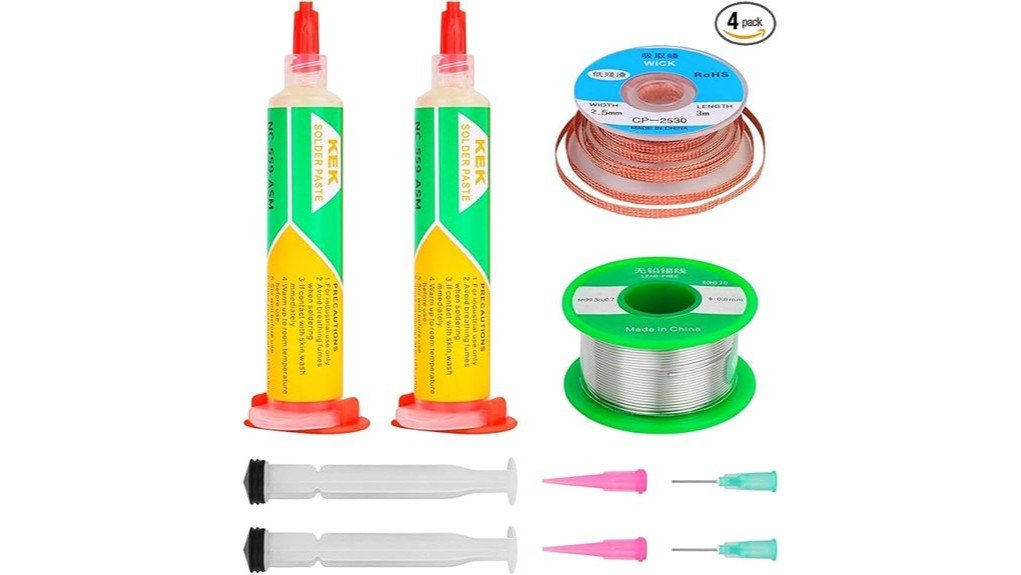
Small electronics repairs can fail quickly when solder does not flow well, pads are oxidized, or old solder is hard to remove cleanly. This No Clean Soldering Flux Paste kit is aimed at hobbyists, repair techs, and DIY users who need help with solder flow, desoldering, and general circuit-board work. The supplied product details describe a lead-free, halogen-free flux paste, copper solder wick, and 0.8mm solder wire for common electronics repairs. This review will help you decide whether the kit gives you the right mix of convenience, performance, and control for your workbench.
Quick Verdict
Rating: 8/10, Recommended with caveats
Best For: electronics repair, circuit-board touch-ups, hobby soldering, and basic desoldering tasks.
Bottom Line: This kit makes sense if you want flux paste, solder wick, and solder wire in one practical soldering setup. The main tradeoff is that the article-supported details do not confirm a brand name, warranty, exact package count, or advanced certification data.
| Specification | Detail |
|---|---|
| Product type | No clean soldering flux paste kit for electronics work |
| Brand | Not confirmed in the supplied article details |
| Model | Not provided |
| Flux type | No clean flux paste with highly active rosin properties |
| Formula notes | Described as lead-free and halogen-free |
| Solder wire size | 0.8mm diameter |
| Solder wire weight | 50g |
| Solder wire melting point | 227 °C, based on the supplied article details |
| Solder wick material | Copper construction with braided design |
| Best use | Circuit boards, cables, motors, radios, TVs, VCRs, toys, and small electronics repairs |
| Safety note | Use ventilation, eye protection, and careful heat control when soldering. |
What Is the No Clean Soldering Flux Paste Kit?
This product is a soldering support kit built around no clean soldering flux paste. The flux paste helps remove oxide layers from metal surfaces, which can improve solder flow and make joints easier to form during electronics repair.
The supplied details also discuss solder wick and 0.8mm solder wire, so this kit is best viewed as a small electronics soldering setup rather than a single-use paste only. The solder wick helps lift excess solder from pads and leads, while the solder wire supports common repair work on circuit boards, cables, toys, motors, and other electronic items.
The main appeal is convenience. You get materials that support both soldering and desoldering, which helps when you are replacing components, cleaning old joints, or practicing on scrap boards before working on a valuable device.
Key Takeaways
- The no clean flux paste is designed to improve solder flow by helping remove oxide layers from the soldering area.
- The supplied article details describe the formula as lead-free and halogen-free, which is useful for buyers who want cleaner electronics work materials.
- The kit includes soldering support for both adding solder and removing excess solder.
- The 0.8mm, 50g solder wire is a practical size for small electronics repairs.
- The copper solder wick is useful for desoldering, pad cleanup, and correcting excess solder.
- You should skip it if you need a fully verified branded kit, a confirmed warranty, or professional production documentation.
Who Should Buy It?
Best For
- DIY electronics users who need flux paste for cleaner solder flow.
- Repair techs who often remove old solder from circuit boards.
- Beginners who want flux, solder wick, and solder wire for practice projects.
Skip If
- You need a confirmed brand name, official datasheet, or warranty information before buying.
- You only need solder wire and do not plan to use flux paste or wick.
- You work on sensitive production electronics that require documented flux classification and process controls.
Before You Buy: No clean flux can reduce cleanup, but it does not mean every residue should always be ignored. For sensitive boards, connectors, high-humidity environments, or inspection-critical work, follow the product label and your repair process for cleaning guidance.
Flux Performance and Solder Flow
The strongest reason to use this kit is the flux paste. Oxide layers can stop solder from wetting a pad or lead properly, which often creates dull joints, weak bonds, or frustrating rework. The supplied details say the paste has highly active rosin properties, which means it is meant to help clean the soldering area during heat application.
Good wettability matters when you are working with small pads or thin leads. When the surface is prepared well and the heat is controlled, solder can spread more evenly instead of forming beads or refusing to bond. This can make small electronics repairs easier, especially when you are touching up old joints.
The limitation is that flux cannot fix every soldering problem. Dirty boards, damaged pads, wrong soldering temperature, poor tip maintenance, and incompatible materials can still cause weak results. The paste helps the process, but your technique still matters.
Solder Wick and Desoldering Use
Solder wick is useful when you need to remove excess solder from a circuit board. The article-supported details describe the wick as high-quality copper with special braiding, which is useful because copper conducts heat well and the braid gives molten solder a path to absorb into the wick.
This helps when you bridge two pads by mistake, need to clear a through-hole, or want to remove old solder before installing a new component. Used correctly, solder wick can leave a cleaner work area than trying to scrape or force solder away from a board.
For best results, place the wick over the solder you want to remove, press the hot iron tip on top of the wick, and lift the wick once solder starts absorbing into it. Do not hold heat on the board longer than needed, since too much heat can damage pads or nearby components.
Solder Wire Specifications and Applications
The supplied article details list the solder wire as 0.8mm in diameter, 50g in weight, and 227 °C in melting point. That size is practical for many electronics tasks because it gives you better control than thick solder wire on small joints.
The article-supported applications include radios, TVs, VCRs, cables, motors, circuit boards, toys, and general electronics. That makes this kit more useful for workbench repairs than for plumbing, jewelry, structural metalwork, or high-temperature brazing.
The solder wire is also described as offering good electrical and thermal conductivity with reduced smoke and rosin spatter. Those are helpful traits for small repairs, but you should still work in a ventilated space and avoid breathing fumes during soldering.
Compatibility and Safety
This kit is best matched with electronics soldering tasks, especially circuit-board repair and small component work. Do not treat it as a universal flux for every material or every soldering process. Acid fluxes and aggressive industrial fluxes have different uses, and many of them are not suitable for electronics.
The supplied details describe the flux as lead-free and halogen-free, but you should still use basic soldering protection. Wear eye protection, keep your hands away from the hot iron tip, work with ventilation, and wash your hands after handling soldering materials.
Beginners should practice on scrap boards before using the kit on a device they care about. Heat control, tip cleanliness, and correct placement matter as much as the material itself.
How It Performs in Real Use
For Circuit Board Touch-Ups
For dull or stubborn solder joints, the flux paste can help solder flow more evenly across the pad and lead. This is useful when you are refreshing old joints or correcting a connection that did not bond cleanly the first time.
For Desoldering Mistakes
The solder wick is helpful when you add too much solder or create a small bridge between pads. It gives you a controlled way to remove excess solder without flooding the board with more material.
For Small Wire and Cable Repairs
The 0.8mm solder wire can work well for small cable, motor, and electronics repairs where you need moderate control. It is not the thinnest possible wire, but it is easier to manage than very thick solder on compact connections.
For Learning and Practice
Beginners benefit from having flux, wick, and solder wire together because soldering mistakes are common during practice. You can add solder, remove solder, and repeat the process while learning how heat and surface preparation affect the joint.
How to Use It Correctly
Start with a clean work area, a stable surface, and the correct soldering iron temperature for your solder and components. Apply a small amount of flux paste to the joint area instead of covering the board heavily. Too much flux can create extra residue and make inspection harder.
Use solder wire sparingly. Touch the solder to the heated joint, not only to the iron tip, so the solder flows onto the parts being joined. If you make a bridge or leave excess solder, use the copper wick to absorb the extra material.
After soldering, inspect the joint under good lighting. A clean joint should look secure and should not move when the component is handled gently. For critical boards, follow the product label, device manual, or professional repair guidance before deciding whether residue should be cleaned.
Pro Tip: Keep a small piece of solder wick ready before you start soldering tight pads. If a bridge forms, you can correct it quickly without overheating the area while searching for tools.
Pros and Cons
Pros
- Flux paste helps remove oxide layers and improve solder wetting.
- No clean design can reduce routine cleanup for many basic electronics tasks.
- Copper solder wick supports cleaner desoldering and excess solder removal.
- 0.8mm solder wire gives practical control for small electronics repairs.
- Useful for beginners because it supports both soldering and correction work.
Cons
- Brand, model, package count, and warranty details are not confirmed in the supplied article.
- Not suitable for buyers who need a documented datasheet for production electronics.
- Good results still depend on proper heat control, tip care, and safe soldering technique.
Is It Worth the Price?
This kit offers strong value for the price if you want several basic soldering materials in one purchase. Flux paste, solder wick, and solder wire are all useful on a repair bench, and buying them together can be convenient for beginners or occasional repair users.
It is a smart buy for everyday electronics repair if your main needs are solder flow, excess solder removal, and small joint work. The best value goes to buyers who will use all three parts of the kit rather than only the flux paste.
The main limitation is documentation. If your work requires a confirmed manufacturer, official technical datasheet, or process-approved flux classification, you should choose a product with stronger published specifications.
How It Compares to Alternatives
Compared with buying only a flux pen, this kit gives you more repair flexibility because it also supports desoldering and solder-wire application. Compared with a full professional soldering station bundle, it is more focused and less complete, since it does not include an iron, stand, tip cleaner, or test equipment.
If you only need quick flux application, a flux pen may be cleaner and easier to store. If you need full repair-bench setup, a larger soldering kit may be better. This No Clean Soldering Flux Paste kit makes the most sense if you already have a soldering iron and need consumables for common electronics repair.
Frequently Asked Questions
Is this No Clean Soldering Flux Paste good for beginners?
Yes, it can work well for beginners because flux helps solder flow and solder wick helps correct mistakes. Practice on scrap boards first so you can learn heat control before repairing valuable electronics.
Does no clean flux mean I never have to clean the board?
Not always. No clean flux is designed to reduce cleanup needs, but sensitive boards, connectors, high-humidity use, or inspection-critical repairs may still require cleaning based on the product label or repair standard.
What is the solder wick used for?
Solder wick removes excess solder from pads, leads, and small bridges. Place it over the solder, heat it with the iron, and let the braid absorb the molten solder.
What jobs fit the 0.8mm solder wire best?
The 0.8mm solder wire is a practical size for many small electronics repairs, including circuit boards, cables, toys, motors, and household electronic items. Very tiny surface-mount work may require thinner solder and more precise tools.
Can I use this flux with every solder type?
The supplied article describes the flux as suitable for electronics work and lead-free use. For best results, match the flux, solder, temperature, and repair material, and follow the product label when working with unfamiliar solder types.
How should I store leftover soldering flux?
Keep leftover flux sealed tightly and stored according to the product label. Avoid heat, dust, and open air exposure because contamination can affect application and performance.
Who should skip this kit?
Skip it if you need verified brand documentation, a confirmed warranty, or a published datasheet before using materials on production electronics. It is better suited to hobby, repair, and general workbench tasks.
The Bottom Line
The No Clean Soldering Flux Paste kit is worth considering if you want flux paste, solder wick, and 0.8mm solder wire for small electronics repair. Its main strength is practical workbench convenience, while its main limitation is the lack of confirmed brand, model, warranty, and full technical documentation in the supplied article details.
Buy it if you need soldering consumables for hobby repairs, circuit-board touch-ups, and basic desoldering. Skip it if your work requires documented production-grade materials or verified manufacturer specifications.