OIMERRY Plastic Repair Welder Review
A cracked bumper cover or plastic panel can be expensive to replace, even when most of the part is still usable. The OIMERRY Plastic Repair Welder gives you a hot stapler system that embeds heated stainless steel staples across a crack to reinforce the damaged area. Its five power levels, LED display, work light, and 800 included staples make it a more complete kit than a basic single-setting stapler. The main tradeoff is that it reinforces plastic rather than replacing a full plastic welding station with filler rods and precise temperature control.
Quick Verdict
Editorial Rating: 8/10
Best For: DIY bumper-cover repairs, motorcycle and ATV panels, plastic housings, and hobby projects that need crack reinforcement.
Bottom Line: The OIMERRY kit offers adjustable power, a visible setting display, a built-in work light, and enough staples for repeated small repairs. It is a practical choice for non-structural plastic work, but you still need to confirm plastic compatibility and avoid safety-critical parts.
Key Specifications
| Specification | Detail |
|---|---|
| Brand | OIMERRY |
| Product name | Plastic Welder Repair Machine Kit |
| Manufacturer part number | HOT-STAPLER-6498 |
| ASIN | B08BYFVM9R |
| Product type | Corded plastic repair hot stapler kit |
| Input voltage | 110V |
| Power control | Five adjustable levels, 1 through 5 |
| Controls and visibility | LED power-level display and built-in work light |
| Amazon-listed dimensions | 5.12 × 6.3 × 9.84 inches |
| Amazon-listed item weight | 9.86 pounds |
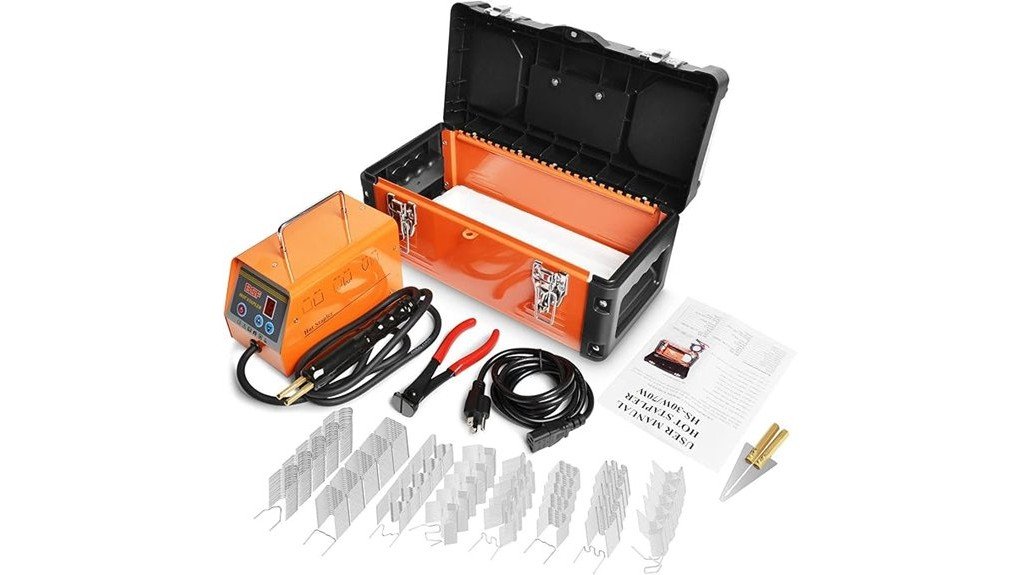
| Included accessories | Hot stapler unit, cutter, triangle electrode, power line, toolbox, and 800 stainless steel staples |
| Best use | Reinforcing cracks in repairable, non-structural plastic parts |
| Main limitation | Not a full filler-rod plastic welding system and not suitable for every plastic or safety-critical component |
What Is the OIMERRY Plastic Repair Welder?
The OIMERRY Plastic Welder Repair Machine Kit is a corded hot stapler for reinforcing cracked plastic. The tool heats a stainless steel staple, which you press partly into the plastic so the staple bridges both sides of the crack. After the plastic cools, the embedded staple acts like a small internal brace.
This method is most useful when a part is cracked but still has enough intact material to hold its original shape. It can support bumper covers, motorcycle fairings, ATV panels, plastic housings, boat trim, and some 3D-printed parts. It does not automatically restore factory strength, surface finish, or impact performance, so the repair must match the part and the damage.
Who Should Buy It?
Best For
- DIY users repairing cracks in removable bumper covers and trim panels
- Motorcycle, ATV, boat, and hobby owners working on non-structural plastic parts
- Garage users who want adjustable power and a large included staple supply
Skip If
- You need professional filler-rod welding, exact temperature settings, or fabrication capability
- The damaged part is structural, safety-critical, badly deformed, or missing large sections
- You cannot identify or safely test the plastic before applying heat
Before You Buy: A hot stapler is a reinforcement tool, not proof that a collision-damaged bumper, helmet, fuel-system part, pressure vessel, or structural component is safe to reuse. Replace safety-critical parts or have them inspected by a qualified professional.
Feature-by-Feature Review
Five Adjustable Power Levels
The five-level control is the kit’s most useful feature. Thin plastic can be easy to penetrate, while a thicker panel may need more heat to seat a staple properly. Starting at a low setting and increasing only as needed gives you more control than a single-output tool.
The LED screen shows the selected level, which helps you repeat a setting as you move along a crack. These are power levels rather than verified temperature readings, so you still need to judge the plastic response and avoid holding the staple in one place too long.
Staple Reinforcement and Repair Strength
The stainless steel staples bridge the crack and help stop the two sides from pulling apart. This can be especially useful on panels that see vibration, such as motorcycle fairings and ATV plastics. Using several evenly spaced staples can distribute support better than relying on one staple at the center of a long crack.
The staples remain inside the plastic after installation. For a clean finish, you normally work from the back or hidden side of the part, then trim exposed staple legs and finish the visible surface separately. The kit does not include filler rods for rebuilding missing material.
Long Handle, Work Light, and Heat Management
The long handle keeps your hand farther from the heated staple and gives you room to guide the tool. A built-in light helps you see the crack line in wheel wells, under panels, or on dark plastic. The listing also describes a heat-dissipation design, but the tool still becomes hot during use and needs cooling breaks during longer jobs.
Cutter, Triangle Electrode, and 800 Staples
The package includes the hot stapler unit, 800 stainless steel staples, a cutter, a triangle electrode, a power line, and a toolbox. The staple count gives you enough consumables for many small repairs, although the number used on one job depends on crack length and spacing.
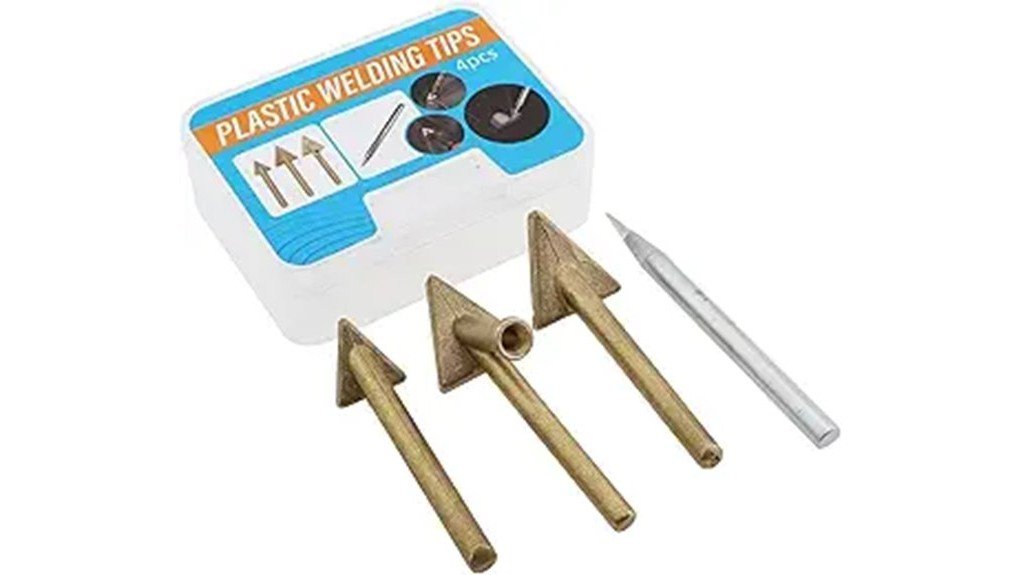
The cutter is intended for trimming staple ends after the plastic cools. The triangular tip can help smooth or shape a plastic surface, but it does not turn the unit into a temperature-controlled professional plastic welder. Use it lightly so you do not thin or distort the surrounding material.
Toolbox and Portability
The included case keeps the corded tool, cutter, electrode, and staples together. That matters in a garage because loose staples are small and easy to misplace. The Amazon-listed item weight is 9.86 pounds, so the kit is portable between work areas but not as compact as a bare handheld stapler.
How It Performs in Real Use
Cracked Bumper Covers
On a removable bumper cover, the tool can reinforce a clean crack from the back side while keeping the staple hidden. It works best when the pieces still align and the surrounding plastic is not crushed, stretched, or missing. Paint preparation and cosmetic refinishing remain separate steps.
Motorcycle and ATV Panels
Fairings and body panels often experience vibration, so a row of embedded staples can provide useful support. Curved panels require careful tool positioning, and too much heat can leave a visible depression on the front. Practice on scrap plastic before working near an exposed painted surface.
Plastic Housings and 3D-Printed Parts
The adjustable levels can help when working with small housings or thicker printed parts, but printed materials vary widely. Layer direction, wall thickness, and material type affect how the part reacts to heat. Use the lowest effective setting and avoid repairs where an embedded metal staple could interfere with electronics or moving parts.
Garage and Mobile Repair Work
The toolbox makes the kit easier to move between a workbench, trailer, or vehicle service area. Because it is a 110V corded tool, you need a suitable outlet and a safe cable path. Keep the cord away from sharp edges, wet floors, hot surfaces, and the repair area.
How to Use It Correctly
- Inspect the damage. Confirm that the part is non-structural, clean enough to repair, and not near fuel, airbags, high-voltage wiring, or other hazards.
- Clean and align the crack. Remove dirt and oil, dry the area, and hold the pieces in their correct position before heating a staple.
- Work from the hidden side. Place the staple across the crack on the back of the part when access allows.
- Start at a low power level. Increase the setting only when the staple will not seat properly. Stop before the staple passes through the visible face.
- Space the staples evenly. Add support along the crack instead of concentrating all the heat in one spot.
- Let the repair cool fully. Do not twist or load the part while the plastic is still soft.
- Trim and finish. Cut protruding staple legs only after cooling, then smooth or refinish the surface as needed.
Pro Tip: Make a test weld on scrap plastic or an unseen tab from the same part. That lets you find the lowest effective power level before you work near the visible surface.
Compatibility and Safety
Plastic type, thickness, age, and previous damage all affect the result. Heat can melt, discolor, warp, or weaken some plastics. Check molded material markings when available, follow the product instructions, and stop if the surface bubbles, smokes, or deforms excessively.
Wear eye protection and heat-resistant work gloves, and use the tool in a well-ventilated area. Heated plastic can release irritating fumes, so do not place your face over the repair. Unplug the unit before changing tips, cleaning, or storing it, and allow every heated part to cool on a nonflammable surface.
For vehicle work, remove the plastic part when practical and follow the vehicle service information. Do not use the tool near fuel-system parts, airbag components, wiring harnesses, batteries, or hybrid and electric vehicle high-voltage systems. High-voltage components should be handled only by trained personnel using the correct procedures.
Pros and Cons
Pros
- Five power levels help you match heat output to different plastic thicknesses
- LED display makes the selected setting easy to confirm
- Built-in work light improves visibility around dark or recessed parts
- Includes 800 stainless steel staples, a cutter, triangle electrode, and storage case
- Useful for reinforcing many repairable automotive and hobby plastic parts
Cons
- Power levels do not provide a verified temperature readout
- Requires practice to avoid pushing staples through thin or visible surfaces
- Cannot replace missing plastic or perform every professional filler-rod repair
Is It Worth the Price?
The OIMERRY Plastic Repair Welder offers strong value for the price when you expect to repair several non-structural plastic parts. The adjustable power, display, light, cutter, triangle electrode, large staple supply, and storage case reduce the need to buy basic accessories separately.
You get the most value when one repairable bumper cover, panel, or housing would otherwise be replaced. It is not the best fit if your work requires verified temperature control, filler rods, airless welding tips, or professional collision-repair procedures. Check the current package details before ordering because seller bundles can change.
How It Compares to Alternatives
The Allturn 2-in-1 kits are worth comparing when you want both hot staples and included welding rods in one package. JOUNJIP’s plastic welding kits may suit buyers who prefer an iron-style filler-rod system, while Polyvance equipment is aimed more toward specialized plastic repair work.
The OIMERRY kit makes the most sense when your main goal is fast staple reinforcement with adjustable power, a visible setting, a work light, and a large staple supply. Choose an alternative when rebuilding missing material or performing controlled filler-rod welding matters more than staple count.
Frequently Asked Questions
Is the OIMERRY Plastic Repair Welder good for beginners?
It can be beginner-friendly because the five power levels let you start low and increase heat gradually. Practice on scrap plastic first so you learn how quickly a staple sinks without pushing it through the front surface.
What parts can you repair with this kit?
The kit is intended for repairable plastic parts such as bumper covers, trim, motorcycle fairings, ATV panels, boat trim, housings, and some 3D-printed pieces. Do not use it as the sole repair method for structural or safety-critical components.
Is a hot stapler the same as a plastic welder?
Not exactly. A hot stapler embeds metal reinforcement across a crack, while a full plastic welding system may fuse compatible filler material into the joint. This kit includes a triangle electrode for surface work, but it is primarily a staple-reinforcement system.
Can it repair every type of plastic?
No. Plastics differ in melting behavior, thickness, and heat sensitivity. Check the material marking when available and test an unseen area before committing to the repair.
Where should the staples be installed?
Install them across the crack on the hidden or back side whenever access allows. Seat each staple far enough to hold without passing through the visible face, then let the plastic cool before trimming the legs.
Does the kit include staples and storage?
Yes. The verified listing includes 800 stainless steel staples plus the hot stapler unit, cutter, triangle electrode, power line, and toolbox. Confirm the current package contents before buying because marketplace bundles can be revised.
Does it have a light and power display?
Yes. The current product listing describes an LED screen that displays power levels 1 through 5 and a light on the long handle. The display shows the selected level, not a verified temperature.
How should you clean and store the tool?
Unplug it and let the tool, tip, and cut staples cool completely. Wipe the exterior with a dry or slightly damp cloth, never immerse the electrical unit, and return the dry components to the toolbox.
The Bottom Line
The OIMERRY Plastic Repair Welder is a recommended-with-caveats kit for DIY users who need adjustable hot-staple reinforcement for cracked, non-structural plastic. Its five power levels, LED display, work light, 800 staples, and storage case provide a useful package, but buyers needing filler-rod fabrication, exact temperature control, or safety-critical repairs should choose a more specialized solution.