Disclosure: As an Amazon Associate, we earn from qualifying purchases. If you click a link on this page and make a purchase, we may receive a small commission at no extra cost to you.
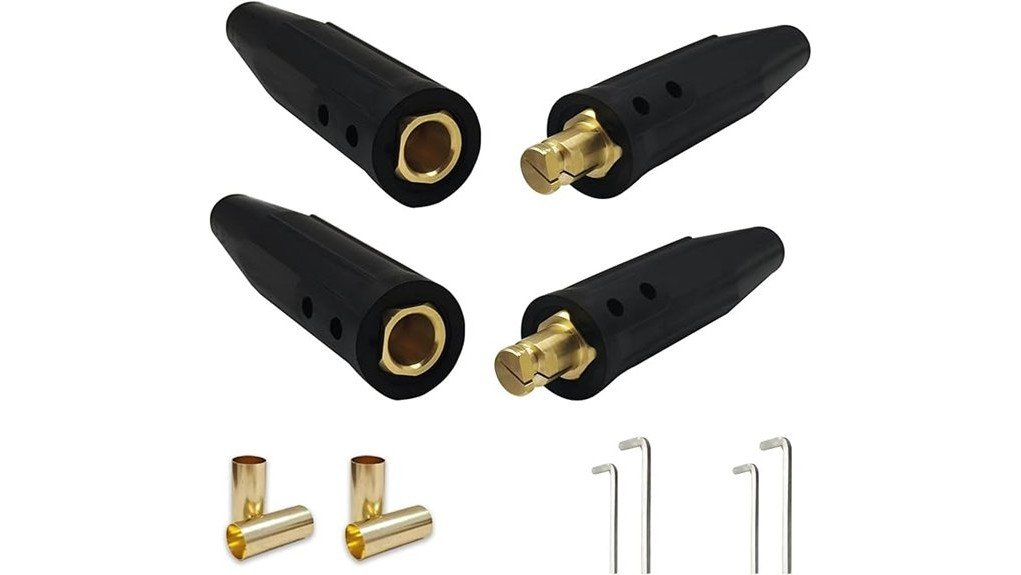
Loose welding lead connections can cause poor arc starts, heat buildup, and frustrating interruptions during a job. The 2PK Welding Lead Connectors are built for welders who need a secure twist-lock connection across compatible heavy-duty cable setups. They support #4 to 2/0 (25–50mm) welding cables and use brass contact parts with EPDM rubber insulation. This review helps you decide whether they fit your machine, your cable size, and the kind of work you do before you buy.
Quick Verdict
Rating: 8/10, Recommended with caveats
Best For: Welders using compatible Tweco, Miller-style, or Lenco-style cable connector setups
Bottom Line: The brass construction, EPDM insulation, and positive cam twist-lock design make these connectors a practical upgrade from loose or worn cable connections. The main tradeoff is compatibility, since they are not universal for every welder or cable setup.
Key Specifications
| Specification | Detail |
|---|---|
| Product Type | Welding lead connector set |
| Count | 2-pack connector set |
| Cable Compatibility | #4 to 2/0 welding cable, listed as 25–50mm |
| Main Material | High-grade brass conductor parts |
| Insulation | EPDM rubber insulation |
| Locking System | Positive cam twist-lock mechanism |
| Listed Compatibility | Tweco 2-MPC, Miller 191981 / 218677 / 218678, and Lenco LC-40 style setups |
| Included Hardware Mentioned | Copper splice caps and ball-point screws |
| Best Use | Workshop welding, fabrication, repair work, mobile jobs, and lead extension connections |
| Safety Note | Match the connector to your cable gauge and machine connector type before use. |
What Are the 2PK Welding Lead Connectors?
The 2PK Welding Lead Connectors are heavy-duty cable connection components used to join welding leads securely. They are made for welders who want a more stable connection point than a loose, worn, or poorly fitted lead connection.
The main design feature is the positive cam twist-lock mechanism. When fitted correctly, it helps keep the lead connection engaged while you move the cable, reposition the work area, or handle vibration around a job site.
They make the most sense for professional, farm, repair, and serious garage welding setups that already use compatible connector styles. They are not a universal fix for every welder, so the cable size and connector style matter as much as the build quality.
Who Should Buy It?
Best For
- Welders using #4 to 2/0 welding cables
- Users with compatible Tweco, Miller-style, or Lenco-style lead connections
- Shops and mobile welders who need a secure twist-lock cable connection
Skip If
- Your welder uses a non-standard connector style that does not match this design
- Your cable size falls outside the listed #4 to 2/0 range
- You need a complete cable replacement instead of connector components
Build Quality and Materials
These connectors use high-grade brass for the main conductive parts. Brass is a practical choice for welding lead connectors because it supports current transfer while holding up better than light-duty materials in repeated use.
The EPDM rubber insulation helps protect the connection area from heat and cold exposure during normal welding work. It also gives the connector a more durable outer layer for shop handling, cable movement, and job-site use.
The article-supported hardware details include copper splice caps and ball-point screws. These parts help secure the cable connection when installed correctly, which reduces the chance of looseness at the contact point.
Pro Tip: Clean connector contact points with a wire brush during routine maintenance. Dirt, oxidation, or debris at the contact area can increase resistance and make the arc feel less stable.
Fit and Compatibility
Compatibility is the most important buying factor for these welding lead connectors. The set is listed for #4 to 2/0 welding cable, which covers many medium and heavy-duty lead setups, but it does not cover every cable size.
The connector compatibility list includes Tweco 2-MPC, Miller 191981 / 218677 / 218678, and Lenco LC-40 style setups. That does not mean every welder from those brands will fit automatically, so you should compare your current connector type before ordering.
Fit also depends on the condition of your cable end. A damaged cable, crushed conductor, or poorly stripped end can make installation harder and may prevent a secure electrical connection.
Before You Buy: Confirm your welding cable gauge and connector style before purchasing. These connectors are not universal, and the wrong fit can cause poor contact, heat buildup, or intermittent arc issues.
Installation and Setup Tips
Installation is straightforward when your cable size and connector type match. You need a clean cable end, correct conductor placement, and a secure mechanical connection before the twist-lock side can perform as intended.
Do not rely on the twist-lock mechanism to fix a loose cable termination. The internal cable connection must be tight first, since a poor termination can create resistance and heat under load.
Common Setup Mistakes to Avoid
A partial twist-lock engagement is one of the easiest mistakes to make. The connector should be fully seated and locked before you start welding, especially when the cable may be dragged across the floor or pulled around a workpiece.
You should also avoid mixing connector styles without checking fit. Similar-looking welding connectors can vary enough to cause a loose or unreliable connection.
Compatibility and Safety
Welding lead connectors carry high current, so fit and contact quality are safety issues, not just convenience details. A connector that is too loose, undersized, damaged, or partly engaged can run hotter than expected.
Inspect the connector before use and look for damaged insulation, loose screws, worn contact faces, or signs of overheating. Replace damaged parts instead of trying to force them back into service.
Follow your welding machine manual and cable manufacturer guidance when matching cable size, connector type, and duty needs. When in doubt, ask a qualified welding technician or supplier to confirm compatibility.
How It Performs in Real Use
For Heavy Welding Tasks
The brass core supports steady conductivity when the connector is properly installed. That makes the set useful for fabrication, structural repair, and other jobs where a weak connection can make the arc less predictable.
For Mobile Job Sites
The twist-lock design helps reduce accidental disconnects when leads are dragged, repositioned, or moved around equipment. This matters most when you work in the field and need the cable connection to stay engaged while you move.
For Workshop Use
In a shop setting, stable lead connections help keep your setup consistent across repeated weld passes. You still need to check the connector periodically, especially if several people share the same welder or lead set.
For Maintenance and Repair Work
The EPDM insulation and brass construction suit repeated handling during repair work. The connector is especially useful when you need to join or extend compatible leads without creating a loose connection point.
Maintenance and Long-Term Use
Welding connectors work best when the contact points stay clean and tight. Dust, spatter, oxidation, and shop grime can build up over time, especially when leads sit on the floor or travel between job sites.
Check the twist-lock action during routine setup. If the connector feels loose, gritty, or hard to fully engage, stop and inspect it before welding.
Also check the cable strain near the connector. A connector can only perform well if the cable end remains secure and undamaged.
Pros and Cons
Pros
- Brass conductor parts support stable current transfer
- Positive cam twist-lock design helps reduce accidental disconnects
- Supports a useful #4 to 2/0 cable range for many welding setups
- EPDM rubber insulation helps handle normal shop and job-site exposure
- Listed compatibility includes Tweco 2-MPC, Miller-style, and Lenco LC-40 setups
Cons
- Not universal for every welding machine or connector style
- Requires correct cable sizing and careful installation
- May not solve arc issues caused by damaged cable, poor grounding, or machine problems
Need a secure welding lead connector set?
Is It Worth the Price?
The 2PK Welding Lead Connectors sit in the mid-range category for welding accessories. They offer strong value for welders who need reliable conductivity, secure locking, and compatibility with the listed connector styles.
You get the most value from this set if your current connectors are worn, loose, or inconvenient to connect during repeated setup changes. The twist-lock design is especially useful when cables move often during fabrication, repair, or field work.
It is not the best fit if you are unsure about your cable size or machine connector style. In that case, confirming fit before purchase matters more than buying quickly.
How It Compares to Alternatives
Compared with basic clamp-style cable connections, these connectors offer a more secure twist-lock setup for joining compatible welding leads. Compared with heavier industrial connector systems, they focus on practical workshop and job-site use without adding extra complexity.
If you want a simple replacement for a listed Tweco, Miller-style, or Lenco-style setup, this set is worth considering. If you need a connector for a specialty machine or a different cable size, compare the exact connector standard before you buy.
Frequently Asked Questions
Are these connectors compatible with all welding machines?
No. They are listed for compatible Tweco 2-MPC, Miller 191981 / 218677 / 218678, and Lenco LC-40 style setups, but not every welder uses those connector standards. Check your existing connector style before buying.
What cable sizes do they support?
They support #4 to 2/0 welding cables, listed as 25–50mm. If your cable is smaller or larger than that range, choose a connector made for your cable size.
Do these connectors help with arc stability?
They can help when poor arc stability comes from a loose or weak lead connection. They will not fix problems caused by damaged cable, poor grounding, incorrect machine settings, or worn consumables.
What materials are used in the connectors?
The article-supported materials are high-grade brass conductor parts and EPDM rubber insulation. It also mentions copper splice caps and ball-point screws as part of the reinforced hardware.
Can you use them for MIG, TIG, and stick welding setups?
They can be used in welding lead setups where the connector style and cable size match. The welding process matters less than whether your lead connection, cable gauge, and machine setup are compatible.
Do they need maintenance?
Yes, light maintenance helps. Keep the contact surfaces clean, check that screws stay tight, and inspect the insulation for wear or heat damage before use.
Who should skip these welding lead connectors?
Skip them if your welder uses a different connector standard, your cable size falls outside #4 to 2/0, or your cable needs full replacement. They are connector components, not a repair for damaged welding leads.
The Bottom Line
The 2PK Welding Lead Connectors are a solid choice if you need a secure twist-lock connection for compatible #4 to 2/0 welding cables. Their main strengths are brass construction, EPDM insulation, and a positive cam lock, while the main limitation is fit compatibility.
Buy them if your welding setup matches the listed connector styles and you want a more reliable cable connection. Skip them if you cannot confirm your connector type or need a complete cable replacement.