Disclosure: As an Amazon Associate, we earn from qualifying purchases. If you click a link on this page and make a purchase, we may receive a small commission at no extra cost to you.
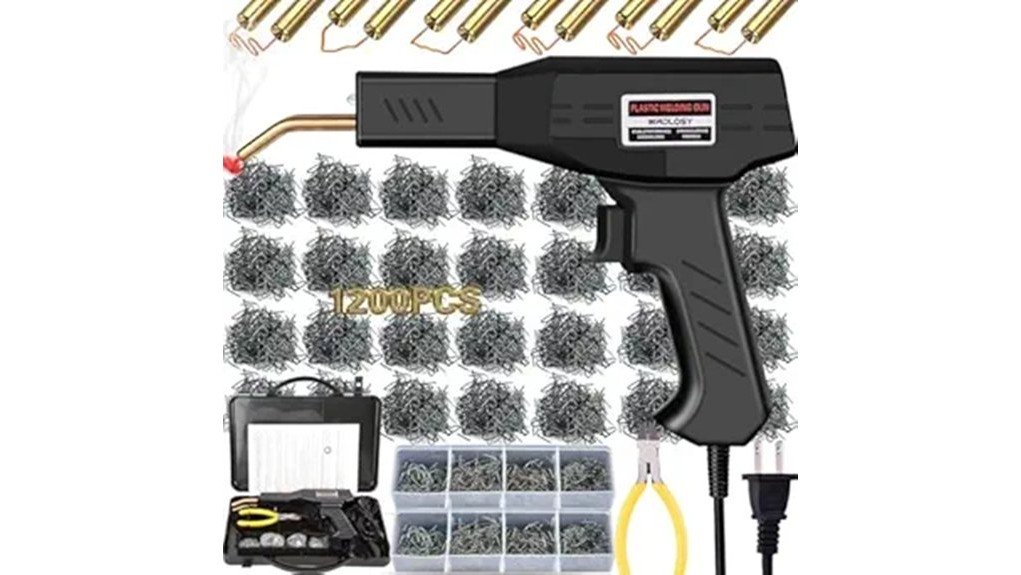
Cracked plastic parts can be frustrating because glue often fails under stress, and replacing a bumper, panel, or appliance part can cost more than the repair should. The Plastic Welder Kit is made for DIY repairs where you want to reinforce broken plastic with heated stainless steel staples instead of relying only on surface adhesive. This review looks at the 1200-staple kit, its grip design, built-in light, staple types, and practical limits so you can decide if it fits your repair work. It looks useful for small to medium plastic repairs, but you still need to confirm material compatibility and use it carefully around heat.
Quick Verdict
Rating: 8.2/10
Best For: DIY users who repair cracked plastic bumpers, dashboards, panels, covers, and household plastic parts.
Bottom Line: The Plastic Welder Kit gives you a wide 1200-staple assortment, a comfortable grip, and a built-in light for finding cracks. The main tradeoff is that it will not suit every plastic type, and beginners should practice before working on visible or high-value parts.
| Specification | Detail |
|---|---|
| Product Name | Plastic Welder Kit |
| Product Type | Hot staple plastic repair kit |
| Amazon Product Identifier | B0DCMWW5DJ, based on the original affiliate URL |
| Total Staple Count | 1200 stainless steel staples |
| Included Staple Types | Outside corner, inside corner, flat, and wave staples |
| Staple Breakdown | 200 outside corner staples at 0.02 inch, 200 inside corner staples at 0.03 inch, 300 flat staples at 0.03 inch, and 500 wave staples at 0.03 inch |
| Material | Stainless steel staples designed to resist rust |
| Design Features | Ergonomic grip and built-in light |
| Common Uses | Automotive bumpers, dashboards, plastic panels, appliance housings, and household plastic repairs |
| Warranty | 5-year warranty stated in the source article |
| Safety Note | Requires heat, proper ventilation, gloves, eye protection, and careful handling to reduce burn and fire risk |
What Is the Plastic Welder Kit?
The Plastic Welder Kit is a handheld repair tool made to strengthen cracked plastic by heating metal staples and embedding them across a break. Instead of only bonding the surface, the staple adds internal support that can help hold the damaged area together after it cools.
The kit includes 1200 stainless steel staples in four types: outside corner, inside corner, flat, and wave staples. That range matters because plastic cracks do not all form in a straight line. A bumper corner, dashboard tab, or appliance cover may need a different staple shape than a flat plastic panel.
This kit is best viewed as a repair aid, not a full restoration system. After stapling, some repairs may still need trimming, sanding, filler, paint, or cosmetic finishing if the damaged part is visible.
Who Should Buy It?
Best For
- DIY users who want to repair cracked plastic instead of replacing a full part.
- Car owners working on bumpers, dashboards, tabs, trims, or other plastic panels.
- Home repair users who need a large staple assortment for different crack shapes.
Skip If
- You need a repair on a load-bearing or safety-critical part that should be handled by a professional.
- You do not know what type of plastic you are repairing and cannot test a hidden area first.
- You want a cosmetic finish from one tool, since stapling may still need sanding and surface repair.
Before You Buy: This kit cannot repair every plastic type. Check the material when possible, test on a hidden area, and avoid using it on parts where heat damage or a failed repair could create a safety risk.
Features and Specifications
1200-Staple Assortment
The strongest reason to consider this kit is the large staple assortment. You get 1200 stainless steel staples across outside corner, inside corner, flat, and wave designs. That gives you more flexibility than a basic kit with only one or two staple shapes.
The article-supported breakdown includes 200 outside corner staples at 0.02 inch, 200 inside corner staples at 0.03 inch, 300 flat staples at 0.03 inch, and 500 wave staples at 0.03 inch. For a long crack, the higher count of wave and flat staples should be useful because those are likely to see more frequent use on broad panels and straight breaks.
Stainless Steel Construction
The included staples are described as stainless steel, which helps resist rust compared with plain steel. That matters for repairs on automotive plastic parts or outdoor items that may see moisture, road grime, or changing temperatures.
Stainless steel staples also add structure inside the repair, but they do not make the plastic new again. If the surrounding plastic is brittle, thin, oily, or heat-damaged, the repair may still need extra care and may not hold as well as it would on a cleaner, stronger part.
Ergonomic Grip
The ergonomic grip is useful if you expect to place many staples in one repair session. A comfortable handle helps you control the tool while lining up the staple across the crack.
This feature is especially helpful for bumper repairs, long panel cracks, or projects where you need to work at an awkward angle. Still, comfort does not replace technique. You need steady hand pressure and good placement to avoid melting too deeply into the plastic.
Built-In Light
The built-in light helps you see cracks, edges, and small damaged areas more clearly. This is helpful when you are working inside a wheel well, under a dashboard, or on darker plastic where the crack line is easy to miss.
Good visibility can also help you place staples more evenly. If the crack is dirty or hard to see, clean the area first and use extra lighting so you can inspect the damage before you heat the staple.
Pro Tip: Start with a hidden or less visible repair before using the tool on a bumper face, dashboard surface, or appliance cover. That gives you a chance to learn heat timing, pressure, and staple depth.
Fit and Compatibility
The kit is aimed at plastic repair, but not all plastics respond the same way to heat. Some thermoplastics can accept a hot staple repair better than brittle, thin, or heat-sensitive plastics. If the part has a plastic marking, check it before repair and follow the tool instructions.
For automotive work, this kit makes the most sense on cracked bumpers, broken tabs, trim pieces, and interior plastic parts where a reinforced backing repair is acceptable. It is not the right choice for airbags, seat belt parts, structural safety pieces, fuel-system parts, electrical insulation, or any part where a failed repair could create danger.
Ease of Use
The basic process is simple: clean the damaged area, select the staple shape, heat the staple with the tool, press it across the crack, let it cool, then trim excess staple ends if the instructions allow. The source article also notes that the kit includes an instruction manual, which is important for beginners.
The learning curve is real. Press too lightly and the staple may not seat well. Press too deeply and you can deform or burn the plastic. For best results, work slowly, use the right staple shape for the crack, and avoid rushing the cooling step.
Materials, Safety, and Handling
This tool uses heat, so safe handling should be part of every repair. Wear gloves and safety glasses, keep flammable items away from the work area, and use the kit in a well-ventilated space. Heated plastic can produce fumes, and melted material can burn skin.
Do not use the tool near fuel, solvents, aerosol products, or wet electrical parts. If you are repairing an appliance housing or a vehicle part, disconnect power where appropriate and avoid any component tied to safety systems.
The staples are article-supported as stainless steel and rust-resistant. That is useful for durability, but the surrounding plastic still controls the strength of the final repair. A good repair starts with clean plastic, correct staple choice, and careful heat control.
How It Performs in Real Use
For Automotive Bumper Repairs
On a cracked bumper or plastic trim panel, the kit can help reinforce the back side of the damage. Outside corner, flat, and wave staples give you options depending on the shape of the crack. For visible bumper faces, expect to do extra finishing work if you want the repair to look clean from the outside.
For Dashboard Tabs and Interior Plastic
Small dashboard tabs and interior plastic clips can be hard to repair with glue alone because they often flex during use. A hot staple can add support across the break, but you need gentle pressure because small tabs can melt or warp quickly.
For Household Plastic Repairs
The kit can also help with appliance housings, plastic covers, storage bins, and similar household items. It is most useful when the part is thick enough to accept a staple and the repair does not involve food contact, water sealing, or electrical safety.
For Long-Term Use
The 1200-staple supply gives you room for multiple projects before needing refills. Long-term value depends on how often you repair plastic and how well you match the staple type to the crack. If you only need one small repair, the kit may still be useful, but the value is better when you expect repeated use.
How to Use It Correctly
Start by cleaning the broken plastic so the crack line is visible and free from dirt or oil. Choose a staple shape that fits the damage. Use flat staples for straighter cracks, corner staples for angled damage, and wave staples when you want broader reinforcement across a longer break.
Heat and press the staple only as directed by the manual. Let the plastic cool before trimming or stressing the repair. If the damaged part is visible, plan for finishing steps such as clipping, sanding, filler, or paint after the structural repair is complete.
Avoid placing staples too close to the edge of thin plastic, since the surrounding material may not have enough strength to hold. For a long crack, use several evenly spaced staples instead of relying on one staple in the middle.
Pros and Cons
Pros
- Includes 1200 stainless steel staples for multiple repair jobs.
- Four staple types help with flat cracks, corners, and irregular damage.
- Ergonomic grip can make longer repair sessions easier to control.
- Built-in light helps you see crack lines and darker work areas.
- 5-year warranty adds confidence if you plan to use the kit over time.
Cons
- Not compatible with every plastic type or every repair situation.
- Beginners may need practice to avoid melting too deeply.
- Structural stapling may still require cosmetic finishing afterward.
Is It Worth the Price?
The Plastic Welder Kit looks like a strong value for the price if you repair plastic parts more than once. The 1200-staple count and four staple types give you more range than a small starter set, especially if you work on vehicles, household items, or mixed plastic projects.
You get the most value if you want to avoid replacing an entire plastic part for a crack that can be safely reinforced. It is worth considering if you need a practical tool for bumper tabs, trim pieces, appliance covers, or general DIY plastic repairs.
It is not the best fit if you only need a perfect cosmetic finish or if the damaged part is safety-critical. In those cases, a professional repair or replacement may be the better choice.
How It Compares to Alternatives
Compared with glue-only plastic repair, this kit adds internal reinforcement with heated staples. That can be helpful on cracks that flex or reopen after adhesive sets. Glue may still be easier for very small cosmetic fixes, but it does not provide the same staple-backed support.
Compared with a professional plastic repair service, this kit costs less over multiple repairs and gives you more control at home. A professional is still the better option for painted exterior panels, expensive parts, safety-related components, or repairs where the finish must look factory-clean.
Frequently Asked Questions
Can the Plastic Welder Kit repair all types of plastic?
No. The kit is made for plastic repair, but results depend on the plastic type, thickness, and condition. Check the material when possible and test a hidden area before repairing an important part.
Is this plastic welder kit suitable for beginners?
Yes, it can work for beginners because the design is straightforward and the kit includes an instruction manual. Start on a small or hidden repair so you can learn how much heat and pressure to use.
How long does it take for the staples to heat?
The source article says the staple melting process usually takes only seconds. Follow the manual and avoid holding the heated staple in one place too long because too much heat can deform the plastic.
Which staple type should you use?
Use flat staples for straighter cracks, inside or outside corner staples for angled damage, and wave staples for broader crack support. The best choice depends on the crack shape and how much surrounding plastic is available for support.
Can the kit be used for outdoor repairs?
The stainless steel staples are described as rust-resistant, which helps for parts exposed to moisture. Outdoor durability still depends on the plastic, the repair quality, and whether the part faces sun, vibration, or repeated stress.
Can it replace professional bumper repair?
It can help with some DIY bumper repairs, especially cracks and tabs that need backing support. For major damage, paint work, sensor areas, or safety-related parts, professional repair is the safer choice.
What safety precautions should you take?
Wear gloves and eye protection, keep the work area ventilated, and move flammable items away before heating staples. Let the repair cool before touching, trimming, sanding, or reinstalling the part.
Who should skip this kit?
Skip it if you need a repair on a safety-critical component, a food-contact surface, or a part that cannot be exposed to heat. You should also skip it if you want a finished cosmetic repair without sanding, filling, or painting.
The Bottom Line
The Plastic Welder Kit is a practical choice if you want a 1200-staple kit for DIY plastic repairs on bumpers, dashboards, trim pieces, and household plastic parts. Its main strengths are the large staple assortment, ergonomic grip, built-in light, and stated 5-year warranty, while its main limitation is that it will not work safely or cleanly on every plastic or repair type.
Buy it if you want a cost-conscious repair tool and are willing to practice proper technique. Skip it if the damaged part is safety-critical, highly visible, or better handled by a professional.