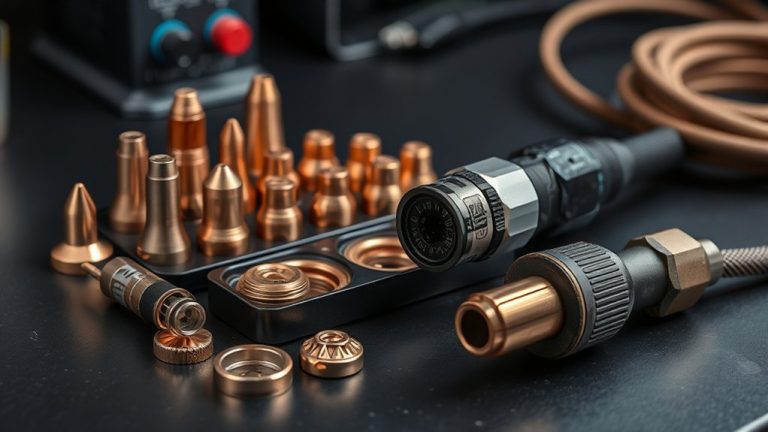
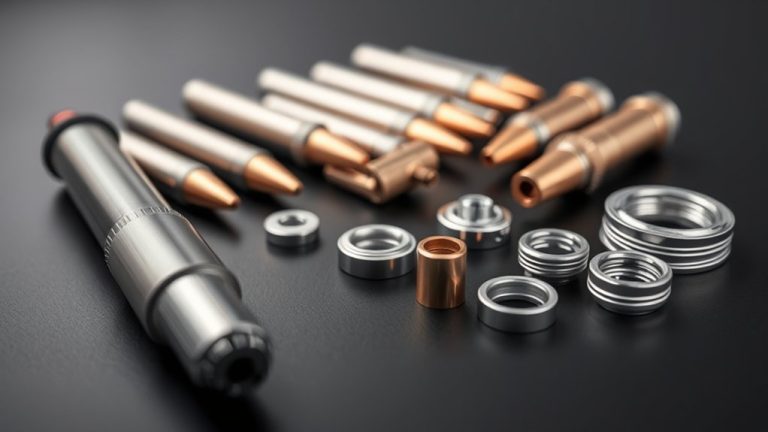
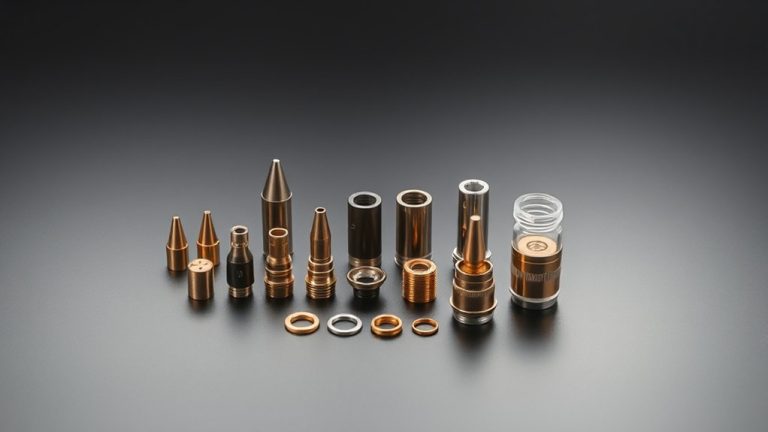
You swap a 65 A nozzle for 10 mm mild steel and notice bevel creeping—classic sign your consumables mix is off. You’ll need the right shield, intact O-rings, a fresh electrode, and the correct retaining cap torque to restore energy density. We’ll map the kit’s parts, match amperage to material, set wear thresholds, and lock in replacement intervals—so you cut cleaner, faster, safer. But first, confirm your torch compatibility and nozzle choice.
What’s Included in the Powermax125 Consumables Kit
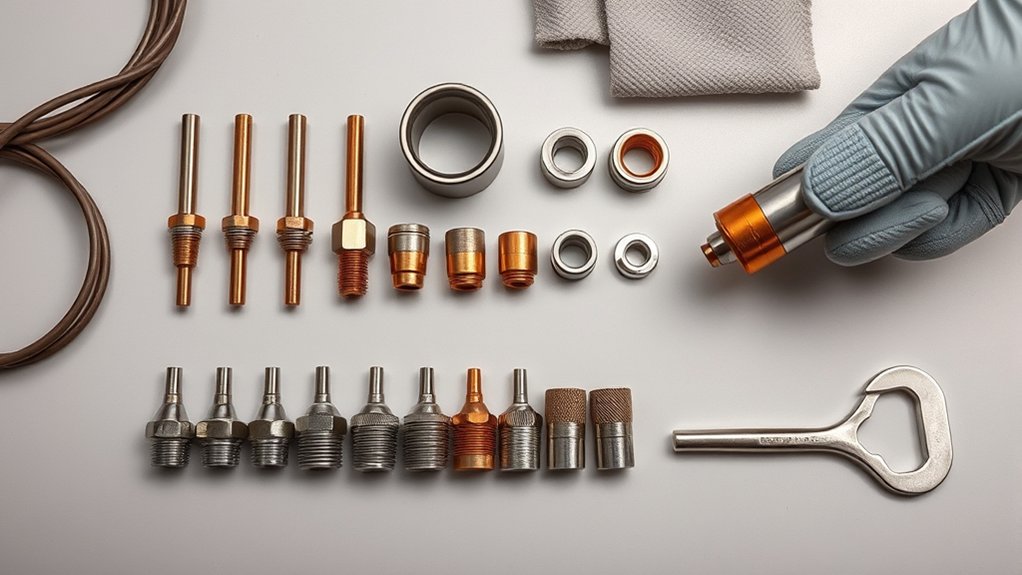
Six core consumable types cover the full 30–125 A range:
Six core consumable types cover the full 30–125 A range for versatile cutting performance.
2 shields (220976) for 105/125A mechanized cutting,
1 retaining cap (220977),
4 high‑amp nozzles (220975, 65–125 A),
plus 1 mid‑amp nozzle (420169, 45–65 A) and
1 low‑amp nozzle (420158, 30–45 A).
You also get a swirl ring (220997) to stabilize gas flow and six electrodes (220971) rated across 30–125 A, all packed in a rugged case that keeps parts indexed and protected.
Think regarding usage scenarios:
deploy 220975 nozzles for high‑duty plate work;
step down to 420169 for mid‑thickness profiles;
use 420158 for thin sheet to control kerf and dross.
Shields 220976 pair with higher‑amp mechanized passes where standoff consistency is critical.
Installation tips:
verify o‑ring integrity on the swirl ring,
seat the electrode fully,
then align the nozzle to prevent arc wander.
Thread the retaining cap snug—hand‑tight plus a fraction—avoiding over‑torque that distorts gas paths.
Rotate electrodes proactively to maintain cut quality.
Compatible Torches and Systems
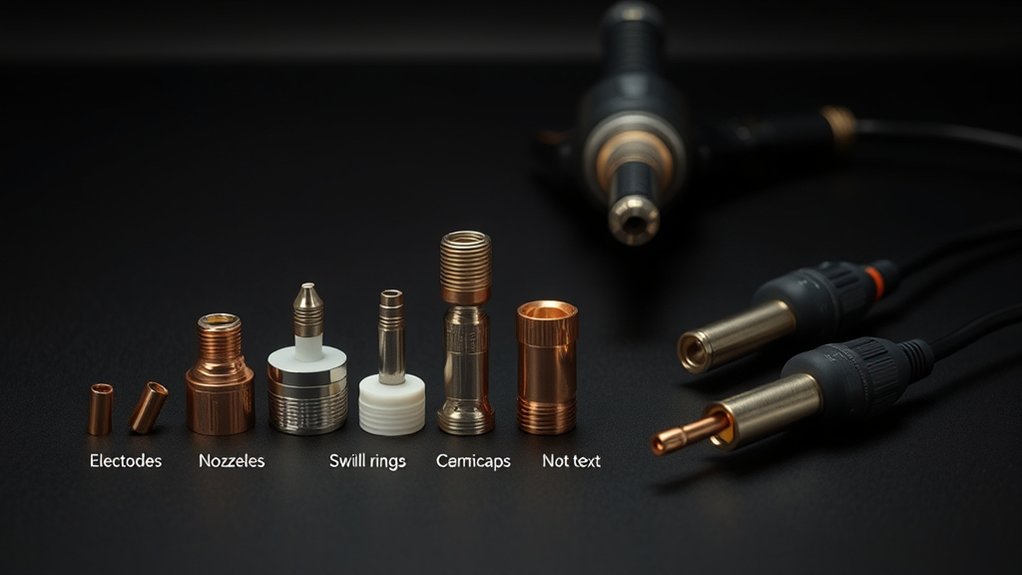
The Powermax125 consumables kit is purpose‑built for Hypertherm’s Powermax125 system and mates directly with Duramax torches—both handheld and mechanized variants—for plug‑fit compatibility and rated performance.
You’ll leverage factory torch compatibility to maintain arc stability, airflow integrity, and cutting efficiency without adapter compromises. The included nozzles, retaining caps, and shields lock into Duramax handles and machine torches, guaranteeing correct standoff, gas flow, and current path under load.
- Verify torch model: confirm Duramax handheld or mechanized part numbers before installation to ascertain pinout and thread match.
- Match setup: use handheld consumables for manual cutting and mechanized sets for CNC gantries, linear tracks, or robotic mounts.
- Inspect interfaces: check torch threads, O‑rings, and swirl ring seating surfaces; replace worn parts to prevent gas leaks and double‑arcing.
- Validate parameters: set amperage, gas pressure, and lead lengths per Powermax125 specs to preserve tip life and kerf quality.
Using the correct kit routinely stabilizes starts, reduces dross, and extends system lifespan.
Nozzles: Types, Amperage Ranges, and Use Cases
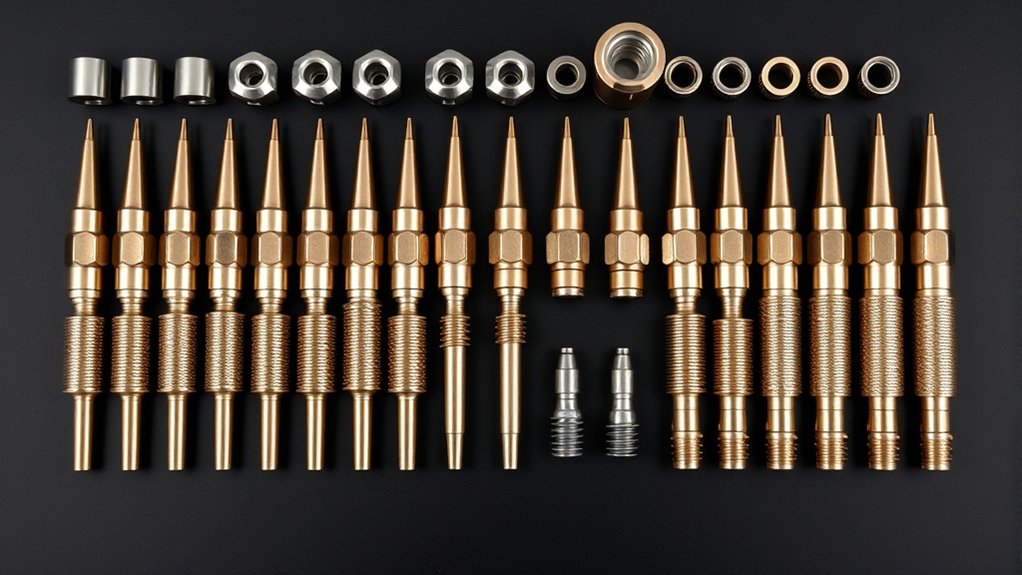
Nozzle choice dictates arc density, kerf width, and tip life on the Powermax125, so match part numbers to amperage and task.
Start with nozzle selection by defining cutting thickness and current. For thin gauge and fine detail, use the 30–45 A FineCut nozzle (Part No. 420151); it tightens the jet for crisp edges and minimal dross at low travel heat.
For light plate and general work, the 45 A nozzle (420158) balances speed and edge quality. Step up to the 65 A nozzle (420169) for medium-duty versatility—stable on mid-range plate and compatible with light gouging.
For maximum throughput and heavy section work, run the 125 A nozzle (220975) to maintain energy density and straight walls.
Set amperage to the nozzle’s rating—don’t overpower or starve it.
Verify cut charts for standoff and speed by material. Inspect orifice wear and heat discoloration; replace nozzles after extended use to hold tolerance and protect the torch.
Electrodes and Swirl Rings: Function and Replacement Tips
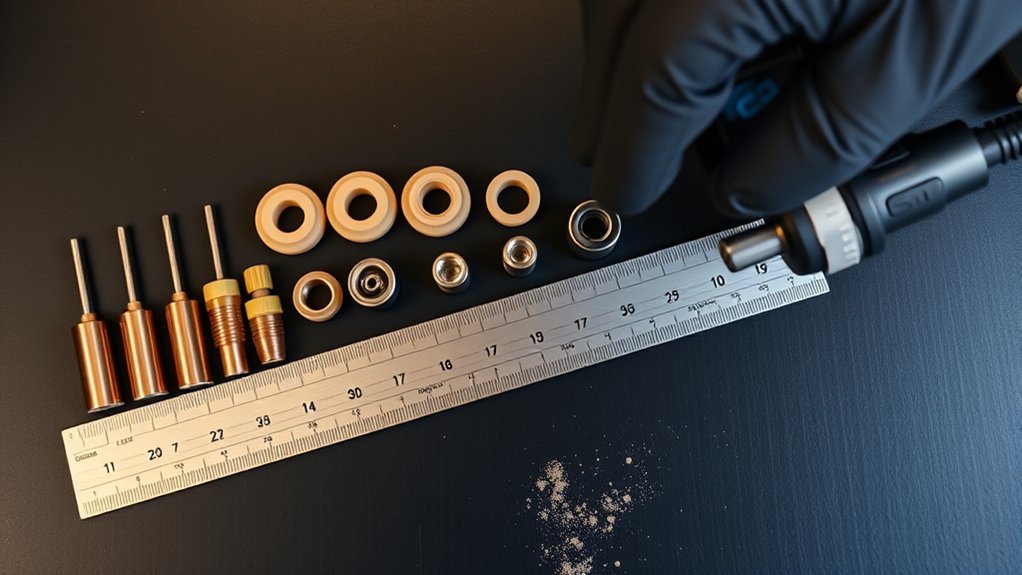
Although no cut happens without a solid arc, electrodes and swirl rings quietly set the arc’s stability and shape on your Powermax125. You’re managing heat, gas vectoring, and wear.
The 30–125 A electrodes stabilize the column; the Hypertherm 220971 ($14.50) is a direct-fit and should be swapped at visible wear to keep energy density tight. Swirl rings, like the 220997 ($30.43), meter and spin gas, protecting the nozzle and extending consumable life—swirl ring importance can’t be overstated.
- Inspect before every shift: check electrode pit depth and discoloration; verify ring ports aren’t chipped, clogged, or heat-distorted.
- Replace proactively: follow amperage history; if arc starts wander or dross rises, prioritize electrode maintenance, then confirm ring integrity.
- Maintain gas quality and flow: leaks or moisture destroy swirl symmetry and overheat the electrode; confirm correct pressure at the torch.
- Service safely and correctly: power down, cool the torch, match part numbers to your Powermax 125, and torque hand-tight without overcompression.
Shields and Retaining Caps: Selection and Maintenance
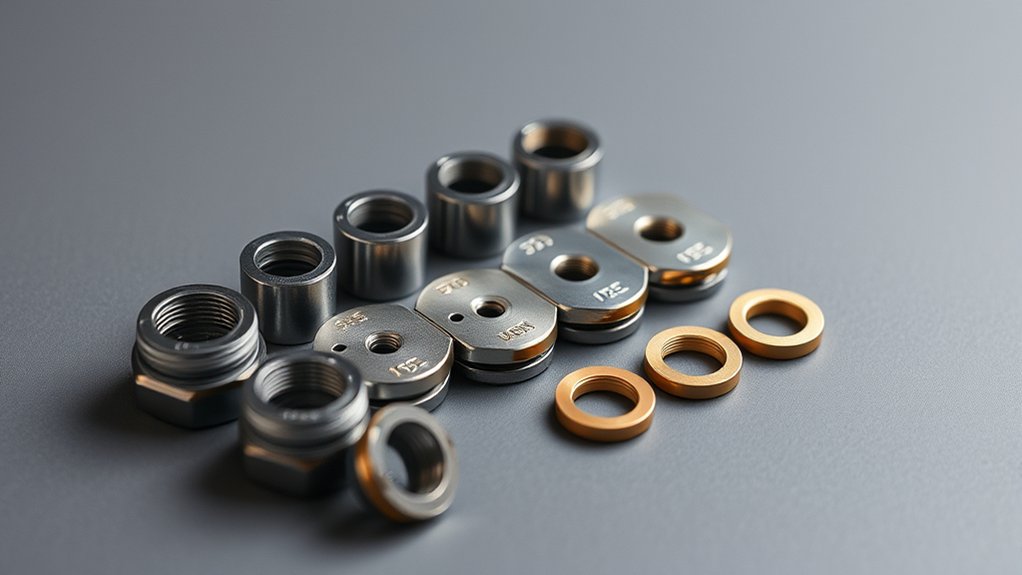
You’ll start by selecting the correct shield for the task—use the 420000 Drag Cutting Shield for handheld cuts or the 220976 Mechanized Shield for mechanized gouging/cutting—then pair it with the 220977 Retaining Cap to secure the nozzle.
You’ll monitor retaining cap lifespan by checking for heat discoloration, thread wear, and distortion that can degrade arc stability and cut quality.
You’ll clean and inspect shields and caps after each shift, removing spatter, verifying orifice integrity and thread fit, and storing them dry to prevent overheating and sustain precision.
Choosing Correct Shields
Two components dictate shield selection and retention integrity on the Powermax125: the shield itself and the retaining cap.
You’ll optimize results by prioritizing shield compatibility and amperage considerations, then validating fit with your torch setup.
For drag work, the Hypertherm 420000 Drag Cutting Shield ($24.72) is purpose-built for the Powermax125, delivering consistent standoff and clean kerfs.
For higher current, the Hypertherm 220976 105/125A Mechanized Shield ($27.90) stabilizes the arc column under load.
Pair either with a correct retaining cap—e.g., Hypertherm 220977 ($51.79)—to secure the nozzle and preserve alignment.
- Match shield to process: drag vs mechanized.
- Align shield rating to set amperage.
- Verify cap-shield stackup and orifice concentricity.
- Inspect, clean, and replace worn components to maintain cut quality.
Retaining Cap Lifespan
With shields matched to process and amperage, focus on the Hypertherm 220977 retaining cap’s service life and inspection cadence.
Cap longevity hinges on retaining cap materials, duty cycle, pierce count, heat load, and alignment—core cutting performance factors. You should baseline lifespan by tracking pierces and arc-on time per job, then correlate to visual condition.
Replace the cap immediately if you see cracks, thread damage, warped geometry, or persistent heat discoloration; once structural integrity shifts, gas flow becomes unstable and cut quality degrades.
Don’t stretch cycles—premature nozzle and shield wear costs more than a timely swap. The Hypertherm 851475 Essential Mechanized Cutting Kit keeps a spare 220977 on hand, minimizing downtime and ensuring you maintain consistent performance under variable cutting conditions and workloads.
Cleaning and Inspection
Start every shift by cleaning and inspecting the Drag Cutting Shield (420000) and Retaining Cap (220977) to lock in consistent cut quality and safety.
Use disciplined cleaning techniques: scrape slag with a plastic pick, follow with a lint-free wipe, then blow dry with oil-free air. Conduct a rapid wear assessment under good lighting; look for ovalized bores, thread nicking, heat tinting, and micro-cracks that compromise nozzle retention and arc stability.
- Verify cap-to-nozzle fit before each use; threads must seat smoothly with no wobble or cross-thread feel.
- Replace the retaining cap at the first sign of excessive wear to prevent nozzle walk and cut taper.
- Clean after each run; remove debris that insulates heat and accelerates erosion.
- Store cleaned parts cool and dry to prevent corrosion and dielectric breakdown.
Wear Indicators and Replacement Intervals
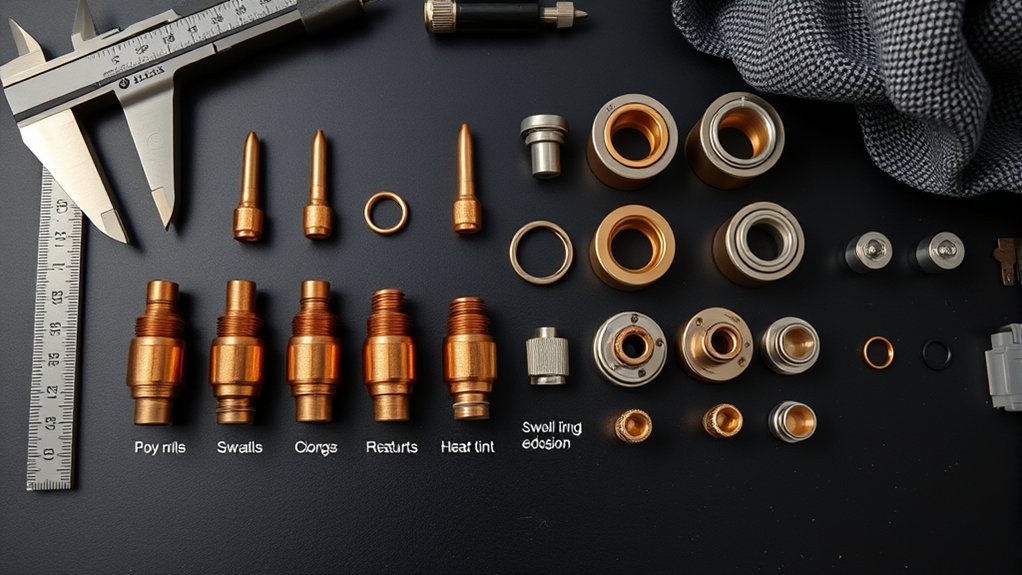
Although the Powermax125 runs hard, its consumables tell you exactly when to intervene: built-in wear indicators on the nozzles and electrodes flag end-of-life to preserve cut quality and arc stability.
Use these wear indicators as your primary go/no-go gauge; don’t wait for erratic kerf or excessive dross to force a changeout. Establish a replacement frequency anchored to duty cycle and material thickness: thicker plate and continuous cutting accelerate erosion, shortening intervals.
Target 5–10 hours of arc-on time for nozzles and electrodes, then verify condition visually and dimensionally. Replace sooner if orifice ovality, pitting, or electrode pit depth reaches the indicator mark.
During each torch cooldown, inspect the drag cutting shield and retaining cap for heat checking, distortion, or thread damage—minor wear there cascades into misalignment and higher cost per cut.
Document hours, material type, and amperage. A routine schedule that pairs indicator checks with logged usage prolongs consumable life and sustains process consistency.
Storage, Handling, and Safety Practices
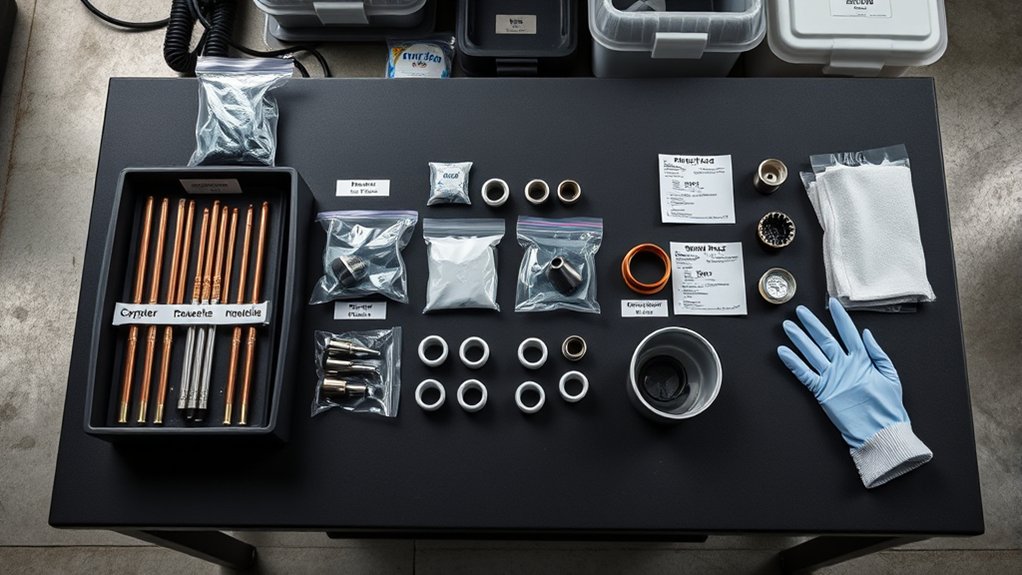
Before you strike an arc, control the variables you can: store Powermax125 consumables in a cool, dry, dust-free cabinet with desiccant, keep them in original packaging until use, and handle parts with clean, dry hands or nitrile gloves to prevent oil and moisture contamination.
Establish storage conditions that minimize humidity swing and airborne grit; silica gel and sealed bins protect copper faces and hafnium inserts from corrosion. Use handling techniques that avoid fingerprints on nozzles, electrodes, and swirl rings; wipe with lint-free cloths if needed.
- 1) Inspect before install: check orifice roundness, electrode pit depth, and O-ring elasticity; reject cracked ceramics and scorched shields.
- 2) Stage by amperage: rack tips and electrodes by rating to prevent mismatches and arc instability.
- 3) Lockout/tagout: de-energize, bleed air, and verify zero pressure before torch servicing; wear eye, hand, and hearing PPE.
- 4) Dispose correctly: segregate spent copper and ceramics; follow local regulations for metal recycling and waste.
Sourcing, Pricing, and Authorized Distributor Guidance
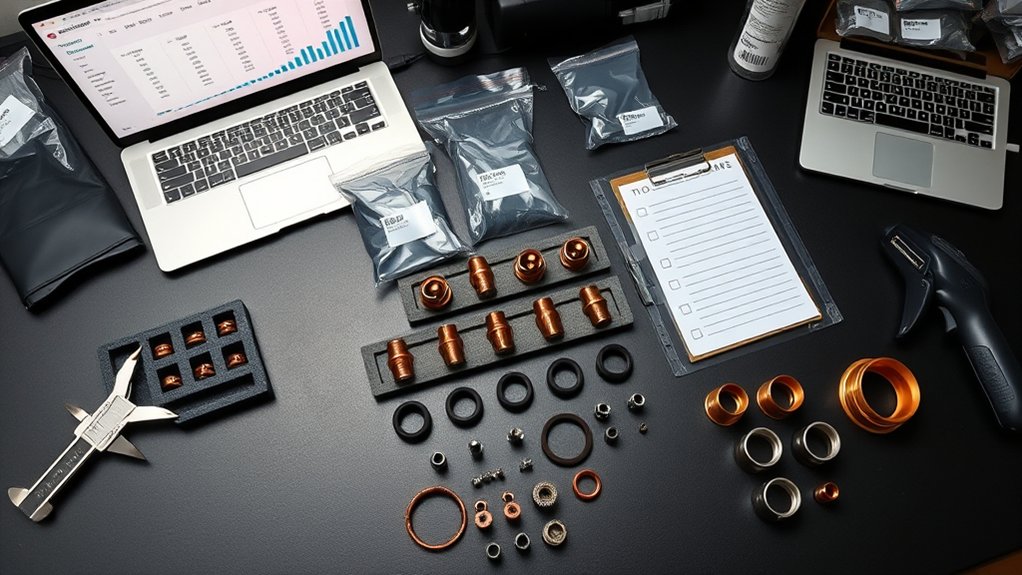
When you source Powermax125 consumables, prioritize authorized Hypertherm distributors to confirm part authenticity, compatibility, and warranty support.
Build sourcing strategies around verified part numbers and published price lists to avoid counterfeit or mismatched components.
Build sourcing around verified part numbers and official pricing to avoid counterfeits and mismatches.
Benchmark pricing: the Powermax125 Essential Mechanized Cutting Consumable Kit (851475) lists at $372.00 but retails at $302.25—an immediate $69.75 savings.
Individual components track similarly: the Hypertherm 420000 Drag Cutting Shield is $24.72; the 220977 Retaining Cap is $51.79.
Validate SKUs against Hypertherm documentation, then cross-check cart totals and discounts before purchase.
Exploit distributor benefits: free standard shipping on orders over $99, rewards points accrual, and technical support for cut charts, torch variants, and amperage/nozzle matchups.
Confirm regional availability; lead times and stock vary by market.
Request traceability (lot numbers) and packaging integrity to confirm quality assurance.
Standardize buys through approved vendors, maintain reorder thresholds based on burn rate, and bundle electrodes, nozzles, and shields to minimize downtime and freight.
Frequently Asked Questions
Can I Mix Third-Party Consumables With Genuine Powermax125 Parts?
You can, but expect variable third party performance and uncertain consumable compatibility. Verify electrode/nozzle geometry, orifice size, flow rates, and metallurgy. Run test cuts, monitor arc stability, inspect wear patterns, and document duty-cycle impacts. Maintain identical part numbers per torch variant.
How Do Ambient Temperature and Humidity Affect Consumable Lifespan?
They directly modulate wear. High temperature accelerates oxidization, arc instability, and consumable degradation; low temperature increases brittleness. High humidity promotes corrosion and conductive contamination. Control ambient conditions: pre-dry air, use desiccant dryers, stabilize shop temperature, monitor dew point, log maintenance intervals.
What Troubleshooting Steps Fix Frequent Double-Arcing Issues?
Time-travel to basics: you fix frequent double-arcing by isolating double arcing causes—inspect electrode pit, nozzle orifice, swirl ring cracks, gas leaks, ground integrity, torch-to-work distance. Apply troubleshooting techniques: clean connections, replace worn parts, verify PSI/CFM, update firmware, recalibrate arc-start.
Are There Recommended Torque Values for Retaining Cap Installation?
Yes. You should follow manufacturer torque specifications for the retaining cap: clean threads, lightly lubricate if specified, hand-seat, then torque with a calibrated wrench to spec. Don’t overtighten; verify alignment, recheck torque after initial thermal cycle.
How Do I Track Consumable Usage for Job Costing and Inventory?
Implement consumable tracking with serialized tips/nozzles, log pierces, arc-on time, and amperage per job. Use barcode/RFID scans at changeout, decrement inventory, and post usage to job costing. Automate via CMMS/ERP integration; audit scrap, variance, and cost-per-cut KPIs.
Conclusion
You’ve now got the kit’s parts, specs, and maintenance cadence dialed in. If you think OEM consumables cost more, consider the total cost of cut: off-spec nozzles reduce energy density, widen kerf, and spike dross rework—your per-foot cost rises fast. Stick to amperage-matched nozzles, verify O-ring integrity, and monitor electrode pit depth. Seat components clean and dry, torque retaining caps per spec, and rotate stock. Source from authorized distributors to lock in traceability, uptime, and cut quality.