Disclosure: As an Amazon Associate, we earn from qualifying purchases. If you click a link on this page and make a purchase, we may receive a small commission at no extra cost to you.
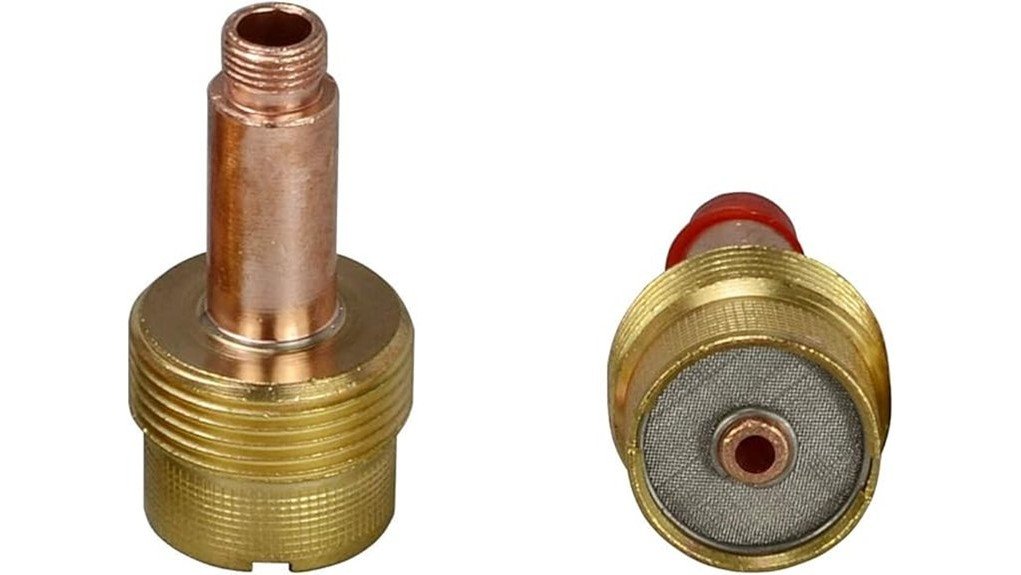
Choosing a TIG gas lens part is mostly a compatibility decision. A well-made collet body will not help if its electrode size, torch threads, cup, collet, or insulator does not match the rest of your torch assembly. The RIVERWELD TIG Gas Lens Collet Bodies 995795 are two copper, large-diameter gas lens bodies listed for compatible 17, 18, and 26-style TIG torches and 1/8-inch tungsten. They can provide smoother shielding gas coverage and useful electrode extension, but you need to confirm every front-end part before ordering.
Quick Verdict
Rating: Recommended with caveats, 8/10
Best For: TIG welders with a verified 17, 18, or 26-style torch setup that accepts a 1/8-inch large-diameter gas lens and matching consumables.
Bottom Line: The RIVERWELD 995795 two-pack is a practical replacement or upgrade when you need broader, smoother shielding gas coverage around 1/8-inch tungsten. Its main drawback is the need to match the gas lens, collet, cup, gasket or insulator, and torch head as one complete system.
| Specification | Detail |
|---|---|
| Brand | RIVERWELD |
| Reference number | 995795 |
| Product type | Large-diameter TIG gas lens collet bodies |
| Package quantity | Two gas lens collet bodies |
| Material | Copper |
| Gas lens size | 1/8 inch, 3.2 mm |
| Tungsten size | Made for a matching 1/8-inch, 3.2 mm collet and tungsten setup |
| Listed torch families | QQ300, PTA, DB, SR, WP, and CK 17, 18, and 26-style TIG torches, subject to exact model verification |
| Collet family | Compatible 10N-series collet sized for 1/8-inch tungsten |
| Cup compatibility | Seller information references 53N, 57N, and 54N-series large-diameter cups. Confirm the exact cup part number for your assembly. |
| Insulator note | Detailed seller information states that a compatible 54N63 large-diameter gas lens insulator is required. |
| Primary benefit | Diffuses shielding gas to reduce turbulence and provide broader coverage around the tungsten and weld area |
| Package note | The listing is for the gas lens bodies. Do not assume cups, collets, tungsten, back caps, or an insulator are included unless the seller package details state otherwise. |
What Is the RIVERWELD TIG Gas Lens Collet Body 995795?
The RIVERWELD 995795 is a large-diameter gas lens collet body for a compatible TIG torch front end. The copper body holds the collet and contains a screen or diffuser that spreads shielding gas more evenly than a basic collet body. This two-piece package is sized for a 1/8-inch, or 3.2 mm, tungsten assembly.
A smoother gas pattern can reduce turbulence as argon leaves the cup. That broader coverage can let you use more electrode extension for better visibility or access, provided your cup size, gas flow, torch angle, and surrounding air movement remain suitable.
This is not a complete consumable kit. You still need the correct collet, ceramic cup, insulator, tungsten, and torch parts for your exact setup.
Key Takeaways
- The package contains two copper RIVERWELD 995795 large-diameter gas lens collet bodies.
- The 1/8-inch, 3.2 mm size is intended for a matching 1/8-inch tungsten and collet setup.
- The seller lists compatibility with several QQ300, PTA, DB, SR, WP, and CK 17, 18, and 26-style torch families.
- A compatible 10N-series collet and large-diameter cup system are required.
- Seller descriptions do not use one consistent cup-series label, so you should compare exact cup and insulator part numbers.
- A gas lens can improve shielding coverage, but it cannot correct contaminated tungsten, dirty metal, leaks, drafts, or unsuitable welding settings.
Before You Buy: Do not order by torch number alone. Verify the torch model, thread pattern, 1/8-inch collet, cup part number, and required gas lens insulator. Seller information references more than one cup series, and the detailed description states that a 54N63 large-diameter insulator is required.
Who Should Buy It?
Best For
- Welders with a verified 17, 18, or 26-style torch that accepts the 995795 large gas lens pattern.
- Users running 1/8-inch tungsten with the matching 10N-series collet and large-diameter cup assembly.
- Welders who need broader shielding coverage or more electrode extension for visibility and access.
Skip If
- Your torch uses a different thread pattern, tungsten size, cup family, or small-diameter gas lens system.
- You need a complete kit with cups, collets, insulators, back caps, and tungsten included.
- You cannot identify the part numbers already installed on your torch.
Fit and Compatibility
Compatibility is the deciding factor for this product. RIVERWELD lists QQ300, PTA, DB, SR, WP, and CK 17, 18, and 26-style torch families, but those names cover several configurations and replacement-part systems. A torch that looks similar is not enough proof that the threads, heat shield, insulator, and cup will fit.
The 995795 part is the 1/8-inch size. Your tungsten and collet must also be 1/8 inch, or 3.2 mm. A smaller collet cannot clamp the tungsten correctly, while the wrong gas lens may not seat against the torch head or insulator.
Cup compatibility deserves extra attention. The seller’s short compatibility text names 57N and 53N ceramic cups, while its detailed product description references 54N-series alumina cups and a 54N63 large-diameter insulator. Check the exact cup and insulator part numbers instead of relying only on a series name.
Gas Flow and Shielding Coverage
A standard collet body releases shielding gas through several openings near the tungsten. A gas lens adds a diffuser screen that straightens and spreads the flow before it leaves the cup. The goal is a broader, less turbulent shielding pattern around the electrode and molten puddle.
That coverage can help when you need extra tungsten stick-out for a corner, fillet, tube joint, or area where a short electrode position blocks your view. It may also help reduce discoloration or oxidation caused by poor coverage, but only when the rest of the setup is correct.
Do not treat a gas lens as a reason to increase argon flow automatically. Excessive flow can create turbulence and draw surrounding air into the shielding stream. Start with the settings recommended for your torch, cup, material, and welding position, then test the result on scrap.
Build and Package Details
The two collet bodies are made from copper and use the large-diameter 995795 design. Copper is common in TIG torch consumables because it conducts heat and electrical current, but the part can still wear from heat cycles, damaged threads, contamination, and repeated tightening.
The package is focused on the two gas lens bodies. Cups, collets, tungsten electrodes, back caps, gaskets, and the large-diameter insulator should be treated as separate requirements unless the current package description specifically says they are included.
This focused package makes sense when you already own the matching consumables or need direct replacements. A complete gas lens kit is usually easier for a first-time conversion because the supplier has grouped the cup, collet, insulator, and lens components.
Installation and Setup
Let the torch cool, switch off the welding power source, and stop shielding gas flow before changing front-end parts. Follow the instructions for your welder and torch, especially when the torch is connected to a water cooler or remote control.
Remove the cup and existing collet body, then inspect the torch-head threads and sealing surfaces. Dirt, damaged threads, or a missing insulator can prevent the new gas lens from seating correctly. Install the compatible insulator first when your assembly requires one, followed by the 995795 gas lens, matching 10N collet, 1/8-inch tungsten, and correct large-diameter cup.
Thread each part by hand. Stop if the gas lens binds, sits at an angle, or requires force. Ceramic cups can crack from overtightening, and forced metal threads can damage the torch head.
Setup Tips Before Your First Weld
- Compare part numbers: Check the markings or documentation for your old gas lens, cup, collet, and insulator before ordering replacements.
- Use matching 1/8-inch parts: The gas lens, collet, and tungsten size must agree.
- Check for leaks: After assembly, restore gas flow and inspect the torch connections according to the manufacturer’s instructions.
- Keep the diffuser clean: Do not install a lens with visible debris, heavy oxidation, or a damaged screen.
- Test on scrap: Confirm arc starts, gas coverage, tungsten clamping, and cup clearance before welding a finished part.
- Control drafts: Fans, open doors, and outdoor wind can overpower the shielding pattern, even with a large gas lens.
Pro Tip: Photograph your assembled torch and the part numbers on its current consumables before taking it apart. The photo gives you a reference for the correct order and makes it easier to compare replacement parts.
Compatibility and Setup Safety
Never install or adjust torch consumables while the welding system is energized. Close or stop the gas supply as directed by your equipment instructions, allow hot parts to cool, and wear suitable eye and hand protection when inspecting recently used components.
A loose collet body can affect tungsten clamping, electrical contact, and shielding gas delivery. A missing or incorrect insulator may also allow poor seating or unwanted contact between parts. Stop using the assembly if the cup will not tighten correctly, the tungsten moves during welding, gas leaks are present, or the lens threads appear damaged.
Gas lens performance does not replace normal TIG safety. Use suitable ventilation, welding PPE, clean base material, and the procedures recommended for the metal and shielding gas you are using.
How It Performs in Real Use
For Routine Shop Welding
On a compatible torch, the large gas lens can create a more forgiving shielding envelope than a basic collet body. This may help you maintain coverage through small changes in torch angle while practicing filler timing and puddle control. The larger front-end assembly may feel bulky in tight spaces, however.
For Joints That Need More Electrode Extension
The 995795 design is most useful when better visibility or joint access requires the tungsten to extend farther beyond the cup. A gas lens can support that extension by producing a straighter shielding stream. The practical limit still depends on cup size, gas flow, joint shape, drafts, and material sensitivity.
For Aluminum TIG Welding
A compatible gas lens can be used as part of an aluminum TIG setup. Aluminum remains sensitive to oxide contamination, poor cleaning, unsuitable tungsten preparation, drafts, and incorrect AC settings. The lens supports shielding coverage, but it does not replace proper preparation or machine setup.
For Stainless Steel and Heat-Sensitive Work
Broader shielding coverage may help when appearance and oxidation control matter, including some stainless-steel work. Cup size, travel speed, heat input, gas flow, and post-flow remain important. Use the finished weld color and tungsten condition as clues, then adjust one setup variable at a time.
Maintenance and Cleaning
Inspect the gas lens whenever you replace tungsten or remove the cup. Look for damaged threads, a loose or distorted screen, embedded debris, discoloration, and contamination that could restrict gas flow.
Clean light surface debris only with a method suitable for TIG torch consumables. Do not drive wire, drill bits, or sharp tools through the diffuser screen because they can damage its shape and change the gas pattern.
Replace the collet body if its threads no longer engage smoothly, the screen is damaged, the tungsten will not clamp securely, or gas coverage becomes inconsistent after you have ruled out leaks and incorrect settings. Keeping a second lens from the two-pack clean and stored in a sealed parts container gives you a useful replacement for troubleshooting.
Pros and Cons
Pros
- Two copper 995795 gas lens bodies are included.
- Designed for a clearly identified 1/8-inch, 3.2 mm tungsten size.
- Can provide smoother, broader shielding gas coverage than a basic collet body.
- May support additional electrode extension for visibility and joint access.
- Listed for several widely used 17, 18, and 26-style torch families.
Cons
- Seller descriptions are not fully consistent about the compatible cup series.
- The package is not a complete conversion kit and may require a separate 54N63 insulator, cup, collet, and tungsten.
- The large-diameter assembly can be bulkier than a standard or stubby torch front end.
Is It Worth the Price?
The RIVERWELD 995795 is worth considering when you need two replacement large-diameter gas lenses and already own the rest of the matching torch assembly. The two-piece package also gives you a spare that can be kept clean for maintenance or troubleshooting.
The value is weaker when you still need to buy the insulator, cups, collets, and tungsten separately. In that situation, compare the total cost and compatibility risk with a complete gas lens kit made for your exact torch model.
This product offers the most value to an experienced TIG user who can identify consumable part numbers. It is less convenient for a new welder who only knows that the torch is described as a 17, 18, or 26 style.
How It Compares to Alternatives
A standard collet body has a smaller, simpler front end and may be better for general work where extra electrode extension is unnecessary. A stubby gas lens setup is worth comparing when access is limited and you want the torch head to remain compact.
A complete large-diameter gas lens kit is the safer alternative when you are converting a torch for the first time. It usually groups the lens, insulator, cups, and collets, which reduces the chance of combining incompatible parts. The RIVERWELD two-pack makes more sense when you already know that reference number 995795 fits your existing setup.
Frequently Asked Questions
Will the RIVERWELD 995795 fit my TIG torch?
The seller lists several QQ300, PTA, DB, SR, WP, and CK 17, 18, and 26-style torch families. You should still verify the gas lens reference number, thread pattern, insulator, cup, and collet for your exact torch model.
What tungsten and collet size does the 995795 gas lens use?
This gas lens is the 1/8-inch, or 3.2 mm, size. Use a matching 1/8-inch tungsten and compatible 10N-series collet rather than mixing it with a smaller electrode assembly.
Which ceramic cup series should I use?
Seller information references 53N and 57N cups in one area and 54N-series cups in its detailed copy. Compare exact cup part numbers with your gas lens and insulator instead of ordering from the series name alone.
Do I need a separate gas lens insulator?
The detailed seller description states that a 54N63 large-diameter gas lens insulator is required. Check whether your torch already has the correct insulator because it is not clearly listed as part of this two-piece package.
Can this gas lens help produce cleaner TIG welds?
It can provide broader and less turbulent shielding coverage when every component fits correctly. Clean welds still depend on uncontaminated tungsten, clean material, leak-free gas delivery, suitable settings, and protection from drafts.
Can I use the RIVERWELD 995795 for aluminum?
You can use a compatible gas lens as part of an aluminum TIG setup. The lens does not replace proper oxide removal, suitable tungsten preparation, correct AC settings, shielding gas control, and clean filler metal.
What comes in the package?
The listing identifies a two-pack of 995795 gas lens collet bodies. Do not assume that cups, collets, tungsten electrodes, back caps, gaskets, or the required insulator are included unless the current seller details confirm them.
When should I replace a gas lens collet body?
Replace it when the threads are damaged, the diffuser screen is loose or distorted, the tungsten will not clamp securely, or gas coverage remains uneven after checking for leaks and setup errors. Do not force a worn lens into the torch head.
The Bottom Line
The RIVERWELD TIG Gas Lens Collet Bodies 995795 are a sensible 8/10 choice for welders who have confirmed a compatible torch, 1/8-inch tungsten and collet, large-diameter cup, and required insulator. Their main strength is smoother, broader shielding coverage, while their main limitation is a front-end compatibility stack that must be checked part by part.
Buy them as replacements or spares for a known 995795 setup. Skip them in favor of a complete torch-specific kit when you cannot verify your cup and insulator part numbers.
Ready to Buy?
Confirm your torch, collet, cup, and insulator part numbers, then check the latest package details.