Disclosure: As an Amazon Associate, we earn from qualifying purchases. If you click a link on this page and make a purchase, we may receive a small commission at no extra cost to you.
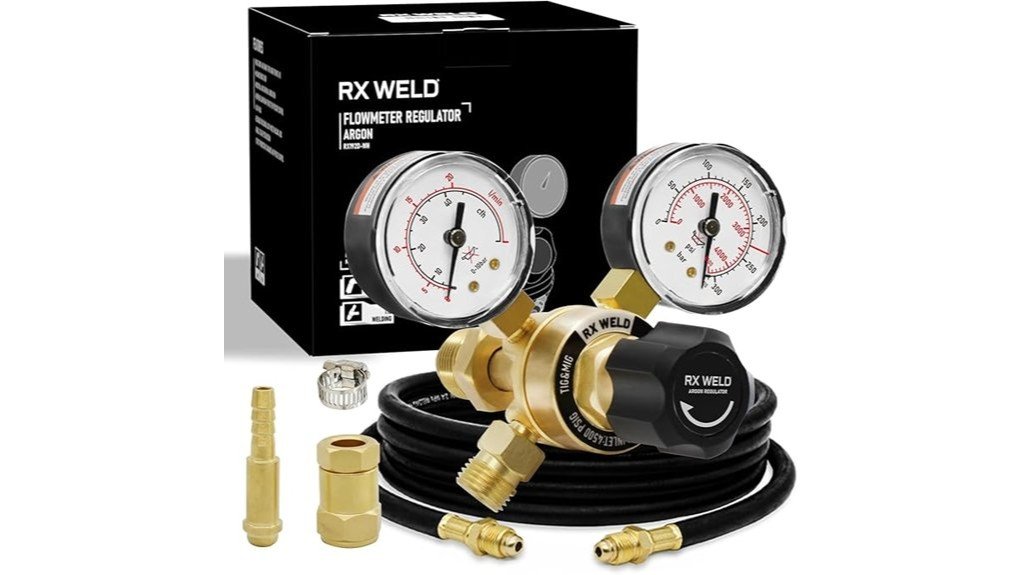
Choosing a shielding gas regulator can be confusing because the wrong connection, flow range, or hose setup can lead to leaks, poor gas coverage, and wasted time. The RX WELD Argon Regulators Gauges are built for welding setups that use Argon, Helium, or compatible CO2 gas arrangements, with a brass regulator body, CGA-580 connection, dual gauges, and a 6.6-foot hose. This review helps you decide whether its 0-40 CFH flow range and included outlet connections fit your MIG, TIG, or light shop setup. It looks strongest for hobby and everyday welding use, but you should skip it if you need a higher flow range, a different cylinder connection, or documented professional calibration.
Quick Verdict
Rating: 8.3/10
Best For: Welders who want a simple CGA-580 shielding gas regulator with a hose included.
Bottom Line: The RX WELD Argon Regulators Gauges offer useful shop value thanks to the brass body, 0-40 CFH flow range, and included 6.6-foot hose. The main tradeoff is that you must verify cylinder fit, outlet fit, and flow needs before buying.
Key Takeaways
- The RX WELD Argon Regulators Gauges are designed for Argon, Helium, and compatible CO2 welding gas setups.
- The regulator uses a brass body, CGA-580 inlet connection, and a 0-4500 PSI inlet gauge.
- The listed flow range is 0-40 CFH, which suits many light MIG and TIG shielding gas jobs.
- The included 6.6-foot hose helps reduce the number of separate parts you need before setup.
- Fit matters. You should confirm your cylinder valve, outlet connector, hose setup, and gas type before buying.
RX WELD Argon Regulators Gauges Specifications
| Specification | Detail |
|---|---|
| Brand | RX WELD |
| Product type | Argon regulator gauges for welding gas control |
| Body material | Brass regulator body |
| Compatible gases listed | Argon, Helium, and CO2 when your cylinder and connection setup match |
| Inlet connection | CGA-580 |
| Inlet pressure gauge range | 0-4500 PSI |
| Flow range | 0-40 CFH |
| Outlet connectors listed | 9/16 male and 5/8 female |
| Included accessory | 6.6-foot hose |
| Best use | Light shop, garage, MIG, TIG, and shielding gas control where the connection and flow range fit your setup |
What Is the RX WELD Argon Regulators Gauges Set?
The RX WELD Argon Regulators Gauges set is a welding gas control accessory made to help you manage shielding gas flow from a compatible cylinder to your welding setup. It is built around a brass regulator body, a CGA-580 inlet, dual gauge design, and a listed 0-40 CFH flow range.
The main purpose is simple: it helps you control gas flow so your weld area receives steadier shielding gas coverage. That matters because inconsistent gas flow can cause porosity, contamination, extra spatter, or wasted gas. The included 6.6-foot hose also makes the package more practical if you do not already have a compatible hose ready to install.
Before You Buy: Check your cylinder valve and welder connection before ordering. The article-supported inlet is CGA-580, so do not assume it will fit every CO2 cylinder, every adapter, or every machine without confirming your setup first.
Who Should Buy It?
Best For
- Garage welders who need a CGA-580 regulator for Argon or Helium setups.
- Hobby MIG or TIG users who can work within a 0-40 CFH flow range.
- Buyers who want a regulator package that already includes a 6.6-foot hose.
Skip If
- Your cylinder does not use a compatible CGA-580 connection.
- You need a higher flow range than 0-40 CFH for your welding process.
- You need a regulator with verified professional calibration paperwork.
Design and Build Quality
The strongest build detail in the article is the brass regulator body. Brass is commonly used in gas fittings because it is sturdy, workable, and suitable for many pressure-control parts. For you, the benefit is a more durable feel than a light-duty plastic-heavy setup.
The regulator also uses gauges to help you monitor cylinder pressure and control shielding gas flow. The 0-4500 PSI inlet gauge gives you a wide reading range for high-pressure cylinders, while the 0-40 CFH flow range helps you set gas output for many common welding tasks.
Flow Control and Gauge Use
The listed 0-40 CFH flow range is practical for many light and general welding jobs. It gives you enough adjustment room for smaller welds, common shop tasks, and basic shielding gas control. If your welding procedure requires more flow, this range may feel limiting.
You should also treat the gauges as setup aids, not as a replacement for good welding practice. Gas flow depends on your process, cup or nozzle size, wind exposure, joint position, and gas type. Start with your welder, filler, and gas supplier guidance, then adjust carefully based on weld quality.
Fit and Compatibility
The article lists compatibility with Argon, Helium, and CO2, along with a CGA-580 inlet connection. That makes it most straightforward for Argon and Helium cylinders that match this fitting. CO2 setups can vary, so you should confirm the actual cylinder valve and any adapter needs before assuming fit.
The listed outlet connectors are 9/16 male and 5/8 female. This matters because the cylinder side is only part of the setup. Your hose, welder, flowmeter connection, or adapter also needs to match safely and securely.
Hose and Setup Convenience
The included 6.6-foot hose is useful if your welder sits near the gas cylinder but not directly beside it. It gives you more placement flexibility than a regulator-only purchase. It can also reduce the need to shop for a hose separately, as long as the included hose fits your machine and use case.
The hose length is not a reason to stretch the setup across a busy floor or leave the cylinder unsecured. Keep the cylinder upright and secured, route the hose away from sparks and sharp edges, and avoid creating a trip hazard around your welding area.
Compatibility and Safety
Gas regulators work with compressed cylinders, so fit and safety matter more than convenience. Before use, inspect the threads, gauge faces, hose, and fittings for visible damage. Do not use the regulator with oxygen, fuel gases, or any gas not supported by the product details and your welding setup.
The original article notes a built-in pressure relief mechanism, which is a useful safety feature for reducing over-pressurization risk. Even so, you should still follow the product instructions, secure the cylinder, open valves slowly, and check for leaks with an approved leak-check method before welding.
Pro Tip: Before your first weld, install the regulator, pressurize the system slowly, and check every threaded connection with a proper leak-check solution. Fix leaks before striking an arc.
How It Performs in Real Use
For Garage Welding
For a small garage setup, the RX WELD regulator is easy to understand because the key controls are familiar: cylinder pressure, flow adjustment, outlet connection, and hose routing. The 0-40 CFH range gives you enough room for many common shielding gas settings without making the setup feel overly complex.
For TIG Welding
For TIG work, steady gas coverage is important because the weld puddle and tungsten need protection from air contamination. This regulator can make sense if your Argon cylinder uses the right connection and your needed flow rate falls within the listed range.
For MIG Welding With Shielding Gas
For MIG welding, the regulator is most useful when you are running a compatible shielding gas cylinder and want simple gas flow control. It may work well for light fabrication, repairs, and practice welds, but you should confirm your machine-side fitting before buying.
For Occasional Shop Use
If you weld only a few times per month, the included hose and simple gauge layout can be a benefit. The main caution is storage. Keep the regulator and hose away from moisture, grinding dust, heavy impacts, and places where the gauges can be bumped.
Setup Tips Before First Use
- Confirm your cylinder uses the correct CGA-580 connection before attaching the regulator.
- Check that the outlet connector and hose match your welder or flow setup.
- Make sure the cylinder is upright, capped when moved, and secured before use.
- Inspect the regulator body, gauges, hose, and fittings for damage before pressurizing.
- Open the cylinder valve slowly and stand to the side of the gauges during initial pressurization.
- Use an approved leak-check solution on fittings before welding.
- Set gas flow based on your welding process, gas type, nozzle size, and work conditions.
Customer Feedback and Ratings
Buyer feedback in the supplied article is mostly positive, with users praising reliability, durability, and ease of use. That kind of feedback makes sense for a product that solves a basic shop need without many extra controls.
The most useful negative feedback involves calibration concerns, a limited pressure or flow range, and occasional leak reports. Those are worth taking seriously. If exact flow accuracy is critical to your work, or if you weld in a professional environment, you may want to compare this regulator with a higher-end option.
| Feedback Theme | What It Means for You |
|---|---|
| Reliable and durable | Good sign if you want a basic regulator for regular shop use. |
| Easy to use | Helpful if you want a simple setup without extra controls. |
| Calibration concerns | Worth noting if precise flow accuracy matters for your work. |
| Leak reports from some buyers | You should check fittings carefully before welding. |
Pros and Cons
Pros
- Brass regulator body gives the unit a sturdy, shop-ready feel.
- CGA-580 inlet fits compatible Argon and Helium cylinder setups.
- 0-40 CFH flow range works for many light welding tasks.
- 6.6-foot hose is included, which adds setup value.
- 9/16 male and 5/8 female outlet connectors improve setup flexibility.
Cons
- 0-40 CFH may not be enough for every welding process or gas setup.
- CGA-580 compatibility does not mean it fits every CO2 cylinder.
- Some user feedback points to calibration concerns and possible leaks.
Is It Worth the Price?
The RX WELD Argon Regulators Gauges look like a strong value for the price if you need a basic regulator package with a hose included. You get the core pieces most buyers care about: brass body, gauges, CGA-580 inlet, outlet connectors, and a listed 0-40 CFH flow range.
It is worth considering if you need simple gas control for light shop or hobby welding and your cylinder connection matches. It is not the best fit if you need premium gauge accuracy, a wider flow range, or a regulator intended for heavy industrial use.
How It Compares to Alternatives
Compared with premium regulators from brands such as Victor or Harris, the RX WELD model is more value-focused. Those higher-end alternatives may be better if you need professional-grade durability, service support, or highly trusted calibration.
Compared with bare regulator-only options, this RX WELD package has an advantage because it includes a 6.6-foot hose. That makes it a smarter buy if you need both the regulator and hose, but only if the included fittings match your setup.
Frequently Asked Questions
Does the RX WELD Argon Regulator fit every gas cylinder?
No. The article-supported inlet connection is CGA-580, so you should confirm your cylinder valve before buying. Do not assume it fits every CO2 cylinder or every welding gas setup without checking.
What gases can you use with this regulator?
The supplied article lists Argon, Helium, and CO2 compatibility. You should only use gases that match the regulator, cylinder connection, and your welding process.
Is 0-40 CFH enough for welding?
For many light MIG and TIG jobs, a 0-40 CFH flow range can be enough. It may not be enough for every process, large nozzle, windy work area, or specialized shielding gas setup.
Does it come with a hose?
Yes. The article states that the package includes a 6.6-foot hose. Before setup, confirm the hose and outlet fittings match your welder or gas line connection.
Is professional calibration required?
Professional calibration is not listed as a required step in the supplied article. If you need exact flow accuracy for production work, professional inspection or a higher-end calibrated regulator may be worth considering.
Can you use this regulator outdoors?
The original article does not list weather-resistant features. If you use it outside, protect the regulator from rain, dirt, and impact, and remember that wind can affect shielding gas coverage.
Who should skip this RX WELD regulator?
Skip it if your cylinder does not use CGA-580, your process needs more than 0-40 CFH, or you need documented professional calibration. You should also compare other options if leak-free precision is critical for your work.
The Bottom Line
The RX WELD Argon Regulators Gauges are a good fit if you want a simple, value-focused CGA-580 welding gas regulator with a brass body and included 6.6-foot hose. The main strengths are the straightforward setup and useful 0-40 CFH flow range, while the main limitation is compatibility and accuracy confidence. Skip it if your cylinder connection, flow needs, or professional calibration requirements do not match.