Disclosure: As an Amazon Associate, we earn from qualifying purchases. If you click a link on this page and make a purchase, we may receive a small commission at no extra cost to you.
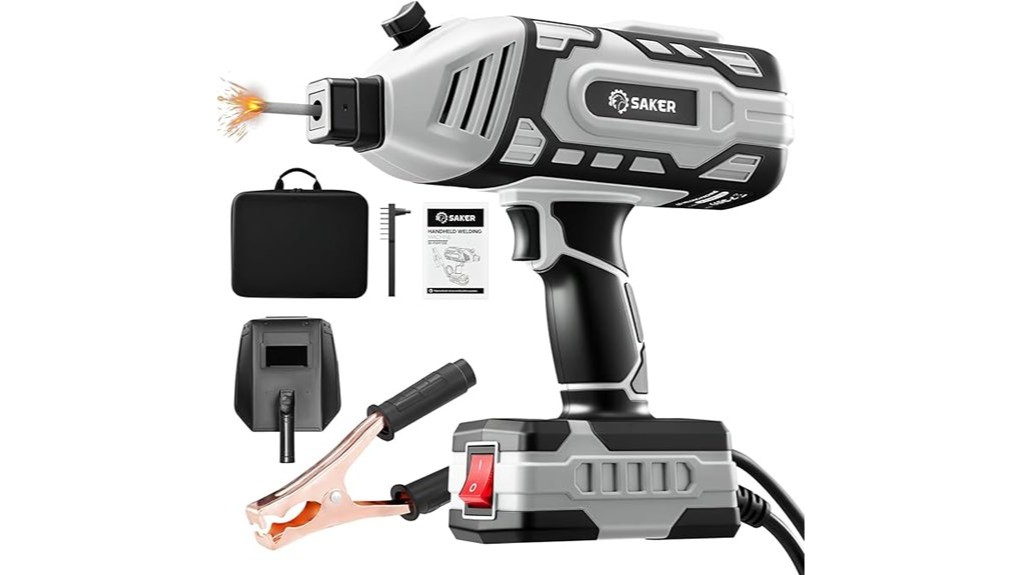
Small steel repairs do not always justify hauling out a full-size welding machine, but a compact welder still needs enough control to produce a usable arc. The Saker Portable Welding Machine is a handheld 110V stick welder made for occasional repairs, home projects, and mobile work on carbon steel and iron. Its main strengths are a 3.3-pound tool body, a 20 to 120 amp range, and simple five-step current control. The tradeoffs are equally clear: electrodes are not included, the current dial offers limited precision, and this is not a MIG, TIG, or heavy-production machine.
Quick Verdict
Rating: 8.2/10, Recommended with caveats
Best For: DIYers who need a highly portable 110V stick welder for occasional steel and iron repairs.
Bottom Line: The Saker is easy to carry and straightforward to set up for small repair jobs. Its basic five-level control and tool-only package make it less suitable for demanding fabrication or buyers who want a complete starter kit.
Key Specifications
| Specification | Detail |
|---|---|
| Brand | Saker |
| Model | GJ76085-X56074 |
| ASIN | B0DMNKPP2F |
| Product type | Handheld arc stick welder |
| Input power | 110V AC |
| Output range | 20 to 120 amps |
| Current control | Five-level adjustment knob |
| Electrode range | 3/32 to 1/8 inch (2.5 to 3.2 mm) |
| Listed tool weight | 3.3 pounds |
| Amazon technical item weight | 6.54 pounds |
| Listed tool size | About 9.8 x 9.45 inches |
| Package dimensions | 15.2 x 12.17 x 4.8 inches |
| Color | Grey |
| Core technology | IGBT inverter, hot start, arc compensation |
| Cooling and protection | 360-degree ventilation and overheating protection |
| Intended metals | Carbon steel and iron |
| Package note | Electrodes are not included |
What Is the Saker Portable Welding Machine?
The Saker model GJ76085-X56074 is a compact stick welder that plugs into 110V AC power. Instead of a separate electrode holder connected to a box-style machine, the main welding controls are built into a handheld body. That design reduces the amount of equipment you need to carry for a quick repair.
The machine uses IGBT inverter technology and offers five current settings across a listed 20 to 120 amp range. Saker positions it for carbon steel and iron, with support for rods from 3/32 to 1/8 inch. It makes the most sense as an occasional repair tool, not as a replacement for a full-size shop welder with finer controls, a documented high duty cycle, or multiple welding processes.
Who Should Buy It?
Best For
- Homeowners making occasional repairs to steel gates, brackets, frames, or similar parts.
- DIYers who value a lightweight tool that stores in a small garage or work vehicle.
- Buyers who already own welding PPE and suitable stick electrodes.
Skip If
- You need MIG, flux-core, conventional TIG, or routine aluminum welding.
- You expect fine digital amperage control for repeatable production work.
- You need a complete kit with electrodes, helmet, and cleanup tools included.
Before You Buy: This listing does not include welding electrodes, and it does not state a duty-cycle rating in the main specifications. Plan for the cost of rods and avoid treating this compact unit like an all-day fabrication welder.
Key Takeaways
- The listed tool weight is 3.3 pounds, which is the main reason to choose it over a larger box-style welder.
- The 20 to 120 amp range is controlled through five fixed levels, making adjustment simple but less exact than a digital dial.
- The listing states compatibility with 3/32 to 1/8-inch electrodes and includes hot-start technology to support easier arc ignition.
- IGBT inverter control and arc compensation are intended to improve current stability and reduce spatter on carbon steel and iron.
- Built-in ventilation and overheating protection help manage heat, but they do not replace sensible work cycles and safe operating habits.
Arc Performance and Current Control
The Saker uses an IGBT inverter to regulate output from a compact 110V platform. The listing also describes high no-load voltage, arc compensation, stable current output, and reduced spatter. Those features are aimed at two common problems with small stick welders: getting the rod to strike cleanly and keeping the arc from feeling erratic.
The five-level knob keeps operation simple. You do not need to navigate menus or tune several settings before a repair. The limitation is that five steps cannot match the precision of a welder with one-amp digital adjustment, so finding the best setting for a specific rod and metal thickness may take practice on scrap material.
Output Range and Electrode Compatibility
The listed output spans 20 to 120 amps, and the machine accepts electrodes from 3/32 to 1/8 inch (2.5 to 3.2 mm). That combination covers common repair-oriented stick work, but the correct current depends on the electrode type, diameter, joint, and base metal. Follow the electrode maker’s recommended amperage range rather than choosing a setting only by feel.
Saker markets this model for carbon steel and iron. It is not presented as an aluminum-focused machine, and it does not offer MIG wire feeding or a conventional TIG torch setup. Buyers who need thin-sheet control, clean aluminum work, or multiple processes should compare a different class of welder.
Design, Weight, and Portability
The 3.3-pound listed body weight makes the Saker easy to carry between a garage, shed, farm building, or repair location. Its listed body size is about 9.8 x 9.45 inches, so it takes up less storage space than a typical box-style inverter welder. The handheld layout can also help when the repair area is awkward to reach.
Amazon’s technical table lists a 6.54-pound item weight and package dimensions of 15.2 x 12.17 x 4.8 inches. That higher number likely reflects how the packaged item is recorded rather than the bare tool alone. Use 3.3 pounds as the listing’s tool-body figure and 6.54 pounds as Amazon’s technical item-weight figure.
How It Performs in Real Use
Quick Gate and Bracket Repairs
For a loose steel bracket, small gate repair, or similar job, the compact body is the clear advantage. You can bring the welder to the work instead of moving the part to a fixed shop machine. The five settings also reduce setup time when you already know which level works with your rod and material.
Light Garage Fabrication
The 20 to 120 amp range gives you room for basic steel projects, but the stepped control may require trial and error. On thinner material, careful fit-up and heat control matter because stick welding can burn through sheet metal more easily than flux-core MIG or TIG.
Mobile or Backup Use
At 3.3 pounds for the listed tool body, the Saker is practical as a backup welder in a work vehicle or for repairs away from your main bench. You still need appropriate rods, PPE, a safe power source, and cleanup tools, so the machine’s low weight does not represent the total weight of a usable welding kit.
Learning and Occasional Practice
Hot start and simple controls can reduce setup friction for a beginner, but stick welding still requires practice with arc length, travel speed, angle, and electrode selection. The Saker is better viewed as an accessible practice and repair tool than a machine that removes the learning curve.
Setup Tips and Common Mistakes to Avoid
- Match the rod to the job: Use an electrode type and diameter suited to the base metal, joint, and available current range.
- Prepare clean metal: Remove loose rust, paint, oil, and heavy contamination around the joint and grounding point.
- Use a suitable circuit: Connect the 110V welder to a properly rated, grounded circuit that is not overloaded by other high-draw tools.
- Practice before the repair: Test your selected current level on scrap of similar thickness before welding the final part.
- Watch heat buildup: Give the unit time to cool if protection activates or the body becomes unusually hot, and follow any supplied manual.
- Do not weld unknown containers: Never weld on a tank, drum, or closed container unless it has been professionally cleaned and made safe for hot work.
Pro Tip: Keep a small piece of scrap steel with your repair kit. Use it to confirm the current level and arc behavior before touching the actual workpiece.
Safety Features and Reliability
The listing describes 360-degree ventilation, a high-efficiency cooling system, and overheating protection. These features help protect internal components, but they do not establish an unlimited run time. Because the listing does not publish a clear duty-cycle figure in the main specifications, use the machine for sensible repair intervals and allow cooling time as needed.
Wear a properly rated welding helmet, leather gloves, flame-resistant clothing, and suitable footwear. Keep combustible materials away, provide local ventilation, and avoid breathing welding fumes. For authoritative guidance, review the OSHA welding, cutting, and brazing standards and CDC/NIOSH information on welding fumes.
Pros and Cons
Pros
- Listed 3.3-pound tool body is easy to carry and store.
- Runs from 110V AC power for convenient home and garage use.
- 20 to 120 amp output covers a useful range of light repair work.
- Supports 3/32 to 1/8-inch electrodes.
- Hot start, inverter control, ventilation, and overheating protection add practical support.
Cons
- Five current levels provide less tuning precision than a digital amperage control.
- Electrodes are not included, so it is not a complete ready-to-weld package.
- No clear duty-cycle figure or detailed manufacturer warranty term appears in the main listing specifications.
Is It Worth the Price?
The Saker fits the budget-oriented end of the portable stick-welder market. Its value comes from the handheld layout, low listed body weight, 110V input, and useful 20 to 120 amp range. It is worth considering when storage space and mobility matter more than fine control or multi-process capability.
The total cost is higher than the tool price alone because you need compatible electrodes and full welding PPE. Buyers starting from nothing may get better value from a bundled kit, while experienced DIYers who already own rods, a helmet, gloves, and cleanup tools can take fuller advantage of this tool-only package.
How It Compares to Alternatives
A Sakerplus portable welding kit is the more convenient comparison if you want a similar handheld format with rods, a helmet, and a carrying case included. A RILAND 120A 110V portable stick welder uses a more conventional compact-machine layout and adds features such as anti-stick and overload protection, but it is heavier than the Saker’s listed tool body.
The TOOLIOM 135A 110V mini stick welder is worth comparing if you prefer a digital display, anti-stick control, and optional Lift TIG capability. The Saker makes the most sense when your top priority is the light handheld form rather than a fuller accessory package or broader process support.
Frequently Asked Questions
Are welding electrodes included?
No. The Amazon title specifically states that electrodes are not included. Buy rods that match the base metal, joint, and machine’s listed 3/32 to 1/8-inch range.
What size welding rods fit the Saker welder?
The listing states support for electrodes from 3/32 to 1/8 inch, or 2.5 to 3.2 mm. Always check the electrode manufacturer’s amperage guidance before choosing one of the five current levels.
Can it weld aluminum?
The listing focuses on carbon steel and iron, not aluminum. For routine aluminum work, choose equipment designed for the correct aluminum process, filler, shielding, and current type.
Does it run from a standard household outlet?
It is listed as a 110V AC welder. Use a properly grounded, adequately rated circuit and follow the product instructions and local electrical requirements.
Why are two different weights listed?
The feature section lists the compact welder body at 3.3 pounds. Amazon’s technical details list an item weight of 6.54 pounds, which may reflect a different packaged or recorded configuration.
Is this a good welder for beginners?
The five-step knob and hot start make the controls approachable. Stick welding still takes practice, so begin on scrap steel and get qualified instruction when possible.
What accessories should you buy with it?
At minimum, you need suitable electrodes, a welding helmet, leather gloves, protective clothing, and safe footwear. A chipping hammer, wire brush, clamps, and appropriate fire-control equipment also help you prepare and finish repair work safely.
What warranty or return coverage is stated?
Amazon shows a 30-day refund or replacement return window for the listing. The main technical details do not spell out a specific manufacturer warranty term, so review the current product warranty link before purchase.
The Bottom Line
The Saker Portable Welding Machine is a practical choice for DIYers who want a light 110V stick welder for occasional carbon-steel and iron repairs. Its portability, 20 to 120 amp range, and hot-start support are useful strengths, but buyers who need precise controls, included rods, multiple processes, or heavy continuous use should choose a more complete machine.
Ready to Buy?
Check the latest price, package contents, and warranty details before you decide.