Disclosure: As an Amazon Associate, we earn from qualifying purchases. If you click a link on this page and make a purchase, we may receive a small commission at no extra cost to you.
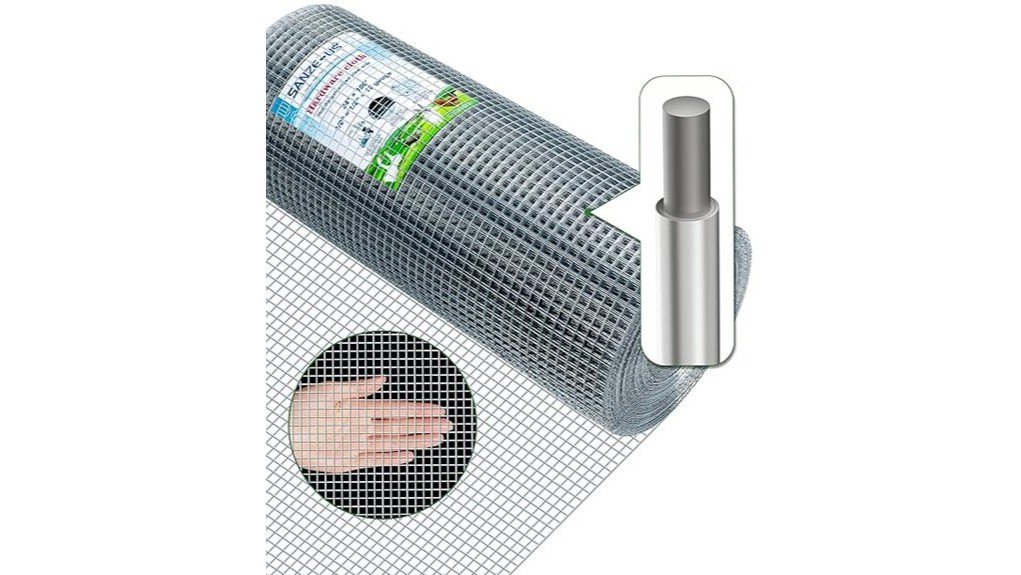
Small pests can ruin garden beds, damage young trees, or slip into coop openings if your barrier has wide gaps or weak wire. The Sanzeus Hardware Cloth gives you a 24-inch by 50-foot roll with 1/2-inch square openings for garden protection, chicken coop panels, rabbit fencing, and plant guards. This review helps you decide where it works well, where it needs reinforcement, and whether the 24-inch height fits your project.
Quick Verdict
Rating: 8/10, Recommended with caveats
Best For: Raised garden beds, chicken coops, tree guards, rabbit barriers, and light-duty outdoor enclosures
Bottom Line: You get tight 1/2-inch mesh, 19-gauge steel, and a double galvanized finish that suits many outdoor protection jobs. The main tradeoff is the 24-inch height, which limits tall fencing unless you stack sections or build a stronger frame.
| Specification | Detail |
|---|---|
| Brand | Sanzeus / SANZEUS |
| Model / ASIN | B0CJF8WDLZ |
| Product Type | Hardware cloth / welded wire mesh roll |
| Design | Roll-format square wire mesh for cutting, wrapping, lining, and framing |
| Dimensions | 24 inches x 50 feet |
| Mesh Size | 1/2 inch x 1/2 inch square openings |
| Wire Gauge | 19 gauge |
| Material | Black annealed steel wire |
| Coating | Double-layer hot-dip galvanized after welding |
| Variant Note | Listing may show 1/2-inch and 1/4-inch mesh variants, so confirm the selected size before checkout |
| Package Note | Seller-stated transparent film wrap and paper box packaging |
| Warranty | Seller-stated 8-year quality guarantee |
| Best Use | Garden beds, chicken coops, rabbit fencing, snake barriers, tree guards, soil screens, and DIY mesh panels |
| Safety Note | Wear gloves and eye protection when cutting because trimmed wire edges can be sharp |
What Is the Sanzeus Hardware Cloth?
The Sanzeus Hardware Cloth is a galvanized welded wire mesh roll made for outdoor barriers and small animal protection. The 1/2-inch square openings help block rabbits, rodents, snakes, squirrels, and other small pests while still allowing airflow and visibility.
This roll is mainly for buyers building garden guards, chicken coop panels, rabbit enclosures, buried barriers, or protective wraps around young trees. Its 19-gauge steel gives it more structure than plastic garden netting, but it still bends enough for DIY shaping around wood frames and posts.
The key feature is the double galvanizing after welding. That process helps protect the weld points, which are often the first areas to corrode on lower-grade wire mesh.
Who Should Buy It?
Best For
- Gardeners lining raised beds or protecting vegetables from small pests
- Chicken coop builders who need airflow plus tighter mesh than standard chicken wire
- DIY users making tree guards, rabbit fencing, cage panels, or small enclosure barriers
Skip If
- You need a tall fence without stacking multiple 24-inch sections
- You need heavy-duty livestock panels or industrial security fencing
- Your area has strong predators and you do not plan to add wood framing or buried edges
Before You Buy: Confirm that the selected Amazon variant is the 1/2-inch, 24-inch x 50-foot version. Some listings may show multiple mesh sizes, and the 24-inch height may not suit full-height perimeter fencing.
Build Quality and Materials
The 19-gauge black annealed steel wire gives this mesh enough stiffness for outdoor projects while staying workable with common cutting tools. You can form it around raised beds, wooden frames, posts, tree trunks, and small cage structures without needing specialty equipment.
The double-layer hot-dip galvanized finish is useful because hardware cloth often fails at weld points first. By galvanizing after welding, the coating helps protect the joined areas as well as the straight wire sections.
This does not make the mesh indestructible. Soil contact, standing water, salt exposure, and constant abrasion can still shorten the lifespan, so good installation matters.
Mesh Size and Pest Protection
The 1/2-inch x 1/2-inch openings are the main reason to choose this product over basic chicken wire. Standard chicken wire has larger openings and a lighter structure, which can let small pests through and may not hold its shape as well over time.
For gardens, the tight spacing works well around raised beds, bulbs, rhizomes, and young plants. For coops, it provides ventilation while reducing gaps around run walls, windows, vents, and lower edges.
For predator-heavy areas, treat it as part of a stronger system. Use a solid frame, overlap seams, bury or apron the lower edge, and check fasteners regularly.
Installation and Setup Tips
You can cut the Sanzeus Hardware Cloth with standard wire cutters, tin snips, or heavy-duty shears. Measure the area first, add extra material for overlaps, then cut the roll slightly larger than the opening so you can fasten it securely.
For wood frames, galvanized fencing staples or screws with washers usually hold better than light staples alone. For temporary positioning, zip ties can keep the mesh in place while you square the panel and tighten the final fasteners.
Pro Tip: Overlap seams by at least a few inches and fasten both layers to the same frame or post. This reduces gaps that small animals can push through.
Safety and Handling Notes
Hardware cloth can have sharp cut ends, especially after trimming it for corners, vents, or curved guards. Wear gloves, long sleeves, and eye protection when unrolling, cutting, and fastening the mesh.
After installation, run your hand near the edges carefully while wearing gloves. Fold, trim, or cover exposed wire ends before animals, children, or pets can reach them.
For chicken coops and pet enclosures, do not rely only on the mesh roll. Secure framing, proper latches, buried edges, and regular inspections all matter for real protection.
How It Performs in Real Use
For Raised Garden Beds
This mesh works well for lining the bottom or sides of raised beds when burrowing animals are a concern. The 1/2-inch openings help protect roots, bulbs, and vegetables while still allowing drainage and soil contact.
For Chicken Coops and Runs
It is a better choice than thin chicken wire for coop vents, lower run walls, and small openings. For larger predators, use it with a sturdy wood frame and secure fasteners rather than stretching it loosely between posts.
For Buried Barriers
You can bury a section vertically or bend it outward as an apron to reduce digging under fences and garden edges. Moist soil can wear down coatings over time, so buried sections need occasional inspection.
For Tree and Plant Guards
The roll format makes it easy to shape around young trees, shrubs, and plant cages. Leave enough space around trunks for growth, and avoid wrapping the wire tightly against bark.
Cleaning, Storage, and Long-Term Care
Once installed, the mesh needs little maintenance, but you should inspect it after storms, animal activity, or seasonal freeze-thaw cycles. Look for loose staples, bent corners, gaps at seams, and areas where soil has exposed or buried the lower edge.
If you have leftover material, keep it rolled, dry, and off the ground. This helps protect the coating and makes the remaining roll easier to use for future repairs or small projects.
Common Mistakes to Avoid
One common mistake is using 24-inch mesh as a full fence without planning for height. It can work as a lower barrier, bed liner, or stacked panel, but it is not tall enough for every enclosure by itself.
Another mistake is leaving seams loose. Small pests often find weak points at corners, overlaps, gates, and the bottom edge, so those areas need the most attention during installation.
Finally, do not install cut edges where animals can rub against them. Fold sharp ends inward, cover them with trim, or place them outside the animal contact area.
Pros and Cons
Pros
- 1/2-inch square openings help block small pests better than standard chicken wire
- 19-gauge steel gives the roll useful strength without making it too hard to shape
- Double galvanized after welding helps protect vulnerable weld points
- 50-foot roll length gives enough material for several small garden or coop projects
- Works for raised beds, poultry runs, tree guards, rabbit fencing, and DIY mesh panels
Cons
- 24-inch height is limiting for tall fence or full enclosure builds
- Cut edges can be sharp and need careful handling
- Predator-heavy setups may need framing, buried edges, and stronger fasteners
Want to compare it with your project size?
Check the current listing, selected mesh variant, and package details before ordering.
Is It Worth the Price?
The Sanzeus Hardware Cloth sits in the practical mid-range category for garden and coop protection. You are paying for tighter mesh, 19-gauge wire, and galvanized construction rather than a basic plastic net or lightweight chicken wire.
It is a strong value for the price if your main goal is pest control, plant protection, or smaller enclosure work. The 50-foot length also helps if you need several panels, bed liners, or guards from one roll.
It is not the best fit if you need a tall, freestanding fence or a heavy-impact barrier. In those cases, taller welded wire, framed panels, or heavier livestock fencing may be more practical.
How It Compares to Alternatives
Compared to standard chicken wire, Sanzeus Hardware Cloth offers smaller openings and a stronger square mesh structure. That makes it better for small pest control, coop vents, and garden bed protection.
Compared to taller welded wire fencing, this roll gives better small-animal blocking but less height. Compared to plastic garden mesh, it is more durable outdoors, but it takes more effort to cut, shape, and secure safely.
Frequently Asked Questions
Can the Sanzeus Hardware Cloth be used underground?
Yes, it can be used as a buried barrier or garden bed liner. Overlap seams, secure edges, and inspect buried areas over time because soil moisture can increase wear.
Is 1/2-inch mesh small enough for garden pests?
The 1/2-inch openings work well for many small pests, including rabbits, rodents, and similar ground-level animals. Very small insects and tiny young rodents may still pass through, so match the mesh size to your pest problem.
Is this better than regular chicken wire?
For small pest control, yes, hardware cloth is usually the better choice because it has tighter square openings and a firmer structure. Chicken wire can work for light containment, but it is often less effective against small animals and chewing pressure.
Can it be used for chicken coops?
Yes, it is suitable for coop vents, windows, lower run walls, and framed panels. For predator-heavy areas, use strong framing, tight overlaps, secure latches, and buried or apron-style lower edges.
Does the galvanized coating prevent rust completely?
No coating prevents rust forever in every condition. The double galvanized finish improves corrosion resistance, but wet soil, scratches, salt, and standing water can still shorten the lifespan.
What tools do you need to install it?
Most projects need gloves, measuring tape, wire cutters or tin snips, and fasteners. For wood frames, galvanized staples or screws with washers can create a stronger hold than light-duty staples.