Disclosure: As an Amazon Associate, we earn from qualifying purchases. If you click a link on this page and make a purchase, we may receive a small commission at no extra cost to you.
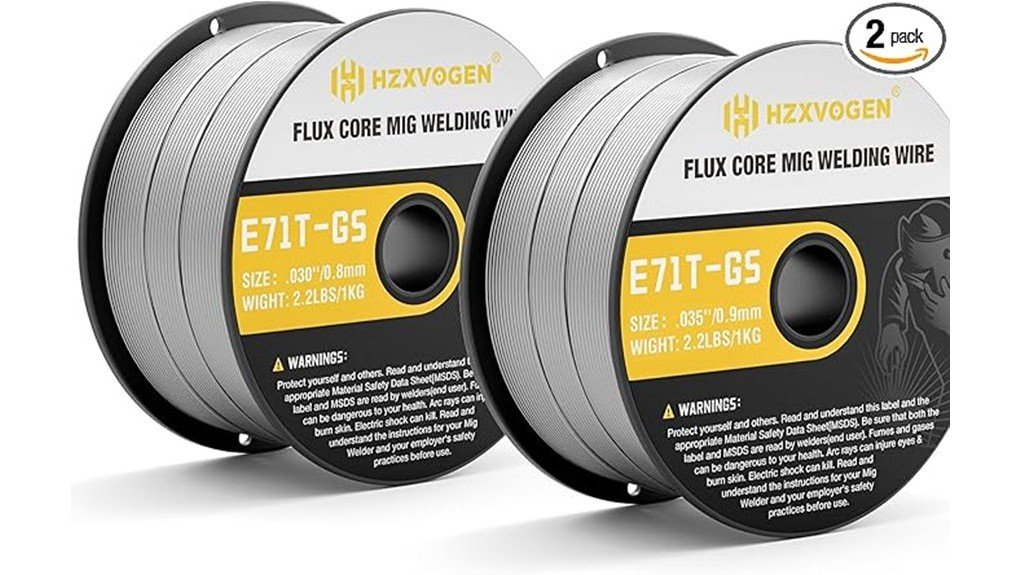
Gasless welding wire can save you from hauling a shielding gas cylinder, but it still needs the right welder setup, polarity, and technique. The H HZXVOGEN Flux Core Welding Wire is an E71T-GS-style self-shielded wire made for mild steel repair, hobby welding, and outdoor work. This review helps you decide whether its 0.030-inch size, gasless design, and budget-friendly use case match your welder and project needs.
Quick Verdict
Rating: 8.3/10, Recommended with caveats
Best For: DIY welders, hobbyists, and mechanics using compatible flux-core MIG welders on mild steel
Bottom Line: This H HZXVOGEN wire is a practical pick when you want gasless welding for light repairs, outdoor jobs, and home fabrication. It is not a shortcut around proper setup, so expect better results only when your welder supports the wire size and you tune voltage, wire speed, and polarity correctly.
Key Specifications
| Specification | Detail |
|---|---|
| Brand | H HZXVOGEN |
| Product Line | E71T-GS MIG welder welding wire |
| Product Type | Self-shielded flux core welding wire |
| Primary Size Reviewed | 0.030 inch / 0.8 mm |
| Other Listed Size | 0.035 inch / 0.9 mm option may be available depending on the listing |
| Shielding Method | Gasless, self-shielded flux core |
| Material Compatibility | Mild carbon steel applications |
| Welder Compatibility | MIG-style welders that support flux-core wire and the selected wire diameter |
| Best Use | DIY repairs, hobby projects, outdoor welding, light fabrication, and mild steel practice work |
| Package Note | Article-supported moisture-resistant packaging claim. Confirm exact spool weight and package count on Amazon before ordering. |
| Safety Note | Use with proper PPE, ventilation, clean work surfaces, and the polarity/settings recommended by your welder and wire label. |
What Is the H HZXVOGEN Flux Core Welding Wire?
The H HZXVOGEN Flux Core Welding Wire is a self-shielded welding consumable for compatible MIG-style machines. Instead of using a separate shielding gas cylinder, the flux inside the wire helps shield the weld puddle during the welding process.
The main reviewed size is 0.030 inch, also shown as 0.8 mm. That size makes the wire a better fit for many light-duty home welders and thinner mild steel projects than larger wire sizes that need more machine output and heat control.
HZXVOGEN also lists a 0.035 inch / 0.9 mm option for this E71T-GS wire family. Check the Amazon variant carefully before checkout because wire size affects drive roller fit, contact tip size, weld settings, and how much heat your machine puts into the workpiece.
Who Should Buy It?
Best For
- DIY users who want gasless welding for mild steel repair and practice projects
- Hobby welders working outdoors where shielding gas can be harder to control
- Mechanics or garage users who need a simple wire option for brackets, small repairs, and light fabrication
Skip If
- Your welder does not support flux-core wire or the selected 0.030-inch diameter
- You need very clean cosmetic welds with minimal spatter and almost no cleanup
- You are welding critical structural parts that require certified procedure, inspection, or professional work
Gasless Flux-Core Design
The biggest reason to choose this wire is convenience. You can weld without setting up a shielding gas bottle, regulator, hose, and gas flow rate, which keeps the setup simpler for garage and outdoor use.
That convenience comes with a tradeoff. Flux-core wire usually leaves slag and can create more spatter than gas-shielded solid MIG wire. You should plan for chipping, brushing, and cleanup after each pass, especially when appearance matters.
Wire Size and Compatibility
The 0.030-inch size is a common choice for smaller flux-core machines and light mild steel work. It can give you better control on thinner material than larger wire when your voltage and wire feed speed are dialed in correctly.
Before you buy, check three parts of your welder setup: the drive roller groove, the contact tip size, and the machine’s flux-core wire range. A mismatch can cause feeding problems, unstable arc starts, poor bead shape, or burn-back at the tip.
Before You Buy: Confirm the exact Amazon variant, wire diameter, spool size, and your welder’s flux-core compatibility before ordering. Do not assume a 0.030-inch spool will fit every MIG welder.
Arc Performance and Weld Quality
HZXVOGEN describes this wire as a smoother-welding flux-core option with less spatter and cleaner welds than poorly tuned gasless wire. In practical terms, that means you may spend less time fighting erratic starts when your machine settings and surface prep are correct.
You still need realistic expectations. Flux-core wire can produce strong, usable welds on mild steel, but the final result depends on material thickness, work angle, travel speed, surface condition, and machine output. Poor setup can make even a decent wire perform badly.
Outdoor Welding Performance
Self-shielded flux-core wire is useful outdoors because it does not depend on an external shielding gas stream that wind can push away from the weld puddle. That makes the H HZXVOGEN wire a practical option for gates, farm-style repairs, garage projects, and mobile work where a gas bottle would be inconvenient.
Outdoor use still needs clean preparation. Remove heavy paint, oil, rust scale, and moisture before welding. Dirty steel can increase porosity, spatter, and weak-looking beads no matter which wire you use.
Pro Tip: Start with a short test bead on scrap metal of the same thickness. Adjust wire speed and voltage before welding the actual part, then check the bead profile and slag removal.
Packaging and Storage
The article-supported packaging claim notes vacuum-packed, moisture-resistant, dust-resistant protection. That matters because welding wire can suffer from moisture exposure, surface contamination, and handling damage during storage.
After opening the spool, keep it in a dry container or sealed bag when it is not on the welder. A clean, dry spool feeds more consistently and helps reduce moisture-related welding defects.
How It Performs in Real Use
For Garage Repair Work
For brackets, small mild steel parts, practice coupons, and home repair jobs, this wire offers the main benefit most DIY users want: quick setup without gas. You can load the spool, set the machine for flux-core welding, and begin testing settings faster than with a full gas MIG setup.
For Automotive Sheet Metal
The 0.030-inch size can be useful on thinner automotive steel when you use short welds, manage heat, and avoid staying in one spot too long. It is not a magic fix for burn-through, so practice on similar scrap before touching visible panels or important repair areas.
For Outdoor Projects
The gasless design makes this wire more practical outside than solid MIG wire with shielding gas. It works best when the workpiece is secure, dry, and cleaned back to bare steel in the weld area.
For Beginners
Beginners may like the simpler setup, but they should still expect trial and error. Flux-core welding teaches travel angle, stickout, sound, bead shape, and cleanup quickly because poor settings show up fast in the weld.
Setup Tips Before First Use
Install the correct drive roller groove for flux-core wire when your welder provides one. Flux-core wire is softer than solid wire, so too much drive tension can crush the wire and cause feeding issues.
Match the contact tip to the wire size. A 0.030-inch wire should use a compatible 0.030 contact tip unless your welder manual says otherwise.
Check polarity before welding. Many self-shielded flux-core wires use a different polarity than gas-shielded solid MIG wire, so follow your welder manual and the wire label instead of guessing.
Keep your stickout consistent and avoid pushing too fast. A steady travel speed helps the flux do its job and gives the weld bead a better chance of forming evenly.
Safety and Material Notes
This wire is intended for mild carbon steel work. Do not use it as a substitute for aluminum, stainless steel, or specialty filler wire unless the manufacturer specifically approves that use.
Flux-core welding creates fumes, slag, sparks, and UV exposure. Wear a welding helmet, gloves, flame-resistant clothing, eye protection during cleanup, and use proper ventilation. When welding automotive, painted, galvanized, or coated metal, remove coatings safely and avoid breathing fumes.
Do not use this review as approval for critical structural welding. Trailer frames, suspension parts, load-bearing brackets, pressure vessels, and safety-critical repairs should follow professional welding procedures and inspection standards.
Pros and Cons
Pros
- Gasless self-shielded design removes the need for an external shielding gas setup
- 0.030-inch / 0.8 mm size suits many light-duty mild steel welding projects
- E71T-GS flux-core format is practical for outdoor repair and hobby welding
- Manufacturer describes smoother welds, less spatter, easier cleanup, and good penetration
- Storage-friendly packaging claim helps protect the wire before the spool is opened
Cons
- Performance depends heavily on correct polarity, contact tip size, wire speed, and voltage
- Flux-core welding still creates slag and may need more cleanup than gas-shielded MIG
- Exact Amazon package count, spool weight, and selected diameter should be checked before buying
How It Compares to Alternatives
Compared with gas-shielded ER70S-6 solid MIG wire, this H HZXVOGEN flux-core wire is easier to use outdoors and does not need a gas bottle. Solid MIG wire is usually better when you want cleaner-looking beads, less slag, and more controlled shop welding on clean steel.
Compared with common flux-core options from Lincoln Electric, Hobart, Forney, or Harbor Freight’s Vulcan line, H HZXVOGEN makes the most sense if you want a simple gasless wire to match a budget or hobby welder. If you already rely on a specific brand for professional repeatability, compare spool size, wire classification, and machine compatibility before switching.
Is It Worth the Price?
This wire fits the budget-friendly, convenience-focused side of welding consumables. It is worth considering if you weld mild steel occasionally and want a spool that supports gasless work without a full shielding gas setup.
You get the most value from it if your projects include practice welds, small repairs, outdoor jobs, and light garage fabrication. Buyers who need code-level structural welds, ultra-clean appearance, or documented procedure control should choose wire based on formal welding requirements, not price alone.
Frequently Asked Questions
Is the H HZXVOGEN Flux Core Welding Wire good for beginners?
Yes, it can be beginner-friendly because it removes the need for external shielding gas. Beginners still need to practice machine setup, travel speed, work angle, and cleanup to get stable welds.
Can I use it with any MIG welder?
No. Your welder must support flux-core wire and the specific diameter you buy, such as 0.030 inch / 0.8 mm. Also check the drive roller, contact tip, and polarity requirements before welding.
What material is this wire made for?
This wire is intended for mild carbon steel applications. Do not use it for aluminum, stainless steel, or specialty metals unless the manufacturer clearly states that the wire supports that material.
Does flux-core wire need shielding gas?
This self-shielded flux-core wire does not need an external shielding gas bottle. The flux inside the wire helps shield the weld puddle during welding.
Is 0.030-inch flux-core wire good for automotive work?
It can work for some light automotive steel repairs when your machine settings are correct and you control heat carefully. For critical repairs, structural areas, or safety-related parts, use a qualified welding professional.
Why does my weld have too much spatter?
Spatter can come from wrong polarity, poor voltage or wire speed settings, long stickout, dirty steel, or poor travel angle. Test on scrap metal first and adjust one setting at a time.
How should I store the spool after opening?
Store the spool in a dry sealed bag, storage box, or cabinet when it is not in the welder. Keeping the wire clean and dry helps feeding consistency and weld quality.
Who should skip this welding wire?
Skip it if your machine cannot run flux-core wire, if you need a verified industrial wire for code work, or if your priority is the cleanest possible cosmetic bead. Gas-shielded MIG or a higher-end wire may suit those needs better.
The Bottom Line
The H HZXVOGEN Flux Core Welding Wire is a smart buy for DIY welders who want gasless mild steel welding for outdoor jobs, garage repairs, and light fabrication. Its main strength is simple self-shielded use, while its main limitation is that results depend on correct setup and cleanup.
Choose it if your welder supports the selected diameter and you want practical value for everyday mild steel work. Skip it for critical structural welding, specialty metals, or projects where a clean gas-shielded finish matters most.
Ready to Buy?
Check the latest price, wire diameter, spool size, and product details before you decide.