Disclosure: As an Amazon Associate, we earn from qualifying purchases. If you click a link on this page and make a purchase, we may receive a small commission at no extra cost to you.
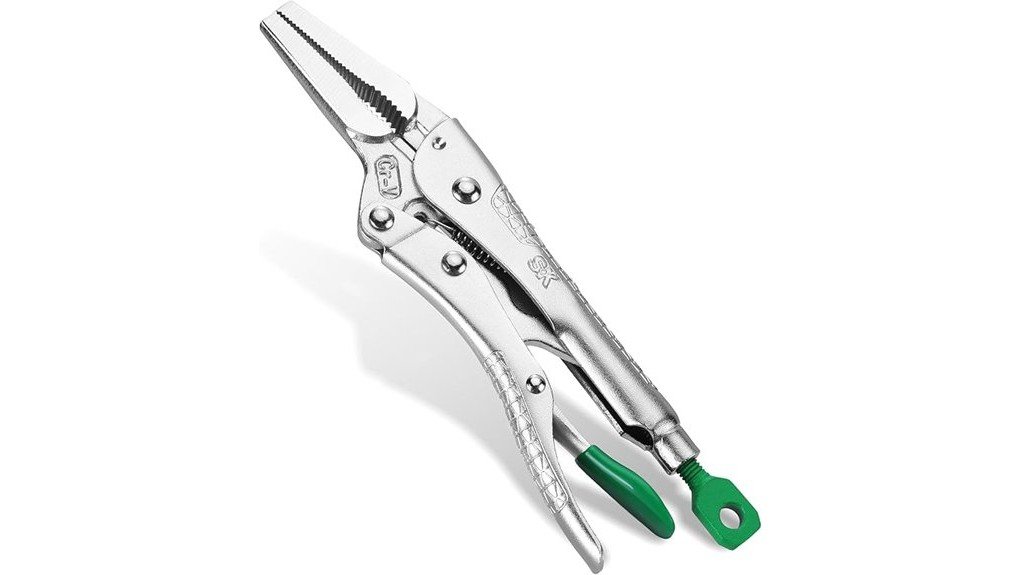
Locking pliers can save time when you need a firm hold, but the wrong jaw shape can make tight spaces harder to work in. The SK 6.5-inch Long Nose Locking Pliers are built for narrow access, controlled clamping pressure, and small-part gripping where bulkier locking pliers may not fit.
This review looks at the article-supported details: the CR-V steel build, long nose jaw design, adjustable screw, knurled anti-slip handle, and trigger release. The tool makes sense for mechanics, welders, assemblers, and DIY users who need reach and control. It is less ideal when you need a wide jaw face for broad, flat, or heavy clamping jobs.
Quick Verdict
Rating: 8.4/10
Best For: Mechanics, welders, assemblers, and DIY users who need locking grip in narrow or awkward spaces.
Bottom Line: The SK 6.5-inch Long Nose Locking Pliers are worth considering if you want a compact locking plier with slim reach, CR-V steel construction, and one-handed trigger release. Choose a larger curved-jaw or C-clamp style locking plier if you mainly clamp broad, flat, or heavy parts.
| Specification | Detail |
|---|---|
| Brand | SK |
| Product name | SK 6.5-inch Long Nose Locking Pliers |
| Product type | Long nose locking pliers |
| Tool length | 6.5 inches, according to the supplied article |
| Jaw design | Long nose jaws for access in tight spaces |
| Material | Premium CR-V steel with heat-treated design, according to the supplied article |
| Handle | Ergonomic grip with knurled anti-slip handle |
| Adjustment | Adjustable screw for clamping pressure |
| Release | Classic trigger release for one-handed unlocking |
| Best use | Welding, assembly, mechanical work, DIY repairs, and confined-space gripping |
| Safety note | Insulated handles are not verified, so do not use on live electrical circuits. |
What Is the SK 6.5-inch Long Nose Locking Pliers?
The SK 6.5-inch Long Nose Locking Pliers are compact locking pliers made for holding, gripping, pulling, and clamping small parts. The long nose jaw shape gives you better access around recessed areas, narrow gaps, brackets, wire ends, small tabs, and awkward work angles.
The supplied article describes the tool as premium CR-V steel with a heat-treated design. That matters because locking pliers place repeated pressure on the jaws, pivot, adjustment screw, and release mechanism. A stronger tool body can help the pliers stay more predictable during everyday shop and garage use.
The main reason to choose this model is control in tight spaces. You can set the clamping pressure with the screw, lock the jaws onto the part, then release the tool with the trigger. The tradeoff is contact area, since long nose jaws do not cover as much surface as wider locking pliers.
Before You Buy: Long nose locking pliers are made for reach and precision. If your main job is clamping wide, flat, or heavy material, a larger curved-jaw or C-clamp style locking plier may give you better surface contact.
Who Should Buy It?
Best For
- Users who need locking grip in narrow spaces, recessed areas, or around small parts.
- Welding and assembly work where a temporary hands-free hold helps with alignment.
- DIYers and mechanics who want compact pliers with adjustable clamping pressure.
Skip If
- You need a wide jaw face for sheet metal, large pipe, or broad flat stock.
- You want insulated pliers for work around live electrical circuits.
- You need verified weight, warranty, or manufacturer listing details before buying.
Key Features and Specifications
The SK 6.5-inch Long Nose Locking Pliers focus on three useful features: slim reach, adjustable pressure, and secure release. The long nose jaws help you work around obstacles that can block standard locking pliers. The adjustable screw lets you set the clamping force before locking the tool onto the workpiece.
The knurled anti-slip handle helps when your hands are dusty, oily, or tired from repeated use. Unlike a smooth handle, a textured grip gives your fingers more traction when you set the clamp or release the trigger. The classic trigger release also helps when you need to unlock the tool with one hand while your other hand steadies the part.
Materials and Build Quality
The article-supported material is premium CR-V steel. CR-V steel is commonly used in hand tools because it offers a practical mix of strength and wear resistance for shop use. For locking pliers, the most important stress points are the jaws, pivot, adjustment screw, and release mechanism.
The article also states that the pliers use a heat-treated design. Heat treatment can help a hand tool resist deformation under repeated pressure. That is useful when you clamp small metal parts, grip fasteners, or hold pieces in place during repair work.
The long nose shape is the main strength and the main limitation. It improves access, but it gives you a smaller gripping surface than wider jaw styles. Use it for precision holding, pulling, twisting, and small-part clamping instead of forcing it into jobs that need a broader jaw profile.
Grip, Comfort, and Control
The ergonomic grip and knurled anti-slip handle are the main comfort features. During longer work sessions, a secure handle can reduce slipping and help you keep better control when locking or releasing the pliers. This is useful in garage, welding, and assembly work where your hand position may change often.
The adjustable screw gives you control over clamping pressure. Turn it to match the thickness and firmness of the part, then squeeze the handles to lock the jaws. Too little pressure can slip, while too much pressure can mark softer material or make the release feel harder than needed.
Pro Tip: Start with lighter clamping pressure on finished, thin, or softer parts. Increase the adjustment gradually until the pliers hold securely without crushing or marring the workpiece.
Performance and Usability
In daily use, the biggest advantage is the combination of a long nose jaw and a locking mechanism. Regular needle-nose pliers can reach tight areas, but they do not stay clamped without hand pressure. Standard locking pliers can clamp firmly, but their jaw shape may be too bulky for confined spaces.
This SK tool sits between those two needs. It gives you more reach than wider locking pliers and more holding power than regular needle-nose pliers. It works best when the job calls for a firm temporary hold rather than heavy clamping across a large surface.
The trigger release is useful when you need quick one-handed unlocking. You can clamp the part, make your adjustment, then release the tool without fighting the jaws open. That matters when you work in a cramped area or hold a part where sudden movement could throw off alignment.
How It Performs in Real Use
For Welding and Tack-Up Work
The long nose jaws can help hold smaller parts in position before a tack weld or assembly step. The locking action keeps your hand free once the tool is set. Because jaw contact is focused, it is better for small alignment tasks than broad clamping pressure.
For Automotive and Mechanical Repairs
In automotive and mechanical work, narrow access is often the problem. These pliers can help when you need to grab a small bracket, tab, wire end, or fastener in a tight space. The adjustable screw helps you tune the clamping pressure to the part instead of relying only on hand squeeze.
For Assembly and DIY Projects
For general assembly, the SK long nose locking pliers are useful when you need a temporary third hand. You can lock the jaws onto a small part, keep it steady, then fasten, align, or inspect the area. This can help with furniture repairs, garage projects, small metalwork, and household fixes.
For Tight Spaces
The long nose design is the reason to choose this tool over a standard jaw locking plier. It can reach into narrow gaps and around obstacles where a wider head may not fit. The tradeoff is contact area, so use care when clamping delicate or finished surfaces.
How to Use It Correctly
Set the adjustment screw before you squeeze the handles closed. The goal is a firm lock without forcing the handles so hard that you damage the workpiece or strain the release mechanism. If the tool slips, open it, tighten the screw slightly, and try again.
Use the jaw tips for small parts and narrow spaces, but avoid treating them like a heavy-duty pry tool. Long nose jaws are best for reach and control. If you need leverage on a large or stuck part, choose a tool with a jaw shape and size made for that task.
Keep the jaws clean so the gripping teeth can do their job. Dirt, oil, metal dust, and welding residue can reduce bite. Wipe the tool after use and store it dry to help preserve the steel and moving parts.
Common Mistakes to Avoid
Do not tighten the adjustment screw as far as it will go before every use. That can make the tool harder to lock and may put too much pressure on softer material. Match the pressure to the part, then increase it only when the grip still slips.
Do not use the long nose tips as a pry bar. The slim jaw shape is useful for reach, but it is not the right design for high-leverage prying. For broad clamping, bending, or heavy pulling, use a larger tool that spreads pressure over more surface area.
Safety and Material Notes
The supplied article describes the tool as made from CR-V steel with a knurled anti-slip handle. It does not verify insulated handles, so do not use these pliers on live electrical circuits. For electrical work, use tools specifically rated and clearly marked for that use.
Locking pliers can pinch skin when the jaws close or when the trigger releases. Keep your fingers away from the jaw path and release point. If you clamp finished material, use caution because locking pliers can leave marks when pressure is too high.
Pros and Cons
Pros
- Long nose jaws help you reach tight spaces better than standard jaw locking pliers.
- CR-V steel construction supports durability for shop, garage, and DIY use.
- Adjustable screw lets you tune the clamping pressure for different parts.
- Knurled anti-slip handle improves control during repeated gripping tasks.
- Trigger release supports quick one-handed unlocking after the jaws are clamped.
Cons
- Long nose jaws provide less surface contact than wider curved-jaw locking pliers.
- Not verified as insulated, so it is not suitable for live electrical work.
- Listing details such as weight, warranty, and included accessories were not verified from an official source.
Is It Worth the Price?
The SK 6.5-inch Long Nose Locking Pliers are worth considering if you need a specialty locking plier for narrow access. The value comes from the mix of slim reach, adjustable clamping pressure, CR-V steel construction, and one-handed trigger release.
This is a smart buy for everyday shop use if you already understand the limits of long nose jaws. You get the most value when your work involves small parts, tight spaces, alignment tasks, or temporary holding. It is not the best fit if you need maximum jaw contact on large, flat, or heavy pieces.
How It Compares to Alternatives
Compared with regular needle-nose pliers, this SK tool gives you the advantage of a locking mechanism. That means you can clamp a part and keep both hands free. Regular needle-nose pliers may feel faster for quick grabbing, but they require constant hand pressure.
Compared with curved-jaw locking pliers or C-clamp style locking pliers, the SK long nose design wins on access and precision. Those wider styles are usually better for broad surfaces, pipe, larger stock, or heavier holding tasks. Choose this SK model when narrow reach matters more than maximum jaw contact.
Frequently Asked Questions
What are the SK 6.5-inch Long Nose Locking Pliers best used for?
They are best for gripping, holding, and clamping small parts in narrow or awkward spaces. They work well for mechanical repairs, assembly tasks, light welding setup, and DIY projects where standard locking pliers feel too wide.
Are these better than regular needle-nose pliers?
They are better when you need the tool to stay clamped without constant hand pressure. Regular needle-nose pliers may be better for quick grab-and-release tasks, but they do not lock onto the workpiece.
Can you use these pliers for heavy clamping?
They are not the best choice for heavy clamping across a broad surface. The long nose jaws give you reach and precision, but a larger curved-jaw or C-clamp style locking plier usually gives better surface contact.
Are the handles insulated for electrical work?
The supplied article does not verify insulated handles. Do not use these pliers on live electrical circuits. Use tools specifically rated and marked for electrical work when shock risk exists.
How do you adjust the clamping pressure?
Use the adjustment screw before locking the jaws. Start with light pressure, test the grip, then tighten slightly if the tool slips. Avoid overtightening on thin, finished, or softer parts.
Who should skip this tool?
Skip it if you mainly clamp wide sheet metal, large pipe, thick flat stock, or heavy parts that need more jaw contact. You should also skip it if you need verified insulation, warranty details, or official manufacturer specifications before buying.
The Bottom Line
The SK 6.5-inch Long Nose Locking Pliers are a strong fit if you need compact locking grip, narrow reach, and adjustable clamping pressure for small parts or confined spaces. The main limitation is the smaller jaw contact area, so they should not replace larger locking pliers for broad or heavy clamping work.
For mechanics, welders, assemblers, and DIY users who need a slim locking plier, the 8.4/10 verdict is fair. Buy it for reach and control, not for maximum clamping surface.