Disclosure: As an Amazon Associate, we earn from qualifying purchases. If you click a link on this page and make a purchase, we may receive a small commission at no extra cost to you.
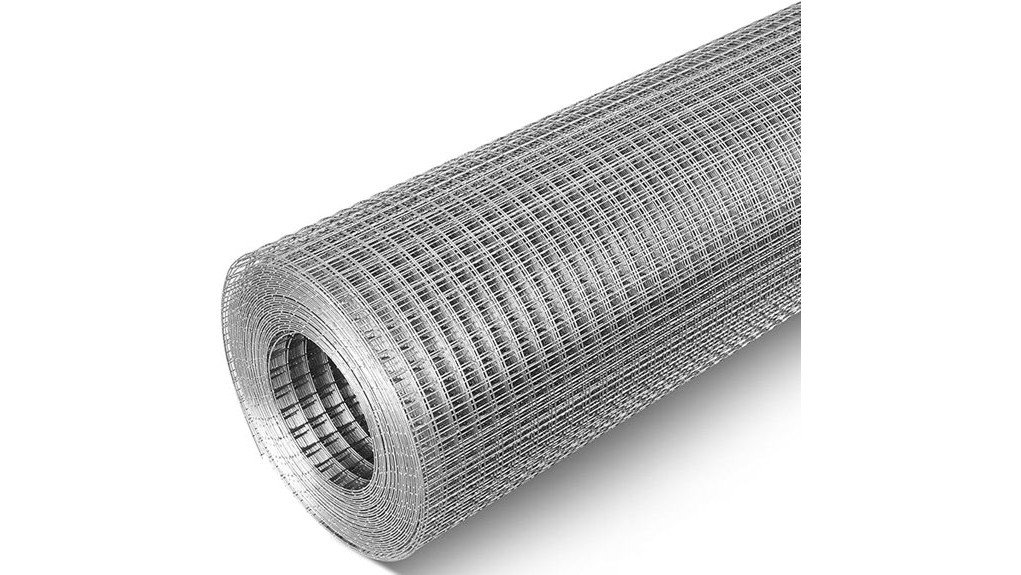
Keeping chickens, rabbits, raised beds, and young garden plants protected usually takes more than thin plastic netting. You need mesh with small openings, enough steel strength for outdoor use, and enough flexibility to cut around frames, vents, and garden beds. The TUSON Hardware Cloth is a 24-inch by 25-foot roll made from 19 gauge hot-dipped galvanized steel with 1/2 inch by 1/2 inch openings. This review helps you decide whether its size, mesh spacing, and steel build fit your poultry run, raised bed, cage, vent, or small outdoor barrier.
Quick Verdict
Rating: 8/10, recommended with caveats
Best For: Gardeners, backyard poultry owners, rabbit owners, and DIY users who need a cut-to-size galvanized steel mesh for lower barriers and enclosure reinforcement.
Bottom Line: TUSON Hardware Cloth makes sense if you want a rigid 1/2-inch mesh that can protect plants and reinforce animal enclosures while still allowing airflow, rain, and light through. Its main tradeoff is height: the 24-inch roll works best for lower protection, lining, wrapping, vents, cages, and reinforcement rather than tall standalone fencing.
Key Takeaways
- TUSON Hardware Cloth uses 19 gauge hot-dipped galvanized steel, which gives it more structure than many plastic garden meshes.
- The 1/2 inch by 1/2 inch mesh is useful for poultry-run reinforcement, raised beds, planter boxes, vents, cage panels, and small-animal barriers.
- The roll measures 24 inches high by 25 feet long, so it is better for lower sections, lining, wrapping, and reinforcement than full-height fencing.
- The product listing identifies the ASIN as B0FG1JQ3LJ and lists the item weight at about 10 pounds, though packaging and shipping weight can vary by seller.
- You can cut the mesh to fit project shapes, but cut wire edges can be sharp and should be handled with gloves, eye protection, and proper cutters.
- Regular checks matter because outdoor mesh can loosen, bend, rust, or expose gaps over time, especially near seams, corners, and ground contact points.
Product Features and Specifications
| Specification | Detail |
|---|---|
| Brand | TUSON |
| ASIN | B0FG1JQ3LJ |
| Product type | Hardware cloth / galvanized welded wire mesh roll |
| Roll size | 24 inches high by 25 feet long |
| Mesh opening | 1/2 inch by 1/2 inch square mesh |
| Wire gauge | 19 gauge |
| Material | Hot-dipped galvanized steel, listed as galvanized after welding |
| Listed item weight | About 10 pounds, based on seller listing information |
| Package quantity | 1 roll |
| Best use | Poultry protection, rabbit enclosures, garden safeguarding, raised beds, cages, vents, tree guards, planter boxes, and DIY barriers |
| Customization | Can be cut, bent, overlapped, and fastened to wood or metal frames |
| Safety note | Cut edges may be sharp, so gloves, eye protection, controlled unrolling, and secure fastening are recommended during installation. |
What Is the TUSON Hardware Cloth?
The TUSON Hardware Cloth is a galvanized steel wire mesh roll designed for outdoor protection, garden work, and DIY enclosure projects. Its 1/2-inch square openings are small enough for many poultry, rabbit, raised-bed, and vent-cover uses while still allowing airflow, visibility, rain, and light to pass through.
The roll is 24 inches tall and 25 feet long, which gives you enough length for several small projects or one longer lower barrier. Because it uses 19 gauge steel wire, it has more stiffness than soft plastic netting, but you still need proper cutters, gloves, and fasteners to install it neatly.
Think of this product as protective mesh material rather than a complete fence kit. You may still need posts, a frame, staples, ties, screws with washers, landscape pins, or other fasteners depending on your surface and project.
Before You Buy: The 24-inch height is useful for lower protection, cage panels, raised beds, vents, and reinforcement. It is not tall enough to serve as a full standalone fence unless you attach it to a taller frame or combine it with another fencing system.
Who Should Buy It?
Best For
- Backyard poultry owners who need lower mesh protection around coops, runs, vents, doors, or small openings.
- Gardeners who want to protect raised beds, fruit plants, vegetables, bulbs, and flowers from small animals.
- DIY users who need cut-to-size galvanized mesh for cage panels, planter boxes, tree guards, soffit openings, or outdoor repairs.
Skip If
- You need a tall finished fence that includes posts, gates, rails, and full installation hardware.
- You want a soft plastic mesh that cuts with basic household scissors and stores flat with little effort.
- You need a heavy barrier for large or powerful animals, where thicker welded wire or a full fence system may be safer.
Applications and Benefits
TUSON Hardware Cloth works well when you need a physical barrier that does not block airflow. The 1/2-inch openings make it useful for poultry areas, raised beds, small cages, plant covers, vent guards, and protective wraps around vulnerable plants.
For poultry use, the mesh can reinforce areas where larger fencing leaves gaps. You can attach it around the lower portion of a run, over small vents, across door gaps, or along weak spots where rodents and small predators may try to enter.
For garden use, the mesh can protect fruits, vegetables, flowers, bulbs, and young plants. It can line raised beds, wrap planter boxes, cover small frames, or protect tree trunks while still letting water and sunlight reach the area.
Mesh Size and Pest Protection
The 1/2-inch by 1/2-inch square mesh is one of the most important buying details. Smaller openings reduce the gaps that rodents, snakes, birds, and rabbits can use compared with wider garden fencing, though no mesh is animal-proof without solid installation.
This size is especially useful along ground-level weak points. If your main fence has larger openings, adding this hardware cloth to the bottom section can improve protection without replacing the entire fence.
For very small pests or insects, 1/2-inch mesh may still be too open. In that case, a smaller mesh size or a different screen material may work better for your goal.
Materials and Build Quality
The main strength of this hardware cloth is its 19 gauge hot-dipped galvanized steel construction. Galvanized steel is a practical choice for outdoor projects because its zinc coating resists corrosion better than plain untreated steel.
The wire mesh should feel more rigid than lightweight plastic fencing. That stiffness helps it hold shape around frames and corners, but it also means you should plan your cuts, bends, and overlaps before installation.
The product is listed as hot-dip galvanized after welding, which matters because welded joints are common weak points on outdoor mesh. Even so, soil contact, standing water, fertilizer, salt, and scratches can wear metal over time, so routine inspection still matters.
Fit, Size, and Compatibility
The 24-inch height is the key sizing detail. It fits lower fence sections, raised bed sides, cage panels, vent covers, plant guards, and protective strips around poultry runs. It can also work as a ground-level reinforcement layer beneath or beside a taller fence.
The 25-foot length gives you flexibility for longer runs or multiple small jobs. Before buying, measure the full perimeter of your project and add extra length for overlap, corners, bends, trimming mistakes, and attachment points.
If your project needs height more than lower protection, this roll may not be enough on its own. You can still use it as the lower section of a taller build, but the frame or main fence must provide the full height.
Installation and Maintenance Tips
Start by measuring the area and marking your cuts before unrolling the mesh. Hardware cloth can spring back when it is released, so keep control of the roll and wear gloves to protect your hands from sharp wire ends.
Use fasteners that match your surface. Wood frames may need heavy staples or screws with washers, while metal or wire structures may need galvanized ties, hog rings, or other secure connectors. The goal is to keep the mesh tight enough that gaps do not open at the edges.
If you are using it to slow digging around a poultry run or garden bed, consider bending part of the mesh outward as a ground apron. A 24-inch-tall roll cannot create a full 2 to 3-foot vertical buried wall by itself, but it can still help protect lower edges when used thoughtfully.
Pro Tip: Leave a small overlap where two pieces meet and fasten both layers securely. Corners, seams, doors, vent edges, and bottom edges are usually the first places animals test.
Common Mistakes to Avoid
Do not stretch the mesh loosely across a frame and assume it will stay tight. Loose edges can create gaps, catch on animals, or bend out of shape after weather and pressure.
Do not leave cut ends exposed where chickens, rabbits, children, pets, or gardeners may brush against them. Fold the edge back, trim sharp points, or cover the edge with wood trim, frame material, or another safe barrier.
Do not rely on the mesh alone for large animal containment. Hardware cloth works best as a protective layer, vent cover, lower barrier, or reinforcement material, not as a complete structural fence.
How It Performs in Real Use
For Poultry Runs and Coop Reinforcement
The 1/2-inch mesh is useful around lower coop and run areas where small openings matter. It can reinforce gaps around frames, doors, vents, and lower panels, especially when larger fencing leaves spaces that smaller animals can reach through.
For Raised Garden Beds
In raised beds, the mesh can protect soil and plants while still allowing drainage and airflow. You can use it as a side barrier, bottom liner, or removable cover when plants are young and more vulnerable.
For Rabbit Cages and Small Animal Areas
The roll can be cut for small cage panels and outdoor animal-area repairs. Because the cut edges can be sharp, the safest setup uses a firm frame and covered edges where animals may press against the mesh.
For Vents, Tree Guards, and DIY Covers
The mesh can cover vents, drains, planter openings, tree trunks, and custom garden frames. Its steel construction holds shape better than soft netting, but curved or detailed cuts take patience and the right wire cutters.
For Long-Term Outdoor Use
The hot-dipped galvanized finish helps the mesh handle outdoor exposure better than untreated wire. Even so, you should inspect it from time to time for bent sections, rust spots, loose fasteners, soil buildup, or sharp edges caused by movement.
Safety and Handling Notes
Hardware cloth is useful, but it still needs careful handling. Cut wire can be sharp, and the roll may flex back as you work with it. Gloves, eye protection, long sleeves, and controlled cutting make installation safer.
If you use the mesh around animals, check that no sharp ends point inward. The mesh should be fastened tightly enough that animals cannot push through a loose edge or get caught between the mesh and the frame.
For garden beds, avoid leaving jagged edges where children, pets, or gardeners may brush against them. Folding, trimming, or covering exposed edges can make the finished project cleaner and safer.
Cleaning and Maintenance
Maintenance is simple, but you should not ignore it. Check the mesh after storms, heavy animal activity, seasonal soil movement, or repeated gate use. Look for loose fasteners, lifted edges, corrosion, and bent sections.
Clear away packed soil, leaves, and debris if they trap moisture against the wire. Galvanized steel resists corrosion, but outdoor conditions can still wear down metal over time.
If a section bends or loosens, repair it early. A small gap can become the weak point in a poultry run, garden barrier, cage panel, or enclosure.
Pros and Cons
Pros
- 19 gauge hot-dipped galvanized steel gives the mesh useful structure for outdoor DIY projects.
- 1/2-inch by 1/2-inch openings help protect gardens, vents, poultry areas, and rabbit spaces from many small pests.
- 24-inch height works well for raised beds, lower barriers, cage panels, vents, plant guards, and reinforcement strips.
- 25-foot length gives you enough material for several small projects or one longer lower run.
- Cut-to-size design makes it adaptable for custom garden, enclosure, and repair work.
Cons
- 24-inch height is not enough for a full standalone fence without a taller frame or added fencing.
- Cut metal edges can be sharp and need careful handling, especially around animals and children.
- You may need separate posts, framing, fasteners, cutters, washers, or landscape pins depending on the project.
Is It Worth the Price?
TUSON Hardware Cloth is worth considering if you need small-opening steel mesh for outdoor protection. It offers strong value for the price when your project calls for galvanized wire rather than light plastic netting.
You get the most value from it when you have several small projects or a longer lower barrier to build. The 25-foot length helps with garden beds, poultry run edges, vent covers, rabbit-area repairs, and DIY plant guards.
It is not the best fit if you only need a temporary decorative screen or a tall finished fence. In those cases, plastic mesh, taller welded wire, or a complete fence kit may be easier to install.
How It Compares to Alternatives
Compared with plastic garden fencing, TUSON Hardware Cloth offers a more rigid metal barrier and smaller 1/2-inch openings. Plastic mesh is usually lighter and easier to cut, but it may not hold shape as well around frames or stand up as well to chewing, pressure, and repeated outdoor use.
Compared with taller welded wire fencing, this 24-inch hardware cloth is better for lower protection, lining, and reinforcement. If your main goal is full perimeter fencing, a taller welded wire roll may be better, while this product makes more sense for the lower, tighter-mesh areas.
Compared with 1/4-inch mesh, this 1/2-inch mesh gives you more airflow and visibility, but it leaves larger openings. Choose the smaller mesh if your main concern is very small pests or fine screening.
Frequently Asked Questions
What size is the TUSON Hardware Cloth?
The roll measures 24 inches high by 25 feet long. The mesh openings are 1/2 inch by 1/2 inch, which makes it useful for garden protection, poultry areas, vents, cages, and small DIY barriers.
Is it suitable for chicken coops and poultry runs?
Yes, it can be useful for reinforcing lower coop and run areas, covering vents, and closing small gaps. For best results, attach it tightly to a frame and check corners, seams, doors, and bottom edges.
Can it protect a vegetable garden from rodents?
The 1/2-inch mesh can help protect vegetables, fruits, flowers, and bulbs from many small animals. It works best when the edges are secured and gaps around corners, seams, and soil lines are closed.
Can you bury this hardware cloth underground?
You can use part of the mesh as a shallow buried edge or outward-bent apron when digging animals are a concern. Because the roll is only 24 inches tall, do not expect it to create a full deep vertical barrier by itself.
Is galvanized steel better than plastic fencing?
Galvanized steel is usually better when you need a rigid barrier that holds shape and resists outdoor wear. Plastic fencing may be easier to cut and move, but it is often better for light or temporary use.
Can you paint or coat the hardware cloth?
You may be able to paint galvanized metal, but it needs proper surface prep and a compatible coating. Paint can wear outdoors, so keep function, corrosion resistance, and safe edges ahead of appearance.
Is it safe to cut by hand?
You should use proper wire cutters or tin snips and wear gloves when cutting hardware cloth. The cut ends can be sharp, so fold, trim, or cover exposed edges where people or animals may touch them.
Is TUSON Hardware Cloth recyclable after use?
Because it is steel wire mesh, it may be recyclable through scrap metal or local recycling programs that accept galvanized steel. Check local rules before placing it in household recycling.
The Bottom Line
The TUSON Hardware Cloth is a practical choice if you need 24-inch by 25-foot galvanized steel mesh for poultry protection, garden safeguarding, raised beds, vents, cages, and small outdoor DIY barriers. Its main strengths are the 19 gauge galvanized steel build and 1/2-inch mesh openings, while its main limitation is the short height for full fence projects.
Choose it for lower protection and reinforcement, especially when you want metal mesh instead of plastic netting. Skip it if you need a complete tall fence system, a soft decorative screen, or a heavier barrier for large animals.