Disclosure: As an Amazon Associate, we earn from qualifying purchases. If you click a link on this page and make a purchase, we may receive a small commission at no extra cost to you.
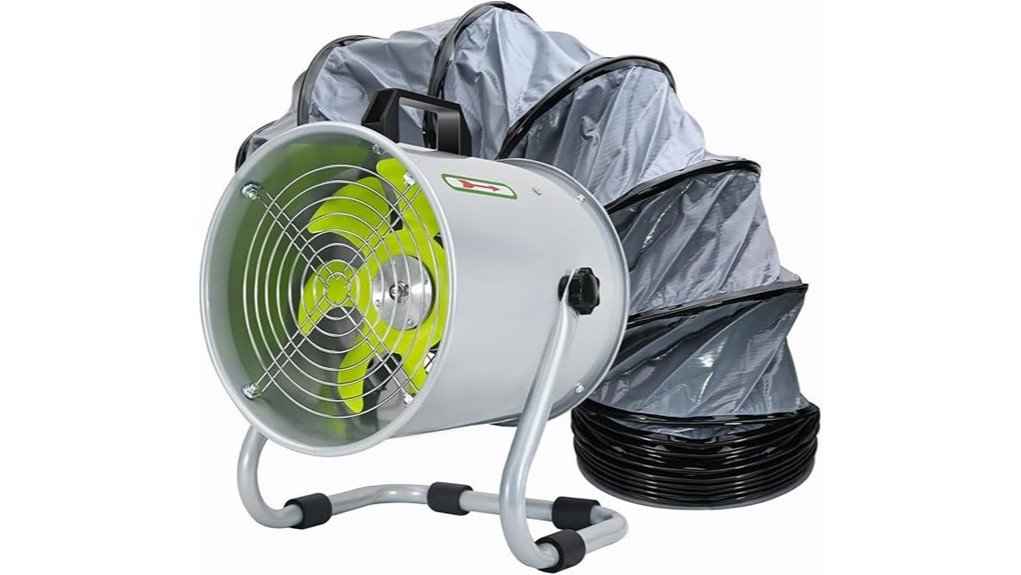
Stale air, welding smoke, dust, and lingering fumes can make a small work area uncomfortable fast. The Utility Blower is made for users who need strong, simple air movement in workshops, garages, utility rooms, and light industrial spaces. Based on the supplied product details, it combines a 2800 RPM motor speed with a stated 1300 m³/h airflow capacity, a steel housing, and aluminum alloy fan blades. This review explains where that setup helps, where it feels limited, and what you should check before buying.
The main appeal is straightforward ventilation without a complex setup. The tradeoff is control, since this industrial-style blower does not offer variable speed settings or smart airflow adjustment. It makes the most sense when you need practical air movement more than quiet comfort or precision control.
Quick Verdict
Rating: 7.8/10
Best For: Workshops, welding areas, garages, basements, utility rooms, and light industrial ventilation
Bottom Line: The Utility Blower is a strong choice if you need steady airflow from a durable, simple unit. It is less ideal if you need quiet operation, variable speed control, or residential-style comfort.
| Specification | Detail |
|---|---|
| Product Name | Utility Blower |
| Product Type | Industrial-style utility ventilation blower |
| Motor Speed | 2800 RPM |
| Airflow Capacity | 1300 m³/h |
| Motor Type | 60W pure copper motor |
| Housing Material | Steel housing |
| Fan Blade Material | Aluminum alloy |
| Fan Design | 7 aluminum alloy blades |
| Noise Level | Approx. 60 dB, as stated |
| Controls | Single-speed operation, based on article details |
| Portability | Lightweight design with carry handle |
| Stability Features | Non-slip base pads |
| Best Use | Workshops, welding areas, garages, basements, paint booths, and utility spaces |
| Safety Note | Use it as a ventilation aid, not as a substitute for proper exhaust systems, respirators, or professional safety controls where fumes are hazardous. |
What Is the Utility Blower?
The Utility Blower is a compact ventilation unit designed to move air in work areas where smoke, fumes, dust, or moisture can build up. The article-supported specs list a 60W pure copper motor, 2800 RPM motor speed, and 1300 m³/h airflow capacity.
Its steel housing and aluminum alloy fan blades make it more work-focused than a basic household fan. That matters in a garage, welding corner, basement, or workshop where the unit may need to handle bumps, vibration, and frequent repositioning.
The supplied article does not identify a clear brand, model number, dimension, or weight, so this review does not add those claims. The safest way to judge it is as a simple, single-speed utility blower built for air movement rather than comfort cooling.
Who Should Buy It?
Best For
- Workshop users who need steady airflow for smoke, dust, stale air, or moisture
- Welding and fabrication areas that need better air movement around the workspace
- Garage, basement, utility room, and paint booth users who want a simple portable blower
Skip If
- You need quiet airflow for a bedroom, office, living room, or other comfort space
- You need variable speed settings, timer controls, app control, or smart features
- You need a certified exhaust system for hazardous fumes instead of a portable air mover
Before You Buy: This blower is designed for industrial-style ventilation support. Do not treat it as a complete safety solution for welding fumes, paint vapors, chemical fumes, or other hazardous airborne contaminants.
Airflow Performance and Efficiency
With a stated airflow capacity of 1300 m³/h, the Utility Blower focuses on moving a large amount of air through a work area. That makes it useful when your main problem is stagnant air rather than personal cooling.
The 2800 RPM motor speed supports strong, direct airflow. In a small or medium workspace, that can help push smoke, dust, or stale air toward a door, window, vent, or exhaust path.
The main limitation is control. Since the article describes it as a single-speed blower, you should expect one consistent output level rather than gentle, medium, and high settings.
Construction and Build Quality
The steel housing gives the blower a more durable feel than plastic household fans. That is helpful in workshops where tools, cords, and materials can bump into equipment during the day.
The 7 aluminum alloy fan blades add durability while helping the unit move air efficiently. Aluminum alloy also makes sense for a utility blower because it can handle regular work-area use better than thin, fragile fan blades.
The 60W pure copper motor is another practical detail. Copper motors are commonly valued for durability and steady electrical performance, though the article does not provide testing data or a warranty claim.
Portability and Ease of Use
The built-in carry handle helps you move the blower between work zones. That matters if you switch between a garage bay, welding bench, basement corner, or temporary project area.
The lightweight design also supports quick repositioning. You can aim the airflow where it helps most instead of leaving one fixed fan in the same spot all day.
Non-slip base pads help keep the unit stable during operation. They are especially useful on smooth concrete floors, shop benches, and utility-room surfaces where vibration can cause movement.
Noise Level and Comfort
The article lists the noise level at approximately 60 dB. That is noticeable, but it may be acceptable in a workshop, garage, or utility room where tool noise is already common.
This is not the best type of blower for quiet comfort cooling. If you want air movement while watching TV, sleeping, studying, or working at a desk, a quieter household fan will likely feel more comfortable.
The noise tradeoff makes sense for its intended use. You get stronger utility airflow, but you give up some refinement.
Setup Tips for Better Results
For best results, place the blower where it can push stale air toward an exit point. An open doorway, window, garage door, or vent path will usually work better than placing the blower in the center of the room.
Keep the intake and output areas clear. Boxes, tools, cords, plastic sheets, or loose shop materials can reduce airflow or create a hazard near the fan path.
Use the blower on a stable surface with the non-slip pads fully contacting the floor or work surface. Avoid placing it where vibration could move the unit toward an edge.
Pro Tip: Create cross-ventilation when possible. Put the blower near an open exit point and allow fresh air to enter from the opposite side of the room.
Compatibility and Safety Notes
This blower is best viewed as an air mover for general ventilation support. It can help move smoke, dust, moisture, and stale air, but it does not filter air or remove contaminants by itself.
For welding, painting, solvents, chemicals, or heavy dust, follow the product instructions for your tools and materials. Use proper exhaust equipment, personal protective equipment, and professional guidance when needed.
Do not block the fan intake or output. Also avoid using the blower around loose lightweight materials that could be pulled toward the blades or pushed into unsafe areas.
How It Performs in Real Use
For Welding and Fabrication
The Utility Blower can help move smoke and fumes away from your immediate work area. That can improve visibility and comfort while you work, especially in a garage or small shop.
It should not replace proper fume extraction or required protective equipment. Use it as part of a safer ventilation setup, not as the only protection against hazardous welding fumes.
For Paint Booth and Project Ventilation
In a paint booth or enclosed project area, the blower can help reduce lingering odor and stale air by moving air toward an exit path. Its stronger airflow makes it more useful than a small desk fan for this kind of job.
Paint vapors can be hazardous, so always follow the paint label and safety instructions. Use proper ventilation and protective gear for the material you are applying.
For Garage and Basement Airflow
Garages and basements can trap moisture, musty air, and fumes from stored materials. The blower can help circulate air and push stale air out when paired with an open door or window.
Its carry handle helps if you need to move it between different corners of the space. That is useful when one area feels damp, smoky, or poorly ventilated.
For General Workshop Use
For sanding, cutting, cleaning, or general shop work, steady airflow can make the space feel less stagnant. The steel housing and non-slip base pads fit this type of rougher environment better than a delicate household fan.
The single-speed design keeps operation simple. The downside is that you cannot reduce airflow when you need a gentler setting around lightweight dust, paper, or small parts.
Pros and Cons
Pros
- Stated 1300 m³/h airflow gives it strong air-moving ability for utility spaces
- 2800 RPM motor speed supports direct airflow for smoke, dust, and stale air
- Steel housing and aluminum alloy fan blades suit workshop-style use
- Carry handle makes it easier to move between work areas
- Non-slip base pads help improve stability during operation
Cons
- Single-speed design limits control in smaller or mixed-use spaces
- Not ideal for quiet residential comfort cooling
- Does not replace proper exhaust, filtration, respirators, or safety equipment for hazardous fumes
Is It Worth the Price?
The Utility Blower is worth considering if you want a simple air mover for a garage, workshop, basement, or light industrial space. Its value comes from strong airflow, a durable metal build, and easy repositioning rather than advanced controls.
It is a better fit for buyers who care about practical ventilation support than comfort features. The 1300 m³/h airflow rating, 2800 RPM motor speed, steel housing, and aluminum alloy blades make it feel purpose-built for work areas.
It is not the best fit if you want quiet indoor comfort, variable speed settings, or a complete safety system for hazardous fumes. In those cases, compare it with quieter fans, ducted exhaust systems, or dedicated fume extraction equipment.
How It Compares to Alternatives
Compared to a basic household fan, the Utility Blower offers stronger air movement and a more work-ready build. A household fan may be better for quiet cooling, but it usually will not feel as suitable for smoke, dust, or utility ventilation.
Compared to higher-end industrial ventilation systems, this blower is simpler and easier to move. Those systems may offer ducting, speed control, filtration, or professional-grade exhaust features, while this unit focuses on direct airflow with fewer controls.
Frequently Asked Questions
Can the Utility Blower run continuously for long work sessions?
The article describes it as suitable for workshop use, and the 60W copper motor supports steady airflow. For motor longevity, follow the product instructions and give the unit breaks if it becomes hot or runs for long periods.
Is it suitable for home indoor air circulation?
It can move air indoors, but it is better suited for utility areas than living spaces. The industrial airflow style and stated 60 dB noise level may feel too strong or noticeable for bedrooms, offices, or lounge areas.
Does it have variable speed settings?
The supplied article describes it as a single-speed industrial-style blower. That keeps operation simple, but it also means you cannot fine-tune airflow for delicate tasks or quiet use.
Where should you place it for better ventilation?
Place it near an open doorway, window, garage door, or exhaust path so it can push stale air out. Center-room placement may move air around, but it usually does not remove smoke, dust, or odors as effectively.
Can it replace a fume extractor for welding or painting?
No. It can help move air, but it does not filter contaminants or guarantee safe exposure levels. For welding fumes, paint vapors, chemicals, or heavy dust, use proper exhaust equipment, protective gear, and professional safety guidance.
Is the build quality better than a regular fan?
The steel housing and aluminum alloy blades make it more suitable for workshop use than many lightweight household fans. It is still important to keep the intake and output clear and place the unit on a stable surface.
Who should skip this Utility Blower?
Skip it if you need quiet comfort cooling, adjustable airflow, a timer, remote control, or smart features. You should also skip it if your project requires certified exhaust, filtration, or fume extraction instead of simple air movement.
The Bottom Line
The Utility Blower is a practical pick for buyers who need strong, simple airflow in workshops, garages, basements, welding areas, and utility spaces. Its strongest points are the stated 1300 m³/h airflow, steel housing, aluminum alloy blades, carry handle, and stable base pads.
You should skip it if you need quiet residential comfort, variable speed control, or a complete safety system for hazardous fumes. It earns its 7.8/10 rating as a capable utility blower with clear limits.