Disclosure: As an Amazon Associate, we earn from qualifying purchases. If you click a link on this page and make a purchase, we may receive a small commission at no extra cost to you.
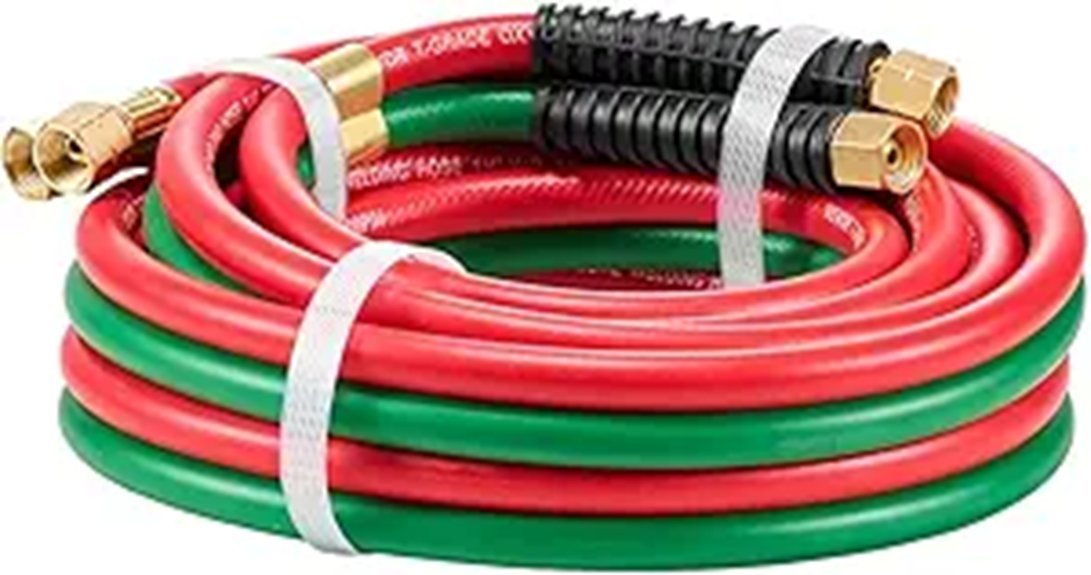
Choosing an oxygen acetylene hose is not just about length. You need the right fittings, safe gas identification, enough pressure capacity, and a hose that stays flexible while you work around a bench, vehicle, or repair bay. The VEVOR Oxygen Acetylene Hose is a 1/4-inch by 15-foot twin welding hose made for oxygen and fuel-gas work, including welding, brazing, soldering, and cutting. Its main strengths are the 300 PSI working pressure, T-grade all-weather rubber construction, and color-coded red and green lines. The main tradeoff is that the 15-foot length may feel short in larger shops or around oversized projects.
Quick Verdict
Rating: 8.4/10
Best For: DIY welders, auto repair shops, maintenance crews, and light professional use where a compact 15-foot oxygen acetylene hose is enough.
Bottom Line: The VEVOR Oxygen Acetylene Hose gives you a practical mix of pressure capacity, flexible T-grade rubber, and standard 9/16-18 B connections. It is a strong value for smaller work areas, but you should skip it if you need a longer hose run or a verified warranty before buying.
| Specification | Detail |
|---|---|
| Brand | VEVOR |
| Product type | Oxygen acetylene twin welding hose |
| Hose size | 1/4 inch |
| Length | 15 feet |
| Outside diameter | 1/2 inch |
| Material | T-grade all-weather rubber |
| Working pressure | 300 PSI maximum working pressure |
| Bursting pressure | 900 PSI |
| Connections | 9/16-18 B fittings |
| Gas identification | Red hose for acetylene, green hose for oxygen |
| Thread orientation | Left-hand thread on red fuel-gas hose, right-hand thread on green oxygen hose |
| Best use | Welding, brazing, soldering, cutting, auto repair, and general maintenance work |
| Safety note | Use only with compatible regulators, torches, gases, and pressure settings. Follow all equipment instructions before use. |
What Is the VEVOR Oxygen Acetylene Hose?
The VEVOR Oxygen Acetylene Hose is a twin welding hose made to carry oxygen and fuel gas between your regulators and torch. It uses a 1/4-inch hose size and a 15-foot length, which makes it useful for bench work, vehicle repair, small fabrication jobs, and maintenance tasks where you do not need a long hose run.
The hose is built from T-grade all-weather rubber, a practical material choice for oxygen and multiple fuel gases. The article-supported compatibility list includes oxygen, acetylene, propane, and other fuel gases. That makes this hose more flexible than an acetylene-only setup, as long as your regulators, torch, fittings, and gas system are also compatible.
The red and green color coding helps you identify gas lines faster. The red line is for acetylene or fuel gas and uses a left-hand thread, while the green line is for oxygen and uses a right-hand thread. This is a useful safety detail because crossed gas connections are one of the mistakes you want to avoid with oxy-fuel equipment.
Before You Buy: Confirm that the 9/16-18 B fittings match your regulators and torch before ordering. Also make sure 15 feet is enough reach for your work area, because a compact hose can be limiting in a larger shop bay.
Who Should Buy It?
Best For
- DIY welders who need a compact oxygen acetylene hose for home garage projects.
- Auto repair shops that need a flexible hose for brazing, heating, soldering, or cutting around vehicles.
- Maintenance users who want a T-grade rubber hose rated for oxygen and multiple fuel gases.
Skip If
- You need more than 15 feet of reach for large fabrication tables, trailers, or wide shop bays.
- Your equipment does not use 9/16-18 B oxygen and fuel-gas connections.
- You need verified warranty terms before buying, since the source article does not confirm a warranty period.
Materials and Build Quality
The strongest build detail here is the T-grade all-weather rubber. For a hose used around welding and cutting work, flexibility matters because the hose often has to move around stands, tools, tires, frame rails, or a workbench. A stiff hose can pull against your torch hand, while a more flexible hose is easier to route without fighting the line.
The hose also includes bend restrictors, which help reduce kinking near the connection points. This matters most at the ends of the hose, where repeated bending can create extra stress. A bend restrictor does not make the hose damage-proof, but it can help the hose last longer when you coil, uncoil, and reposition it often.
The listed 300 PSI maximum working pressure and 900 PSI bursting pressure give the hose a solid pressure margin for demanding oxy-fuel work. You should still use the pressure settings recommended for your regulators, torch, tips, and gas cylinders. The hose rating is not a reason to exceed safe setup limits.
Fit and Compatibility
This VEVOR hose uses 9/16-18 B connections, a common fitting style for oxy-fuel welding hoses. The red fuel-gas hose uses a left-hand thread, and the green oxygen hose uses a right-hand thread. That thread difference helps reduce the chance of mixing up oxygen and fuel-gas connections during setup.
The article states that the hose can accommodate oxygen, acetylene, propane, and various fuel gases. That compatibility is one of the main reasons to consider a T-grade hose. Still, your whole system must match. Check the regulator outlet, torch inlet, hose fittings, gas type, and pressure range before putting the hose into service.
Pro Tip: Before first use, connect the hose without twisting it, then route it in a loose path from the cylinders to your work area. This helps you spot reach problems, tight bends, or connection strain before lighting the torch.
Performance in Welding, Brazing, and Cutting
For welding and brazing work, the 1/4-inch hose size is practical for many common shop tasks. The 15-foot length gives you enough reach for close-range work without leaving a large coil on the floor. That can be helpful in a home garage or smaller repair space where clutter creates trip hazards.
For cutting, the hose rating and rubber construction are useful because the hose may be moved often around metal stock, stands, or vehicle parts. The wear-resistant material is a real benefit in these environments, but you still need to keep the hose away from hot slag, sharp edges, grinding sparks, and open flame.
The red and green color coding also improves daily workflow. You can identify the oxygen and fuel side at a glance, which helps during setup, shutdown, inspection, and troubleshooting. This is a simple feature, but it matters when you are working around multiple hoses or busy repair equipment.
How It Performs in Real Use
For Auto Repair Shops
In an auto repair setting, this hose makes sense for localized heating, brazing, cutting, and maintenance tasks near a vehicle. The 15-foot length can work well when your cylinders stay close to the bay or workbench. It may feel short if your cylinders are stored far from the vehicle or if you need to move around both sides of a larger project.
For DIY Garage Welding
For a home garage, the compact length is often a benefit. It is easier to store, easier to coil, and less likely to leave excess hose across the floor. The T-grade rubber construction gives you more fuel-gas flexibility than a hose intended only for acetylene.
For Brazing and Soldering
For brazing and soldering, hose control matters because you may work closer to small joints, fittings, brackets, or repair parts. A flexible hose can make torch movement smoother and reduce drag on your hand. The bend restrictors also help near the fittings when you reposition the torch often.
For Long-Term Shop Use
Long-term performance depends on how you treat the hose. The wear-resistant rubber and pressure rating are good signs, but storage, inspection, and safe routing matter just as much. Coil it loosely, keep it dry, and inspect it before each use for cracks, cuts, soft spots, burns, or damaged fittings.
How to Use It Correctly
Start by checking that the hose fittings match your regulator and torch connections. Attach the green hose to the oxygen side and the red hose to the fuel-gas side. Do not force a fitting that does not thread smoothly, because cross-threading can damage the connection and create a leak risk.
After connection, route the hose where it will not sit under tires, tools, hot metal, or sharp workpieces. Keep it away from grinding sparks and cutting slag. Before lighting the torch, follow your regulator and torch instructions, check your pressure settings, and test for leaks using a method approved for your equipment.
When you finish, shut down the oxy-fuel setup according to your torch and regulator instructions. Let the hose cool if it was near hot work, then coil it loosely. Avoid tight wraps, hard bends, and storage in direct sunlight because poor storage can shorten hose life.
Safety and Material Notes
Oxygen and fuel-gas equipment needs careful handling. Never use oil, grease, or oily gloves on oxygen fittings. Keep the hose away from open flames, hot slag, and freshly cut metal. If the hose shows cracking, swelling, burns, exposed reinforcement, or a damaged fitting, stop using it until it is replaced or inspected by a qualified person.
The 300 PSI working pressure and 900 PSI bursting pressure are useful specifications, but your safe working setup depends on the full system. The cylinder, regulator, torch, tip, gas type, hose, and fitting condition all matter. Always follow the instructions for your oxy-fuel equipment and local safety rules.
The article does not confirm any specific certification or warranty term for this hose. That does not mean the hose lacks one, but it does mean you should check the current product listing and packaging before relying on those details for professional purchasing requirements.
Pros and Cons
Pros
- 300 PSI maximum working pressure supports demanding welding, brazing, soldering, and cutting tasks.
- T-grade all-weather rubber works with oxygen, acetylene, propane, and other fuel gases listed in the article.
- Red and green color coding helps you identify fuel gas and oxygen lines quickly.
- 9/16-18 B fittings suit many standard oxy-fuel setups when your equipment matches.
- Bend restrictors help reduce kinking near the hose ends during setup and storage.
Cons
- The 15-foot length may be too short for large shops, trailers, or wide fabrication areas.
- Warranty details are not confirmed in the source article.
- You must verify fitting compatibility before buying, since not every torch or regulator setup is the same.
Is It Worth the Price?
The VEVOR Oxygen Acetylene Hose looks like a strong value for the price if you need a compact twin hose for everyday oxy-fuel work. The main value comes from the T-grade rubber construction, 300 PSI working pressure, 900 PSI bursting pressure, and standard-style 9/16-18 B connections.
It is worth considering if your work area is small to medium in size and you want a hose for auto repair, brazing, soldering, cutting, or general maintenance. You get the most value if you need fuel-gas flexibility and do not want to manage a long hose on the floor.
It is not the best fit if you need extra reach, verified warranty terms, or a hose with documented certifications for a regulated workplace purchase. In that case, compare the current listing details and your shop requirements before you buy.
How It Compares to Alternatives
Compared with longer 25-foot or 50-foot oxy-acetylene hoses, this 15-foot VEVOR hose is easier to store and less bulky in a small garage. The tradeoff is reach. Longer hoses may be better for larger fabrication areas, mobile repair setups, or shops where the cylinders stay farther from the work.
Compared with R-grade hoses, a T-grade hose is usually the more flexible choice when you may use fuel gases beyond acetylene, as long as the rest of your setup supports them. Compared with premium heavy-duty shop hoses, this VEVOR option makes the most sense when you want practical specs and compact handling without moving into a higher-cost hose category.
Frequently Asked Questions
What size is the VEVOR Oxygen Acetylene Hose?
The hose is listed as 1/4 inch by 15 feet, with a 1/2-inch outside diameter. That size is practical for smaller shop spaces, auto repair work, and garage oxy-fuel setups.
What gases can this hose be used with?
The article states that it can accommodate oxygen, acetylene, propane, and various fuel gases. You should still confirm compatibility with your regulator, torch, fittings, and gas type before use.
Does it use standard oxy-fuel fittings?
The hose uses 9/16-18 B connections. The red fuel-gas side has a left-hand thread, and the green oxygen side has a right-hand thread, but you should verify that your equipment uses the same fitting type.
Is 15 feet long enough for shop use?
It can be enough for bench work, home garages, and close-range auto repair. It may not be enough if your cylinders sit far from your work area or if you need to move around large vehicles or metal stock.
What pressure is the hose rated for?
The hose is listed with a 300 PSI maximum working pressure and a 900 PSI bursting pressure. Always follow the pressure limits for your full oxy-fuel setup, including the regulator, torch, tip, and gas cylinder.
How should you store the hose when it is not in use?
Store it in a cool, dry place away from direct sunlight, hot metal, sparks, and sharp edges. Coil it loosely rather than bending it tightly, and inspect it before the next use.
Who should skip this hose?
Skip it if you need a longer hose, different fittings, verified warranty terms, or documented certifications for a specific workplace requirement. You should also avoid using it if any part of your oxy-fuel setup is not compatible.
The Bottom Line
The VEVOR Oxygen Acetylene Hose is a practical choice if you want a 1/4-inch by 15-foot T-grade rubber hose for welding, brazing, soldering, cutting, auto repair, or maintenance work. Its best strengths are the 300 PSI working pressure, 900 PSI bursting pressure, color-coded gas lines, and 9/16-18 B connections. Skip it if 15 feet is not enough reach, if your equipment uses different fittings, or if you need verified warranty details before buying.