Disclosure: As an Amazon Associate, we earn from qualifying purchases. If you click a link on this page and make a purchase, we may receive a small commission at no extra cost to you.
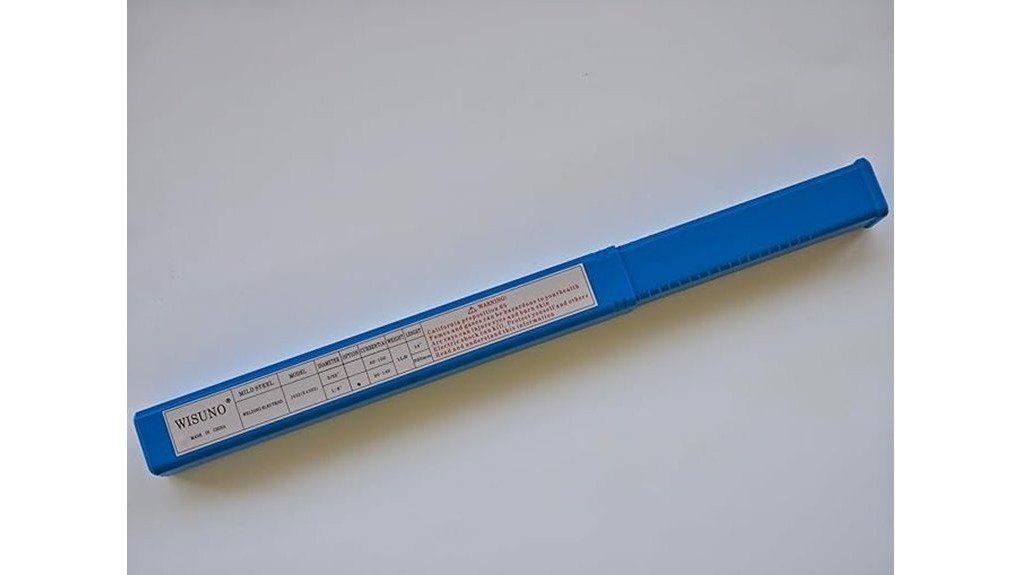
Choosing a general-purpose stick electrode can be confusing when you need easy starts, manageable cleanup, and enough versatility for common steel repairs. The WISUNO J422 (E4303) Welding Rods are 1/8-inch by 14-inch carbon steel stick electrodes supplied in a 1 lb package and aimed at general welding work. Their main appeal is straightforward operation, all-position capability, low spatter, and a stable arc. They make the most sense for mild or low-carbon steel projects, but you should not treat them as a universal electrode for every metal or critical structural job.
Quick Verdict
Rating: Recommended with caveats
Best For: Home repairs, hobby welding, practice, maintenance work, and general mild-steel fabrication.
Bottom Line: These J422 (E4303) rods offer a practical mix of easy arc starting, low spatter, and all-position usability in a convenient 1 lb package. The main limitation is that they are general-purpose stick electrodes, so specialized metals, code-controlled work, and applications requiring a specific electrode classification need a different choice.
Key Specifications
| Specification | Detail |
|---|---|
| Brand | WISUNO |
| Model / Classification | J422 (E4303) |
| Product Type | Stick welding electrodes |
| Electrode Diameter | 1/8 inch |
| Electrode Length | 14 inches |
| Package Weight | 1 lb |
| Primary Material Use | Mild and low-carbon steel |
| Welding Positions | Flat, horizontal, vertical, and overhead |
| Notable Characteristics | Easy arc starting, stable operation, low spatter, and manageable slag cleanup |
| Storage | Keep cool, dry, and protected from moisture |
Key Takeaways
- The 1/8″ x 14″ J422 (E4303) electrodes are supplied as a 1 lb package for general stick-welding work.
- They are intended mainly for mild and low-carbon steel rather than aluminum, stainless steel, or other specialized metals.
- All-position capability gives you flexibility for flat, horizontal, vertical, and overhead joints.
- Easy arc starting and relatively low spatter can make routine repairs and practice work more manageable.
- The rods may tolerate light surface contamination, but cleaning rust, paint, oil, and scale before welding remains the better practice.
- You need a stick/MMA/SMAW welding machine suitable for the electrode size. These are not TIG filler rods.
What Are the WISUNO J422 (E4303) Welding Rods?
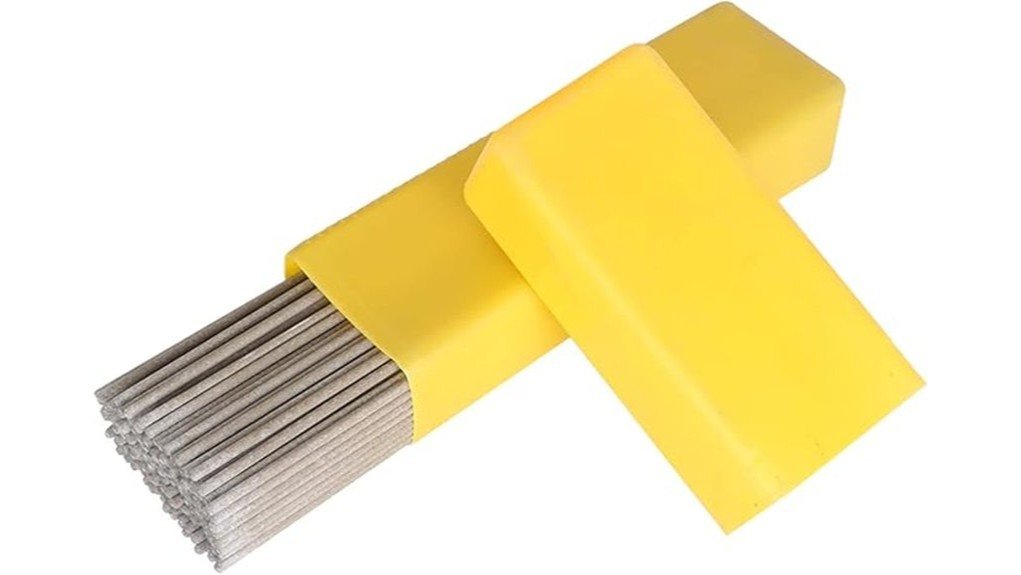
The WISUNO J422 (E4303) rods are consumable electrodes for shielded metal arc welding, commonly called stick or MMA welding. This particular version uses a 1/8-inch diameter and 14-inch length, with the electrodes packaged by weight in a 1 lb quantity.
The product is positioned as a general-purpose option for mild and low-carbon steel. That makes it relevant for ordinary shop fabrication, household repairs, maintenance jobs, practice beads, brackets, frames, gates, and similar work where the project’s welding procedure does not call for a different electrode type.
Its strongest buyer benefit is versatility rather than specialization. You get an electrode designed to start without excessive difficulty, operate in multiple welding positions, and keep spatter reasonably controlled. That combination is useful when you want a practical rod for varied small jobs instead of a highly specialized consumable.
Who Should Buy It?
Best For
- DIY welders doing general repairs on mild or low-carbon steel.
- Beginners who want a manageable stick electrode for practice and routine projects.
- Maintenance and fabrication users who need flat, horizontal, vertical, and overhead capability.
Skip If
- You need electrodes specifically approved for a code-controlled or engineered welding procedure.
- You are welding aluminum, stainless steel, cast iron, or another material requiring a different filler metal.
- You need a smaller-diameter electrode for very thin sheet and tighter heat control.
Before You Buy: Check the base metal, joint design, electrode diameter, and your welder’s capabilities before ordering. J422 (E4303) is a general-purpose stick electrode, not a universal substitute for every welding rod or welding procedure.
Features and Specifications
1/8-Inch Diameter and 14-Inch Length
The reviewed version uses a 1/8-inch diameter and 14-inch length. That is a common full-size stick-electrode format that suits many general fabrication jobs, but electrode diameter still needs to match the material thickness, joint, welding position, and available machine output.
A 1/8-inch rod can be less forgiving on very thin sheet than a smaller electrode because controlling heat becomes more important. If most of your work involves thin automotive panels or delicate sheet metal, compare smaller electrode sizes before buying.
All-Position Welding
One of the main advantages is all-position welding capability. You can use the rods for flat, horizontal, vertical, and overhead work when your technique, settings, and joint preparation are appropriate.
This matters for repair work because the damaged part is not always conveniently positioned on a welding table. Frames, gates, equipment, brackets, and installed components may force you to change position during the same project.
Arc Starting, Spatter, and Cleanup
The J422 (E4303) rods are described as easy to start and capable of maintaining a stable arc. That can reduce frustration during short welds and repeated starts, especially when you are still improving your stick-welding technique.
Low spatter is another practical advantage. Less scattered metal around the joint can reduce post-weld cleanup, although actual spatter still depends on current settings, arc length, electrode angle, surface condition, and operator technique.
Slag also needs to be removed between passes and before inspecting the finished weld. Easy slag removal can make general fabrication more convenient, but you should never assume a weld is sound based only on bead appearance.
Mild-Steel Focus and Surface Condition
These electrodes are intended mainly for mild and low-carbon steel. The original product information also presents them as reasonably adaptable when surfaces have light rust, oxidation, or paint.
That tolerance should not replace proper preparation. Removing loose rust, heavy scale, paint, oil, grease, and other contamination gives you a cleaner joint and makes it easier to judge the arc and finished bead.
Performance and User Experience
For General Repairs
For common repairs on mild-steel items, the combination of easy starting and all-position use is convenient. You can work on brackets, frames, gates, fixtures, and similar components without choosing the rod solely around the orientation of the joint.
The 1 lb package also makes sense if you need electrodes for occasional repairs rather than a large production supply. It gives a hobby or maintenance user a manageable quantity without requiring a much larger box.
For Shop Fabrication
In a home or small fabrication shop, these rods are best treated as general-purpose consumables. They can handle varied low-carbon steel tasks where easy operation and practical bead control matter more than a specialized electrode specification.
Keep in mind that electrode choice is only one part of weld quality. Joint fit-up, base-metal condition, current setting, travel speed, electrode angle, and penetration all affect the finished joint.
For Vertical and Overhead Work
The all-position rating is useful when a part cannot be rotated. Vertical and overhead welding still demand more technique than flat-position work, so beginners should practice on scrap before using those positions on an important repair.
Short practice runs also help you learn how the 1/8-inch electrode behaves with your particular welding machine. Do not assume settings that work well on another welder will transfer perfectly to yours.
For Outdoor and Field Repairs
Stick welding is commonly used for repair and field work because it does not depend on an external shielding-gas bottle at the arc. These rods can therefore be practical for outdoor steel repairs when the work area is otherwise safe.
Do not weld in rain, standing water, or unsafe wet conditions. Wind, nearby combustible materials, electrical hazards, and hot sparks still require proper control even when the welding process itself is suitable for field work.
Pro Tip: Before starting an important joint, run a short test bead on scrap steel of similar thickness. Use that test to confirm arc behavior, heat input, penetration, and slag removal with your welder instead of relying on a generic setting.
How to Use It Correctly
Good results depend as much on preparation and setup as on the electrode itself. A few basic habits can make these rods easier to use and reduce avoidable defects.
- Confirm the base metal: Use the rods for compatible carbon or mild-steel work rather than assuming they suit every metal.
- Clean the joint: Remove heavy rust, loose scale, paint, oil, and grease whenever practical.
- Check fit-up: Poor gaps and misalignment can affect penetration and bead shape.
- Use appropriate machine settings: Follow the electrode packaging, your welder manual, and any applicable welding procedure. A verified current range for this exact listing was not available during review.
- Control arc length: An unnecessarily long arc can increase spatter and make the puddle harder to control.
- Remove slag between passes: Clean the weld before adding another pass or evaluating the joint.
- Practice unfamiliar positions: Vertical and overhead work should be practiced on scrap before you attempt an important repair.
Compatibility and Safety
These are stick welding electrodes, so you need an MMA/SMAW or stick welding machine capable of running the selected 1/8-inch electrode. They should not be described as ordinary TIG filler rods. If you own a multiprocess machine, use its stick-welding mode and follow the machine and electrode instructions.
Welding exposes you to intense arc radiation, hot metal, sparks, electrical hazards, and fumes. Wear an appropriate welding helmet, gloves, flame-resistant clothing, and other protection required for the job. Keep combustible materials away from the work area and provide suitable ventilation.
Storage also matters. Keep unused electrodes cool, dry, and protected from moisture. The original article claimed a fixed 12-month shelf life, but a specific shelf-life limit for this exact product was not verified. Instead of relying on a calendar alone, follow the package instructions and avoid using electrodes with damaged coatings or obvious moisture problems.
Pros and Cons
Pros
- 1/8″ x 14″ format suits many general stick-welding jobs.
- All-position capability adds flexibility for repair and fabrication work.
- Easy arc starting can help with short welds and repeated restarts.
- Low-spatter behavior can reduce unnecessary cleanup.
- 1 lb package is convenient for hobbyists and occasional maintenance work.
Cons
- Not intended as a universal electrode for stainless steel, aluminum, cast iron, or other specialized materials.
- The 1/8-inch diameter may not be ideal for very thin sheet where lower heat input is easier with a smaller rod.
- Critical or code-controlled welding may require a specifically approved electrode and welding procedure.
Is It Worth the Price?
The J422 (E4303) rods make the strongest value case for buyers who need a smaller supply of general-purpose electrodes rather than a large production package. The 1 lb format is convenient for occasional repairs, practice, and maintenance work because you are not committing to a large quantity.
The practical value comes from versatility. All-position capability, easy starts, low spatter, and mild-steel compatibility cover several common needs with one type of electrode. That can make them a smart buy for everyday workshop use when the classification matches your job.
They are less attractive if you already know your project requires a specialized filler metal, a certified low-hydrogen procedure, deeper penetration, or a different electrode diameter. In those cases, buying the correct electrode for the procedure matters more than choosing a general-purpose rod for convenience.
How It Compares to Alternatives
For ordinary mild-steel work, E6013 electrodes are another common general-purpose option and are widely used where smooth operation, all-position capability, and bead appearance matter. Depending on your welding procedure and local electrode standards, they are worth comparing with J422 (E4303) rods before you buy.
E7018 electrodes serve a different need. They are commonly selected for low-hydrogen applications and higher-strength structural work where the procedure calls for that classification. If your project is engineered, structural, or code-controlled, follow the required welding procedure rather than substituting J422 simply because it is easier to obtain.
Frequently Asked Questions
What type of welder should you use with J422 (E4303) rods?
Use a stick, MMA, or SMAW welding machine that can properly run a 1/8-inch electrode. These rods should not be treated as ordinary TIG filler rods, even if your machine supports both TIG and stick processes.
What metals are these J422 welding rods best for?
They are intended mainly for mild and low-carbon steel. Do not assume they are suitable for aluminum, stainless steel, cast iron, or another alloy that requires a different filler-metal classification.
Can J422 rods weld lightly rusted or painted steel?
The product information describes them as reasonably adaptable to lightly contaminated surfaces. You should still remove loose rust, paint, oil, grease, and heavy scale whenever possible because cleaner steel makes weld quality easier to control.
Can you weld in vertical and overhead positions?
Yes. The J422 (E4303) rods are described for all-position welding, including flat, horizontal, vertical, and overhead work. Vertical and overhead joints require more technique, so practice on scrap first if you are inexperienced.
Are these rods suitable for outdoor welding?
They can be practical for outdoor and field stick-welding jobs when conditions are safe and dry. Do not weld in rain, standing water, or an area where sparks and hot metal can start a fire.
How should J422 welding rods be stored?
Keep them in a cool, dry location and protect them from moisture. A specific fixed shelf life for this exact listing was not verified, so follow the package guidance and inspect the electrode coating before use.
Are 1/8-inch J422 rods good for very thin sheet metal?
They may be less forgiving on very thin sheet because controlling heat and burn-through becomes more difficult. If thin material is your main application, compare a smaller-diameter electrode and confirm the recommended welding procedure first.
The Bottom Line
The WISUNO J422 (E4303) 1/8″ x 14″ welding rods are worth considering for hobbyists, repair work, maintenance, and general mild-steel fabrication where an easy-running, all-position stick electrode fits the job. Their strongest points are practical handling, low spatter, and versatility, while their main limitation is that they are not intended to replace specialized electrodes required for other metals or critical welding procedures. If your base metal and welder are compatible, the 1 lb package provides a useful general-purpose option without forcing you to buy a large quantity.
Ready to Buy?
Check the latest price, package details, and product information before you decide.