YESWELDER Argon CO2 Regulator Review
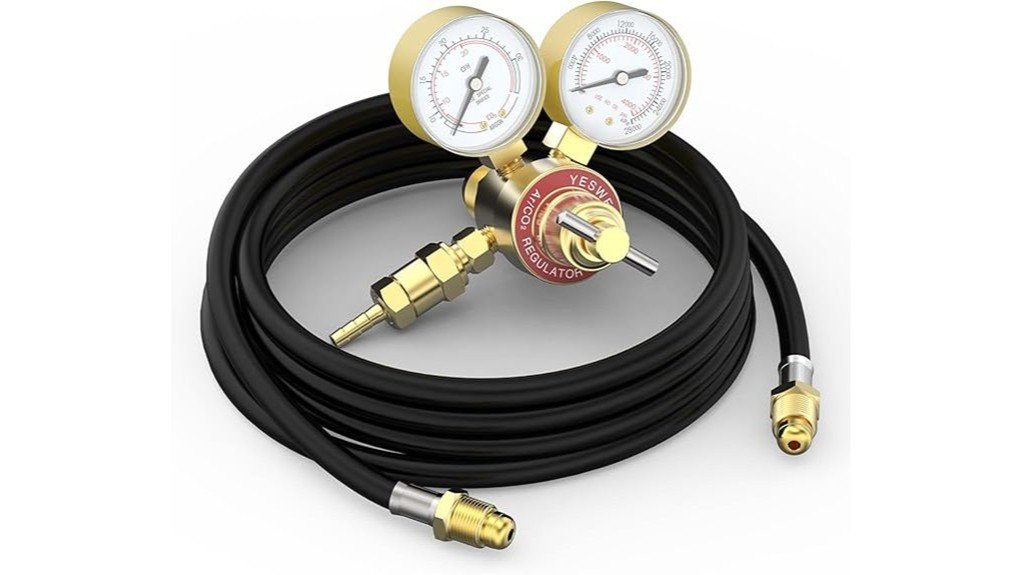
Choosing a shielding-gas regulator is mainly a compatibility decision: the inlet must match your cylinder, the outlet must connect to your hose or welder, and the flow scale must suit the gas you plan to use. The YESWELDER Argon CO2 Regulator combines a CGA580 inlet, a 0 to 4000 psi cylinder-pressure gauge, separate argon and CO2 flow scales, and an 8.2-foot hose. That package is convenient for many MIG and TIG setups, but it is not universal. This review explains the verified specifications, practical setup points, safety concerns, and the buyers who should consider another regulator.
Quick Verdict
Rating: 8/10, recommended with caveats
Best For: MIG and TIG users with a compatible CGA580 cylinder who want a regulator, multiple outlet options, and a longer gas hose in one package.
Bottom Line: The verified flow ranges and 8.2-foot hose make this a practical garage-shop option. Its main limitation is compatibility, because the CGA580 inlet and outlet fittings must match your exact cylinder and welding setup.
Key Specifications
| Specification | Detail |
|---|---|
| Brand | YESWELDER |
| Product | Argon CO2 welding gas regulator with hose |
| ASIN | B0DGWZK34M |
| Supported processes | MIG and TIG welding, according to the product listing |
| Listed gases | Argon, helium, and CO2 |
| Inlet connection | CGA580 |
| Inlet pressure gauge | 0 to 4000 psi |
| Argon flow scale | 0 to 30 CFH |
| CO2 flow scale | 0 to 20 CFH |
| Outlet options | 9/16-inch male, 5/8-inch female, and 1/4-inch hose barb |
| Included items | Regulator and 8.2-foot gas hose |
| Best use | Compatible garage, hobby, and light shop MIG or TIG setups |
| Key safety check | Confirm the cylinder valve, gas, hose, and welder connection before installation |
What Is the YESWELDER Argon CO2 Regulator?
This YESWELDER unit is a pressure regulator and flow-gauge assembly for controlling shielding gas supplied to a MIG or TIG welder. The inlet gauge provides a cylinder-pressure reference up to 4000 psi, while the second gauge uses separate CFH scales for argon and CO2. You adjust the outlet flow to suit your welding process, gas, joint, and working conditions.
The package also includes an 8.2-foot hose and three listed outlet interfaces: a 9/16-inch male connection, a 5/8-inch female connection, and a 1/4-inch hose barb. Those options can reduce the need to buy a separate hose immediately, but you still need to compare every fitting with your welder and cylinder before ordering.
Who Should Buy It?
Best For
- Home and garage welders using a compatible CGA580 shielding-gas cylinder
- MIG or TIG users who need separate argon and CO2 flow scales
- Workspaces that benefit from an included 8.2-foot hose and several outlet options
Skip If
- Your cylinder does not have a CGA580 valve connection
- Your process needs a flow range above the listed 30 CFH argon or 20 CFH CO2 scales
- You need documented industrial certifications or product-specific warranty terms before purchase
Before You Buy: Do not assume that “argon/CO2” means the regulator fits every argon, mixed-gas, or pure CO2 cylinder. The verified inlet is CGA580. Ask your gas supplier to confirm the cylinder valve and any approved adapter requirements before you connect the regulator.
Feature-by-Feature Review
CGA580 Inlet Compatibility
The CGA580 inlet is the first specification to check. It must match the valve on your shielding-gas cylinder without forcing threads, stacking unapproved adapters, or modifying fittings. This connection is common on many inert-gas and argon-rich mixed-gas cylinders, but your local supplier should confirm the exact valve fitted to the cylinder you rent or own.
This compatibility check matters more than the brand name. A regulator with useful gauges and a long hose still has no value if the inlet does not match your cylinder.
Dual Argon and CO2 Flow Scales
The outlet gauge shows 0 to 30 CFH for argon and 0 to 20 CFH for CO2. Separate scales are helpful because different gases do not produce identical readings on the same calibrated gauge. You should use the scale named for your gas and follow the welder or consumable guidance for the starting flow setting.
The 30 CFH argon range covers many common indoor MIG and TIG tasks, but the ideal setting varies with nozzle size, drafts, torch angle, joint access, and gas choice. The gauge gives you a repeatable reference, not a guarantee that one number will suit every weld.
0 to 4000 PSI Cylinder-Pressure Gauge
The inlet gauge reads from 0 to 4000 psi and provides a general view of cylinder pressure. That helps you notice a major pressure drop and plan for a refill before a larger job. It should not be treated as a precise remaining-time meter, because gas use depends on cylinder size, flow setting, leaks, and arc time.
Open the cylinder valve and adjust the regulator only as directed by the product instructions and your gas supplier. If a gauge is damaged, does not return normally, or behaves erratically, stop using the regulator until it has been inspected or replaced.
Three Outlet Connection Options
The listing specifies a 9/16-inch male outlet, a 5/8-inch female outlet, and a 1/4-inch hose barb. This is useful when you own more than one welder or need flexibility in how the hose attaches. It may also reduce the number of extra fittings needed for a basic garage setup.
Multiple outlets do not make the unit universal. Thread diameter, pitch, sealing method, hose condition, and machine-side fitting still need to match. Do not force a fitting that starts crooked or binds after the first turn.
8.2-Foot Gas Hose
The included 8.2-foot hose gives you more room to position a secured cylinder away from sparks, foot traffic, and the immediate workbench. It can also help when the welder sits on a cart and the cylinder is mounted nearby rather than directly behind the machine.
Extra length creates another inspection point. Route the hose where hot metal, sharp edges, wheels, doors, and workpieces cannot crush or cut it. Replace the hose if you find cracking, burns, damaged ends, or a leak.
Gas and Welding-Process Support
The listing names argon, helium, and CO2 and describes the regulator for MIG and TIG welding. In practice, the correct gas depends on your process, wire or electrode, base metal, and welder setup. The regulator controls the supplied gas, but it does not make an unsuitable shielding gas appropriate for a specific weld.
For mixed gases, confirm that both the cylinder valve and the gauge scale are appropriate. The listing provides only argon and CO2 flow scales, so helium users should obtain setting guidance from the gas supplier or equipment manufacturer rather than estimating from appearance alone.
How It Performs in Real Use
For a Garage MIG Setup
In a typical garage MIG station, the long hose is the most noticeable convenience. You can secure the cylinder in a sensible position and still reach a welder cart or bench without stretching the line. The dual scale also makes the gauge easier to read when changing between supported gases, provided the fittings and cylinder remain compatible.
For TIG Bench Work
TIG work often benefits from controlled, repeatable shielding-gas flow. The 0 to 30 CFH argon scale gives you a usable reference for many shop tasks. You will still need to account for drafts, cup size, torch setup, and post-flow settings on the welder.
For Small or Crowded Workspaces
The 8.2-foot hose can improve layout in a small shop, but only when it is routed carefully. Coiling excess hose beside hot work or across a walkway creates a new hazard. Use the extra length to place the cylinder safely, not to leave loose loops around the welding area.
For Regular Long-Term Use
Long-term value depends on inspection and correct handling. Check the hose, connection faces, threads, gauge lenses, and adjustment control before each use. A regulator that has been dropped, contaminated, or exposed to heat should not be trusted simply because the gauges still move.
Pro Tip: Photograph the cylinder valve and the welder-side gas fitting before you order. Compare those photos with the listing and send them to your gas supplier when you need help confirming the correct regulator and hose connections.
Setup Tips Before First Use
- Confirm the gas and cylinder valve. Verify that the CGA580 inlet is correct for the exact cylinder you will use.
- Inspect every part. Check the regulator, gauges, hose, threads, fittings, and sealing surfaces for damage or debris.
- Secure the cylinder upright. Use a proper chain, cart, or restraint before installing the regulator.
- Connect without forcing threads. Stop if a fitting cross-threads, binds, or does not seat as the instructions describe.
- Route the hose safely. Keep it away from sparks, hot metal, sharp edges, vehicle tires, and walking paths.
- Check for leaks and operation. Follow the regulator instructions and gas-supplier procedure before welding. Close the cylinder valve when work is finished.
Compatibility, Safety, and Maintenance
Shielding-gas equipment works under high pressure, so installation is not the place for guesswork. Keep the cylinder secured upright, protect it from impact, close the valve when work is finished, and remove the regulator before moving a cylinder unless it is secured on equipment designed for that purpose. OSHA provides additional guidance on compressed-gas cylinders used for welding.
Use the regulator in a dry, ventilated work area and follow the cylinder label, product instructions, welder manual, and gas-supplier directions. Argon and similar shielding gases can displace oxygen in a poorly ventilated space even though they are not fuel gases. Never use a damaged regulator or hose, and do not attempt an improvised repair on pressure-control components.
Warranty coverage was not shown on the verified Amazon product details. YESWELDER publishes a general U.S. warranty policy, but eligibility and terms can depend on the product, seller, purchase channel, and documentation. Check the current listing and policy before buying.
Pros and Cons
Pros
- Verified CGA580 inlet for compatible shielding-gas cylinders
- Separate 0 to 30 CFH argon and 0 to 20 CFH CO2 scales
- 0 to 4000 psi inlet gauge provides a cylinder-pressure reference
- Three listed outlet interfaces add connection flexibility
- Included 8.2-foot hose supports more practical cylinder placement
Cons
- CGA580 does not fit every gas cylinder or valve configuration
- The listing does not provide product-specific certification details or warranty terms
- The hose and multiple outlets still require careful matching, routing, and leak checks
Is It Worth the Price?
This YESWELDER regulator is worth considering as a budget-to-mid-range package when you need the verified CGA580 inlet, dual gas scales, several outlet choices, and an included long hose. Buying those parts together can be more convenient than sourcing a regulator and hose separately.
You get the most value when every connection matches without extra adapters and the listed flow ranges suit your work. It is not the best fit if you need a higher flow range, a flow-tube design, documented industrial approvals, or a regulator built for a different cylinder valve.
How It Compares to Alternatives
A Hobart Flowgauge Regulator with 5-foot hose is worth comparing if you want a recognized welding-equipment brand, a 10 to 50 SCFH range, and documented product literature. It has a shorter hose and a different flow range, so it suits a different priority.
YESWELDER also sells a separate QB01 flow-meter regulator with a vertical flow tube and 0 to 60 CFH range. That style may appeal to buyers who prefer a visible floating-ball flow reading. The reviewed model makes more sense when you prefer dial gauges, the included 8.2-foot hose, and the exact outlet options listed above.
Frequently Asked Questions
Does this regulator fit every argon or CO2 cylinder?
No. The verified inlet is CGA580, so the cylinder valve must match that connection or use an adapter specifically approved for the gas and equipment. Confirm the valve with your gas supplier before ordering.
Can you use it for both MIG and TIG welding?
The product listing identifies it for MIG and TIG welding. Your gas, hose connection, flow setting, and machine configuration must still match the specific welding process and material.
What flow ranges does the outlet gauge show?
The gauge shows 0 to 30 CFH for argon and 0 to 20 CFH for CO2. Use the scale for the selected gas and follow the welder, consumable, and gas-supplier guidance for your starting setting.
What comes in the package?
The verified listing includes the YESWELDER regulator and an 8.2-foot hose. Check the current seller page when you order because package contents can change, and confirm whether any clamps, washers, or machine-specific fittings are required.
Can you use the argon scale for helium?
The listing names helium as a supported gas, but the gauge description provides argon and CO2 scales only. Ask the gas supplier or equipment manufacturer how to interpret the reading for helium rather than assuming the argon scale is exact.
How should you check the regulator before use?
Inspect the gauges, adjustment control, hose, threads, fittings, and sealing surfaces for impact damage, burns, cracks, or contamination. Follow the product instructions and gas-supplier procedure for connection and leak testing before welding.
Can you leave the regulator attached when moving the cylinder?
Remove the regulator and install the valve-protection cap before moving the cylinder unless it is secured on a special carrier designed for that purpose. Keep the cylinder upright and restrained according to applicable safety rules.
Does YESWELDER include a warranty?
YESWELDER publishes a general U.S. warranty policy, but product-specific coverage was not confirmed on the verified Amazon details. Review the current seller, purchase-channel, and warranty terms before buying.
The Bottom Line
The YESWELDER Argon CO2 Regulator is a sensible 8/10 choice for MIG and TIG users who have a compatible CGA580 cylinder and value separate gas scales, three outlet options, and an included 8.2-foot hose. Skip it if your cylinder connection differs, your flow needs exceed the listed ranges, or you require product-specific certification and warranty documentation. Its strongest advantage is practical connection flexibility, while its main limitation is the need for careful compatibility checks.
Ready to Buy?
Check the latest price, seller, package contents, and product details before you decide.