Disclosure: As an Amazon Associate, we earn from qualifying purchases. If you click a link on this page and make a purchase, we may receive a small commission at no extra cost to you.
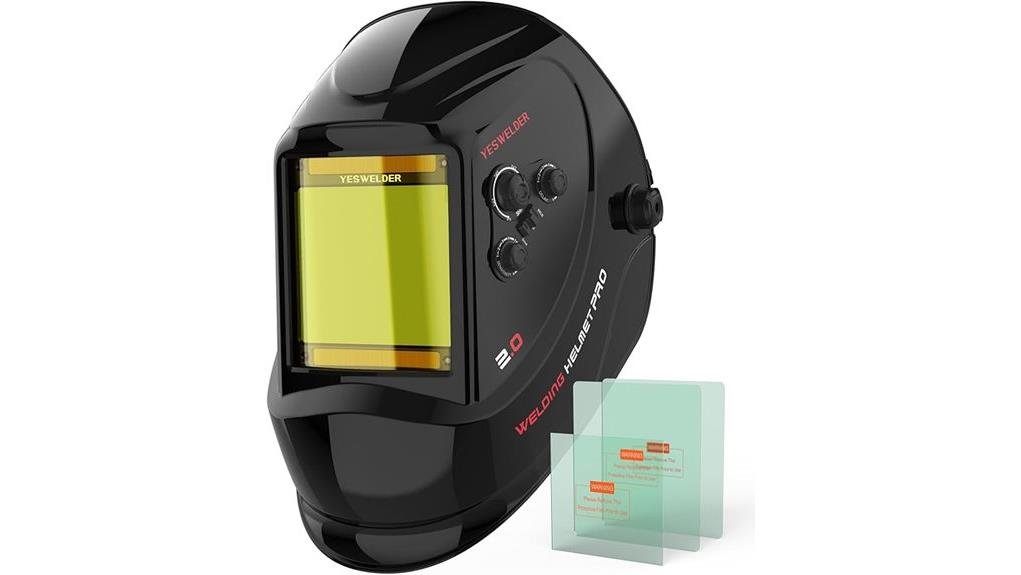
A welding helmet can have an impressive feature list and still be frustrating if the lens feels cramped, the controls are awkward, or the headgear will not stay put. The YESWELDER LYG-M800H focuses on visibility, offering a 3.93 by 3.66-inch viewing area, four arc sensors, true-color optics, and external shade controls. Its current Amazon listing also identifies an upgraded 1/1/1/1 optical class and a 3/5-9/9-13 shade range. This review explains the benefits, safety limits, and model-variant details you should check before buying.
Quick Verdict
Rating: 8.5/10, Recommended with caveats
Best For: Hobby welders, fabrication students, and shop users who want a large true-color view without moving into a premium helmet tier.
Bottom Line: The LYG-M800H gives you a wide view, four-sensor arc detection, replaceable battery power, and useful controls for TIG, MIG, stick, cutting, and grinding. Its main tradeoffs are budget-grade headgear and specification differences across older M800H listings, so confirm the exact variant shown on the product page.
| Specification | Detail |
|---|---|
| Brand | YESWELDER |
| Model | LYG-M800H |
| Product type | Auto-darkening welding helmet |
| Viewing area | 3.93 x 3.66 inches |
| Optical class | 1/1/1/1 on the current Amazon listing |
| Shade range | Light state 3; dark shades 5-9 and 9-13 on the current listing |
| Arc sensors | 4 |
| Switching speed | 1/30000 second under stated normal conditions |
| Controls | External shade, sensitivity, delay, and mode controls |
| Processes | TIG, MIG, MMA/stick, plasma cutting, and grinding |
| Shell material | Reinforced polypropylene |
| Power | Solar assist with replaceable CR2450 lithium battery |
| Weight | 2.2 pounds |
| Included items | Helmet, storage bag, replacement battery, two outer cover lenses, and one inner lens |
| Important note | M800H specifications can differ by variant and production version. Check the selected style before ordering replacement parts. |
What Is the YESWELDER LYG-M800H?
The LYG-M800H is a variable-shade auto-darkening helmet built for common shop processes. Instead of lifting a passive hood after every arc, you can keep the helmet down while the auto-darkening filter changes from its light state to the selected dark shade. External knobs let you adjust shade, sensitivity, and delay without opening the helmet.
Its main selling point is the near-square 3.93 by 3.66-inch lens. That shape gives you more vertical visibility than many narrow rectangular filters, which helps when you are checking joint position, torch angle, or the area around a weld. The helmet also accepts magnifying lenses, though fit can depend on the cheater-lens format and the exact M800H variant.
Key Takeaways
- The 3.93 by 3.66-inch viewing area is the strongest reason to consider this helmet.
- Four arc sensors help maintain detection when part of the lens is blocked by your torch, hand, or workpiece.
- External shade, sensitivity, delay, cut, weld, and grind controls make process changes faster.
- The current listing states 1/1/1/1 optical clarity, but older M800H material may show 1/1/1/2.
- The 2.2-pound weight is manageable, though headgear comfort and balance matter more than weight alone.
- Grind mode does not darken for welding, so you must return the selector to a welding mode before striking an arc.
Who Should Buy It?
Best For
- Home-shop welders who want a large lens for MIG, stick, and general fabrication.
- TIG learners who need adjustable sensitivity and a clear view of the joint.
- Buyers who want replaceable battery power and included spare cover lenses.
Skip If
- You need a certified hard-hat system, supplied-air respirator, or specialized overhead-welding setup.
- You want premium headgear, digital memory settings, or an integrated work light.
- You cannot verify that replacement lenses and headgear match your exact M800H version.
Before You Buy: Check the selected Amazon style and photos, not just the M800H family name. Older listings and graphic variants may show different light-state or optical-class details, and replacement parts should match the exact shell and filter version.
Advanced Blue Light Protection
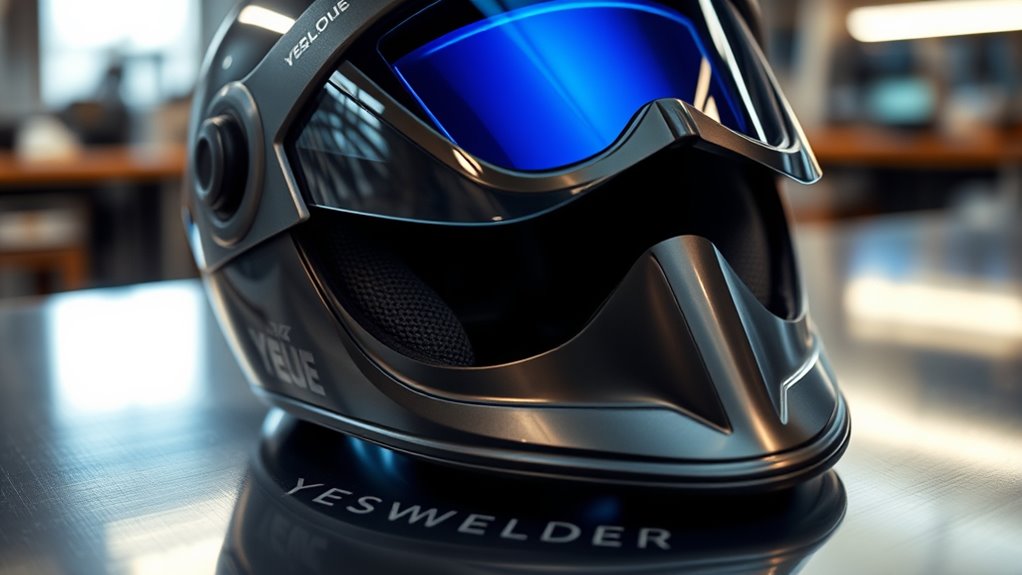
YESWELDER markets the outer lens as a blue-light-blocking design. Treat that as a comfort feature, not the primary safety system. Protection depends on correct shade selection, UV and infrared filtering, an undamaged filter, and suitable protective equipment.
The American Academy of Ophthalmology’s blue-light guidance provides useful context and does not support broad eye-damage claims. The more relevant benefits here are the true-color view, adjustable shades, and stated UV/IR protection.
Viewing Area and Optical Clarity
The 3.93 by 3.66-inch lens provides about 14.4 square inches of viewing area. Its extra height helps you see the puddle and nearby joint line with less head movement.
The current Amazon listing states an upgraded 1/1/1/1 optical class. The four numbers describe distortion, light diffusion, shade consistency, and angle dependence. A clean cover lens and correct shade still strongly affect visibility.
True-color optics reduce the strong green cast associated with older filters. You should get easier color separation between the arc, base metal, heat-affected area, and surrounding shop. Do not expect a perfectly neutral view, since shade level, process, ambient light, and lens condition all affect color.
Pro Tip: Keep spare outer cover lenses near your welding table. Spatter and grinding dust can make a good auto-darkening filter look hazy, and replacing the inexpensive cover lens often restores clarity faster than changing helmet settings.
Auto-Darkening Speed and Controls
Four arc sensors watch for the light from an arc and trigger the filter. More sensors do not guarantee flawless operation, but they improve detection when one sensor is partly blocked by your position, the torch, or the workpiece. The listing states a 1/30000-second bright-to-dark response under normal conditions.
Sensitivity controls how readily the lens reacts. A higher setting can help with low-amperage TIG, while a lower setting can reduce false triggering from nearby welders or bright ambient light. Delay controls how long the lens stays dark after the arc stops, which can help when the puddle remains bright or when you are making repeated tacks.
The selector also includes cut, weld, and grind positions. The manufacturer’s manual warns that the lens will not darken in grind mode. Always check the mode before welding, especially after surface preparation.
Welding, Cutting, and Grinding Applications
The variable dark shades cover TIG, MIG, and MMA/stick welding, while the lower range supports cutting work. The large lens is especially helpful for fit-up, tack welding, and projects where you move between the joint and surrounding work area.
For low-amp TIG, start with the manual’s recommended sensitivity range and test the lens before welding. For MIG or stick work, adjust shade to the process and amperage rather than choosing the lightest setting that feels comfortable. The OSHA welding, cutting, and brazing guidance is a useful safety reference, but your process chart and helmet manual should control the final shade choice.
Grinding mode lets you use the clear state for prep work without removing the helmet. It is convenient for short transitions, but this is still a welding helmet rather than a full-face impact shield for every grinding task. Wear approved safety glasses with side protection underneath and use additional face protection when the job requires it.
Shell, Headgear, and Comfort
The reinforced polypropylene helmet weighs about 2.2 pounds. Comfort still depends on balance, crown depth, rear-band tension, and side-pivot pressure.
The pivot-style headgear includes a padded sweatband and several adjustment points. Set the crown depth first, then the rear ratchet, then the tilt and side tension. If the helmet drops too quickly, tighten both side knobs evenly. Uneven side settings can twist the headgear and shorten its service life.
The storage bag helps keep dust off the lens. Store the helmet dry and inspect the lenses, filter, shell, and headgear before use.
How It Performs in Real Use
For MIG and General Fabrication
The wide, tall lens makes it easier to see the gun angle and joint before the arc starts. Four sensors are useful when you weld inside frames or around fixtures, though you should still position the helmet so the sensors have a clear path to the arc.
For Low-Amp TIG
Adjustable sensitivity is the key benefit. You can raise sensitivity for a small TIG arc and use the delay control to suit your pace. Test the auto-darkening action before beginning a long seam, and stop immediately if the lens flickers or fails to darken.
For Cutting and Grinding
The external mode control saves time when you switch between prep and welding. The risk is forgetting that the helmet is still in grind mode. Build a quick mode check into your routine before every arc strike.
For Longer Shop Sessions
The 2.2-pound shell is reasonable for extended use, but the standard headgear may not feel as refined as premium multi-point systems. Careful adjustment can improve balance. Buyers who wear a hood all day may still prefer a higher-end headgear design or a compatible replacement assembly.
Setup and Usage Tips
- Remove protective film: Check both sides of new cover lenses for clear shipping film before judging visibility.
- Test the filter: Use the self-check function when available and confirm that the lens darkens before welding.
- Set the process mode: Make sure the selector is on weld or cut, not grind, before striking an arc.
- Choose the correct shade: Match the shade to your process and amperage using the helmet manual and applicable safety guidance.
- Adjust both pivots evenly: Keep left and right headgear positions symmetrical to reduce binding and premature wear.
- Wear safety glasses: A welding helmet does not replace approved impact-resistant eye protection with side shields.
- Replace damaged lenses: Stop using the helmet if the auto-darkening filter or cover lenses are cracked, deeply scratched, pitted, or unreliable.
Read the official LYG-M800H series operator’s manual before first use. The manual includes shade guidance, sensitivity recommendations, battery instructions, maintenance steps, and safety limits.
Compatibility and Safety
This helmet is designed for welding and related shop work, but it does not provide unlimited eye, face, ear, respiratory, or head protection. Use approved safety glasses underneath, wear process-appropriate gloves and flame-resistant clothing, and add hearing or respiratory protection when the task requires it.
The M800H manual says not to use the helmet for overhead welding, around explosives, or around corrosive liquids. It also directs you to stop welding immediately if the auto-darkening lens does not darken when the arc starts. Do not continue by relying on the lens’s passive state.
Prescription glasses may fit under the shell, but fit depends on frame size and headgear position. Prescription glasses are not a substitute for impact-rated safety glasses unless they are specifically rated and provide suitable side protection.
Pros and Cons
Pros
- Large 3.93 by 3.66-inch viewing area with useful vertical visibility.
- Four arc sensors and adjustable sensitivity for varied welding positions.
- External shade, delay, sensitivity, cut, weld, and grind controls.
- Solar assist with a user-replaceable CR2450 battery.
- Storage bag and spare cover lenses are included with the listed package.
Cons
- Headgear feels more basic than premium all-day professional systems.
- M800H variants and older listings can show different optical or light-state specifications.
- Grind mode creates a serious user-error risk if you forget to switch back before welding.
Is It Worth the Price?
The LYG-M800H sits in the budget-to-mid-range part of the auto-darkening helmet market. Its value comes from combining a large viewing area, four sensors, true-color optics, replaceable battery power, and external controls in one package.
It is a strong value for the price when visibility matters more to you than premium headgear, digital menus, memory presets, or an integrated light. It is less compelling for daily industrial use where hard-hat compatibility, supplied-air integration, fleet-standard replacement parts, or employer-approved PPE requirements take priority.
How It Compares to Alternatives
The Lincoln Electric VIKING 3350 and Miller Digital Infinity are worth comparing when you want a more established professional platform, premium headgear, and broader accessory support. Those options usually target a higher price tier. The ESAB Sentinel A60 is another premium alternative with a panoramic true-color filter and more advanced digital controls.
The YESWELDER LYG-M800H makes the most sense when you want a large near-square view and straightforward external controls at a lower entry cost. Choose a premium alternative when all-day comfort, digital presets, hard-hat accessories, or employer-standard equipment matter more than purchase price.
Frequently Asked Questions
What is the viewing size of the YESWELDER LYG-M800H?
The viewing area is 3.93 by 3.66 inches. Its tall, near-square shape helps you see more of the joint and surrounding work than many narrow filters.
Can you use it for TIG, MIG, stick, cutting, and grinding?
Yes, the listed shade ranges and mode selector cover TIG, MIG, MMA/stick, plasma cutting, and grinding. You must choose the correct shade for the process and return the helmet to weld or cut mode after grinding.
Does the LYG-M800H use a replaceable battery?
Yes. The current listing identifies solar assist with a replaceable CR2450 lithium battery. Replace the battery when the low-voltage indicator appears or the lens response becomes unreliable, following the manual’s instructions.
Why do some M800H listings show different optical ratings?
The M800H name covers several colors, graphic shells, and production versions. The current ASIN lists 1/1/1/1 optics, while older manufacturer material may show 1/1/1/2, so check the exact selected style before buying.
Can you wear prescription glasses under the helmet?
Many standard frames should fit, but clearance depends on frame size and headgear adjustment. You still need approved impact-resistant eye protection with suitable side coverage.
How should you set sensitivity for low-amp TIG?
Start in the middle-to-high sensitivity range recommended by the manual, then test before welding. Raise sensitivity if the lens misses the arc, or lower it if nearby light causes unwanted triggering.
Can you weld while the helmet is in grind mode?
No. The manual warns that the lens will not darken in grind mode. Check the selector before every arc strike and stop immediately if the filter fails to darken.
What warranty does the YESWELDER LYG-M800H include?
Warranty terms are not stated clearly on the current product page. Check the manufacturer warranty link and seller details for the exact coverage, registration rules, and claim process before ordering.
The Bottom Line
The YESWELDER LYG-M800H is a sensible choice for hobbyists, students, and general fabricators who want a large true-color view, four arc sensors, and practical external controls. Skip it when you need premium all-day headgear, hard-hat or supplied-air integration, or tightly standardized replacement parts. Its visibility and feature set earn an 8.5/10 recommendation, with the condition that you verify the exact M800H variant and follow the safety manual.
Ready to Buy?
Check the latest price, selected model style, included parts, and current warranty details before you decide.