Disclosure: As an Amazon Associate, we earn from qualifying purchases. If you click a link on this page and make a purchase, we may receive a small commission at no extra cost to you.
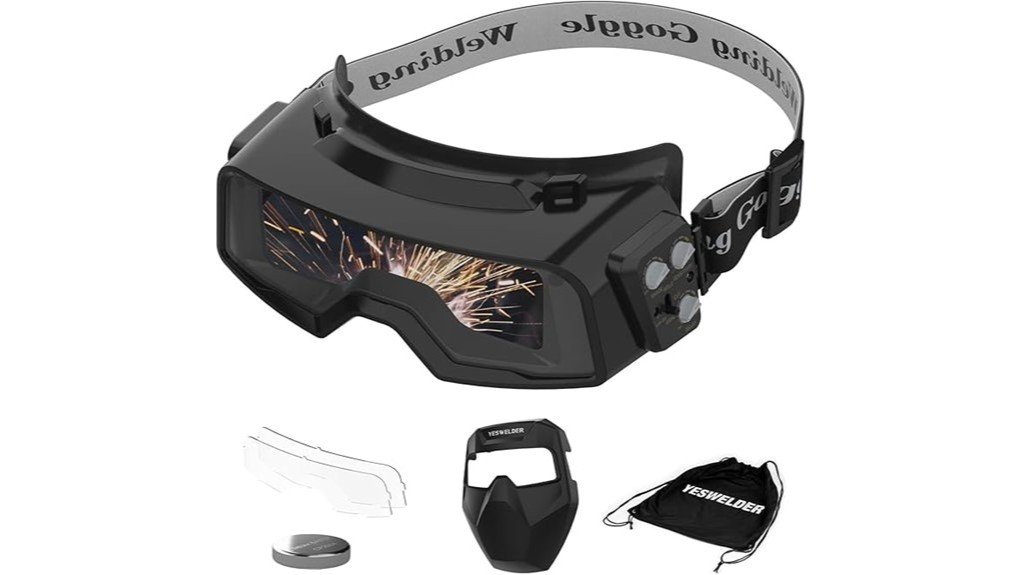
Welding in a cramped repair area can make a full-size helmet feel bulky, but switching to goggles raises an important question: do you still get enough visibility, shade control, and face coverage for the job? The YESWELDER LYG-R100A True Color Auto Darkening Welding Goggles combine a narrow goggle-style lens with an included face shield for TIG, MIG, stick, plasma cutting, and grinding tasks. This review explains how the 4/5-9/9-13 shade range, two arc sensors, compact 4.82 x 1.38-inch viewing area, and roughly 7-ounce goggle weight affect real use. Their strongest advantage is access in tight spaces, while their main limitation is a smaller view and less enclosing coverage than a conventional welding helmet.
Quick Verdict
Rating: 8/10
Best For: DIY welders, auto-restoration work, field repairs, and confined-space jobs where a normal helmet is hard to position.
Bottom Line: The LYG-R100A offers useful shade controls, true color viewing, hard-hat compatibility, and an included shield in a light package. It is less appealing for long fabrication sessions, high-spatter work, or any workplace that requires a certification you have not confirmed.
| Specification | Detail |
|---|---|
| Brand | YESWELDER |
| Model | LYG-R100A |
| Product type | True color auto-darkening welding goggles with included face shield |
| Material | ABS and polypropylene components |
| Light state | DIN 4 |
| Shade range | Shade 4 for grinding, 5-9 for cutting, and 9-13 for welding |
| Viewing area | 4.82 x 1.38 inches |
| Optical class | Listed as 1/1/1/2 |
| Arc sensors | 2 |
| Switching speed | Listed at 1/30,000 second from light to dark |
| Controls | Adjustable shade, sensitivity, and delay |
| Power | Solar-assisted power with replaceable CR2450 lithium battery |
| Weight | About 7 ounces for the goggles; published seller figures vary slightly |
| Compatible work | TIG, MIG, stick/MMA, plasma cutting, and grinding |
| Fit features | Adjustable headgear, hard-hat compatible without an adapter, and designed to fit over many eyeglasses |
| Included items | Welding goggles, face shield, user manual, 2 replacement lens covers, and 1 replacement battery |
| Best use | Compact welding and repair work where helmet clearance is limited |
What Is the YESWELDER LYG-R100A?
The YESWELDER LYG-R100A is a compact auto-darkening goggle kit rather than a conventional hood-style welding helmet. It uses a narrow true color lens, two arc sensors, adjustable headgear, and an included face shield. The kit is made for welding and cutting in places where a standard helmet can bump into a vehicle body, frame, pipe, machine housing, or overhead obstruction.
The included shield is an important part of the package because it adds coverage against limited spatter and radiant energy. Even with the shield attached, the open, compact design does not enclose your head and neck like many full welding helmets. You should treat it as specialized PPE for suitable tasks, not as an automatic replacement for every helmet.
Key Takeaways
- The LYG-R100A combines auto-darkening goggles with an included face shield, two replacement lens covers, and a spare CR2450 battery.
- The shade controls cover grinding at shade 4, cutting at 5-9, and welding at 9-13.
- The 4.82 x 1.38-inch lens is wide for goggles but much shorter than the viewing area on many full helmets.
- Two sensors, adjustable sensitivity, and adjustable delay help you tune the filter for different arc conditions.
- The narrow profile fits under many hard hats without an adapter and can reach areas where a normal helmet may not fit.
Before You Buy: Confirm the exact PPE and certification requirements for your jobsite before relying on this kit. The current Amazon listing does not clearly state an ANSI Z87.1 certification, and the included shield should not be assumed to cover every impact, spatter, or radiant-energy hazard.
Who Should Buy It?
Best For
- Auto restoration, exhaust repair, pipe work, and other jobs with limited helmet clearance.
- DIY welders who want one compact filter for welding, plasma cutting, and grinding modes.
- Hard-hat users who need a low-profile option that does not require a separate helmet adapter.
Skip If
- You need the broad head, neck, and side coverage of a full welding hood.
- You prefer a tall panoramic lens for long beads, bench fabrication, or frequent out-of-position welding.
- Your employer requires a clearly documented standard or marking that you cannot verify on the product itself.
True Color Lens and Shade Control
The lens has a DIN 4 light state and adjustable dark ranges of 5-9 and 9-13. In practical terms, that gives you a low setting for grinding, a middle range for cutting, and a darker range for common arc-welding processes. You still need to select the shade by process, arc current, electrode size, and the manufacturer instructions rather than choosing a setting only because the puddle looks bright or dim.
True color optics reduce the heavy green cast associated with older filter designs. That can make joint edges, soapstone marks, torch position, and the weld puddle easier to distinguish. The lens is listed with a 1/1/1/2 optical class, which is a solid specification for a compact filter, although the shallow lens height still limits your vertical field of view.
Auto-Darkening Speed, Sensors, and Controls
YESWELDER lists a light-to-dark response of 1/30,000 second. The two arc sensors detect the start of the weld and trigger the filter automatically. The system also includes sensitivity and delay adjustments, so you can change how readily the lens reacts and how quickly it returns to the light state after the arc stops.
Two sensors are adequate for many repair and shop positions, but sensor blockage matters more in a tight corner. A hand, clamp, body panel, pipe, or workpiece can interrupt the sensor’s view of the arc. Keep both sensor windows clean, test the filter before each session, and reposition yourself if the lens flickers or lightens during a weld.
Fit, Weight, and Hard-Hat Compatibility
The goggles weigh about 7 ounces, with published figures ranging slightly by source. That is far lighter than many helmet assemblies and reduces the leverage pulling on your neck when you are under a vehicle or looking upward. The adjustable headgear lets you set the tension, while the close-fitting eye covering helps block stray light around the lens.
The LYG-R100A is designed to fit under a hard hat without a dedicated adapter. The product description also says you can wear many eyeglasses inside the goggles. Fit still depends on your frame shape, respirator, hearing protection, and face size, so test the full PPE combination before you start work.
Pro Tip: Put on every item you plan to wear together, including your respirator, glasses, hard hat, and shield. Turn your head through the positions you will use, then confirm that the goggles stay securely positioned, the sensors remain exposed, and the shield does not hit nearby equipment.
Included Face Shield and Coverage
The package includes a face shield that attaches to the goggle assembly. It gives you more protection from limited spatter and radiant energy than the goggles alone, which makes the kit more useful than a bare auto-darkening lens for quick welding work.
The shield is still more open than a full helmet and does not protect your entire head, neck, ears, or clothing. For grinding, flying particles can approach from different directions. For welding, sparks and hot metal can reach exposed skin. Select gloves, flame-resistant clothing, hearing protection, respiratory protection, and added face protection according to the hazard assessment for the task.
Power, Battery, and Maintenance
The auto-darkening filter uses solar assistance and a replaceable CR2450 lithium battery. A low-battery indicator and self-check function help you catch power problems before the lens is needed. The package also includes one replacement battery, which is useful if the installed cell reaches the end of its service life.
Keep the outer cover lens, inner viewing surface, and both sensor windows clean. Replace a cover lens when scratches, pits, or spatter interfere with your view. Store the goggles and shield where tools cannot crush the frame, and avoid harsh solvents that could cloud the plastic or damage the lens coating.
Safety and Shade Selection
Welding PPE must match the actual hazard. OSHA requires an appropriate filter shade for the operation and appropriate eye or face protection where workers face flying particles, molten metal, or harmful light radiation. Shade selection depends on the welding process and operating conditions, so use the product manual and an applicable workplace shade table instead of treating shade 9 or 13 as a universal setting.
The goggles act as primary eye protection, while the supplied shield adds face coverage. OSHA guidance generally treats face shields and welding shields as additional protection over suitable primary eye protection. You can review OSHA’s current eye and face protection requirements at OSHA 29 CFR 1910.133.
How It Performs in Real Use
For Auto Restoration and Under-Vehicle Repairs
The narrow profile is most useful around floor pans, exhaust systems, roll cages, body panels, and frame repairs where a standard helmet shell can hit the work. The lighter weight also reduces strain when you are lying on a creeper or holding your head at an awkward angle. The smaller vertical view means you may need to move your head more often to inspect the full joint.
For TIG, MIG, and Stick Welding
The 9-13 dark range covers common TIG, MIG, and stick applications when you choose the correct setting for the current and process. True color viewing helps you separate the electrode, wire, joint edges, and puddle. For high-spatter stick welding or long MIG sessions, a full helmet may provide more comfortable and complete coverage.
For Plasma Cutting and Grinding
The 5-9 range supports cutting, while shade 4 is intended for grinding mode. Switching modes on one filter is convenient when a repair alternates between fitting, cutting, tacking, and cleanup. Grinding mode does not remove the need for appropriate impact protection, and you should attach or add the face protection required for flying debris.
For Hard-Hat and Confined-Space Work
The ability to fit under a hard hat without an adapter is a practical advantage for maintenance and field work. Confined-space welding can also involve ventilation, fume, fire, and access hazards that goggles do not address. Use the kit only as one part of the complete work plan and PPE setup.
Setup Tips Before First Use
- Read the user manual and identify the shade, sensitivity, delay, self-check, and low-battery controls.
- Inspect the close-fitting eye covering, headgear, face shield, lens covers, sensor windows, and battery compartment.
- Install the face shield when the task exposes your face to spatter, sparks, or particles.
- Set the shade for the process and amperage using the manual and your workplace’s approved shade guidance.
- Run the self-check and test the auto-darkening response before striking the first arc.
- Confirm that your hands, clamps, workpiece, and body position will not block both arc sensors.
- Check compatibility with prescription glasses, a respirator, hearing protection, and a hard hat before beginning the job.
- Keep the spare CR2450 battery and replacement lens covers clean and protected in your tool kit.
Pros and Cons
Pros
- Compact profile reaches work areas where a conventional helmet may not fit.
- Shade 4/5-9/9-13 supports grinding, cutting, TIG, MIG, and stick work.
- Adjustable sensitivity and delay provide more control than a basic fixed-setting filter.
- Included face shield, two replacement lens covers, and spare CR2450 battery add practical value.
- Roughly 7-ounce goggle weight and hard-hat compatibility suit mobile repair work.
Cons
- The 1.38-inch lens height gives you a narrower vertical view than most full helmets.
- The shield does not enclose your head and neck or replace all task-specific PPE.
- The current Amazon listing does not clearly document a specific ANSI certification or complete warranty terms.
Is It Worth the Price?
The LYG-R100A is best viewed as a value-focused specialty tool. Its price has to cover more than the goggle lens because the kit includes a face shield, two replacement lens covers, and a spare battery. The shade range and adjustable controls also let one compact filter handle several common shop tasks.
You get the most value if a normal helmet regularly blocks your movement or will not fit into the work area. It is not the best fit if most of your welding happens at a bench, where a larger viewing window and fuller coverage may matter more than low weight.
How It Compares to Alternatives
A full-size auto-darkening helmet gives you a taller field of view and broader head and face coverage, but the shell can get in the way under vehicles or inside machinery. Fixed-shade welding goggles cost less and have fewer controls, but you lose automatic switching and the ability to fine-tune sensitivity and delay.
Safety glasses plus a clear face shield are often suitable for grinding hazards when the equipment is correctly rated, but they do not replace a welding filter for arc work. The YESWELDER kit makes the most sense when you specifically need auto-darkening protection in a narrow, hard-hat-friendly format.
Frequently Asked Questions
What model are these YESWELDER goggles?
The product linked in this review is model LYG-R100A, ASIN B07PM1N4K4. It is sold as true color auto-darkening welding goggles with an included shield mask.
Does the package include a face shield?
Yes. The listed package includes the goggles, a shield mask, two replacement lens covers, a user manual, and a replacement battery. Check the current seller’s package details before ordering because marketplace bundles can change.
Can the LYG-R100A replace a full welding helmet?
It can serve as a compact welding filter and shield for suitable jobs, but it does not duplicate the coverage of every full helmet. Choose PPE from the actual hazards, workplace rules, and product markings rather than assuming one setup is safe for all welding.
What shade should you use for TIG, MIG, or stick welding?
The welding range is 9-13, but the right setting depends on the process, amperage, electrode size, and work conditions. Follow the manual and an approved shade-selection table for the job.
Can you use these goggles for cutting and grinding?
Yes. The filter provides shades 5-9 for cutting and shade 4 for grinding. Grinding also creates impact hazards, so use the included shield or other properly rated protection as required by the task.
Do they fit under a hard hat or over prescription glasses?
YESWELDER states that the goggles fit under a hard hat without an adapter and can accommodate many eyeglasses. Your actual fit depends on the glasses, hard hat suspension, respirator, and head shape, so test the full combination before work.
What battery does the auto-darkening filter use?
The current Amazon listing specifies a replaceable CR2450 lithium battery with solar assistance. Use the self-check and low-battery indicator, and replace the cell when the filter no longer passes its test.
How do you clean and store the goggles?
Wipe the lens covers and sensors with a soft cloth and a cleaning method approved in the manual. Replace deeply scratched covers, keep solvents away from the plastic, and store the kit where the lens and shield cannot be crushed.
The Bottom Line
The YESWELDER LYG-R100A earns an 8/10 for welders who need a light, adjustable, auto-darkening setup for confined repairs, hard-hat work, cutting, and grinding. Its main strengths are the broad shade control, included shield and spares, and narrow profile, while its main limitation is less viewing height and overall coverage than a full welding helmet.
Buy it when access and low weight solve a real problem. Skip it when you need broader coverage, a large lens, or clearly documented jobsite certification that you cannot verify before purchase.
Ready to Buy?
Check the latest seller, package, certification, and warranty details before you decide.