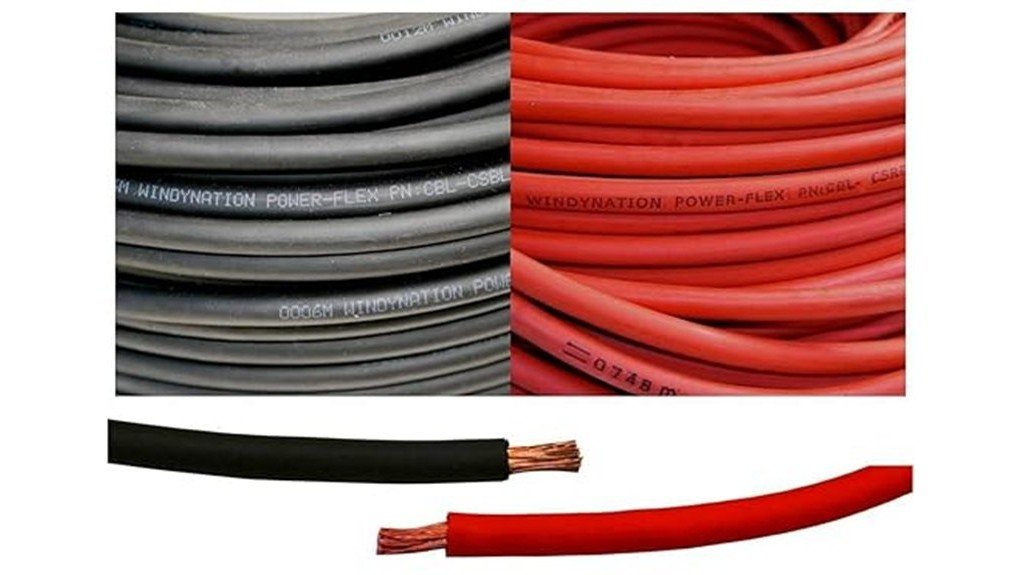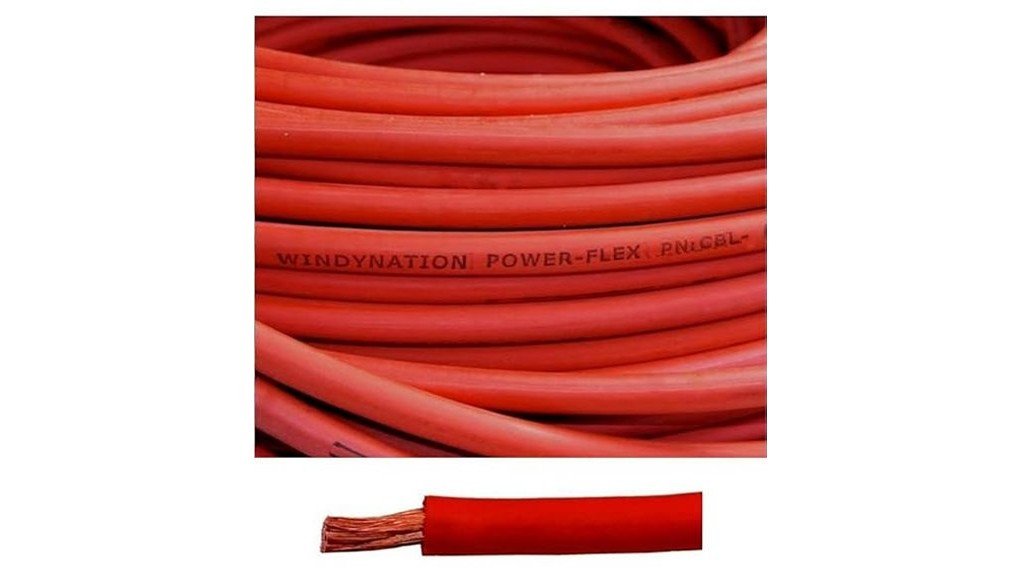
A 1/0 gauge battery cable is a thick, flexible copper cable used for high-current runs such as battery-to-starter, battery-to-inverter, RV and solar connections. This review covers one 1/0 gauge battery cable listed on Amazon as fully annealed pure copper with EPDM insulation, a 600-volt rating and a -50 C to +105 C temperature range. It is a sensible pick if those specs match your job, but the listing does not give a verified amp rating, so size the cable against a proper ampacity chart before you buy.
Quick Verdict
Best for: DIY and shop users wiring batteries, inverters, RV or solar systems who want a flexible pure-copper cable.
Bottom line: The listed construction (annealed copper, EPDM insulation, high strand count) suits battery and inverter wiring. Confirm length, color and any included lugs on the listing, and do not rely on a single amp figure for your own circuit.
1/0 Gauge Battery Cable Specifications
| Specification | Detail |
|---|---|
| Gauge | 1/0 (AWG), roughly 53.5 mm2 conductor area |
| Conductor | Fully annealed pure copper, per the listing |
| Insulation | EPDM, per the listing |
| Voltage rating | 600 V, per the listing |
| Temperature range | -50 C to +105 C, per the listing |
| Construction | High strand count for flexibility, per the listing |
| Length | 20 feet, per the listing (check the current variation you select) |
| Listed uses | Automotive, inverter, RV and solar wiring |
| Lugs and hardware | Not confirmed. Check what is included before ordering |
Before you buy: The amp rating of a cable depends on insulation temperature rating, run length, bundling and ambient heat. The listing details used for this review do not give a verified ampacity, so check the manufacturer data or a recognized ampacity table for your application. Fuse the circuit close to the battery.
What Is 1/0 Gauge Battery Cable Used For?
1/0 (pronounced “one-aught”) sits between 2 gauge and 2/0 in the AWG range. It is a common choice when a 2 gauge cable feels marginal but a 4/0 cable would be stiff and costly for the run.
- Automotive: battery-to-starter, ground straps and alternator runs, depending on vehicle current and run length.
- Inverters and power stations: short, heavy DC runs between battery bank, fuse and inverter.
- RV and trailer: house battery banks and chassis grounds.
- Solar: battery-to-bus bar and battery-to-inverter connections, with the correct fuse and protection.
It is not a substitute for welding cable. Welding leads normally use very fine strands and a different jacket so they stay flexible under repeated flexing, so check the listing before using any battery cable as a welder lead.
How 1/0 Compares With Nearby Sizes
| Size | Conductor area | Typical trade-off |
|---|---|---|
| 2 AWG | about 33.6 mm2 | Lighter and cheaper; fine for shorter or lower-current runs |
| 1/0 AWG | about 53.5 mm2 | The size reviewed here; a common step up for inverters and starters |
| 2/0 AWG | about 67.4 mm2 | More margin for long runs; stiffer and heavier |
| 4/0 AWG | about 107.2 mm2 | Large inverters and heavy loads; hard to route and crimp |
How to Choose the Right Cable
- Work out the current: use the fuse or the maximum load of the device, not a guess.
- Measure the run: add the positive and negative lengths, because voltage drop grows with distance.
- Check the insulation rating: engine bays and battery boxes get hot, so match the temperature rating to the location.
- Match lugs and tools: buy 1/0 lugs with the right stud hole size, and use a hammer or hydraulic crimper rather than pliers.
- Confirm copper: make sure the listing says pure copper, not copper-clad aluminum, if you need full capacity.
Installation and Safety
- Disconnect the battery negative first and keep metal tools away from the positive terminal.
- Cut the cable square, strip only what the lug needs and crimp with a proper tool. Seal the joint with adhesive-lined heat shrink.
- Fuse the positive cable close to the battery, sized for the cable and not just the load.
- Protect the cable from sharp edges and heat with grommets, loom or conduit, and secure it so it cannot rub through.
- Check for hot lugs or discolored insulation after the first heavy use, which points to a poor crimp or an undersized cable.
Pros and Limitations
Pros
- Pure annealed copper conductor, per the listing
- EPDM insulation with a wide listed temperature range
- High strand count helps routing in tight spaces
- Suits a wide range of battery, inverter, RV and solar jobs
Limitations
- No verified ampacity or manufacturer data in the listing details
- Lugs and heat shrink may not be included
- Thick cable needs proper crimping tools
- Not intended as a welding lead
Related guides: 2/0 Gauge Battery Cable Review | 4/0 Gauge Cable Review: Performance Tested | Hammer Lug Crimper Tool Review
Frequently Asked Questions
How many amps can 1/0 gauge battery cable carry?
It depends on the insulation temperature rating, ambient heat, bundling and run length. Ampacity tables for 1/0 copper cable vary by standard, so check the manufacturer data and the rules for your application instead of relying on one number.
Can I use 1/0 gauge battery cable for welding?
It is not designed as a welding lead. Welding cable usually has finer strands and a jacket made for repeated flexing. Use cable sold as welding cable for a stinger or ground lead.
Is this cable suitable for boats or marine use?
The listing details used here do not confirm tinned copper or a marine rating. Marine wiring standards generally call for tinned stranded copper, so choose a cable sold for marine use on a boat.
What lugs fit 1/0 gauge cable?
Use lugs sold for 1/0 AWG with the stud hole size that matches your terminal, and crimp them with a hammer or hydraulic crimper. Lugs may not be included, so check the listing.
How do I keep voltage drop low on a long run?
Use the shortest practical route, size the cable for the full round-trip length and keep connections clean and tight. Check a voltage-drop calculator for your current and distance.
Bottom Line
This 1/0 gauge battery cable is a reasonable choice for battery, inverter, RV and solar wiring when you want pure-copper flexibility and EPDM insulation. Check the length, color and included hardware on the listing, size it with an ampacity table, and use the right lugs and fuse.