Disclosure: As an Amazon Associate, we earn from qualifying purchases. If you click a link on this page and make a purchase, we may receive a small commission at no extra cost to you.
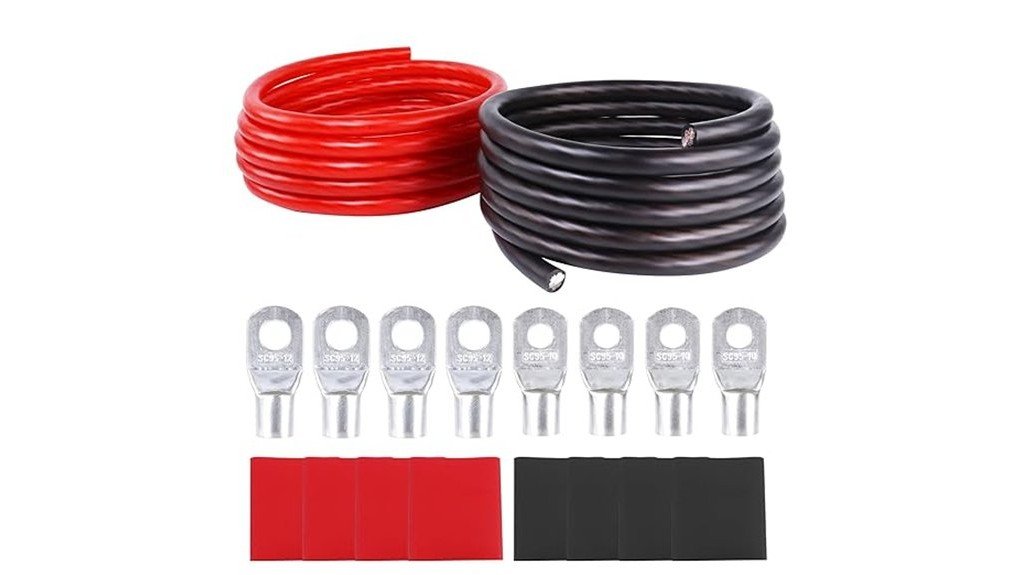
Choosing a 2/0 battery cable is not just about buying the thickest wire you can find. You need the right length, insulation, lug setup, and material for the current path you plan to build. This 2/0 Gauge Battery Cable is a 12-foot copper-clad aluminum option for low-voltage work up to 60 volts, with PVC insulation, SC lugs, and heat shrink tubing included. It looks like a practical choice for vehicle, garage, and power-system projects, but you should confirm your amp load, terminal size, and installation requirements before you rely on it.
Quick Verdict
Rating: Recommended with caveats
Best For: DIY low-voltage battery cable runs where a 12-foot 2/0 CCA cable and included lugs fit the project.
Bottom Line: This cable gives you a thick 2/0 gauge conductor, PVC protection, SC lugs, and heat shrink tubing in one kit. The main tradeoff is that copper-clad aluminum is not the same as pure copper, so you need to size the run carefully and avoid unsupported high-current or high-voltage use.
| Specification | Detail |
|---|---|
| Product type | 2/0 gauge battery cable |
| Length | 12 feet |
| Voltage rating listed | Up to 60 volts for low-voltage applications |
| Conductor material | Copper-clad aluminum (CCA) |
| Insulation | PVC insulation described as resistant to oil, chemicals, grease, and flame |
| Color details | Black and red cable noted in the source article |
| Included accessories | SC lugs and heat shrink tubing |
| Best use | Low-voltage battery, vehicle, hybrid or EV-related accessory, and power-system projects when the cable matches the system design |
| Safety note | Confirm current load, lug size, fuse protection, and routing before installation. Do not use on high-voltage EV traction circuits. |
Key Takeaways
- The main appeal is the 12-foot length, 2/0 gauge size, and included connection hardware.
- Copper-clad aluminum keeps weight and cost down, but pure copper may be better for demanding high-current runs.
- PVC insulation helps protect the cable from oil, chemicals, grease, and flame exposure in garage or vehicle environments.
- The included SC lugs and heat shrink tubing can simplify setup, but you still need the correct crimping tool and terminal fit.
- This cable belongs in low-voltage applications only, and your final installation should follow the equipment manual or a qualified installer’s guidance.
What Is the 2/0 Gauge Battery Cable?
The 2/0 Gauge Battery Cable is a heavy battery cable for low-voltage power connections. The source article describes it as a 12-foot cable made from copper-clad aluminum with PVC insulation, SC lugs, and heat shrink tubing.
It is aimed at projects where you need a large-gauge cable for power transfer without using a pure copper conductor. That can make sense for some vehicle accessory, garage, inverter, or battery-system setups, as long as the cable size, length, and conductor material match your actual current demand.
The strongest part of the package is convenience. You get the cable and basic connection accessories together, so you are not starting from loose wire alone.
Who Should Buy It?
Best For
- DIY users who need a 12-foot 2/0 cable for a low-voltage project.
- Vehicle or garage setups where oil, grease, and chemical resistance matter.
- Buyers who want cable, SC lugs, and heat shrink tubing in one purchase.
Skip If
- You need pure copper cable for maximum conductivity or a strict equipment requirement.
- Your system requires a cable rated beyond the listed 60-volt low-voltage use.
- You are not able to crimp lugs, protect the circuit, or route the cable safely.
Before You Buy: Do not assume 2/0 gauge alone makes this cable right for every battery job. Match the conductor material, cable length, amp load, fuse size, terminal stud size, and voltage rating to your exact system.
Materials and Build Quality
The cable uses copper-clad aluminum, often shortened to CCA. This means the conductor is aluminum with a copper layer, giving you a lighter cable than many pure copper options. The tradeoff is that CCA does not perform exactly like pure copper, so it may need more careful sizing for long or high-load runs.
The PVC insulation is a useful feature for automotive and workshop environments. The source article describes it as resistant to oil, chemicals, grease, and flame, which matters when the cable may run near tools, battery boxes, engine-bay residue, or other harsh surfaces.
The included SC lugs add convenience, especially if you already know they match your terminals. Still, lug fit is not universal. You should confirm the cable opening, stud size, and crimp method before installation.
Fit and Compatibility
This cable is best treated as a low-voltage power cable for systems that fit the listed 60-volt limit. It may work for battery connections, inverter leads, vehicle accessory wiring, and some solar or power-station related setups when the system design supports 2/0 CCA cable.
Compatibility depends on more than cable gauge. You need to check the device manual, battery terminal type, lug hole size, fuse or breaker requirements, and the route the cable will take. A cable that is too long, too short, poorly crimped, or routed against sharp metal can create heat, voltage drop, or reliability problems.
Installation and Setup
The included SC lugs and heat shrink tubing make the setup more complete than a bare cable spool. Use a crimping tool sized for 2/0 cable and the chosen lug. A loose crimp can create resistance, heat, and voltage loss.
After crimping, heat shrink tubing helps cover the connection and reduce exposure to moisture and abrasion. It should not be treated as a fix for a poor crimp, wrong lug size, or unsafe cable route.
Route the cable away from sharp edges, moving parts, and high-heat areas. Add clamps or loom where needed so the cable does not rub through the insulation over time.
Pro Tip: Before cutting, crimping, or routing, lay the full 12-foot cable along the planned path and mark every bend, clamp point, and terminal end. This helps you avoid a cable that is technically long enough but too tight once installed.
Performance in Low-Voltage Applications
For the right low-voltage project, a 2/0 gauge cable can help carry power with less voltage drop than thinner cable of the same material and length. The 12-foot length gives you room for battery-to-device runs, but longer routes still need careful current and voltage-drop calculations.
The CCA construction is the main performance tradeoff. It can be a smart value choice when weight and cost matter, but pure copper is usually the safer comparison point for demanding current loads, tight voltage-drop limits, or equipment that specifically calls for copper cable.
The cable’s PVC insulation adds protection in practical work areas. That does not remove the need for fusing, proper termination, strain relief, and routine inspection.
How It Performs in Real Use
For Vehicle Accessory Projects
This cable makes the most sense for low-voltage vehicle accessory runs where the 12-foot length, red and black color notes, and included lugs fit your layout. It is not a plug-and-play answer for every vehicle, so check the device’s current draw before installing it.
For Battery Bank or Inverter Setups
For battery banks or inverter leads, the thick 2/0 size can be useful, especially when you want a heavier cable than common small-gauge wire. The important step is confirming that CCA is allowed by your inverter, battery, and fuse recommendations.
For Solar-Related Low-Voltage Work
The cable may suit some solar panel, charge-controller, or battery-storage connections if the system is designed for this gauge, conductor type, and voltage range. Follow the controller, inverter, and battery manuals instead of choosing the cable by thickness alone.
For Long-Term Garage or Workshop Use
The PVC insulation is helpful around oil, grease, and chemical exposure. Long-term reliability still depends on clean crimps, covered terminals, abrasion protection, and periodic checks for heat marks or damaged insulation.
Installation Safety Notes
Low voltage does not always mean low risk. Battery cables can carry high current, and a short circuit can damage equipment or create a fire hazard. Use proper fuse or breaker protection as close to the power source as your system instructions require.
Do not use this cable on high-voltage EV traction systems. Hybrid and electric vehicles can include dangerous high-voltage circuits that require trained service procedures. For those systems, use manufacturer-approved parts and professional service.
Before energizing the circuit, check polarity, lug tightness, cable routing, and insulation coverage. If you see heat, odor, discoloration, arcing, or unstable power, disconnect the system safely and inspect the installation.
Pros and Cons
Pros
- 2/0 gauge size supports heavier low-voltage power runs than small-gauge wire.
- 12-foot length gives you room for many vehicle, garage, and battery layouts.
- CCA construction can reduce weight compared with many pure copper alternatives.
- PVC insulation adds resistance to oil, chemicals, grease, and flame exposure.
- SC lugs and heat shrink tubing help you start with key connection parts included.
Cons
- CCA is not equal to pure copper for every high-current or long-distance run.
- Included lugs may not match every battery post, bus bar, or device terminal.
- Safe installation still requires correct crimping, fusing, routing, and inspection.
Is It Worth the Price?
This cable is worth considering if you want a value-focused 2/0 battery cable with lugs and heat shrink tubing included. The CCA construction makes the most sense for buyers who want a large cable size without choosing a heavier pure copper option.
You get the most value from it when the listed 12-foot length fits your run and your equipment allows CCA cable. It is not the best fit if your project requires pure copper, a known temperature rating, a specific certification, or a lug size that differs from the included hardware.
How It Compares to Alternatives
Compared with pure copper 2/0 battery cable, this CCA cable may be lighter and more budget-friendly, but pure copper is usually better for conductivity and demanding current loads. Compared with smaller gauges such as 1/0 or 4 AWG, the 2/0 size gives you a larger conductor, but only if your terminals and route can handle the added thickness.
Welding cable is another option some buyers compare for flexible low-voltage power leads. This 2/0 Gauge Battery Cable makes the most sense if you want the article-supported combination of 12-foot length, CCA conductor, PVC insulation, SC lugs, and heat shrink tubing.
Frequently Asked Questions
Can this 2/0 Gauge Battery Cable be used for solar panel installations?
It can be considered for solar-related low-voltage connections only when the system design allows 2/0 CCA cable and the listed voltage range. Check your charge controller, inverter, battery, fuse, and connector requirements before using it.
Is copper-clad aluminum as good as pure copper?
No. Copper-clad aluminum can be lighter and more cost-conscious, but pure copper generally offers better conductivity. Choose pure copper when your equipment requires it or when the project has strict voltage-drop and current-load limits.
Are the included SC lugs compatible with all batteries?
Do not assume universal fit. Lug compatibility depends on the terminal stud size, cable opening, battery post adapter, and device connection point. Confirm the dimensions before crimping.
What temperature range can this cable handle?
The provided article does not state a specific temperature range. Because of that, avoid placing it near exhaust parts, high-heat components, or enclosed areas that exceed the cable’s documented rating.
Is the cable flexible enough for tight spaces?
The source article describes the cable as lightweight due to its CCA construction, which may help during routing. Still, 2/0 cable is thick, so you should test the bend path before final installation.
Can this cable be used on hybrid or electric vehicles?
It may fit some low-voltage accessory or battery-side work when the vehicle service information allows it. Do not use it on high-voltage EV traction circuits or manufacturer-controlled systems unless a qualified professional confirms the part is appropriate.
What common mistakes should you avoid during installation?
Avoid using the wrong lug size, skipping fuse protection, crimping with the wrong tool, or routing the cable across sharp metal. Also avoid choosing CCA cable when the device manual specifically requires pure copper.
The Bottom Line
The 2/0 Gauge Battery Cable is a practical buy if you need a 12-foot CCA cable with PVC insulation, SC lugs, and heat shrink tubing for a properly designed low-voltage setup. Skip it if your project requires pure copper, verified high-temperature specs, universal lug fit, or use beyond the listed low-voltage range. It earns a recommended-with-caveats verdict because the package is useful, but safe performance depends on correct sizing and installation.