
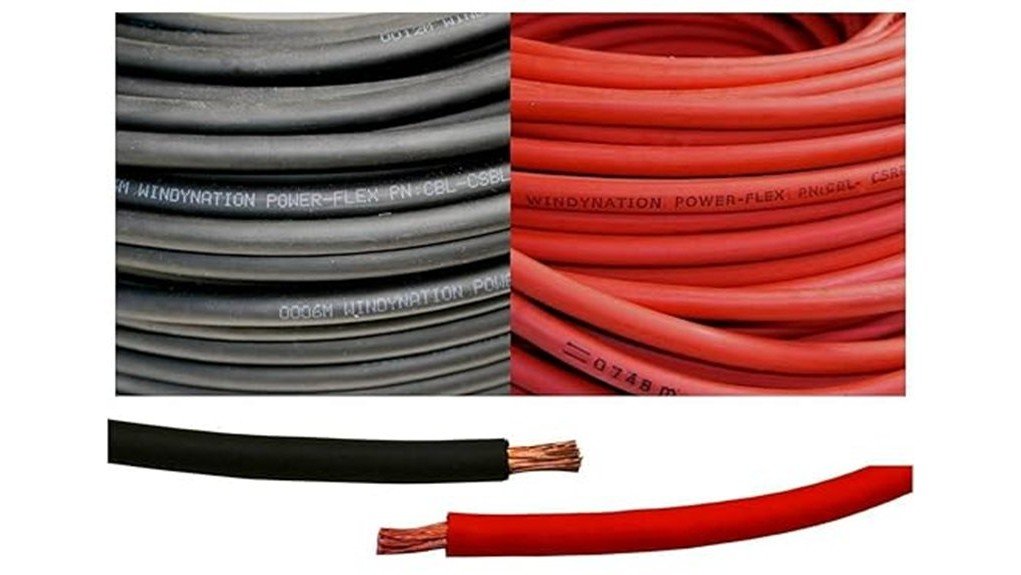
Disclosure: As an Amazon Associate, we earn from qualifying purchases. If you click a link on this page and make a purchase, we may receive a small commission at no extra cost to you.
Choosing the right battery cable is not just about picking a thick wire. You need the gauge, conductor material, jacket type, temperature range, and voltage rating to match your setup. The 4 Gauge 4 AWG Battery Cable reviewed here is built around fully annealed pure copper strands, a solvent-resistant EPDM jacket, and a rating of up to 600 volts. It looks best suited for buyers who need flexible, high-current cable for automotive, inverter, RV, or solar battery work, but you should confirm the exact length, terminal needs, and load requirements before ordering.
Quick Verdict
Rating: 8.0/10
Best For: DIY battery wiring, inverter connections, RV electrical projects, and solar battery setups that call for 4 AWG copper cable.
Bottom Line: This cable stands out for its pure copper conductor, flexible strand design, 600V rating, and wide temperature range. The main tradeoff is that the source article does not confirm the exact brand, length, terminals, marine rating, UV rating, or warranty, so you need to check the live Amazon listing before you buy.
Before You Buy: Confirm the cable length, terminal style, amp load, fuse size, and whether your project requires tinned marine cable, UV-rated insulation, or a specific code-approved wire type. A 4 AWG copper cable can be a strong choice, but it still needs to match your exact system.
| Specification | Detail |
|---|---|
| Product type | Battery cable |
| Cable size | 4 Gauge, 4 AWG |
| Voltage rating | Up to 600 volts |
| Temperature range | -50°C to +105°C |
| Conductor material | Fully annealed pure copper strands |
| Jacket material | Durable, solvent-resistant EPDM jacket |
| Design | High strand count for flexibility and easier routing |
| Common uses | Cars, inverters, RVs, solar setups, battery banks, and high-current DC wiring projects |
| Standards mentioned | ASTM, SAE J1127, IEC, and RoHS are referenced in the source article |
| Safety note | Match wire gauge, length, terminals, and fuse protection to your actual current draw and installation environment. |
What Is the 4 Gauge 4 AWG Battery Cable?
The 4 Gauge 4 AWG Battery Cable is a heavy-duty electrical cable designed for high-current battery and power transfer applications. The source article identifies it as a pure copper cable with a durable EPDM jacket, a voltage rating of up to 600 volts, and an operating temperature range from -50°C to +105°C.
That combination makes it more capable than thin, light-duty wire used for small accessories. The 4 AWG size is commonly considered for battery leads, inverter wiring, RV electrical work, solar battery connections, and other projects where voltage drop and conductor quality matter.
The main appeal is the balance of conductivity and flexibility. Fully annealed copper strands help carry current efficiently, while the high strand count makes the cable easier to bend around batteries, compartments, inverters, and tight routing paths.
Who Should Buy It?
Best For
- DIY users wiring batteries, inverters, RV power systems, or solar battery banks that call for 4 AWG copper cable.
- Automotive projects that need flexible, high-current cable with a durable jacket.
- Installations where a wide temperature range and solvent-resistant insulation are useful.
Skip If
- Your system requires a different wire gauge based on current draw, cable length, or voltage drop calculations.
- You need a confirmed tinned marine cable, UV-rated outdoor cable, or a specific code-listed wire type.
- You want a ready-made cable with verified terminal ends, exact length, and listed warranty details before purchase.
Specifications and Features
The strongest listed feature is the 4 AWG pure copper construction. Copper conducts electricity better than cheaper substitute materials, which helps reduce resistance and heat when the cable is sized correctly for the job.
The cable is also rated for use up to 600 volts, which gives it room for many automotive, RV, inverter, and solar battery applications. You should still size the cable by current, run length, voltage drop, fuse protection, and the instructions for your equipment.
The listed temperature range of -50°C to +105°C is useful for vehicles, garages, off-grid setups, and battery compartments that may see hot or cold conditions. This does not replace proper installation, but it does suggest the cable is built for tougher use than light accessory wire.
Material and Construction
The cable uses fully annealed pure copper strands. Annealed copper is softer and more flexible than harder-drawn wire, so it can be easier to route through a vehicle, battery box, RV compartment, or solar power setup.
The high strand count is also useful during installation. Instead of fighting a stiff cable around corners, you get a cable that can bend more easily while still offering the conductivity expected from 4 AWG copper.
The outer EPDM jacket is described as durable and solvent-resistant. That matters in automotive and workshop environments where cable insulation may be exposed to vibration, abrasion, oil mist, cleaner residue, or changing temperatures.
Fit, Load, and Compatibility
A 4 AWG battery cable can support demanding DC power setups, but the correct fit depends on more than the gauge printed on the jacket. Your cable length, current draw, voltage, terminal style, fuse size, and routing path all affect whether this cable is the right choice.
For vehicle battery work, check the battery post style, lug hole size, starter or accessory load, and available routing space. For inverters, follow the inverter manual because many models list a required cable gauge based on watts and distance from the battery.
For solar battery banks or RV power systems, pay close attention to voltage drop. A cable that works well over a short run may not be enough for a longer run with the same current demand.
Pro Tip: Before ordering, map the full cable path with a piece of rope or scrap wire. Measure the real route, including bends and service loops, then confirm your equipment manual supports 4 AWG for that distance and current draw.
Installation and Setup Tips
Use clean, properly sized copper lugs that match both the cable and the connection point. A poor crimp, loose lug, or undersized terminal can create heat even when the cable itself is capable.
Protect the cable from sharp metal edges, moving parts, exhaust heat, and pinch points. Use grommets, loom, clamps, and strain relief where the cable passes through panels or around equipment.
Fuse the cable according to your system design and equipment instructions. In battery systems, proper overcurrent protection is not optional because a shorted high-current cable can become dangerous very quickly.
Usage and Applications
This cable is most useful in applications where efficient power transfer matters. In automotive applications, it can be considered for battery connections, power accessories, winch-style setups, or other high-current circuits when 4 AWG is the correct size.
In RV and inverter setups, the flexibility of the copper strand design can make routing easier through compartments and around tight spaces. The EPDM jacket adds protection in areas where vibration and temperature changes are common.
For solar battery systems, 4 AWG cable may help move current between batteries, charge controllers, and inverters when the system design calls for that size. Always check the solar equipment manual and local electrical rules before installation.
How It Performs in Real Use
For Automotive Battery Projects
In a vehicle, the pure copper conductor is the main performance benefit. When the gauge is correct for the circuit, copper helps reduce resistance and supports more efficient current flow from the battery to the connected load.
For RV and Inverter Connections
RV and inverter wiring often involves short but crowded cable paths. The high strand count can make this cable easier to bend into place than stiff, low-strand cable, especially inside battery compartments or storage bays.
For Solar Battery Setups
Solar battery systems can be sensitive to voltage drop, especially when cables run longer than expected. This 4 AWG cable is a practical option to consider when your charge controller, inverter, or battery bank documentation calls for this size.
For Workshop and Backup Power Use
For garage and backup power projects, the EPDM jacket and wide temperature range are useful strengths. You still need to keep the cable away from abrasion, sharp edges, and heat sources, but the listed materials are better suited to tough environments than basic light-duty wire.
Compatibility and Safety
Battery cable safety depends on correct sizing and installation. Do not choose cable gauge by appearance alone. Use your equipment manual, current draw, cable length, and voltage drop target to decide whether 4 AWG is correct.
The source article mentions ASTM, SAE J1127, IEC, and RoHS compliance. Since verification was limited, you should confirm those details on the current Amazon listing or manufacturer documentation before relying on them for a regulated job.
For marine use, check whether your project requires tinned copper, a marine-specific jacket, or an ABYC-style installation standard. The article supports pure copper and EPDM construction, but it does not confirm a dedicated tinned marine rating.
Pros and Cons
Pros
- 4 AWG size is useful for many high-current battery, inverter, RV, and solar applications.
- Fully annealed pure copper strands support strong conductivity and easier bending.
- EPDM jacket is described as durable and solvent-resistant for tougher environments.
- Rated up to 600 volts, giving it room for many common DC power projects.
- Wide -50°C to +105°C temperature range helps in hot, cold, vehicle, and garage conditions.
Cons
- Brand, exact length, terminal ends, and warranty details are not confirmed in the source article.
- May not be correct for every system because cable gauge depends on current draw and run length.
- Marine, UV, and outdoor ratings should be confirmed before use in those conditions.
Is It Worth the Price?
This cable is worth considering if your project needs 4 AWG pure copper cable with a durable jacket and flexible construction. The value comes from the core materials: copper strands, EPDM insulation, a 600V rating, and a wide temperature range.
It is a smart buy for everyday battery and power projects only when the specs match your system. If you need a specific length, pre-crimped ends, tinned marine construction, or a verified UV rating, compare the live listing details carefully before purchase.
The biggest limitation is not the listed cable construction. It is the missing product-specific detail in the source article. You should check the current Amazon page for length, package quantity, lug type, warranty, and seller notes before making a final decision.
How It Compares to Alternatives
Compared with cheaper copper-clad aluminum cable, a pure copper 4 AWG cable is usually the better pick when conductivity and durability matter. Compared with welding cable, this battery cable may be more focused on battery and DC power use, while welding cable may offer different flexibility and jacket properties.
If you need boat wiring, tinned marine battery cable may be a better comparison point. If you need outdoor solar runs, compare it with cable that clearly lists UV resistance and installation ratings. This 4 AWG battery cable makes the most sense when you want copper construction, flexibility, and a tough jacket for battery-centered projects.
Frequently Asked Questions
What is this 4 AWG battery cable best used for?
It is best used for battery, automotive, inverter, RV, solar, and other high-current DC wiring projects where 4 AWG copper cable is the correct size. Always confirm the required cable gauge in your equipment manual or wiring chart before installation.
Is 4 AWG cable the right size for my inverter?
It depends on the inverter wattage, battery voltage, cable length, and allowed voltage drop. Check your inverter manual because many manufacturers list the required cable gauge and fuse size for each installation distance.
Can this cable be used for marine applications?
It may work for some boat battery projects if the gauge, jacket, and installation method match your needs. However, the source article does not confirm tinned copper or a dedicated marine rating, so check the current listing and marine wiring requirements before using it on a boat.
Is the cable resistant to UV exposure?
The source article supports a durable, solvent-resistant EPDM jacket, but it does not confirm a UV rating. If the cable will be exposed to direct sunlight, choose a cable with a clearly listed UV-resistant outdoor rating or protect the cable inside approved conduit or loom.
Does it come with terminal ends?
The source article does not confirm included terminal ends, lug size, or package contents. Before buying, check the Amazon listing to see whether you are ordering raw cable, a cable pair, or a finished cable with crimped terminals.
How should you store extra battery cable?
Store extra cable in a cool, dry place away from direct sunlight, chemicals, and sharp edges. Coil it loosely instead of kinking it, and keep the ends clean so the copper is ready for proper termination later.
What is the biggest mistake to avoid with 4 AWG battery cable?
The biggest mistake is assuming 4 AWG is correct without checking the actual load and cable length. Undersized cable, poor crimps, missing fuse protection, or routing near heat and abrasion can create safety risks.
What warranty comes with this battery cable?
The source article does not provide a confirmed warranty period. Review the live Amazon listing, seller information, and manufacturer details before purchase if warranty coverage matters to you.
The Bottom Line
The 4 Gauge 4 AWG Battery Cable is a strong option for buyers who need flexible pure copper cable with an EPDM jacket, a 600V rating, and a wide operating temperature range. It is best for automotive, inverter, RV, and solar battery projects that specifically call for 4 AWG cable.
You should skip it or compare carefully if you need verified terminal ends, exact length, tinned marine construction, UV-rated insulation, or a different gauge for your current draw. Overall, it earns an 8.0/10 because the listed construction is useful, but several product-specific details still need confirmation on the live listing.


