Disclosure: As an Amazon Associate, we earn from qualifying purchases. If you click an Amazon link on this page and make a purchase, we may receive a commission at no extra cost to you.
Last Updated: July 23, 2026
Cast iron can crack beside a weld when you use the wrong filler, add too much heat, or cool the part too quickly. The right rod depends on your welding process, the type and thickness of the casting, whether you are joining cast iron to steel, and whether the finished repair must be drilled, tapped, ground, or machined.
This guide compares Ni55 and Ni99 stick electrodes, a TIG-only nickel filler, small repair packs, and a nickel-free rod for contaminated castings. It also explains the limitations of each option so you can choose a rod that matches your equipment and repair procedure.
Quick Verdict
Choose Ni55 when you want a versatile stick electrode for cast-to-cast repairs, heavier sections, or joining cast iron to steel. Choose Ni99 when easy drilling, tapping, grinding, or machining is the priority. Choose Blue Demon ERNi99 only when you have a TIG welder and shielding gas. Choose Forney EST CI for contaminated castings or cladding where a hard, non-machinable deposit is acceptable.
Editor’s Pick: WeldingCity Ni55 1-lb
The larger Ni55 pack is the most practical all-around choice for repeated stick-welding repairs because it works for joining and surfacing cast iron and can also be used for suitable cast-to-steel joints.
Top Picks
| Category | Product | Type | Best Reason to Buy |
|---|---|---|---|
| Best Overall | WeldingCity Ni55 1-lb | Ni55 stick electrode | A larger pack for repeated cast-iron repairs and dissimilar-metal joints. |
| Best for Machining | Weldcote Ni99 | Ni99 stick electrode | A soft, machinable deposit for repairs that must be finished afterward. |
| Best for TIG | Blue Demon ERNi99 | Ni99 TIG filler rod | Provides TIG-style puddle control for detailed, machinable repairs. |
| Best Small Ni55 Pack | HYW Ni55 1/8 | Ni55 stick electrode | A compact 1/8-inch option for occasional joining and surfacing work. |
| Best Small Ni99 Pack | HYW Ni99 3/32 | Ni99 stick electrode | Combines a smaller diameter with a more machinable nickel deposit. |
| Best Budget Ni55 Pack | WeldingCity Ni55 3/32 | Ni55 stick electrode | A smaller-diameter pack for controlled spot repairs and thinner edges. |
| Best for Small Repairs | Fox Alloy Ni55 3/32 | Ni55 stick electrode | A compact option for short beads on smaller castings. |
| Best Portable 1/8 Pack | Fox Alloy Ni55 1/8 | Ni55 stick electrode | A thicker small-pack electrode for localized repairs on suitable sections. |
| Best for Contaminated Castings | Forney EST CI | Nickel-free specialty electrode | Designed for dirty or oxidized castings and non-machinable cladding. |
How We Picked
We compared each product by electrode classification, welding process, rod diameter, pack format, intended casting type, dissimilar-metal capability, and whether the resulting deposit is intended to be machined. We also checked whether the product serves a clearly different buyer need instead of ranking several nearly identical packs without explanation.
Manufacturer documentation received more weight than marketplace descriptions. We did not use current prices, discounts, star ratings, review totals, or unsupported claims about personal testing. Marketplace specifications can change, so confirm the selected diameter, package quantity, polarity, amperage range, and included amount before ordering.
Selection Method: Products were evaluated by process compatibility, filler classification, machinability, repair use, pack practicality, specification clarity, and meaningful differences from the other options.
Ni55 vs Ni99 vs Nickel-Free Cast Iron Rods
| Rod Type | Common Strength | Machinability | Typical Use |
|---|---|---|---|
| Ni55 / ENiFe-CI | A nickel-iron electrode selected for ductility, strength, lower shrinkage stress, and dissimilar-metal work. | Machinable, but generally harder to finish than Ni99. | Heavier castings, cast iron to steel, joining, surfacing, and general repairs. |
| Ni99 / ENi-CI | A high-nickel electrode that produces a softer deposit. | Usually the easiest option to drill, tap, mill, grind, or machine. | Thin or medium sections, porous castings, detailed repairs, and surfaces requiring finishing. |
| ERNi99 TIG filler | Offers TIG puddle control with a high-nickel filler composition. | Machinable when used with a suitable repair procedure. | Detailed TIG repairs with shielding gas. It is not a stick electrode. |
| Nickel-free specialty electrode | Can seal or cover contaminated, oxidized, or oil-affected casting surfaces. | Normally non-machinable. | Cladding, machine bases, furnace grates, housings, and difficult castings where finish machining is unnecessary. |
Quick rule: Start with Ni55 for versatile stick-welding repairs and cast-to-steel joints. Select Ni99 when the repaired area must be machined. Use ERNi99 only with a TIG setup, and reserve nickel-free specialty electrodes for the contaminated-casting applications stated by the manufacturer.
Welding Safety and Critical-Part Warning
Use suitable eye protection, protective clothing, gloves, ventilation, and hot-work fire precautions. Completely remove oil, paint, plating, and other contamination that could create hazardous fumes. Do not treat this guide as a repair procedure for brake, steering, suspension, lifting, pressure-containing, or other safety-critical parts. Those repairs require material identification, an approved welding procedure, inspection, and qualified professional judgment.
1. WeldingCity Ni55 1-lb: Best Overall
This is the strongest general recommendation for readers who regularly repair cast iron with a stick welder. The Ni55 classification gives you a useful balance of deposit strength, ductility, dissimilar-metal capability, and machinability.
The one-pound format makes more sense than a few-stick pack when you expect multiple repairs, longer joints, practice runs, or repeated shop use. It may be unnecessary for a single small crack.
Why You May Like It
- Ni55 classification supports joining and surfacing work.
- Suitable for many cast-to-cast and cast-to-steel repairs.
- Larger pack is practical for repeated projects.
Limitations
- Ni55 is normally harder to machine than Ni99.
- A one-pound pack may be excessive for one minor repair.
- Heat procedure and amperage still depend on the casting and rod size.
Best for: Repeated stick-welding repairs, general maintenance, heavier castings, and suitable cast-iron-to-steel joints.
Skip it when: You only need a few rods or maximum post-weld machinability is your main priority.
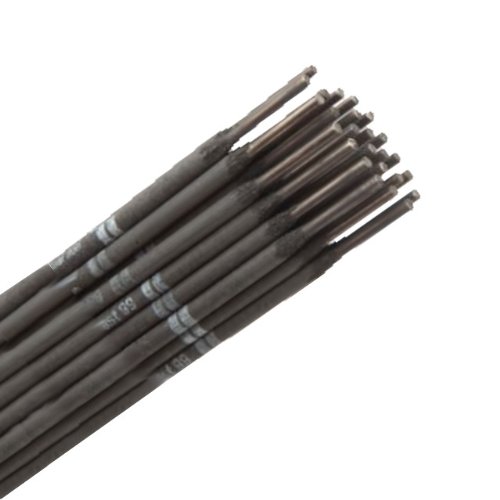
2. Weldcote Ni99: Best for Machinability
Weldcote Ni99 is the better fit when the repair cannot end with a hard, difficult-to-machine deposit. Its main advantage is the softer weld metal associated with high-nickel cast-iron electrodes.
Weldcote publishes clearer procedural guidance than many marketplace-only brands. Even so, you must match preheat, interpass control, bead length, polarity, and cooling method to the casting and the manufacturer’s directions.
Why You May Like It
- Produces a comparatively soft, machinable deposit.
- Suitable for gray iron and specified dissimilar-metal joints.
- Backed by manufacturer procedure information.
Limitations
- Not automatically the best choice for every thick or highly restrained casting.
- The 1/8-inch size offers less fine control than a 3/32-inch rod on thin edges.
- Proper cleaning and thermal control remain essential.
Best for: Machine parts, housings, restoration work, and repairs that will be drilled, tapped, ground, or milled.
Skip it when: The deposit will not be machined and a tougher Ni55 repair is more appropriate for the joint design.
3. Blue Demon ERNi99: Best TIG Filler for Cast Iron
This is the process-specific choice for welders who want TIG control rather than a coated stick electrode. The long bare rods let you add filler independently while controlling the arc with the torch.
ERNi99 is most attractive when the repair needs a machinable deposit and the casting can be cleaned and prepared for TIG. TIG does not eliminate the need for material identification, a suitable heat procedure, or controlled cooling.
Why You May Like It
- Separates arc control from filler addition.
- High-nickel filler supports a machinable deposit.
- Useful for detailed restoration and build-up work.
Limitations
- Cannot be used as a conventional stick electrode.
- Requires a TIG welder, torch, shielding gas, and clean base metal.
- May not be practical for field repairs or heavily contaminated castings.
Best for: TIG welders repairing detailed castings, vintage parts, fins, housings, or areas requiring later machining.
Skip it when: You only own a stick welder or cannot thoroughly clean and shield the weld area.
4. HYW Ni55 1/8: Best Small Ni55 Pack
HYW Ni55 gives occasional users access to a nickel-iron electrode without requiring a full one-pound tube. The 1/8-inch diameter is better matched to sections that can accept its higher deposition and heat input than a smaller 3/32-inch rod.
Public technical information for this marketplace brand is more limited than the documentation available from WeldingCity, Weldcote, or Forney. Confirm the package label, amperage range, polarity, and storage instructions before welding.
Why You May Like It
- Small pack suits occasional repairs.
- Ni55 classification fits joining and surfacing work.
- 1/8-inch diameter can suit thicker localized repairs.
Limitations
- Less manufacturer documentation is readily available.
- 1/8-inch rods may be too large for thin edges or very small cracks.
- The small pack is not economical for repeated shop work.
Best for: Occasional repairs on suitable castings when you want Ni55 performance without buying a large tube.
Skip it when: You need detailed published procedure data or a smaller rod for delicate work.
5. HYW Ni99 3/32: Best Small Machinable Pack
This option combines the finer control of a 3/32-inch stick electrode with the easier post-weld finishing normally associated with Ni99. It can make sense for a one-off housing, pulley, decorative casting, or small repair that must be ground or machined later.
As with the HYW Ni55 pack, independently published technical data is limited. Use the packaging and current listing to confirm the exact classification, pack quantity, polarity, and amperage range.
Why You May Like It
- 3/32-inch diameter gives more control than a 1/8-inch rod.
- Ni99 is selected when machinability matters.
- Small pack limits leftover material after a one-off job.
Limitations
- Limited public manufacturer documentation.
- Small quantity is less suitable for practice and multiple repairs.
- Ni99 is not automatically the best choice for every heavy casting.
Best for: Small repairs that need a finer electrode and a finishable weld deposit.
Skip it when: You expect repeated jobs or need a well-documented industrial procedure.
6. WeldingCity Ni55 3/32: Best Budget Ni55 Pack
This is the smaller and more controlled alternative to the WeldingCity one-pound recommendation. The 3/32-inch diameter is easier to match to short beads, narrow grooves, small castings, and lower-amperage work than a 1/8-inch electrode.
You still receive the general Ni55 benefits associated with cast-to-cast and suitable cast-to-steel repairs, but the small pack is intended for occasional use rather than ongoing production.
Why You May Like It
- Smaller diameter supports more controlled heat input.
- Ni55 works for joining and surfacing applications.
- Small pack suits occasional household or shop repairs.
Limitations
- Not enough material for extensive practice or repeated repairs.
- Less machinable than a comparable Ni99 deposit.
- Small rods are not automatically right for thick, highly restrained parts.
Best for: Small castings, short cracks, narrow grooves, and occasional repairs requiring a Ni55 stick electrode.
Skip it when: You need a large supply or the finished repair must be machined extensively.
7. Fox Alloy Ni55 3/32: Best for Small Repairs
The smaller diameter makes this Fox Alloy option easier to consider for narrow repair grooves, decorative castings, thin edges, and other jobs where a 1/8-inch electrode could add heat too quickly.
It is a marketplace-focused product with less accessible manufacturer procedure information than the leading industrial brands. Treat the package label as the controlling source for amperage, polarity, and storage.
Why You May Like It
- 3/32-inch size is useful for localized repair work.
- Ni55 composition supports cast-iron and suitable steel joints.
- Compact pack is easy to store for occasional use.
Limitations
- Current pack quantity should be confirmed before purchase.
- Limited independent technical documentation.
- Not intended as a large-volume shop supply.
Best for: Small cracks, decorative castings, brackets, housings, and other localized repairs that suit a 3/32-inch Ni55 rod.
Skip it when: You want a larger pack or extensive manufacturer procedure documentation.
8. Fox Alloy Ni55 1/8: Best Portable 1/8-Inch Pack
This version serves the same occasional-repair buyer as the smaller Fox Alloy rod but moves to a 1/8-inch diameter. That makes it more suitable for sections that can accept a larger electrode and less suitable for delicate edges.
The small pack is convenient to carry or store, but it leaves little material for extensive practice. Cast-iron welding is technique-sensitive, so inexperienced users may prefer a larger pack that allows procedure trials on comparable scrap.
Why You May Like It
- Portable small-pack format.
- 1/8-inch diameter suits appropriate thicker sections.
- Ni55 classification supports joining and surfacing.
Limitations
- Less control than 3/32-inch electrodes on thin work.
- Small pack provides limited practice material.
- Technical directions should be confirmed from the package.
Best for: Portable repair kits and occasional localized work on castings suited to a 1/8-inch Ni55 electrode.
Skip it when: The casting has a thin edge, a narrow groove, or requires very low heat input.
9. Forney EST CI: Best for Contaminated Castings
Forney EST CI addresses a different problem from the nickel rods above. Its purpose is to work with difficult casting surfaces where embedded oil, oxidation, heat damage, or other contamination makes a conventional clean repair difficult.
The resulting deposit is hard and non-machinable. Consider it for cladding, sealing contaminated areas before a nickel overlay, or repairing appropriate machine bases, housings, frames, and furnace components where machining is unnecessary.
Why You May Like It
- Designed for contaminated or oxidized cast iron.
- Can be used for cladding before a high-nickel finish weld.
- Current Forney product documentation identifies item 43401 as EST CI.
Limitations
- Produces a hard, non-machinable deposit.
- Not the first choice for clean, precision, or cosmetic repairs.
- Does not replace an approved structural repair procedure.
Best for: Dirty or oil-affected castings, cladding, machine bases, furnace grates, and non-machined surface repairs.
Skip it when: The repair must be drilled, tapped, ground smooth, or machined to a close tolerance.
How to Choose the Right Cast Iron Welding Rod
Match the Rod to Your Welding Process
Ni55 and Ni99 products labeled as stick electrodes require an SMAW welding machine and have a flux coating. ERNi99 TIG filler is bare rod and requires a TIG torch and shielding gas. Do not buy ERNi99 TIG filler for a conventional stick welder.
Choose 3/32 Inch or 1/8 Inch
A 3/32-inch electrode normally gives better control on narrow grooves, thinner edges, smaller castings, and lower-amperage work. A 1/8-inch rod deposits more material and may suit thicker sections, but it can add heat too quickly to a delicate repair. Follow the rod maker’s amperage range rather than applying one setting to every brand.
Decide Whether the Weld Must Be Machined
Choose Ni99 when the repaired area must be drilled, tapped, milled, or extensively ground. Ni55 deposits can also be machinable, but they are generally harder than Ni99. Nickel-free contaminated-casting electrodes such as Forney EST CI are not intended for machining.
Consider Pack Size
A few-stick pack can be enough for one known repair. A one-pound tube gives you more material for practice, procedure trials, longer joints, and future projects. Confirm the current package quantity because marketplace variations can change.
Identify the Casting Before Welding
Gray iron, ductile iron, malleable iron, cast steel, and unknown mixed castings do not behave identically. A spark test alone may not provide enough certainty for an important repair. When failure could cause injury, property damage, pressure loss, or equipment damage, obtain professional material identification and an approved procedure.
Cast Iron Welding Preparation Checklist
- Confirm the base material: Make sure the part is cast iron rather than cast steel or another alloy.
- Find the full crack: Inspect beyond the visible end and use an appropriate crack-detection method where necessary.
- Remove contamination: Eliminate oil, grease, paint, plating, rust, and scale before heating.
- Prepare the joint: Grind a suitable groove without removing more parent material than necessary.
- Select the procedure: Follow the electrode maker’s preheat, interpass, polarity, amperage, bead-length, and cooling directions.
- Control heat input: Use short stringer beads and avoid concentrating heat in one area.
- Peen only when appropriate: Light peening may reduce residual stress in some procedures, but it must not damage a thin or weak casting.
- Cool as directed: Some procedures call for slow cooling, while cold-repair methods limit heat buildup between very short beads.
- Inspect the result: Check for new cracks, incomplete fusion, porosity, distortion, and dimensional changes before returning the part to service.
Frequently Asked Questions
Which welding rod should I use for cast iron?
Choose Ni55 for a versatile stick electrode suited to many joining, surfacing, and cast-to-steel repairs. Choose Ni99 when the deposit must be easy to machine. Choose ERNi99 only for TIG welding. Use a nickel-free contaminated-casting electrode only for the cladding and non-machinable applications identified by its manufacturer.
Is Ni55 or Ni99 stronger?
Ni55 is often chosen when strength, ductility, dissimilar-metal joining, and resistance to shrinkage stress matter. Ni99 is chosen primarily for its softer, more machinable deposit. The best classification still depends on the casting type, section thickness, restraint, joint design, and approved repair procedure.
Can Ni55 weld cast iron to mild steel?
Many ENiFe-CI Ni55 electrodes are intended for suitable cast-iron-to-steel joints. The steel side and cast-iron side expand and cool differently, so joint design, dilution, bead placement, and temperature control remain important.
Can Ni99 weld cast iron to stainless steel?
Some Ni99 manufacturers identify stainless steel as a suitable dissimilar metal. Confirm that application on the exact electrode’s data sheet or packaging before welding.
Do I always need to preheat cast iron?
No single temperature applies to every casting and electrode. Some procedures use controlled preheat and slow cooling, especially on heavier or restrained sections. Other cold-repair procedures use extremely short beads and strict temperature control without heating the entire casting. Follow the manufacturer’s instructions and an approved repair procedure instead of automatically using 400–500°F on every part.
Can I cold weld cast iron?
A cold-repair technique can be used in some applications by depositing very short beads, distributing the weld sequence, limiting interpass temperature, and allowing controlled cooling between beads. It does not mean the work remains completely cold, and it is not suitable for every casting. Use temperature-measuring tools rather than judging solely by touch.
Should I drill stop holes at the ends of a crack?
Stop holes are used in some repairs, but their position, diameter, and suitability depend on the crack path and part design. Drilling in the wrong place can remove useful material or fail to reach the true crack tip. Critical repairs should be inspected and planned by a qualified professional.
Can I weld a cast iron exhaust manifold?
Some nickel electrodes are used for exhaust-manifold repairs, but manifolds experience repeated thermal cycling and may contain extensive hidden cracking or contamination. Remove the manifold when possible, inspect it fully, and use a procedure appropriate for its alloy and condition. Replacement may be safer or more economical when damage is extensive.
How should nickel electrodes be stored?
Keep the electrodes dry and protected from damaged packaging, condensation, and contamination. Follow the manufacturer’s storage and reconditioning instructions. Do not assume that every nickel electrode uses the same rod-oven temperature as a low-hydrogen steel electrode.
Complete Comparison Table
| Product | Image | Process | Rod Type | Diameter | Best For | Amazon |
|---|---|---|---|---|---|---|
| WeldingCity Ni55 1-lb |
 |
Stick / SMAW | ENiFe-C1 Ni55 | Confirm selected variation | Repeated general repairs | Check Price |
| Weldcote Ni99 |
 |
Stick / SMAW | Ni99 | 1/8 inch | Machinable repairs | Check Price |
| Blue Demon ERNi99 |
 |
TIG / GTAW | ERNi99 bare filler | 3/32 inch | Detailed TIG repairs | Check Price |
| HYW Ni55 1/8 |
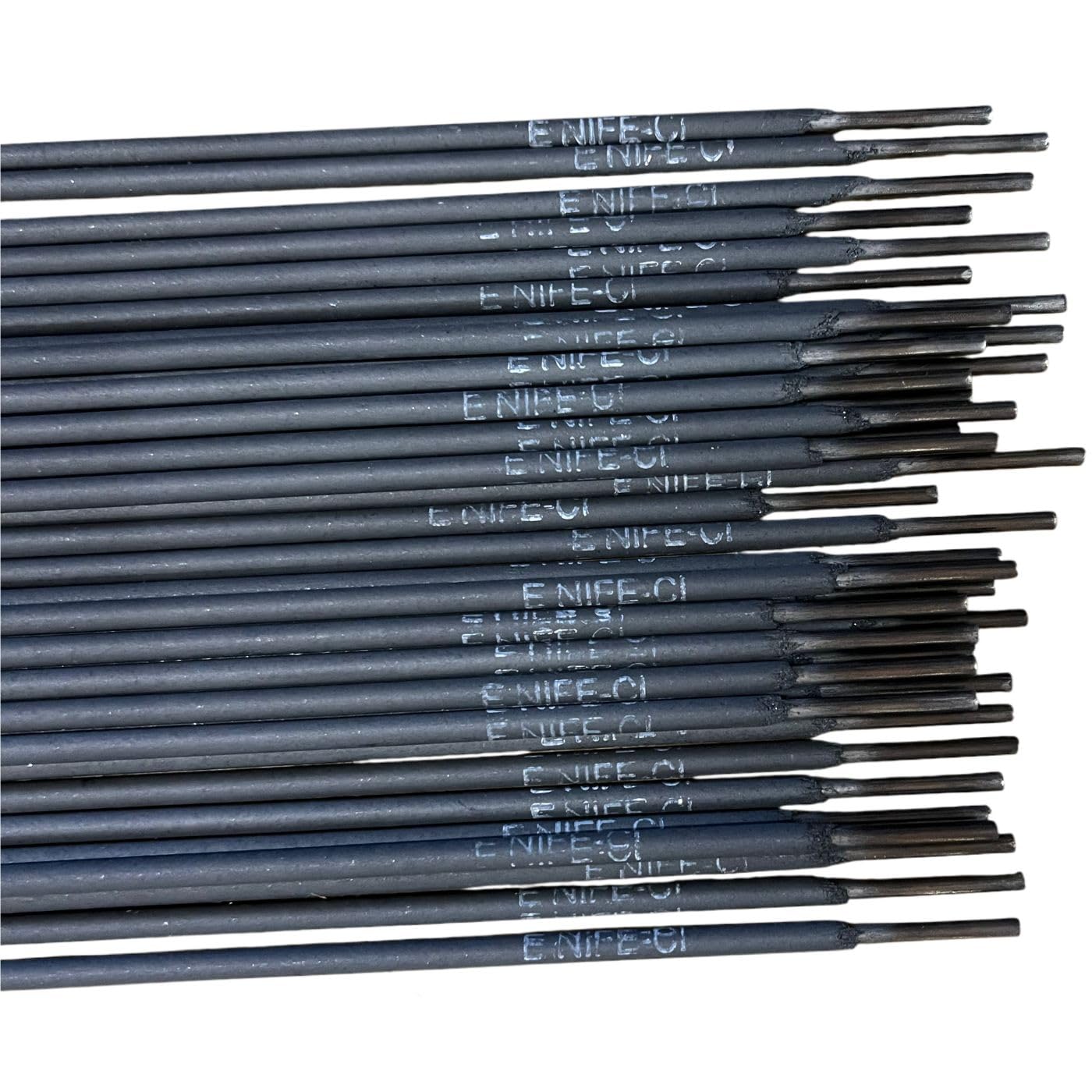 |
Stick / SMAW | ENiFe-CI Ni55 | 1/8 inch | Occasional thicker repairs | Check Price |
| HYW Ni99 3/32 |
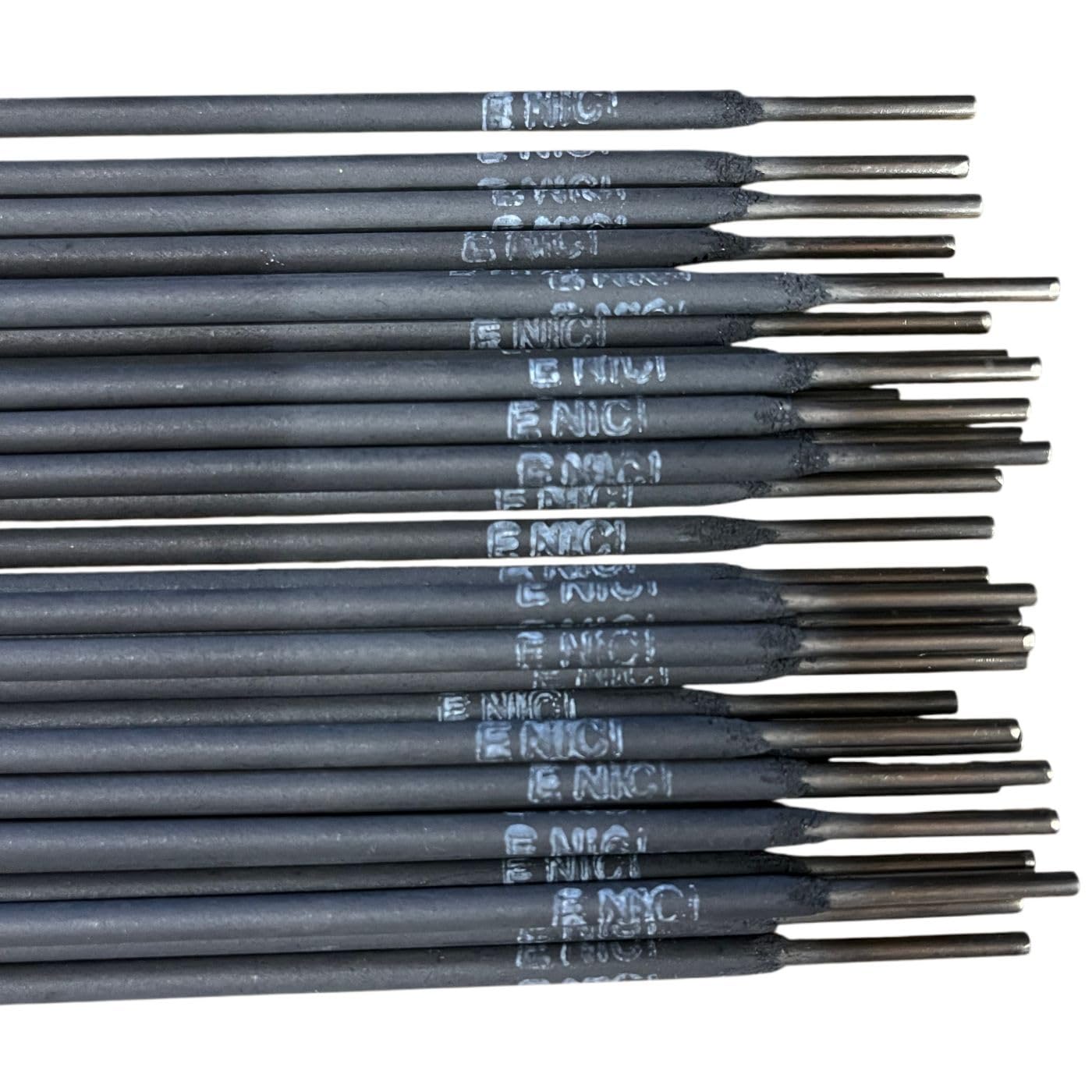 |
Stick / SMAW | ENi-CI Ni99 | 3/32 inch | Small machinable repairs | Check Price |
| WeldingCity Ni55 3/32 |
|
Stick / SMAW | ENiFe-C1 Ni55 | 3/32 inch | Controlled spot repairs | Check Price |
| Fox Alloy Ni55 3/32 |
 |
Stick / SMAW | ENiFe-CI Ni55 | 3/32 inch | Small localized repairs | Check Price |
| Fox Alloy Ni55 1/8 |
 |
Stick / SMAW | ENiFe-CI Ni55 | 1/8 inch | Portable repair supply | Check Price |
| Forney EST CI |
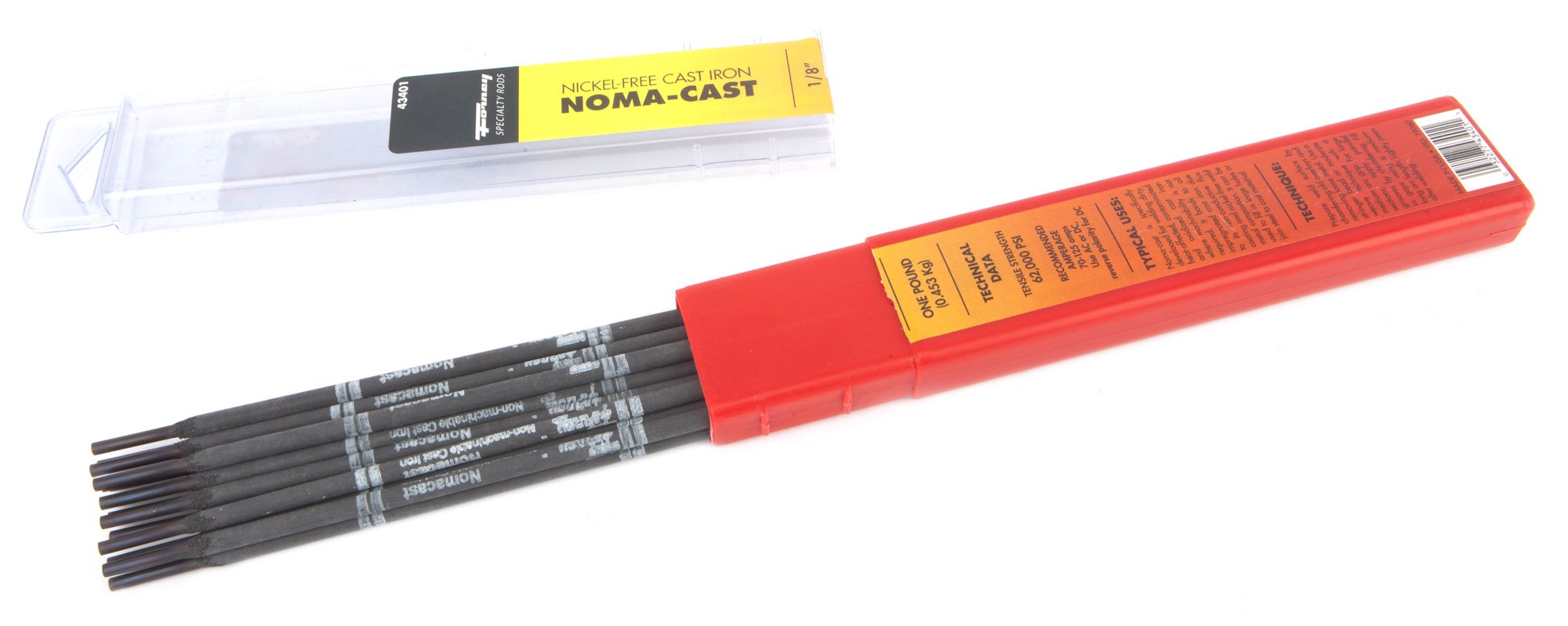 |
Stick / SMAW | Nickel-free hard-deposit electrode | 1/8 inch | Contaminated castings and cladding | Check Price |
Final Recommendations
- Choose WeldingCity Ni55 1-lb for the best balance of versatility and quantity for repeated stick-welding repairs.
- Choose Weldcote Ni99 when a machinable deposit and clear manufacturer guidance are the priorities.
- Choose Blue Demon ERNi99 for detailed TIG repairs, but only when you have a proper TIG setup and shielding gas.
- Choose WeldingCity Ni55 3/32 or Fox Alloy Ni55 3/32 for smaller, lower-amperage spot repairs.
- Choose HYW Ni99 3/32 when you need a small pack and a comparatively machinable deposit.
- Choose Forney EST CI only for contaminated castings, cladding, or non-machinable repairs that match its stated purpose.
Rod choice is only one part of a successful cast-iron repair. Clean the casting, identify the material, select the correct welding process, control heat input, follow the filler manufacturer’s directions, and inspect the finished repair before returning the component to service.
Related Welding Guides