Disclosure: As an Amazon Associate, we earn from qualifying purchases. If you click a link on this page and make a purchase, we may receive a small commission at no extra cost to you.
Choosing a welding jacket is not just about looking protected. You need gear that can handle heat, sparks, and shop wear while still letting you move your arms comfortably. The YESWELDER Welding Jacket is built around 310g FR flame-resistant cotton, NFPA 2112 certification, a stand-up collar, and adjustable cuffs. This review breaks down what those details mean in daily welding use, where the jacket makes sense, and where you may want heavier protection.
Quick Verdict
Rating: 8/10
Best For: Welders who want a breathable FR cotton jacket for general shop work, light fabrication, and longer sessions where comfort matters.
Bottom Line: The YESWELDER Welding Jacket is a practical pick if you want flame-resistant cotton, neck coverage, and an adjustable fit without the bulk of a full leather jacket. It may not be the best choice for every high-spatter or heavy overhead welding job, where thicker leather protection can be more suitable.
| Specification | Detail |
|---|---|
| Brand | YESWELDER |
| Product type | Welding jacket |
| Material | 310g FR flame-resistant cotton |
| Certification stated in article | NFPA 2112 certification |
| Collar design | Stand-up collar for added neck coverage |
| Cuffs | Adjustable cuffs for a closer wrist fit |
| Pockets | Covered chest pocket and arm pocket |
| Fabric feel | Lightweight and breathable compared with heavier welding protection |
| Care note | Dry cleaning recommended in the source article; stated wash tolerance up to 165°F (74°C) |
| Best use | General welding, shop work, fabrication, and jobs where flame-resistant coverage and mobility both matter |
What Is the YESWELDER Welding Jacket?
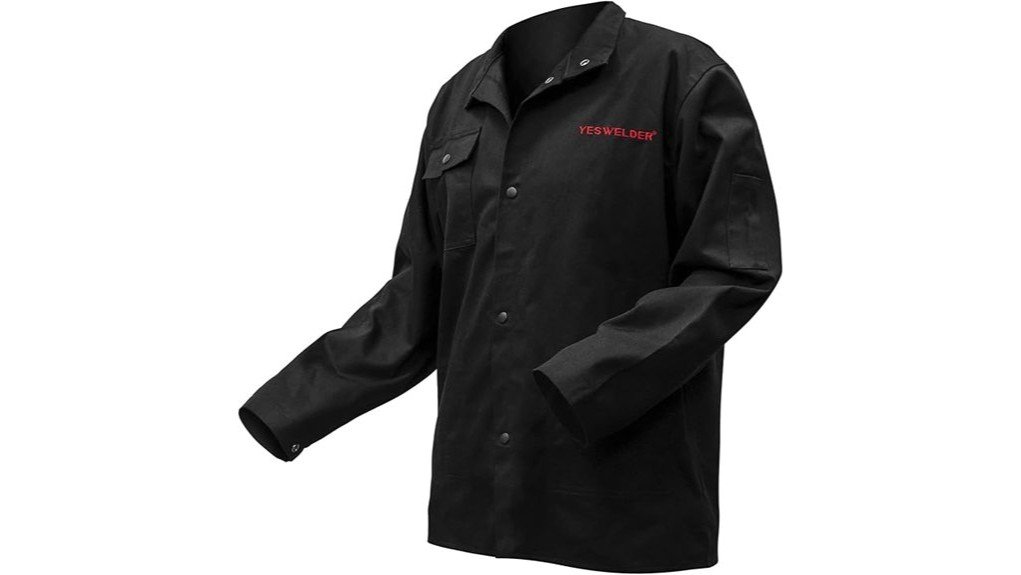
The YESWELDER Welding Jacket is a flame-resistant cotton work jacket made for welders who want upper-body coverage without wearing a heavy leather jacket all day. The article-supported material is 310g FR flame-resistant cotton, which gives you a lighter, more breathable feel while still focusing on fire-resistant protection.
Its design includes a stand-up collar, adjustable cuffs, a covered chest pocket, and an arm pocket. Those details matter because sparks and hot debris often reach gaps around your neck, wrists, and front torso. A closer fit at the cuffs and better collar coverage can help reduce exposed areas when you are working at a bench or moving around a shop.
Before You Buy: FR cotton is useful for comfort and flame resistance, but it is not always the same as thick leather protection. If your work creates heavy spatter, long overhead welds, or extreme heat exposure, compare this jacket with leather or leather-sleeve welding gear before deciding.
Who Should Buy It?
Best For
- You want a breathable welding jacket for general shop use.
- You prefer flame-resistant cotton over a heavier full-leather jacket.
- You need practical details like adjustable cuffs, a stand-up collar, and storage pockets.
Skip If
- You need maximum protection for frequent overhead welding or heavy spatter.
- You want a cold-weather insulated work jacket rather than a welding-focused FR cotton layer.
- You prefer leather protection for the sleeves, chest, or shoulders.
Material and Safety Certifications
Material quality is one of the main reasons to consider this jacket. The YESWELDER Welding Jacket uses 310g FR flame-resistant cotton, which is meant to give you a balance of protection, comfort, and movement. The heavier cotton weight helps the jacket feel more work-ready than a basic shirt, while still being less bulky than many leather welding jackets.
The article states that the jacket carries NFPA 2112 certification. That certification is an important trust signal for flame-resistant workwear, but you should still check the current product label and listing before buying. Certifications, care rules, and product variants can change by seller or batch.
Design and Functionality Features
The design focuses on coverage in the areas welders often notice first: neck, wrists, and front torso. The stand-up collar helps protect your lower neck from sparks and heat exposure. It is a useful detail if you often lean over a workbench or weld in positions where sparks can bounce upward.
The adjustable cuffs help you close the wrist opening, which can reduce gaps around gloves. This is especially useful when your arm position changes during longer welds. A loose cuff can catch debris or expose skin, while a closer cuff can feel more secure.
Storage is simple but practical. The covered chest pocket gives you a place for small flat items, while the arm pocket can help keep a marker, soapstone, or small accessory within reach. You should still avoid storing anything heat-sensitive in the jacket while welding.
Comfort and Mobility
One of the biggest advantages of FR cotton is wearability. A breathable cotton welding jacket can feel easier to use during long shop sessions than a thick leather jacket, especially when you are doing lighter fabrication, tack welding, grinding prep, or moving between jobs.
The lighter feel also helps with arm movement. You still need protection, but stiff gear can make it harder to hold a steady angle or reach into tighter work areas. The YESWELDER jacket makes the most sense when you want a protective layer that does not fight your movement.
Pro Tip: Try the jacket with your welding gloves before your first full session. Make sure the adjustable cuffs sit close enough to reduce gaps, but not so tight that they limit wrist movement.
Durability and Maintenance Considerations
The source article describes the jacket as durable enough for long-term use when cared for correctly. The 310g FR cotton construction is designed to handle demanding shop conditions better than ordinary cotton clothing. Still, any welding jacket will wear faster if it is exposed to heavy spatter, sharp edges, grinding sparks, or repeated washing without proper care.
Care is important because flame-resistant fabric can lose performance if handled incorrectly. The article recommends dry cleaning and states that the jacket can withstand washing cycles up to 165°F (74°C). Before washing, check the current care label on your jacket, close fasteners, and avoid harsh treatment that could shorten fabric life.
How It Performs in Real Use
For Daily Shop Work
For general welding, layout work, and light fabrication, the YESWELDER jacket offers a useful mix of coverage and mobility. The FR cotton material keeps it more wearable during routine tasks, while the collar and cuffs give you better protection than a regular work shirt.
For Longer Welding Sessions
Breathability matters when you wear protective gear for more than a quick weld. This jacket should feel less restrictive than heavier leather options, which can help if you move between welding, fitting, measuring, and cleanup. The tradeoff is that very hot, high-spatter jobs may still call for heavier gear.
For Outdoor or Garage Use
The jacket can work well in a garage, home shop, or outdoor work area when the weather is mild. It is not presented as rainwear or insulated winter gear, so treat it as welding protection rather than an all-weather coat. Layering underneath may change fit, so check mobility before welding.
For Long-Term Use
Long-term performance depends on care, storage, and the type of welding you do. Hanging the jacket in a cool, dry place helps protect its shape and reduces moisture buildup. Inspect the fabric, cuffs, seams, and pockets before use, especially after heavy spatter exposure.
Fit Tips Before You Buy
Fit affects both comfort and safety. A jacket that is too tight can limit reach, while a jacket that is too loose can leave extra fabric near sparks, tools, or moving parts. Check the seller size chart before ordering, and think about whether you will wear only a shirt underneath or add a thicker base layer.
Pay close attention to sleeve length. Your sleeves should overlap well with your welding gloves when your arms are extended. If the sleeve rides up when you reach forward, your wrist area may be exposed during real work.
Common Mistakes to Avoid
Do not treat any welding jacket as a complete safety system by itself. You still need proper gloves, helmet, eye protection, pants, boots, and safe welding practices. The jacket protects your upper body, but it does not replace full PPE.
Do not ignore the care label. Washing flame-resistant garments the wrong way can shorten their useful life. You should also avoid using the jacket if it is soaked with oil, fuel, solvent, or other flammable material.
Pros and Cons
Pros
- 310g FR flame-resistant cotton offers a useful balance of protection and comfort.
- NFPA 2112 certification is stated in the source article.
- Stand-up collar adds practical neck coverage.
- Adjustable cuffs help reduce wrist gaps when worn with gloves.
- Covered chest pocket and arm pocket add simple shop-friendly storage.
Cons
- FR cotton may not be enough for every heavy-spatter or overhead welding job.
- Care instructions matter, so it may need more attention than a basic work jacket.
- Size and fit should be checked carefully if you plan to layer underneath.
Is It Worth the Price?
The YESWELDER Welding Jacket looks like a strong value for the price if you want a practical FR cotton jacket for everyday welding and shop use. Its main value comes from the 310g flame-resistant cotton, stated NFPA 2112 certification, stand-up collar, adjustable cuffs, and pocket layout.
It is worth considering if you care more about breathable protection and mobility than maximum leather coverage. It is not the best fit if you need a heavy-duty jacket for frequent overhead welding, extreme spatter, or harsh outdoor weather.
How It Compares to Alternatives
Compared with full leather welding jackets, the YESWELDER FR cotton jacket should feel lighter and easier to wear for longer sessions. Leather can be better for high-spatter work, but it often feels hotter and more restrictive.
If you are comparing it with FR cotton options from brands such as Lincoln Electric, Revco Black Stallion, or Tillman, focus on material weight, sleeve protection, collar style, cuff closure, and the care label. The YESWELDER jacket makes the most sense if you want a breathable cotton design with practical coverage details.
Frequently Asked Questions
Is the YESWELDER Welding Jacket good for all welding types?
It can work well for many general welding and shop tasks, but no single jacket is ideal for every process or position. If you often deal with heavy spatter, overhead welding, or high heat, compare it with thicker leather welding protection.
What material is the jacket made from?
The source article states that the jacket is made from 310g FR flame-resistant cotton. That material choice helps keep the jacket more breathable than many heavy leather options while still focusing on flame-resistant protection.
Does it have safety certification?
The article states that the YESWELDER Welding Jacket has NFPA 2112 certification. Before buying, check the current Amazon listing and product label to confirm the exact certification details for the size or variant you choose.
How should the jacket fit?
The jacket should give you enough room to move your shoulders and arms without leaving loose fabric hanging near the work area. Check that the sleeves overlap your gloves when your arms are extended.
Can you wash the YESWELDER Welding Jacket?
The source article recommends dry cleaning and states that the jacket can withstand washing cycles up to 165°F (74°C). Always follow the current care label on the garment because flame-resistant clothing can lose performance if cleaned incorrectly.
Is this jacket good for hot weather?
The FR cotton design should feel more breathable than many heavier jackets, which can help during long shop sessions. It is still protective workwear, so you should take breaks, stay hydrated, and avoid using comfort as a reason to skip proper PPE.
Who should skip this jacket?
Skip it if you need maximum leather coverage for frequent overhead work, heavy spatter, or very harsh welding conditions. You may also want a different jacket if you need insulation for cold weather instead of breathable FR cotton.
The Bottom Line
The YESWELDER Welding Jacket is recommended with caveats for welders who want breathable FR cotton protection, a stand-up collar, adjustable cuffs, and practical pockets for general shop work. Skip it if your work calls for heavier leather coverage or frequent overhead protection.