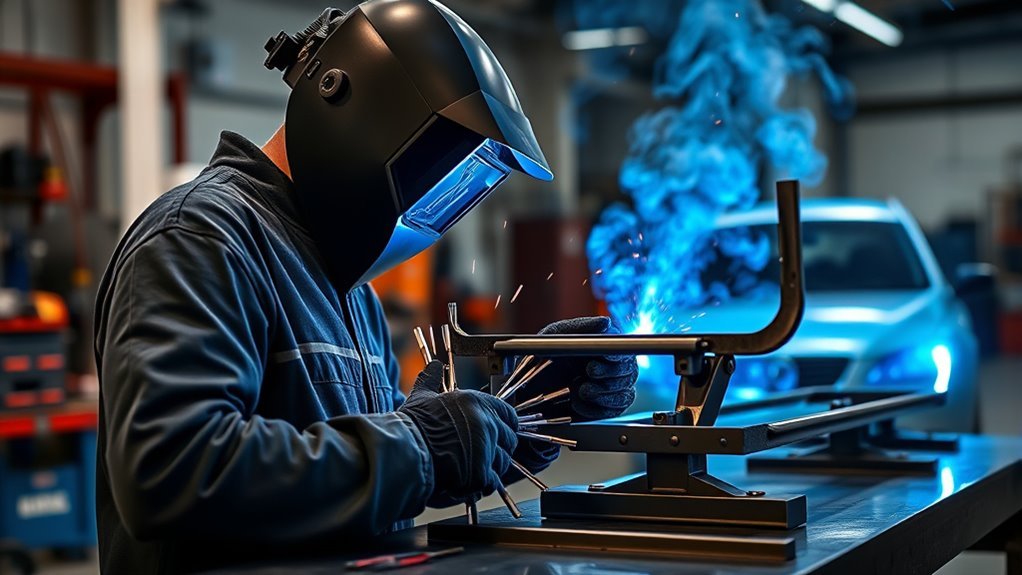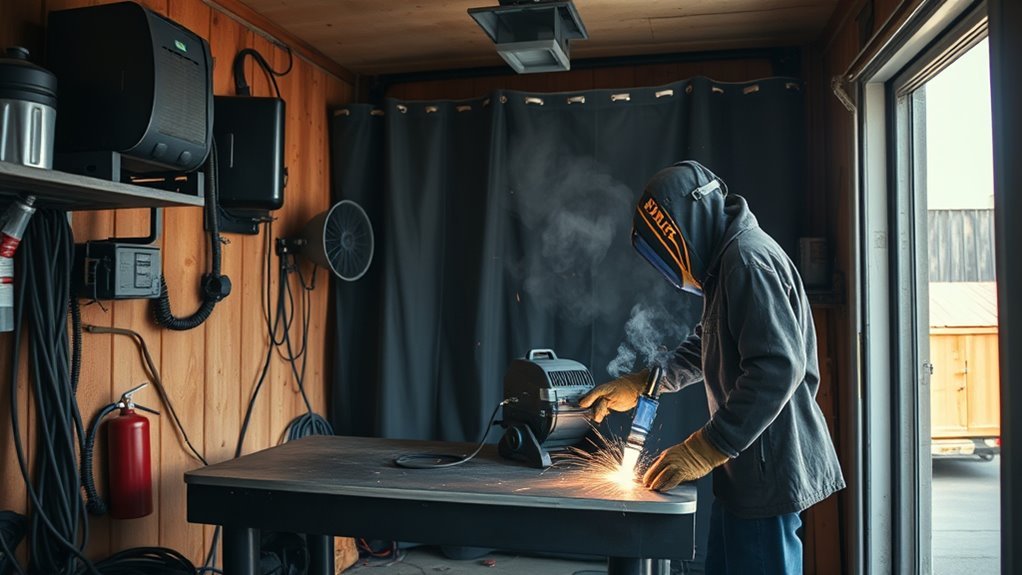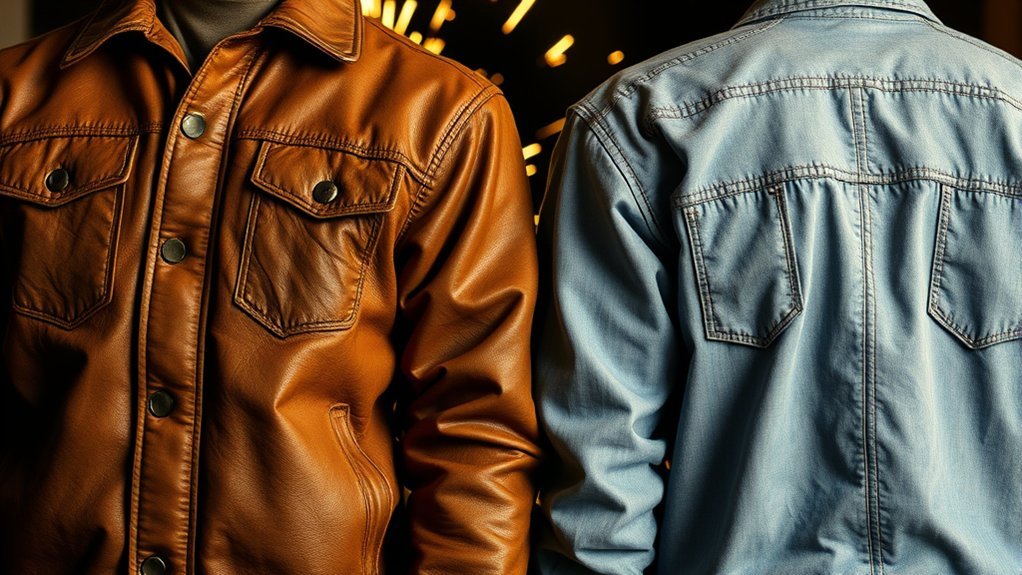
Leather and flame-resistant cotton welding jackets both protect you from welding hazards, but they are not built for the same job. Leather is usually the safer choice for heavy spatter, overhead work, stick welding, and flux-core welding. Flame-resistant cotton is lighter, cooler, and easier to move in, which makes it useful for TIG, light MIG, and warm shop conditions when spatter is lower.
Quick Answer
Choose leather for the strongest spark, spatter, and heat protection, especially during stick, flux-core, overhead welding, or high-amperage MIG. Choose flame-resistant cotton when you need lighter weight, better airflow, and more mobility for lower-spatter work. The safest choice depends on the welding process, position, shop heat, and garment rating.
Key Takeaways
- Leather gives better protection from sparks, hot slag, and heavy spatter, but it is heavier and less breathable.
- Flame-resistant cotton is cooler and easier to move in, but it is better suited to lighter welding and lower-spatter work.
- Do not wear polyester, nylon, or synthetic blends under welding PPE because they can melt and cause severe burns.
- Inspect your jacket often. Retire it if it has holes, thin spots, oil or grease contamination, damaged closures, or lost flame-resistant performance.
Why the Right Material Matters for Your Welding Safety
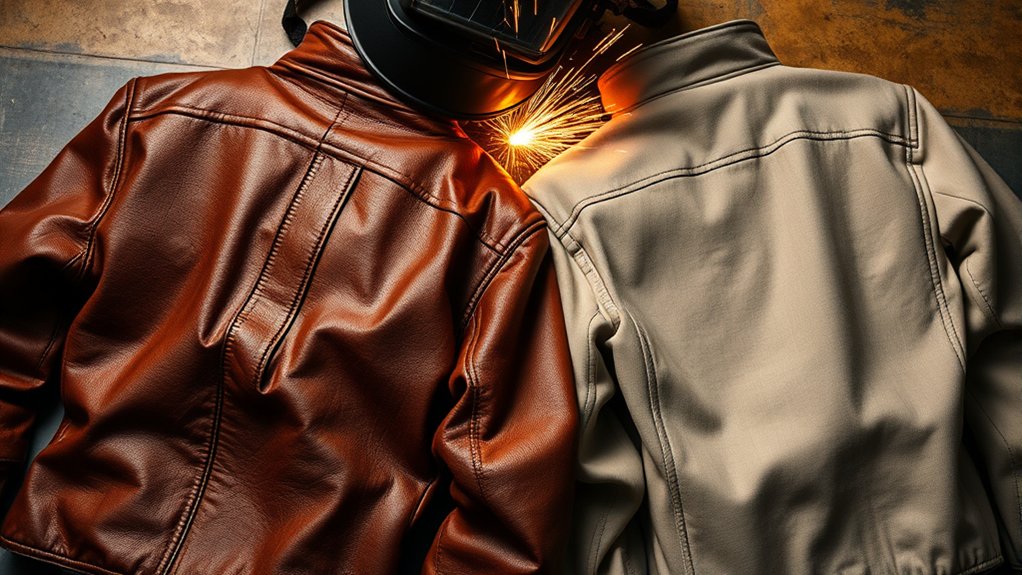
A welding jacket is not just workwear. It is part of your personal protective equipment, and it should match the hazards created by your welding process, position, amperage, and work area. OSHA says protective clothing for welding varies with the size, nature, and location of the work being performed, so one jacket material is not automatically best for every job.
Leather handles sparks, hot slag, and molten-metal spatter better than most fabric jackets. That makes it a strong choice for heavy MIG, stick welding, flux-core welding, and overhead welding where sparks can land on your arms, chest, shoulders, and lap.
Flame-resistant cotton gives you a different advantage. It is lighter, more breathable, and usually easier to move in. That matters during TIG welding, short tack welds, light MIG work, and hot weather when heavy leather may increase fatigue.
Warning: Avoid polyester, nylon, rayon blends, and other synthetic clothing while welding. Synthetic fabrics can burn, melt, and stick to skin. Also keep your jacket free of oil, grease, solvents, and other combustible contaminants before striking an arc.
For a complete setup, your jacket should work with your gloves, helmet, boots, sleeves, respirator when needed, and other essential safety gear. A good jacket cannot make up for exposed skin, poor ventilation, or unsafe work around combustibles.
Leather vs FR Cotton Welding Jacket Comparison
| Factor | Leather Welding Jacket | FR Cotton Welding Jacket |
| Best Use | Stick, flux-core, overhead welding, heavy MIG, high-spatter work | TIG, light MIG, tack welding, lower-spatter work, hot shops |
| Spatter Protection | High | Moderate, depending on fabric weight and rating |
| Heat Comfort | Warmer and less breathable | Cooler and more breathable |
| Mobility | Can feel stiff until broken in | Usually easier arm and shoulder movement |
| Maintenance | Brush clean, dry properly, condition when needed, avoid soaking | Wash only by label directions; avoid bleach and fabric softener unless approved |
Products Worth Considering

SAFE & RELIABLE: This welding jacket is made of 11oz(310g) FR cotton, blocking high-temperature sparks and preventing melting. It also has reflective strips—ideal for low-light workshops, nighttime outdoor repairs. The fabric holds NFPA2112 certification (meets pro standards) and suits MIG, TIG welding & cutting operations, safeguarding safety in workshops and outdoors

Exceptional Safety: Expertly crafted from 310g (11 oz) flame-resistant cotton, this NFPA2112-certified welding jacket is ideal for TIG and MIG welding, providing reliable protection against sparks and molten slag. Designed to be worn by both men and women, it ensures all-day safety and comfort
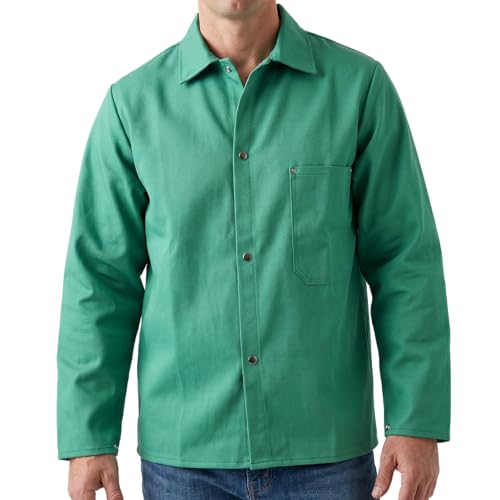
FR PROTECTION GUARANTEED THROUGH 50+ INDUSTRIAL WASHES — FR treatment keeps the jacket flame resistant through multiple washings, no re-treating required. Meets ASTM D6413-99.
The Advantages of Flame-Resistant Cotton in Welding Jackets
Flame-resistant cotton welding jackets are popular because they solve one of leather’s biggest problems: heat buildup. In a warm garage, fabrication shop, or outdoor work area, a lighter FR cotton jacket can help you stay more comfortable while still covering your arms, torso, and neck.
FR cotton works best when the spatter level is low to moderate. It is a practical choice for:
- TIG welding: TIG usually produces less spatter than stick or flux-core welding, so mobility and comfort often matter more.
- Light MIG welding: FR cotton can work well for short beads, tack welds, and thinner material when spatter is controlled.
- Hot shop work: A lighter jacket may reduce fatigue when you are welding in warm weather or near heat-producing equipment.
- Detailed fabrication: Softer fabric can make it easier to reach, clamp, reposition, and control the torch or gun.
The key is choosing a real flame-resistant garment, not just a thin cotton shirt. CCOHS welding PPE guidance says protective clothing should protect workers from ultraviolet radiation, sparks, and molten metal. It also advises that fabric garments should resist sparks, heat, and flame and be kept clean and free of combustible materials.
For more on the role of flame-resistant clothing in arc welding, focus on coverage first: sleeves, collar, torso overlap, and cuffs matter as much as the fabric itself.
Pro Tip: If you choose FR cotton, buy a jacket with covered snaps, secure cuffs, a collar that protects your neck, and pocket flaps that keep sparks from collecting inside open pockets.
How Leather Jackets Stack Up Against Flame-Resistant Cotton
Leather welding jackets are the better choice when sparks and spatter are frequent, heavy, or falling from above. Split leather and grain leather resist hot particles well, and leather also adds abrasion and puncture resistance when you are working around rough steel, sharp edges, and welding tables.
Leather is especially useful for stick welding, flux-core welding, overhead welding, and high-amperage MIG work. In these jobs, the heavier material can prevent hot slag from burning through to your shirt or skin as quickly as lighter fabric might.
The tradeoff is comfort. Leather can feel hot, heavy, and restrictive during long welds. CCOHS notes that leather welding jackets are not very breathable and can make you sweat if you are overdressed. That does not mean leather is the wrong choice. It means you should match it to the job instead of wearing it automatically for every weld.
You can also combine materials. Many welders use a hybrid jacket with leather sleeves and shoulders plus an FR cotton body. That setup gives stronger protection where sparks usually land while keeping the torso cooler. For high-heat accessories, leather gloves remain common for high-temperature tasks, especially when the hands and wrists are close to the arc.
Products Worth Considering

Safety Protection: Crafted from heat-resistant and flame-retardant heavy-duty split cowhide leather, this welding jacket features a stand-up collar and soft cotton lining. It offers full protection against flames, sparks, and slag, covering vital areas like the neck to effectively prevent burns. It’s the ideal safety choice for high-risk tasks such as welding.

All-Round Protection: The cotton-lined stand-up collar effectively protects workers' neck area; the adhesive Velcro can block sparks splashing during work. The adjustable cuff design is intended to prevent sparks from splashing onto hands. ARCCAPTAIN welding jacket provides all-round protection during welding.
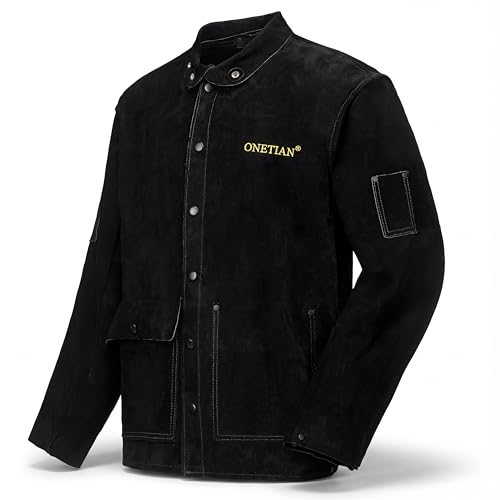
MAKING CAREFULLY: We choose the good cowhide leather to make the jacket, stitching with strong Kevlar fireproof thread.The sewing joints of jacket are reinforced with metal claps.
Match the Jacket to Your Welding Process
The safest jacket is the one that matches the process and position. Use this as a practical starting point:
- TIG welding: FR cotton is often enough for clean, low-spatter work. Add leather sleeves if the part position exposes your forearms to heat.
- Light MIG welding: FR cotton or a hybrid jacket can work well when spatter is low and the weld position is flat or horizontal.
- Heavy MIG welding: Choose leather or a leather-sleeve hybrid if you see frequent spatter or work at higher amperage.
- Stick welding: Leather is usually the better jacket because slag and sparks are more common.
- Flux-core welding: Choose leather for better spatter protection, especially on dirty steel, thicker material, or outdoor repairs.
- Overhead welding: Wear leather sleeves, shoulder coverage, a cap or hood, and full torso protection because sparks fall directly onto you.
- Grinding or plasma cutting nearby: Use spark-resistant clothing and keep the same no-synthetic rule. General personal protective equipment habits still apply around sparks and hot metal.
Note: If you weld for an employer, follow the site hazard assessment and PPE requirements. OSHA requires PPE to be selected for the hazards present and to fit the worker properly.
Essential Comfort and Fit Factors for Welding Jackets
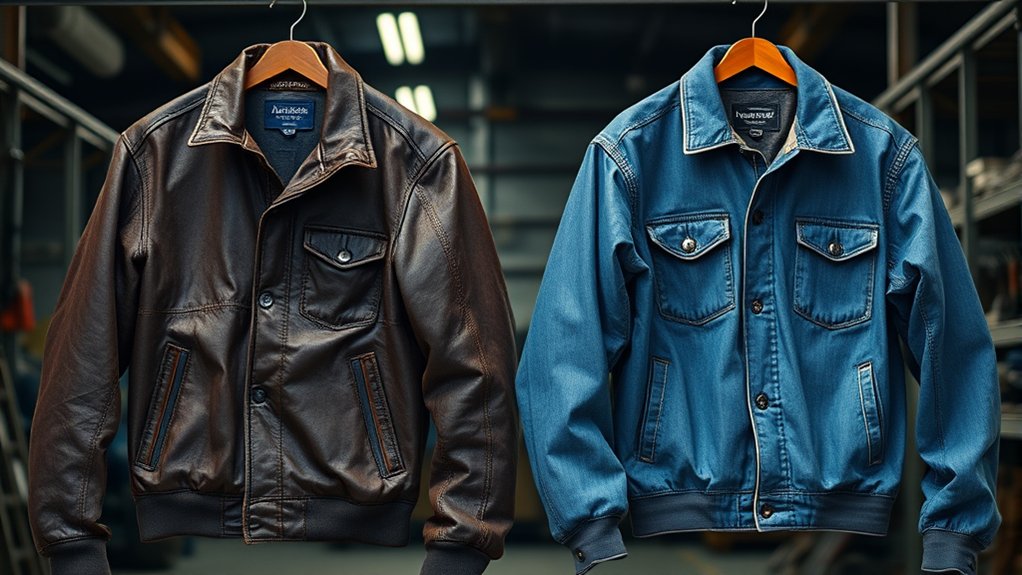
A welding jacket must protect you without fighting your movement. If it is too loose, sparks can enter through gaps. If it is too tight, you may leave it unfastened, roll up the sleeves, or stop using it when the shop gets hot.
Check these fit points before welding:
- Sleeve length: Sleeves should cover your wrists when your arms are extended toward the work.
- Cuffs: Cuffs should close securely so sparks cannot enter the sleeves.
- Collar: A stand-up or close-fitting collar helps protect the throat and neck from UV and sparks.
- Torso overlap: The jacket should overlap your pants when you reach, bend, or sit.
- Closures: Snaps or buttons should stay closed and be covered where possible.
- Pockets: Open pockets can catch sparks. Choose flaps or keep pockets closed.
- Shoulder movement: You should be able to reach the joint without the jacket pulling open.
Leather can feel stiff until it breaks in, while FR cotton usually moves more easily right away. Hybrid jackets often provide the best middle ground: leather protection on the sleeves and shoulders with a lighter FR cotton body.
Heat Stress and Breathability
Comfort is a safety issue. If a jacket makes you overheat, you may rush the weld, lose focus, or stop wearing the jacket correctly. NIOSH explains that occupational heat stress comes from the combination of body heat, environmental heat, clothing, and PPE. Heavy protective gear can increase heat storage in the body.
FR cotton can help in hot conditions because it breathes better than leather, but it does not remove the need for heat controls. Drink water, improve airflow where safe, take breaks, reduce workload when possible, and watch for heat illness symptoms such as dizziness, heavy sweating, cramps, confusion, or unusual fatigue.
The more heat, spatter, and overhead exposure you face, the more protection you need. The hotter the shop and the lower the spatter, the more breathability and mobility matter.
Maintenance, Cleaning, and Replacement
A welding jacket only protects you when the material is clean, intact, and used as designed. Do not keep wearing a jacket just because it still looks wearable from a distance.
For leather welding jackets:
- Brush off dust, slag, and metal particles after use.
- Let the jacket dry naturally if it gets damp. Do not bake it near a heater.
- Condition leather when it starts to dry out or crack, using a product suitable for work leather.
- Retire it if it has burn-through, deep cracking, open seams, or closures that no longer stay shut.
For flame-resistant cotton welding jackets:
- Wash only according to the garment label.
- Avoid chlorine bleach, hydrogen peroxide, fabric softeners, or starch unless the manufacturer specifically allows them.
- Inspect for pinholes, thin areas, frayed cuffs, damaged snaps, and worn elbows.
- Replace the jacket if it no longer self-extinguishes as designed, if the label’s wash limit has been reached, or if damage exposes your skin or base layer.
Never weld in clothing contaminated with gasoline, oil, solvents, brake cleaner, grease, or other flammable materials. Contaminated clothing can ignite even if the base fabric is flame-resistant.
Choosing Leather or Cotton for Your Welding Needs?
Choose leather if your main concern is protection from heavy sparks, slag, and molten-metal spatter. It is the safer default for stick welding, flux-core welding, overhead work, and heavy MIG welding. It also holds up well when you are leaning on benches, brushing against sharp steel, or working around rough plate.
Choose flame-resistant cotton if your main concern is comfort, breathability, and mobility during lighter welding. It works best for TIG, light MIG, small repairs, and warm environments where heavy leather may cause fatigue. For many welders, a hybrid jacket is the smartest all-around option because it protects the arms and shoulders with leather while keeping the torso cooler.
Do not base your decision on material alone. Look for a jacket that fits correctly, closes securely, covers your skin, matches the welding process, and comes from a manufacturer that provides clear care instructions. Proper maintenance matters for every piece of PPE, whether you are caring for a jacket, gloves, or a welding helmet.
Frequently Asked Questions
What is the best material for a welding jacket?
Leather is usually best for heavy sparks, hot slag, overhead welding, stick welding, and flux-core welding. Flame-resistant cotton is better for lighter welding when you need cooler, easier movement. Many welders choose a hybrid jacket with leather sleeves and an FR cotton body.
What is the least safe material to wear while welding?
Synthetic fabrics such as polyester, nylon, rayon blends, and many stretch fabrics are among the least safe choices. They can melt, burn, and stick to skin. Avoid synthetic base layers under your jacket as well, because sparks can pass through a gap or damaged outer layer.
Can you wear 100% cotton while welding?
Heavyweight, tightly woven 100% cotton may be acceptable for some low-spatter welding clothing, but ordinary thin cotton is not the same as a welding jacket. For better protection, choose flame-resistant cotton that is made and labeled for welding or hot-work use, and follow the care label.
Which is safer, leather or FR cotton?
Leather is safer for heavy spatter, overhead welding, and high-heat work. FR cotton is safer than ordinary cotton or synthetic clothing for lighter welding, but it does not offer the same spatter resistance as leather. The safest choice is the one matched to the specific hazard.
Are hybrid welding jackets worth it?
Yes, hybrid jackets are a strong choice for many welders. Leather sleeves and shoulders protect the areas that catch the most sparks, while the FR cotton body reduces heat and weight. They are useful for general shop welding where conditions change throughout the day.
Conclusion
Leather and flame-resistant cotton are both useful welding jacket materials, but they are not interchangeable. Pick leather when sparks, slag, spatter, and overhead exposure are your biggest risks. Pick FR cotton when the work is lighter, the shop is hot, and mobility matters. For many everyday welders, a hybrid jacket gives the best balance of protection and comfort.
Whatever you choose, make sure the jacket fits well, covers your skin, closes securely, and stays clean. Replace it when it is burned through, contaminated, worn thin, or no longer performing as designed. Your jacket should make welding safer, not just more comfortable.
Sources
- OSHA 1910.252, Welding, Cutting, and Brazing General Requirements — supports welding protective clothing selection and hot-work safety requirements.
- OSHA 1910.132, Personal Protective Equipment General Requirements — supports hazard assessment, PPE fit, maintenance, and training guidance.
- CCOHS Welding: Personal Protective Equipment and Clothing — supports clothing material, laundering, synthetic-fabric warning, coverage, and leather breathability guidance.
- CDC/NIOSH Heat Stress and Workers — supports heat-stress discussion related to clothing and PPE.
- OSHA Occupational Heat Exposure — supports heat-risk prevention, hydration, rest, airflow, and workload-control guidance.