Disclosure: As an Amazon Associate, we earn from qualifying purchases. If you click a link on this page and make a purchase, we may receive a small commission at no extra cost to you.
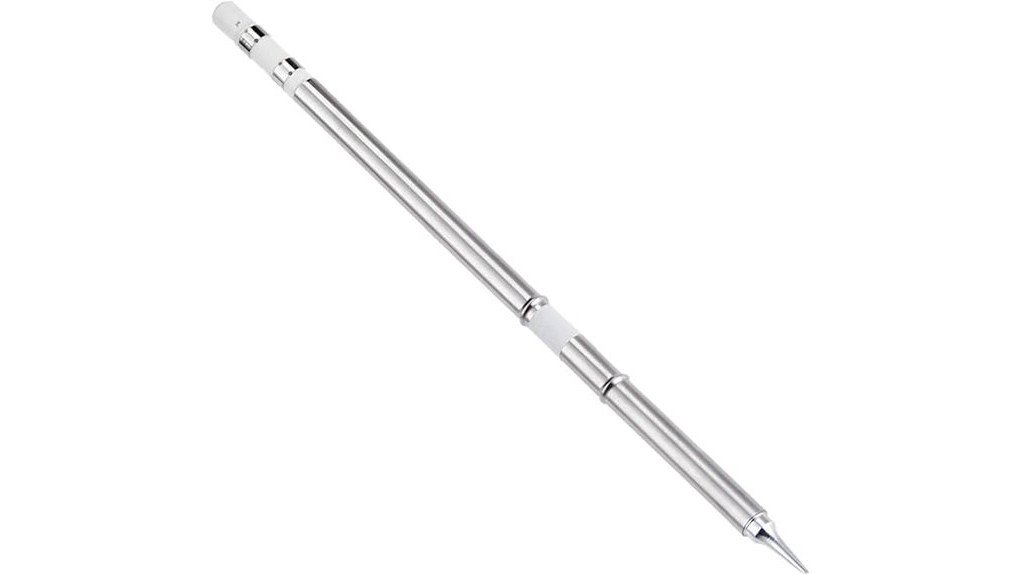
A replacement soldering tip is only useful when its shape, cartridge family, and station compatibility match your setup. The Yetaha T12-BCF1 is an aftermarket T12-series tip designed around the BCF1 geometry and sold primarily for compatible HAKKO FX-951 setups. Its roughly 150 mm cartridge length and coated soldering surface make it a practical option for owners who need a single replacement rather than a multi-tip assortment. The main limitation is compatibility, especially because FX-951 tip families vary by market.
Quick Verdict
Rating: 8/10
Best For: Owners of compatible T12-based FX-951 systems who specifically need the BCF1 tip shape.
Bottom Line: The Yetaha T12-BCF1 offers the correct general cartridge format, useful BCF1 geometry, and a simple one-tip replacement package. Its biggest tradeoff is that you must confirm your FX-951 handpiece and regional tip family before ordering.
| Specification | Detail |
|---|---|
| Brand | Yetaha |
| Model | T12-BCF1 |
| Product Type | T12-series soldering iron replacement tip |
| Tip Geometry | BCF1 / Shape-1BC style with tinned cut surface |
| Approximate Length | 150 mm / 5.9 in |
| Surface | Treated surface with coated tip end |
| Package | 1 soldering tip |
| Primary Compatibility | Compatible T12-based HAKKO FX-951 configurations |
| Best Use | General electronics soldering where BCF1 geometry suits the joint |
| Important Note | Check your handpiece and regional T12/T15 requirement before ordering |
Key Takeaways
- The Yetaha T12-BCF1 is sold as a single aftermarket replacement tip, not a complete soldering iron or multi-tip kit.
- Its approximately 150 mm cartridge format is intended for compatible T12-series soldering systems.
- The BCF1 designation corresponds to a Shape-1BC style with solder applied to the cut working surface.
- Compatibility deserves more attention than voltage claims because FX-951 tip families can differ by region and handpiece.
- Proper tinning, lower practical temperatures, and protection from oxidation can have a major effect on tip performance and service life.
What Is the Yetaha T12-BCF1?
The Yetaha T12-BCF1 is a cartridge-style replacement soldering tip made for stations that accept the T12 family. The package contains one tip measuring about 150 mm long. It is marketed as a replacement option for the HAKKO FX-951 platform and similar setups that use compatible T12 cartridges.
The BCF1 designation is more meaningful than the generic phrase “soldering tip.” In HAKKO’s T12 naming system, T12-BCF1 uses a Shape-1BC profile and has a tinned cut surface. That geometry gives you a defined working face rather than an ultra-fine needle point, which can be helpful when you need useful surface contact for transferring heat into a solder joint.
Who Should Buy It?
Best For
- You already own a T12-compatible FX-951 setup and need a BCF1 replacement.
- You prefer buying one specific tip instead of a mixed assortment.
- You work on electronics where a small angled working face is more useful than a needle-style point.
Skip If
- Your station requires T15, T39, or another cartridge family rather than T12.
- You need several tip shapes for different joint sizes.
- You want a genuine HAKKO-branded cartridge rather than an aftermarket replacement.
Before You Buy: Do not order by the FX-951 model name alone. HAKKO has used T12 Series tips in Japan, Oceania, Asia, and other markets, while North American and European FX-951 configurations commonly use T15 Series tips. Check the cartridge already installed in your handpiece or your station documentation first.
Design and Build Details
The Yetaha tip uses a cartridge-style design with an overall length of roughly 150 mm. This format places the working tip and heating-related components in a slim replaceable assembly, allowing a compatible station to respond quickly when heat is drawn from the joint.
The seller describes the tip as having specialized surface treatment and a coated tip end intended to improve resistance to oxidation and moisture. That matters because oxidation can stop solder from wetting the working surface properly. Once solder begins forming beads instead of coating the intended working area, heat transfer and joint quality can suffer.
The package contains one T12-BCF1 tip. That is convenient if you already know BCF1 is the shape you need, but it is less flexible than a multi-shape kit if you regularly switch between fine pads, larger terminals, wires, and broad ground connections.
BCF1 Tip Shape and Contact Area
BCF1 corresponds to a Shape-1BC style. Unlike a very sharp conical tip that concentrates contact at a tiny point, the BCF1 design provides a cut working face. The tinned portion is concentrated on that cut surface, so correct orientation against the joint can improve contact.
This shape can be useful for general electronic assembly, component leads, pads, and other joints that benefit from controlled surface contact. It is still important to match the tip to the joint. A small BCF1 face may be slower on large heat-hungry terminals, while an unnecessarily broad tip can make fine work less comfortable.
Thermal Performance and Soldering Use
The original product description emphasizes quick thermal conductivity, temperature control, smooth tinning, and consistent solder flow. In practical terms, those qualities matter because a soldering tip must transfer enough heat into the work before you can create a clean joint.
The FX-951 platform was designed around strong thermal recovery, which allows you to work effectively without simply turning the temperature as high as possible. Higher settings can accelerate oxidation and shorten tip life. A well-matched tip shape with good contact usually gives you better results than using excess temperature to compensate for poor contact.
The Yetaha T12-BCF1 therefore makes the most sense when its contact face matches the size of the joint. Use the working face against both surfaces that need heating, let the joint come up to soldering temperature, and feed solder into the heated joint rather than relying on a large blob of solder sitting on the tip.
Pro Tip: Keep the BCF1 working face lightly tinned when the iron is resting. Clean it just before the next joint, then apply fresh solder as needed. Leaving the working surface completely bare while hot can speed up oxidation.
Replacement and Compatibility
Compatibility is the most important buying check for this product. The Yetaha listing specifically targets the HAKKO FX-951, and HAKKO documentation confirms that FX-951 systems have existed with T12-series configurations. However, that does not mean every FX-951 worldwide accepts the same cartridge.
HAKKO identifies T12 Series tips for FX-951 systems in Japan, Oceania, Asia, and several other markets. North America and Europe commonly use the closely related T15 Series. Because of that regional difference, you should inspect your current tip, handpiece documentation, or station manual before assuming the Yetaha T12 cartridge will fit.
The FX-951 itself was discontinued by HAKKO in 2025 and replaced by the newer FX-971 platform. That does not make the Yetaha tip useless. Many FX-951 stations remain in service, and consumable-tip replacement is still relevant for owners maintaining those older stations.
Compatibility and Safety
Turn the station off and allow the tip and handpiece to cool before removing or installing a cartridge. Soldering cartridges operate at temperatures high enough to cause burns and damage nearby materials, so handle replacement only when the equipment is safe to touch.
Do not select this tip based on household mains voltage. The cartridge must match the handpiece and station system. The FX-951 station itself uses a low-voltage output to the soldering iron, so the important buying questions are cartridge family, physical fit, handpiece compatibility, and intended tip geometry.
After installation, follow the temperature guidance for your solder alloy, components, and work process. Avoid raising the temperature simply because solder is not wetting the tip. Poor wetting can be a sign of oxidation, contamination, or a worn working surface.
How It Performs in Real Use
PCB and Component Work
For ordinary through-hole components and modest solder pads, the BCF1 working face gives you more contact area than a needle-like point. Better contact can help transfer heat into the joint efficiently without requiring an unnecessarily high station setting.
Wire and Connector Repairs
The cut face can also work for smaller wires, connector tabs, and similar repair jobs when the joint size suits the tip. For large terminals or heavy-gauge conductors that absorb a lot of heat, you may get better results from a larger tip profile.
Repeated Bench Work
During repeated soldering, tip condition becomes increasingly important. Keep solder on the working surface when the iron is sitting in its holder and clean immediately before the next joint. This reduces the amount of time the hot working face remains exposed and unprotected.
Long-Term Use
No reliable fixed lifespan can be promised for a soldering tip. High temperatures, lead-free solder, oxidation, abrasive cleaning, and heavy use can all shorten service life. Replace the cartridge when physical wear or corrosion damages the working surface, or when proper cleaning can no longer restore normal solder wetting.
How to Use and Maintain the Tip Correctly
Start by confirming that the station is off and cool before inserting the replacement cartridge. Once installed, heat the iron and apply solder to the intended working surface so it is properly tinned. A protected, wetted working area transfers heat more effectively than a dry, oxidized surface.
For ordinary soldering where no process temperature has been specified, a moderate starting point is safer than immediately using the maximum setting. HAKKO’s maintenance guidance suggests starting around 330°C to 350°C when no other specification is available, then adjusting according to solder flow, thermal load, component sensitivity, and your solder alloy.
Clean the tip just before soldering rather than stripping it clean before putting the iron back in the holder. A wire-type cleaner can remove excess solder while leaving some protective solder on the working surface. After finishing, apply fresh solder to the tinned area before returning the iron to its holder.
If solder stops wetting the surface, first check for oxidation rather than immediately replacing the cartridge. Appropriate tip cleaning and re-tinning can sometimes restore performance. If the working surface has corroded, developed a hole, or will no longer wet after proper cleaning, replacement is the safer option.
Pros and Cons
Pros
- Specific T12-BCF1 replacement rather than an assorted kit.
- Approximately 150 mm cartridge format matches the intended T12-style design.
- Shape-1BC style provides a useful cut working face for controlled heat contact.
- Surface treatment and coating are intended to resist oxidation and support solder wetting.
- Useful for maintaining compatible older FX-951 stations that are still in service.
Cons
- Not every FX-951 configuration uses T12 tips, particularly across different markets.
- Only one tip is included, so you do not get alternative shapes for different joint sizes.
- It is an aftermarket replacement, not a genuine HAKKO-branded cartridge.
Is It Worth the Price?
The Yetaha T12-BCF1 is worth considering when you already know that your soldering setup accepts this exact cartridge family and you only need one BCF1 replacement. In that situation, buying a single specific tip can make more sense than paying for a set containing shapes you may never use.
Its value is less convincing if you are still uncertain about compatibility or regularly work on very different joint sizes. Buyers who need maximum assurance about manufacturing consistency may also prefer a genuine HAKKO tip. For an established compatible T12 setup, however, the Yetaha gives you a straightforward aftermarket replacement option without forcing you into a larger assortment.
How It Compares to Alternatives
A genuine HAKKO T12-BCF1 is the closest reference point because it uses the same named Shape-1BC geometry. HAKKO also lists the T12-BCF1Z, a long-life version of the BCF1 shape. Those genuine options may appeal more if OEM sourcing and exact manufacturer specifications are your priority.
If you have a North American or European FX-951 configuration, compare the corresponding T15-series option instead of assuming a T12 cartridge is interchangeable. The Yetaha makes the most sense when your handpiece is confirmed for T12 and you specifically want the BCF1 working profile.
Frequently Asked Questions
Does the Yetaha T12-BCF1 fit every HAKKO FX-951?
No. HAKKO has used T12 and T15 tip families with the FX-951 depending on market and handpiece. Confirm the tip family printed on your existing cartridge or check your station documentation before ordering.
What does BCF1 mean?
BCF1 refers to a Shape-1BC style in the T12 family. The working cut surface is tinned, giving you a small flat contact area that can transfer heat more effectively than an extremely fine point on suitable joints.
How many soldering tips are included?
The listed package contains one T12-BCF1 soldering tip. It is a single replacement rather than a multi-shape assortment.
What temperature should you use with this tip?
There is no single correct temperature for every solder alloy and joint. Follow your solder and component requirements, use the lowest temperature that produces a proper joint, and consider roughly 330°C to 350°C as a starting range only when no other process specification is available.
How can you make the tip last longer?
Avoid unnecessary high temperatures and keep the working surface coated with solder when the iron is resting. Clean the tip just before soldering, re-tin it as needed, and turn the station off when it will not be used for an extended period.
When should you replace the T12-BCF1?
Replace it when the working surface is physically corroded or damaged, or when solder no longer wets the intended surface after proper cleaning and re-tinning. A fixed service-life estimate is not reliable because temperature, solder type, maintenance, and workload all affect wear.
Does the Yetaha T12-BCF1 have a verified manufacturer warranty?
A specific manufacturer warranty term could not be verified reliably from the available product information. Check the current Amazon seller and product details before ordering if warranty coverage is important to you.
The Bottom Line
The Yetaha T12-BCF1 is a sensible replacement for buyers who have confirmed a T12-compatible FX-951 setup and want the specific BCF1 working shape. Its main strengths are its familiar cartridge format, useful cut-face geometry, and simple one-tip package, while its biggest limitation is the need to verify regional T12 versus T15 compatibility. Skip it if your handpiece uses another tip family or if you would rather buy a genuine HAKKO cartridge.
Ready to Buy?
Confirm your T12 compatibility, then check the latest product details before you decide.