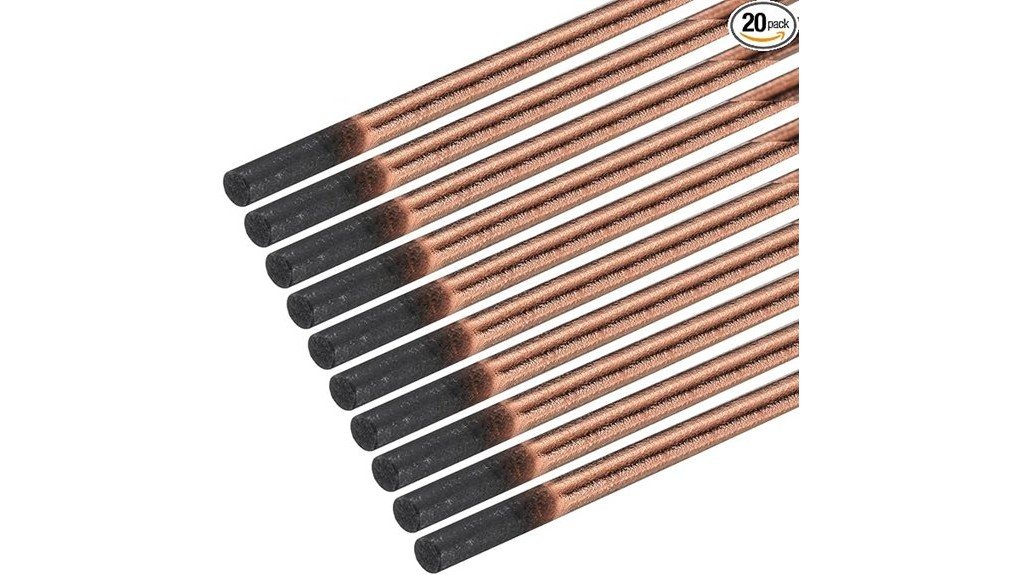
The PATIKIL carbon arc gouging rods are a pack of 20 copper-coated carbon-graphite rods, 6 mm (about 1/4 in) in diameter and 305 mm (12 in) long. They are used with an air carbon arc torch to cut grooves, remove weld defects and back-gouge roots in steel. They are worth considering if you already have a gouging torch, a capable power source and an air supply; skip them if you do not, because the rods alone do nothing without that setup.
This carbon arc gouging rods review is based on the Amazon listing and standard air carbon arc practice, not hands-on testing. The listing shows some inconsistent size text (3/16 in and long lengths), so use the 6 mm x 305 mm, 20-piece size from the product title and verify on the listing.
Quick specs at a glance
| Item | Detail |
|---|---|
| Quantity | 20 pieces |
| Diameter x length (title) | 6 mm x 305 mm (about 1/4 in x 12 in) |
| Construction | Carbon-graphite rod with copper coating, per listing |
| Typical polarity | DC electrode positive (rod to the positive pole); verify rod type |
| Used with | Air carbon arc gouging torch and compressed air |
| Not for | Cutting aluminum or non-ferrous metals as a normal practice |
Check Current Price on Amazon →
What these rods are and who they suit
Gouging rods are consumables. The arc melts the metal and a high-velocity air stream blows it away, wearing the rod down as you go. Copper coating improves current conduction and rod life compared with bare carbon rods.
- Good for: welders who back-gouge or remove defective welds on steel, fabrication shops, repair shops.
- Less suited to: hobbyists without a gouging torch and big power source, aluminum work, or tight spaces.
How to check fit with your torch and machine
- Torch rating: The torch jaws must accept a 6 mm (about 1/4 in) rod. Check your torch’s rod range. See our 600A carbon arc gouging torch review.
- Power source: The rod size needs enough current and a good duty cycle. Check the rod maker’s current range before gouging.
- Polarity: Standard copper-coated DC rods run on DC electrode positive. Some machines offer a gouging setting.
- Air supply: You need steady compressed air at the pressure and flow specified for your torch.
- Length and pack: 305 mm rods are about 12 in; confirm that 20 pieces meets your job volume.
Pros and limitations
Pros
- Copper-coated design aids current flow and rod life.
- 20-piece pack suits small to medium jobs.
- Standard 6 mm size suits many torches.
Limitations
- Consumable; heavy gouging uses rods quickly.
- Leaves a carbon-rich surface that must be ground before welding.
- Listing size text is inconsistent, so verify before ordering.
- Not suitable as a general cutting method for aluminum.
See PATIKIL Gouging Rods on Amazon →
Using the rods safely
- Keep rods dry; damp rods can spit and give a rough arc.
- Start air flow before the arc, and use a shallow rod angle (roughly 30 to 45 degrees is often cited) and steady travel.
- Set current for the rod size using the maker’s chart.
- Wear a welding helmet, leather jacket, gloves and hearing protection. The air blast is very loud.
- Ventilate or use respiratory protection because the process produces fume and carbon dust.
- Clear flammables; molten metal sprays several feet.
- Grind the groove clean before welding to remove carbon.
Alternatives and related guides
- 600A carbon arc gouging torch review: the torch these rods are used with
- noise-cancelling ear plugs review: hearing protection for loud gouging
- Black Stallion welding jacket review: leather protection from sparks
- brass brazing rods review: a different rod type for brazing work
Frequently Asked Questions
What polarity do copper-coated gouging rods use?
Standard copper-coated carbon gouging rods are generally used on DC electrode positive, meaning the rod connects to the positive pole. Always follow the rod maker’s instructions and your machine’s gouging setting.
What size are the PATIKIL gouging rods?
The product title lists 20 pieces at 6 mm x 305 mm, roughly 1/4 in by 12 in. Other text in the listing mentions different sizes, so confirm on the listing before ordering for your torch.
Can I use gouging rods on aluminum?
It is not a normal practice. Aluminum melts at a lower temperature and carbon contamination can cause problems in later welds. Use methods designed for aluminum, such as plasma or mechanical removal.
Do I need compressed air for gouging rods?
Yes. Air carbon arc gouging depends on a high-velocity air stream to blow away molten metal. You need a compressor and an air carbon arc torch; the rods alone cannot gouge without them.
Final verdict
The PATIKIL gouging rods are a consumable pack for air carbon arc work on steel. Confirm the 6 mm x 305 mm size against your torch, use DC electrode positive, and wear full PPE including hearing and respiratory protection.
Check PATIKIL Rod Availability on Amazon →