Reader-supported disclosure: This roundup may contain affiliate links. If you click through and buy, we may earn a commission from qualifying purchases.
Best for: beginner to intermediate garage fabricators, DIY metalworkers, farm repair users, and small-shop buyers who need a plasma cutter for 1/2 inch steel.
You want a plasma cutter that can handle 1/2 inch steel without wasting time, money, or consumables. The right unit should match your power supply, air compressor, cutting thickness, and work style. This guide compares dedicated plasma cutters first, then clearly labels one combo machine as a secondary option for buyers who also need welding functions.
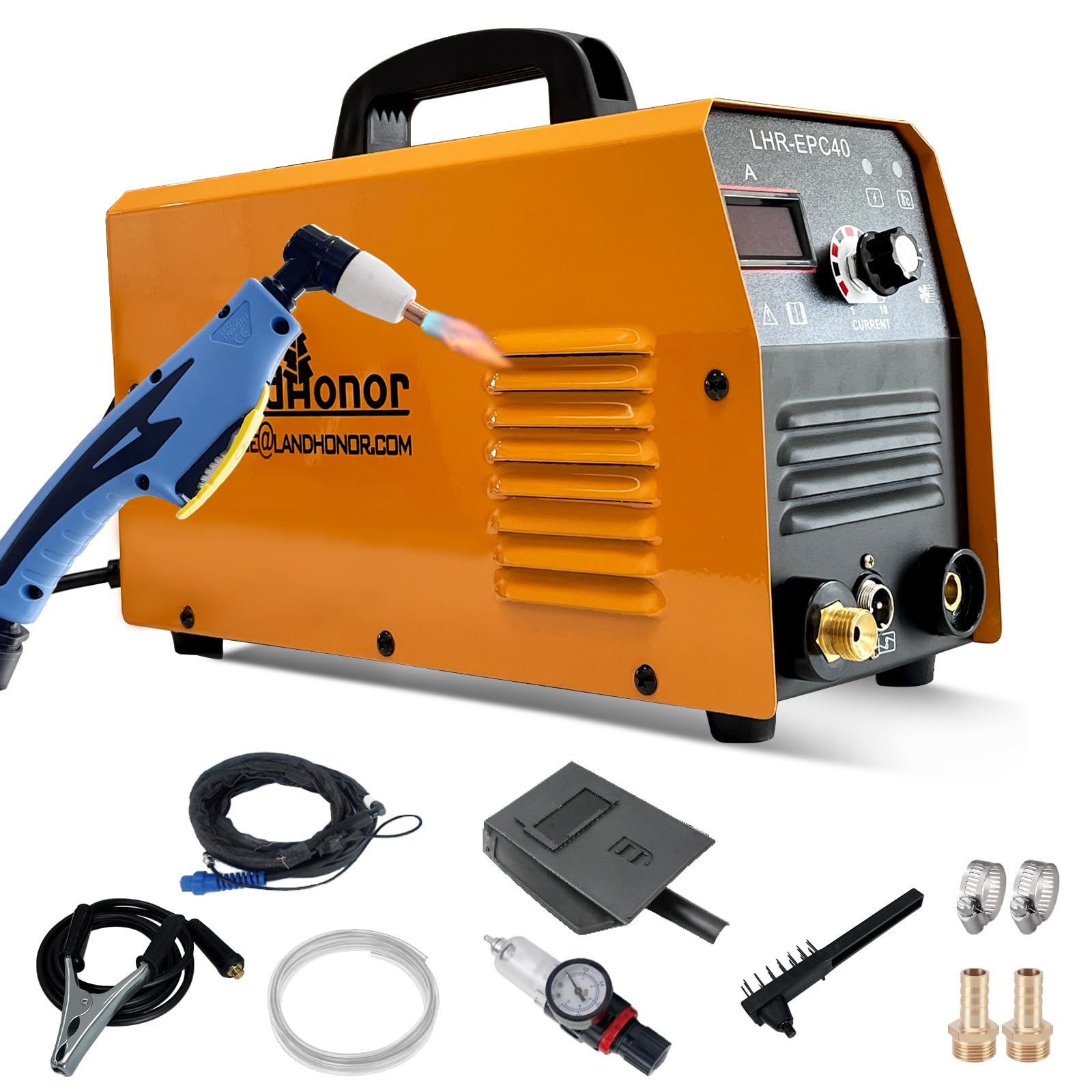
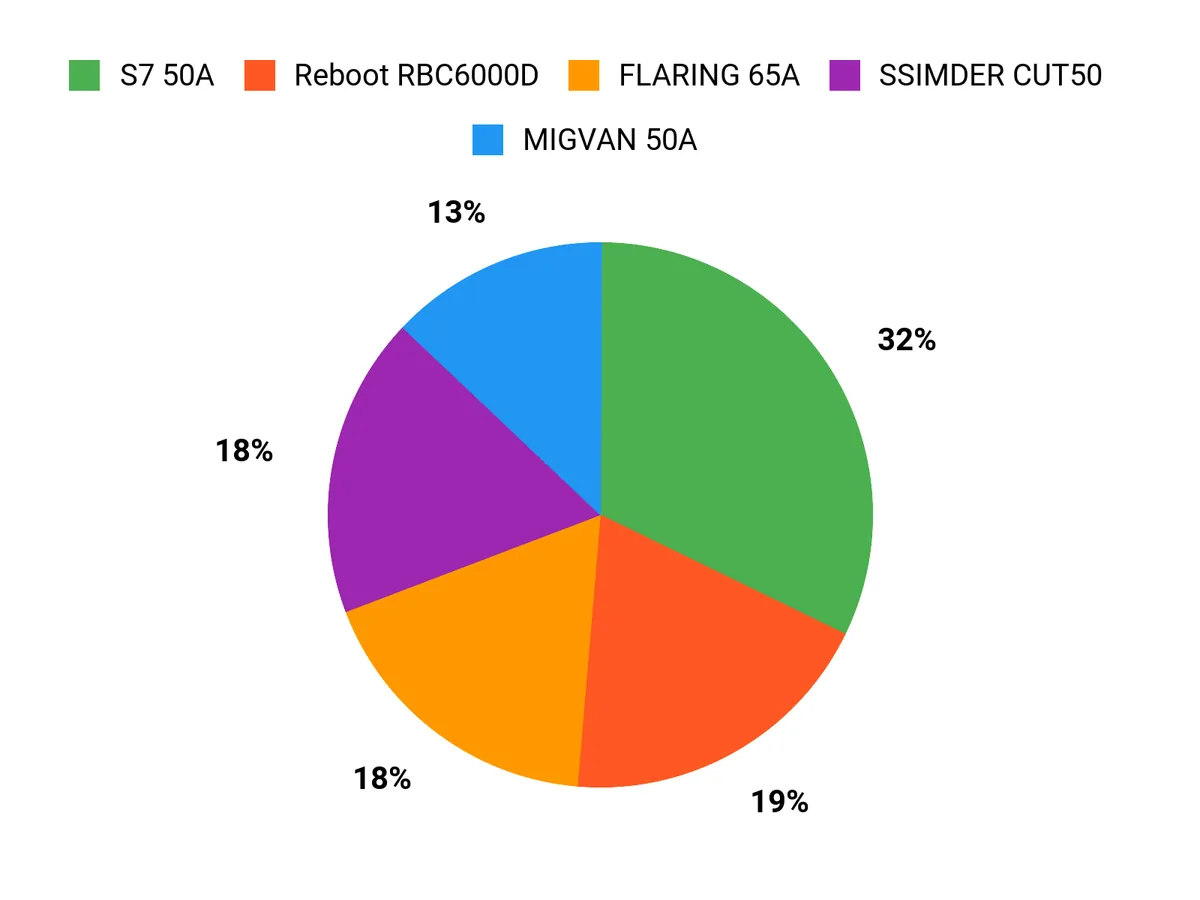
Quick pick: Choose the LOTOS LOP55D if you want the best balance of pilot arc control, portability, and clean 1/2 inch cutting. Choose the MIGVAN 50A if you want strong shop performance with simple controls. Choose the S7 50A only after manually checking the exact Amazon listing, because the current link points to an Amazon search page rather than a single product listing.
Manual verification note: Live Amazon verification was not completed because this edit uses only the provided article HTML. Ratings, review counts, exact specs, badges, stock, and prices must be manually checked before publishing.
Top Picks for 1/2 Inch Steel
| Category | Product | Relevance | Score |
|---|---|---|---|
| 🏆 Best Overall Dedicated Cutter | LOTOS LOP55D | KEEP — dedicated plasma cutter | 92/100 |
| 🚀 Best Shop Power Pick | MIGVAN 50A | KEEP — dedicated plasma cutter | 95/100 |
| 💰 Best Budget Candidate | S7 50A | MAYBE — exact listing needed | 86/100 |
| ⭐ Best Portability | Reboot RBC6000D | KEEP — dedicated plasma cutter | 88/100 |
| ⚡ Best High-Amperage Value | FLARING 65A | KEEP — dedicated plasma cutter | 90/100 |
| 🔰 Best Compact Light-Duty Cutter | ATS 40A | KEEP — dedicated plasma cutter | 75/100 |
| 🛠️ Best Starter Kit | Reboot 60A Kit | KEEP — dedicated plasma cutter kit | 83/100 |
| 💼 Secondary Combo Option | Reboot RBM2500 | MAYBE — combo machine, not a pure plasma cutter | 80/100 |
| ⚙️ Best Duty Cycle Candidate | Amico CUT-40 | KEEP — dedicated plasma cutter | 87/100 |
| 🎯 Best Hobbyist Favorite | SSIMDER CUT50 | KEEP — dedicated plasma cutter | 85/100 |
Product Relevancy Check
The main keyword is best plasma cutter for 1/2 inch steel. Readers searching this topic expect dedicated plasma cutters that can cut 1/2 inch steel, not welding helmets, hoses, gas regulators, consumables, or general welding machines. Most products in this article match that buyer intent. The main cleanup issue is the Reboot RBM2500, because it is primarily a multiprocess welding combo with a plasma cutter function, not a dedicated plasma cutter.
| Product Name | Product Type | Keyword Match | Search Intent Match | Score /10 | Action |
|---|---|---|---|---|---|
| LOTOS LOP55D | Dedicated plasma cutter | Yes | Yes | 10 | KEEP |
| MIGVAN 50A | Dedicated plasma cutter | Yes | Yes | 9 | KEEP |
| S7 50A | Plasma cutter, exact listing unclear | Partial | Partial | 7 | Use only after replacing the search URL with a verified product URL. |
| Reboot RBC6000D | Dedicated plasma cutter | Yes | Yes | 9 | KEEP |
| FLARING 65A | Dedicated plasma cutter | Yes | Yes | 9 | KEEP |
| ATS 40A | Dedicated plasma cutter | Yes | Partial | 8 | KEEP as a light-duty option. |
| Reboot 60A Kit | Dedicated plasma cutter kit | Yes | Yes | 9 | KEEP |
| Reboot RBM2500 | Multiprocess welder and plasma combo | Partial | Partial | 6 | Move to secondary combo option, not a main dedicated-cutter pick. |
| Amico CUT-40 | Dedicated plasma cutter | Yes | Yes | 9 | KEEP |
| SSIMDER CUT50 | Dedicated plasma cutter | Yes | Yes | 9 | KEEP |
How We Picked These Plasma Cutters
You need more than a rated cut thickness when choosing a plasma cutter for 1/2 inch steel. We prioritized product-category fit first. A main recommendation had to be a plasma cutter, not a welding accessory or unrelated shop tool.
We then weighed stated cutting power, rated amperage, dual-voltage capability, duty cycle, and setup needs. These factors matter because 1/2 inch steel usually requires stronger output, clean dry air, and a properly rated circuit.
Portability and weight matter if you move between job sites. Onboard features such as LED displays, built-in regulators, and pilot or touch arc starts can simplify setup and reduce consumable waste. We also considered what comes in the box, including torches, tips, regulators, and guides, because those parts affect your first-use experience.
Finally, we looked for practical buyer cautions inside the article content, including compressor needs, 120V limitations, short leads, power hookup concerns, and durability risks under heavy continuous use.
Before You Buy
- Power: For better 1/2 inch steel performance, use 220V or 240V when the machine supports it.
- Air supply: A weak compressor or wet air can cause rough cuts, poor starts, and faster consumable wear.
- Duty cycle: Higher duty cycle matters if you cut thick steel for longer sessions.
- Cut type: Clean cut and severance cut are not the same. A machine may cut 1/2 inch steel slowly even if it can sever thicker metal.
- Listing accuracy: Manually confirm ratings, review counts, warranty, weight, accessories, and exact cut capacity before publishing.
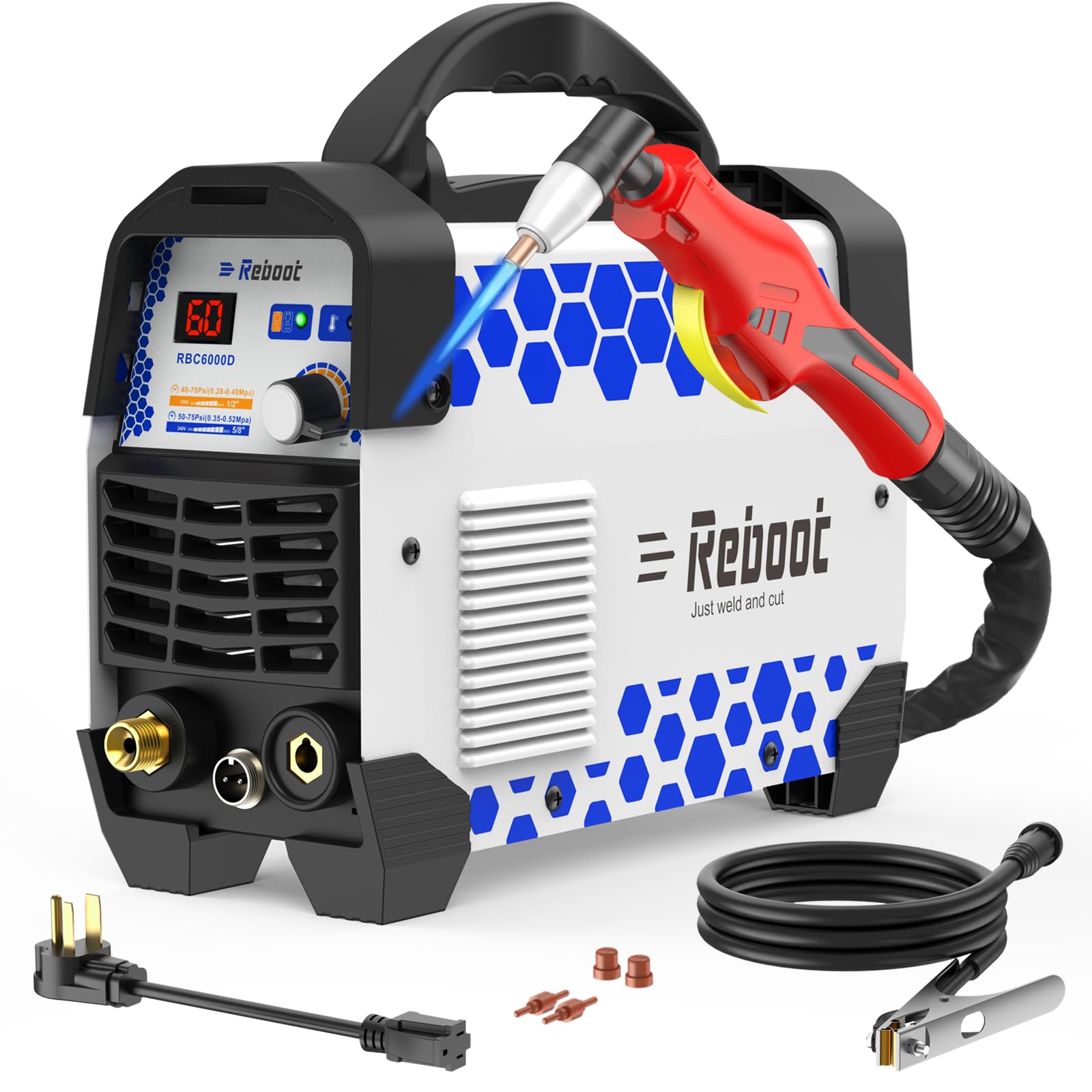
You get a surprisingly capable, compact 60A cutter that works on both 120V and 240V circuits. It ships with a PT31 torch, tips, and a pre-installed air regulator so you can be cutting sooner, and the touch arc makes starting easier. For everyday shop jobs and weekend projects, it balances portability and cutting power, but you should plan your electrical and compressor setup before you begin.
What People Say
Buyers often report strong value and better cutting performance when the unit runs on 240V. They also mention the compact size, easy setup with the built-in regulator, and solid cooling during normal use. A recurring caution is to use a high-amp circuit and a capable compressor, because weak 110V circuits can trip breakers or reduce cutting performance.
Overall Sentiment: Positive

Where It Shines
| Situation | How It Helps |
|---|---|
| Home Garage Repairs | You can plug into a workshop 240V outlet to cut brackets, exhaust pieces, and patch panels without hauling heavier gear. |
| Mobile Jobsite Tasks | The lightweight case and handle help you move between sites, though you’ll want a dedicated 30–40A circuit or a proper generator for full power. |
| Hobby Fabrication | The setup is simple for occasional artistic or fabrication cuts, and the included consumables help you start without hunting for extra parts. |
| Quick Field Repairs | If you have a compatible power source and compressor, you can make emergency cuts on frames or repair parts without calling in larger equipment. |
Pros and Cons
- Pros: Portable, dual-voltage, built-in regulator, starter consumables included.
- Cons: Full performance depends on proper power and air supply.
Durability
Moderate to good for light-to-medium duty. Many users report months of reliable use, though long-term heavy commercial workloads are less proven.
Key Benefits
- Dual-voltage flexibility for garage or shop power
- Pre-installed air regulator reduces setup time
- Portable, compact form that’s easy to move
- Consistent 1/2″ clean cuts on proper power and air
- Includes torch and starter consumables
Rating: 4.4 (total: 154+) Manual verification required before publishing.
You get a compact, dual-voltage cutter designed for a small shop or garage. The bright LED display helps you monitor settings, while the built-in regulator and post-flow cooling may make setup and torch care easier.
It may fit stainless and mild steel work, small fabrication runs, and maintenance tasks where portability matters. Before publishing, manually confirm the exact Amazon listing, cut rating, included accessories, weight, and review count.
What People Say
Users in this product class often praise value and cutting ability, especially when running on 220V. They also tend to like LED readouts and built-in regulators because they reduce setup guesswork. Common caveats include the need for a proper high-amp circuit, short ground leads, limited documentation, and possible fitting compatibility issues.
Overall Sentiment: Positive, pending manual listing verification

Where It Fits
| Situation | How It Helps |
|---|---|
| Garage Fabrication | Lets you cut brackets, panels, and custom parts quickly with a small footprint and easy setup. |
| Small Shop Use | Dual-voltage capability can help you switch between lighter bench work and more demanding cuts when 220V is available. |
| Mobile Repairs | It is light enough to carry between jobs, provided you have a proper circuit or compatible generator to reach full power. |
| Hobby Projects | Included consumables and a PT31 torch can help you start artistic or one-off builds without hunting for parts. |
Pros and Cons
- Pros: Budget-friendly positioning, dual-voltage design, LED display, portable size.
- Cons: Current link is not a verified single-product listing, so product details require manual confirmation.
Durability
Likely suitable for hobby and light professional use, based on the article’s description. Heavy continuous commercial use should be avoided unless the exact listing confirms stronger duty-cycle performance.
Key Benefits
- Dual-voltage flexibility for 110V or 220V outlets
- LED display for real-time monitoring
- Built-in air regulator simplifies setup
- Lightweight and easy to carry
- Post-flow cooling to extend consumable life
Rating: 4.2 (total: 1759+) Manual verification required before publishing.
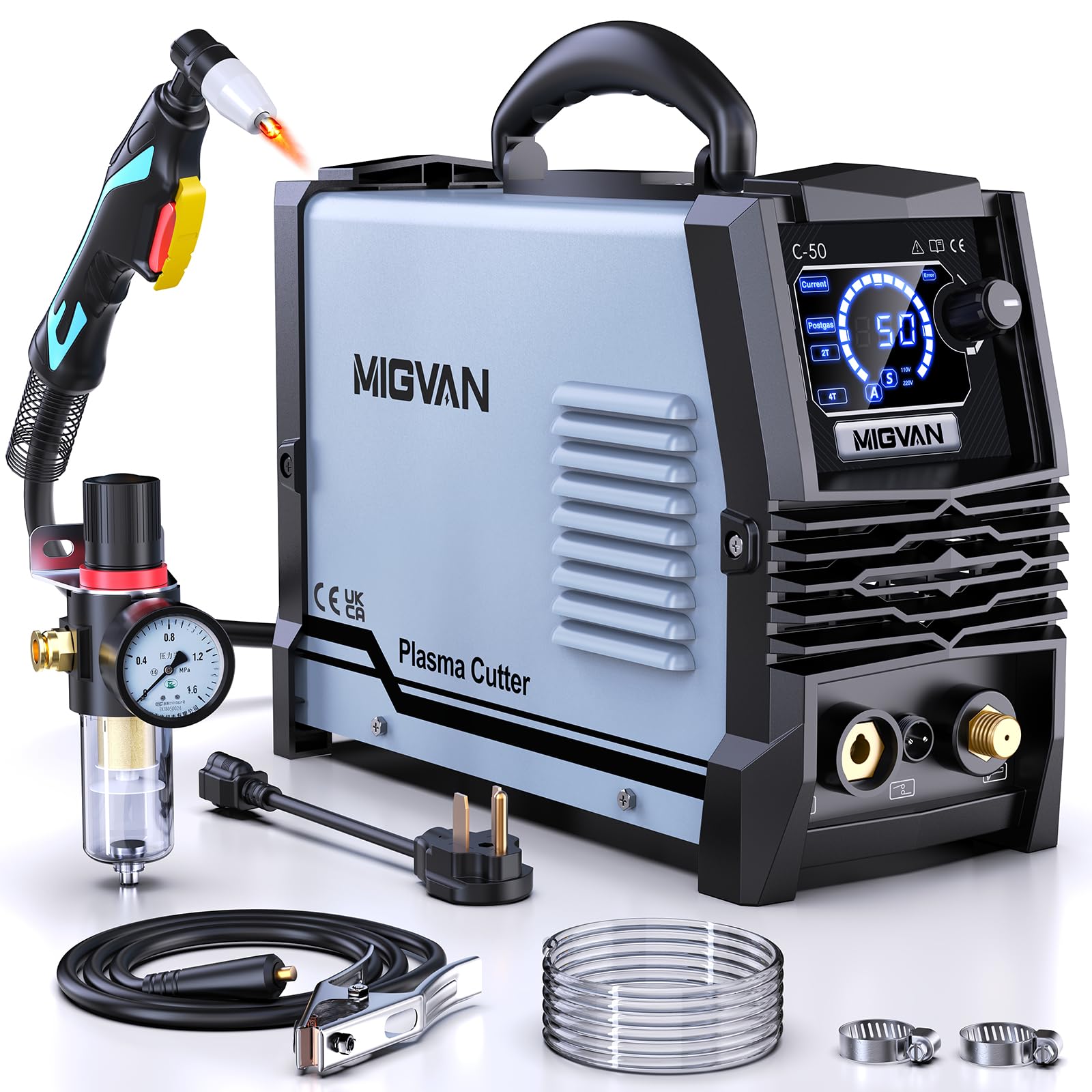
You get a punchy small unit that leans on usable power when you run it on 220V. The touch-arc start and included consumable kit mean you spend less time hunting parts, while the built-in regulator and hose help you start cutting faster.
It is a strong pick for hobbyists who want to step up to thicker steel. It is also compact enough to move between the garage and a jobsite when you have the right power and compressor available. If you want a balance of power, portability, and starter accessories, this one deserves consideration.
What People Say
Most users appreciate the extra power and the convenience of the consumable kit, saying it cuts much better on 220V. People also like the touch-arc start and compact size, which make setup and handling simpler.
Common notes warn that 120V performance is limited and that you should check plug compatibility and duty cycle for heavier, continuous work.
Overall Sentiment: Positive

Where It Works
| Situation | How It Helps |
|---|---|
| Hobby Fabrication | Gives you extra amperage for thicker panels and decorative work without stepping up to a heavy industrial machine. |
| Tough Plate Cuts | On 220V, it may handle thicker mild steel with fewer passes, saving time on jobs that need clean, quick cuts. |
| Portable Jobs | The small footprint and included accessories make it easier to pack for site work, provided you have a compatible power source. |
| Starter Shop Upgrade | Adds a higher-capacity cutter to a small shop without a big learning curve, and the consumable set helps you start sooner. |
Pros and Cons
- Pros: Higher amperage, compact size, included consumables, touch-arc start.
- Cons: Best results depend on 220V power and suitable air flow.
Durability
Generally good for hobby and light professional use. Many users report reliable performance, though long-term durability under heavy continuous duty remains less proven.
Key Benefits
- High 65A output for tougher cuts on 1/2″ steel
- Dual-voltage flexibility for 120V or 240V outlets
- Touch-arc start for easier torch ignition
- Includes extra consumables and regulator
- Compact, easy-to-move footprint
Rating: 4.3 (total: 137+) Manual verification required before publishing.
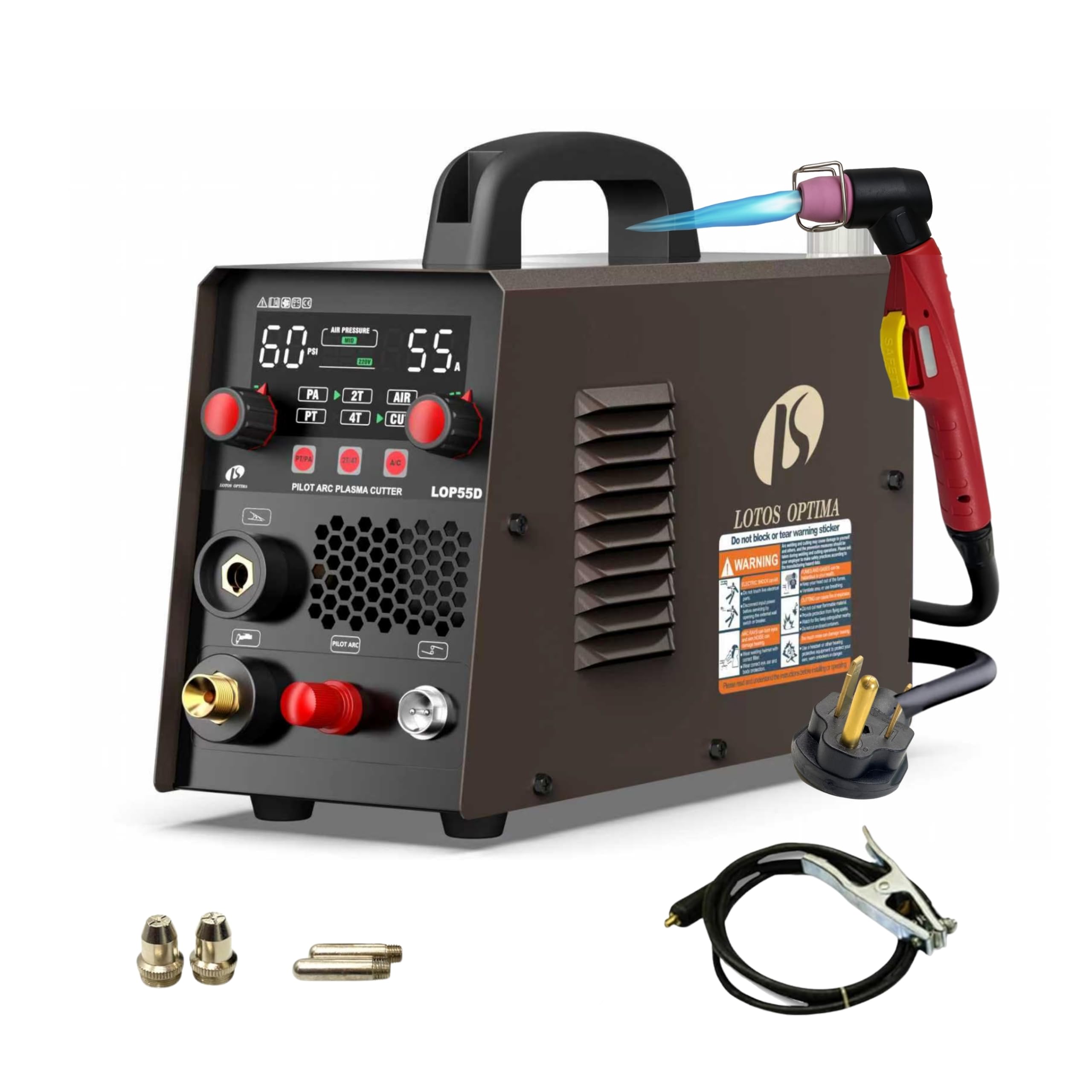
You get a compact, capable cutter that balances power and ease of use. The non-touch pilot arc can make starts smoother on painted or rusty metal, and the LED control panel keeps adjustments simple while you work.
It is well suited for garage projects, light farm repairs, and small shop fabrication where portability and consistent cuts matter. If you want a unit that feels solid out of the box and handles common metal tasks without a steep learning curve, this one is worth a close look.
What People Say
Most users highlight the smooth pilot arc and overall build quality. People like the LED panel and included regulator because they reduce setup guesswork.
A common caution is to check cord length and power hookups so you can run it at full capacity without surprises.
Overall Sentiment: Positive

Where It Works
| Situation | How It Helps |
|---|---|
| Home Shop Projects | Lets you cut plates and brackets with less setup, so you spend less time prepping and more time fabricating. |
| Field Repairs | Portable enough to carry to a jobsite and forgiving on rough surfaces thanks to the pilot arc, provided you have proper power and air. |
| Welding Prep | Gives controllable cuts for trimming and cleaning metal before welding, helping your parts fit better. |
| Small Production Runs | Stable arc and simple controls help you repeat cuts with less adjustment, which speeds up short fabrication batches. |
Pros and Cons
- Pros: Non-touch pilot arc, clear controls, portable size, long torch, built-in regulator.
- Cons: Review volume shown in the article is low and must be manually verified before publishing.
Durability
Good for regular shop and hobby use, based on the article’s described buyer feedback. Long-term heavy industrial duty is less documented.
Key Benefits
- Non-touch pilot arc for reliable starts on painted or rusty surfaces
- Dual-voltage flexibility for 110V or 220V environments
- Clear LED controls for quick, visible adjustments
- Includes long torch and regulator for faster setup
- Portable build that’s easy to move around a shop
Rating: 4.6 (total: 16+) Manual verification required before publishing.
You get a compact 40A inverter aimed at small shops and DIYers who need a tool for occasional 1/2″ cuts. The LED display helps you monitor settings, while dual-voltage support lets you move between garage outlets and a 220V circuit when available.
It is a sensible choice if you want something portable that can handle trim work, brackets, and repair jobs without a complicated setup. For frequent thick-plate cutting, a higher-amperage model may be the safer choice.
What People Say
People who buy cutters in this class often appreciate portability and straightforward controls. Common notes include praise for clean cuts on thinner material and reminders to check electrical and air requirements to avoid tripped breakers or poor performance.
Overall Sentiment: Neutral

Where It Fits
| Situation | How It Helps |
|---|---|
| Garage Fixes | Lets you cut panels and brackets without moving heavy equipment, so small repair jobs stay manageable. |
| Light Fabrication | Gives controllable cuts for prototypes and one-off parts where portability matters more than industrial duty cycle. |
| Farm or Shop Maintenance | Portable enough to take around a property for on-the-spot repairs, provided you have an adequate power source and compressor. |
| Hobby Projects | Simple controls and a visible display reduce the learning curve, so you can focus on shaping parts. |
Pros and Cons
- Pros: Compact, dual-voltage, simple display, portable design.
- Cons: Lower amperage than 50A, 55A, 60A, and 65A models in this roundup.
Durability
Moderate for light-to-medium duty. It may perform well for occasional shop work, but long-term heavy commercial use is less certain.
Key Benefits
- Dual-voltage flexibility for varied power sources
- LED display for easy monitoring
- Compact, portable design for shop-to-site use
- IGBT inverter technology for stable arc control
- Suitable for routine repair and fabrication tasks
Rating: N/A Manual verification required before publishing.
This cutter is easy to live with whether you are learning or stepping up your home shop. The bright LED display and clear controls make output settings easier to read, and dual-voltage support lets you switch between 110V bench work and 220V shop cuts.
It comes with the torch, regulator and basic consumables, so you can start without hunting parts. Its compact footprint also makes it easier to move around a shop or farm. Expect better results when power, air flow, and consumables are properly matched.
What People Say
Users commonly praise clean, controllable cuts for home and light shop work. They also like the LED display because it makes settings easier to understand. Typical caveats include short leads, a learning curve for best settings, and the need to keep spare consumables nearby.
Overall Sentiment: Positive

Where It Fits
| Situation | How It Helps |
|---|---|
| Garage Fabrication | Lets you cut brackets, panels and small assemblies quickly with minimal setup and clear controls. |
| Mobile Repairs | Lightweight enough to carry between sites, provided you have a proper power source or generator to reach full power. |
| Learning And Hobby | Simple interface and included consumables reduce friction while you practice cuts and basic technique. |
| Farm Or Maintenance Work | Useful for on-the-spot equipment and frame repairs when portability and reliable cuts matter. |
Pros and Cons
- Pros: Large LED display, 50A output, dual-voltage design, starter accessories.
- Cons: Short leads and consumable availability should be checked before purchase.
Durability
Good for regular hobby and light pro use. The overall build appears solid from the article’s user-feedback summary, though consumables and leads may need replacement over time.
Key Benefits
- Dual-voltage flexibility for garage or shop power
- Large LED display for easy adjustments
- Includes torch, regulator and starter consumables
- Compact and portable for shop-to-site use
- Good cut quality for hobby and light professional work
Rating: 4.7 (total: 37+) Manual verification required before publishing.
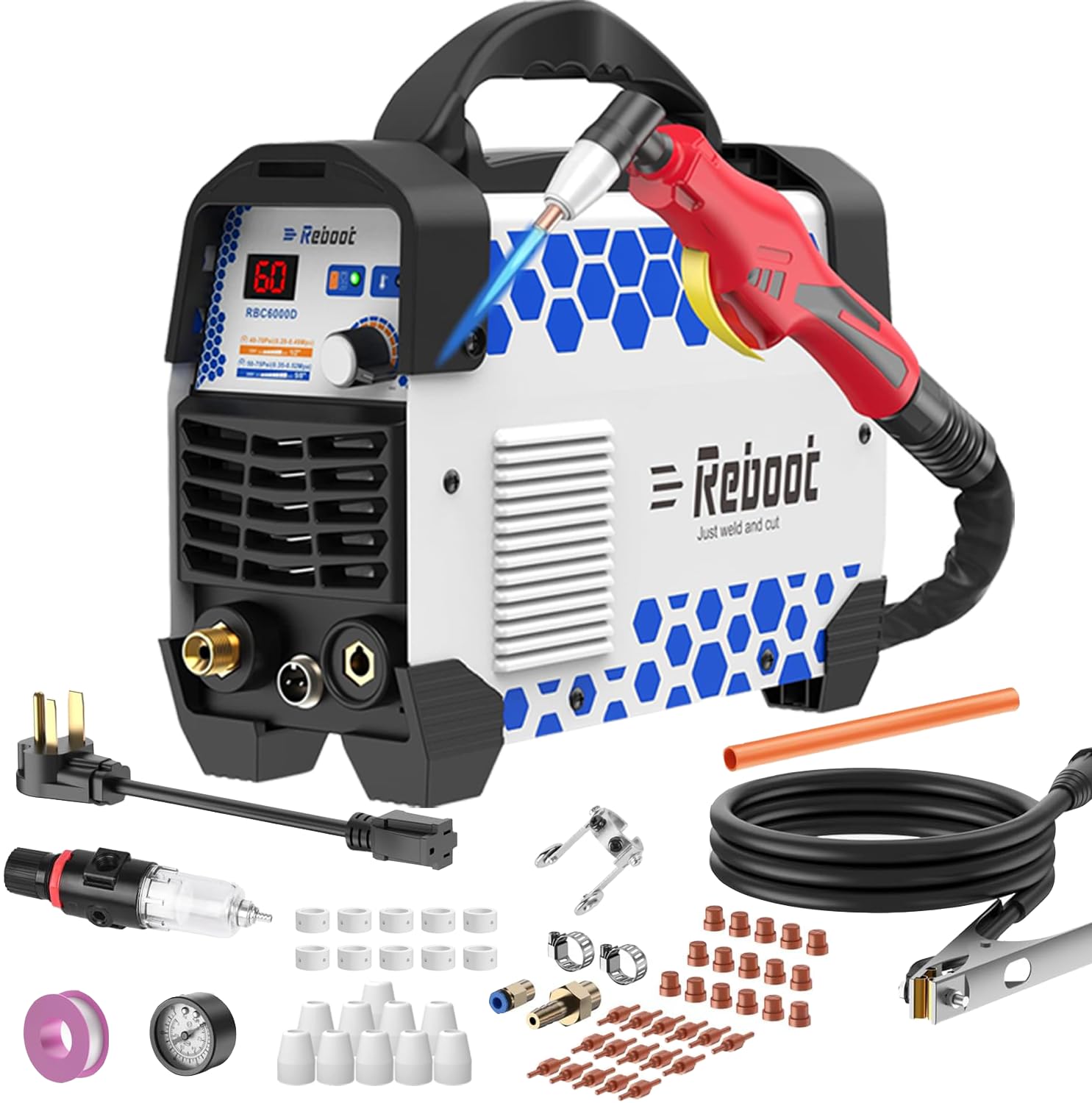
You get a full kit that is ready to work out of the box: a 60A cutter that runs on 120V or 240V, a PT31 torch, extra consumables, and a roller guide for straighter cuts. The built-in regulator and compact case make setup quicker, and the touch-arc start helps when surfaces are not clean.
It is a good fit for weekend fabricators and small shops, but make sure your power and compressor match what the unit needs.
What People Say
Customers generally like the value and kit completeness, noting that included consumables and a roller guide can save a trip to the parts store. Many report best performance on 240V and praise the portability and easy setup. Common cautions point to needing a proper high-amp circuit and a decent air compressor for consistent 1/2″ cuts.
Overall Sentiment: Positive

Where It Fits
| Situation | How It Helps |
|---|---|
| Home Shop | Lets you handle brackets, trim and repair work without juggling separate accessories. |
| Mobile Jobsite | Compact and light enough to carry between sites, provided you have a compatible power source or generator. |
| Fabrication Projects | Roller guide and consumables help you produce straighter, repeatable cuts for small production runs or decorative work. |
| Maintenance And Repairs | Quick setup and touch-arc starting make it useful for on-the-spot repairs where metal may be painted or slightly rusty. |
Pros and Cons
- Pros: Cutter plus starter accessories, dual-voltage support, roller guide, built-in regulator.
- Cons: Included accessories still need manual verification against the live product listing.
Durability
Moderate to good for hobby and light professional tasks. Users report reliable performance for normal use, but long-term heavy industrial durability is less documented.
Key Benefits
- Dual-voltage flexibility for different workspaces
- Includes consumables and roller guide to get started
- Pre-installed regulator reduces setup time
- Touch-arc start improves reliability on painted or rough metal
- Portable design for moving between jobs
Rating: N/A Manual verification required before publishing.
This option does not serve the same buyer intent as a pure plasma cutter. It may still make sense if you want one machine that combines welding modes with a 60A plasma function. Switching between MIG, TIG, stick and plasma can reduce the number of machines in a small shop.
For this article’s main keyword, treat it as a secondary recommendation only. A reader searching for the best plasma cutter for 1/2 inch steel is usually better served by a dedicated plasma cutter unless they also need welding functions.
What People Say
Buyers who choose combo units usually appreciate the convenience of one cabinet that handles welding and cutting, especially when shop space is tight. People tend to like having a plasma cutter built in for quick trim or repair work. Common caveats include a learning curve across modes and the need to stock different consumables.
Overall Sentiment: Neutral

Where It Fits
| Situation | How It Helps |
|---|---|
| Small Shop Setup | You can consolidate tools and free up bench space if you need both welding and cutting functions. |
| Weekend Fabrication | If you tackle metal art, brackets or vehicle repairs, the combo lets you move from cutting to welding with fewer machine changes. |
| Mobile Maintenance | For on-site fixes where you need both cutting and welding, a single rig can be easier to transport than separate units. |
| Shop Expansion | When you are growing a home shop into a light pro space, this machine gives you multiple capabilities while you decide which dedicated tools to upgrade later. |
Pros and Cons
- Pros: Multiple welding modes plus plasma function, space-saving design, flexible for mixed tasks.
- Cons: Not a dedicated plasma cutter, so it is less aligned with this article’s main search intent.
Durability
Moderate for mixed hobby and light professional use. It may handle routine jobs well, but heavy industrial duty would be better served by dedicated commercial machines.
Key Benefits
- All-in-one versatility across MIG, TIG, stick and plasma
- Space-saving footprint compared with separate machines
- Dual-voltage plasma cutter for 1/2″ work in many shops
- Good starter package for small shops and hobbyists
- Includes multiple modes so you can switch tasks quickly
Rating: N/A Manual verification required before publishing.
You get a workhorse-style cutter designed for regular shop use rather than occasional tinkering. The CUT-40 pairs a stable inverter with an internal air filter and regulator so setup stays tidy, and the included 13 ft torch and clamp help you start cutting sooner.
It is a solid fit if you need consistent 1/2″ cuts, want a unit with a professional feel, and prefer a machine that keeps air setup simple. If you move between bench work and heavier repairs, this one keeps the workflow straightforward.
What People Say
Users praise reliable cutting and a build that feels more serious than many hobby-grade machines. Many mention the convenience of the internal filter/regulator and the long torch. Practical notes often remind buyers to wire it properly and use suitable grounding for best results.
Overall Sentiment: Positive

Where It Fits
| Situation | How It Helps |
|---|---|
| Shop Fabrication | Delivers repeatable cuts for brackets, plates and prep work so your welding fit-up is easier. |
| Maintenance Work | Built-in filter and steady arc help you handle repairs without fussing over external air setups. |
| Heavy Hobby Use | Higher duty cycle claims may support longer cutting sessions during weekend projects, pending manual listing verification. |
| Portable Professional Use | Relatively compact and well-equipped for pros who need a reliable cutter they can move around a shop or small site. |
Pros and Cons
- Pros: Built-in air filter/regulator, long torch, duty-cycle-focused positioning, dedicated cutter design.
- Cons: Lower amperage than several other models, and rating volume shown is small.
Durability
Good for regular shop and maintenance tasks based on the article’s user-feedback summary. Manually verify duty-cycle and certification claims before publishing.
Key Benefits
- Built-in air filter and regulator for cleaner, consistent cuts
- 80% duty cycle at 40A for longer run times
- Includes long PT31 torch and robust ground clamp
- Wide input range (100–250V) for flexible use
- ETL listed and designed to feel industrial-grade
Rating: 4.4 (total: 12+) Manual verification required before publishing.
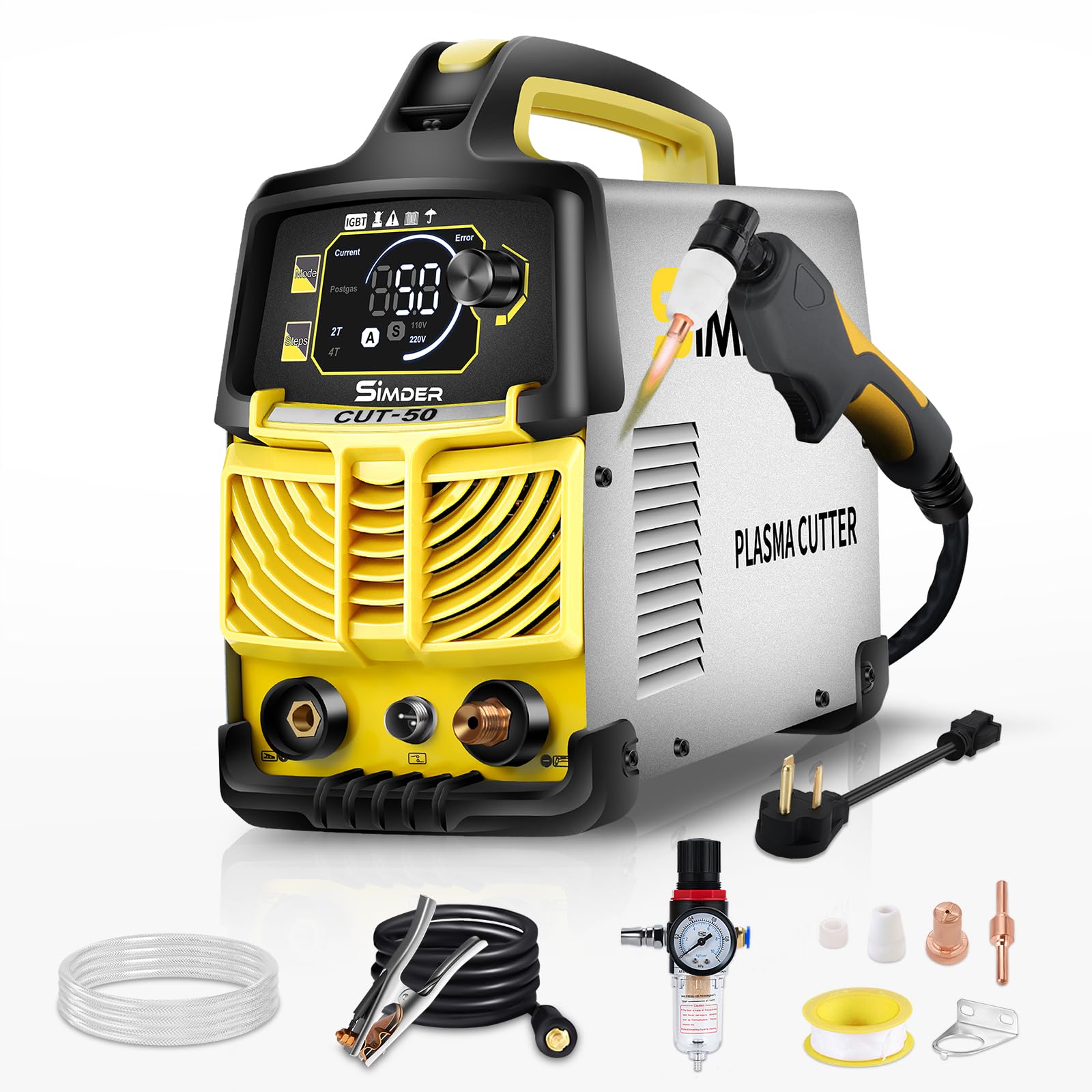
You get a compact, no-nonsense cutter that handles a wide range of home and hobby jobs. It runs on 110V or 220V, gives stronger cuts on 220V, and the simple controls make it approachable if you are stepping up from grinders or shears.
It is lightweight enough to move around your shop or take to a jobsite, and the included torch and gauge help you start without hunting down parts. Keep extra consumables on hand and use a proper air supply for the best results.
What People Say
Most buyers praise how well it cuts for the price and how easy it is to set up, especially when running on 220V. Users often mention the compact size, included accessories, and reliable arc for hobby and maintenance work. Common caveats include 110V limitations, occasional setup quirks, and the value of keeping spare tips on hand.
Overall Sentiment: Positive

Where It Fits
| Situation | How It Helps |
|---|---|
| Garage Projects | Lets you cut brackets, panels and custom parts quickly without filling the bench with bulky gear. |
| Mobile Repairs | Lightweight enough to carry between sites, provided you have a suitable power source and compressor. |
| Hobby Fabrication | Good arc stability and included consumables make practice cuts and small production runs easier to manage. |
| Trailer And Farm Work | Handles routine trim and repair tasks on thicker steel when plugged into a 220V circuit, cutting down cleanup time. |
Pros and Cons
- Pros: 50A output, dual-voltage, portable size, simple display, included accessories.
- Cons: 110V use may limit thicker cuts, and fittings or consumables should be checked before purchase.
Durability
Solid for hobby and regular light shop use. Users report dependable performance over months of work, though heavy continuous commercial use may stress consumables and components faster.
Key Benefits
- Dual-voltage flexibility for bench or shop power
- Compact and portable for easy movement
- Effective 1/2″ cuts on 220V with consistent arc
- Includes torch, ground clamp and pressure gauge
- User-friendly LCD display and inverter stability
Rating: 4.3 (total: 136+) Manual verification required before publishing.
Comparison Table
| Product Name | Image | Rating | Cutting Capacity | Weight | Power Source | Best For |
|---|---|---|---|---|---|---|
| Reboot 60A Plasma Cutter |
![]() |
4.4/5 (154 reviews) — verify | 1/2″ clean cut | 15.18 lbs — verify | AC 120V/240V | Portable garage and jobsite work |
| S7 50A Plasma Cutter with LED Display |
![]() |
4.2/5 — verify exact listing | Up to 1/2″ steel — verify | 18.76 lbs — verify | Dual voltage 110V/220V | Budget buyers after listing verification |
| FLARING Plasma Cutter, 65 Amp |
![]() |
4.3/5 (137 reviews) — verify | Max cut 1/2″ | 15.17 lbs — verify | AC 120V/240V | Higher-amperage value |
| LOTOS LOP55D 55A Plasma Cutter |
![]() |
4.6/5 (16 reviews) — verify | 1/2″ clean cut | 16.96 lbs — verify | AC dual voltage 110V/220V | Best overall dedicated cutter |
| ATS 40A Dual Voltage Plasma Cutter |
![]() |
N/A — verify | 1/2″ clean cut — verify | 20 lbs — verify | AC dual voltage 110V/220V | Compact light-duty work |
| MIGVAN 50A Plasma Cutter with Large LED Screen |
![]() |
4.7/5 (37 reviews) — verify | 1/2″ clean cut | 20.3 lbs — verify | DC dual voltage 110V/220V | Shop power and easy controls |
| Reboot 60A Plasma Cutter Kit |
![]() |
N/A — verify | 1/2″ clean cut — verify | Verify before publishing | AC 120V/240V | Starter kit with consumables |
| Reboot RBM2500 Combo Machine |
![]() |
N/A — verify | Includes 60A plasma function — verify | Verify before publishing | AC 120V/240V | Secondary combo option only |
| Amico CUT-40 Plasma Cutter |
![]() |
4.4/5 (12 reviews) — verify | 1/2″ clean cut | Verify before publishing | 100–250V input | Duty-cycle-focused shop use |
| SSIMDER CUT50 Plasma Cutter |
![]() |
4.3/5 (136 reviews) — verify | 1/2″ clean cut | Verify before publishing | Dual voltage 110V/220V | Hobbyist and farm repair work |
FAQ
Will These Plasma Cutters Cut 1/2 Inch Steel?
Yes, many cutters on this list are described as capable of cutting 1/2 inch steel, but performance depends on setup. A 240V supply usually gives faster, cleaner cuts and fewer passes. On 120V, expect slower travel speed and a higher chance of tripping breakers.
Use dry compressed air, fresh consumables, and the correct torch technique. Multiple passes or a higher-amperage model can improve results on thick plate.
What Power And Air Do I Need?
Match the cutter to a suitable outlet and a moisture-free compressed air source. For solid 1/2″ performance, use a properly wired 240V circuit when supported. Avoid thin extension cords. If you must run on 120V, use a dedicated higher-amp circuit and expect reduced speed.
Set air pressure and flow according to the product manual. The article mentions about 50–65 PSI and at least 4–6 CFM as a common working range, but you should verify the exact requirements for each model before buying.
Which Features Matter Most?
Focus on the features that match how you work. Dual-voltage gives flexibility between shop and home power. Higher amperage and duty cycle help with repeated thick cuts. A pilot arc or touch arc can make starts easier on painted or rusty metal.
Built-in regulators, a clear LED display, included consumables, torch length, and local support also matter. These details affect setup time, cut quality, and long-term ownership cost.
Is A 40A Plasma Cutter Enough For 1/2 Inch Steel?
A 40A cutter may handle 1/2 inch steel in some cases, but it is usually a better match for lighter use and slower cuts. If you cut 1/2 inch steel often, a 50A to 65A model may give you more practical headroom.
Should I Buy A Dedicated Cutter Or A Combo Machine?
Buy a dedicated plasma cutter if your main goal is cutting 1/2 inch steel. Choose a combo machine only if you also need MIG, TIG, or stick welding in the same unit. A combo machine can save space, but it is not as focused as a standalone cutter.
What Should I Manually Verify Before Publishing?
Verify the exact Amazon product title, ASIN, rating, review count, availability, warranty, included accessories, weight, power requirements, cut capacity, and certification claims. Also replace any Amazon search-page link with a direct product URL before publishing.
What Buyers Prefer
Most buyers choose based on a trade-off between cutting power, portability, and how ready the machine is out of the box. If you need extra muscle for thicker plate, the FLARING 65A is attractive. If you want a balanced dedicated cutter with pilot arc control, the LOTOS LOP55D is the strongest overall fit. If you want a complete starter kit, the Reboot 60A Kit deserves a look.
Also factor in your power and compressor. If you can run 240V and a steady air supply, you will get better performance from higher-amp units. If you only have lighter power available, prioritize realistic cut capacity, duty cycle, and setup simplicity over headline amperage.

Final Verdict
If you work on 1/2 inch steel regularly, choosing the right plasma cutter saves time, cleanup, and consumables. The LOTOS LOP55D stands out as the best overall dedicated option because it matches the article’s buyer intent and offers pilot arc control, portable design, and 1/2 inch cutting focus. The MIGVAN 50A is a strong shop-power pick, while the FLARING 65A suits buyers who want higher amperage.
The Reboot RBM2500 should stay as a secondary combo option only, because it is not a pure plasma cutter. The S7 50A also needs a verified direct Amazon product link before publishing. Before you buy, check that your outlet, breaker, air compressor, and consumables match the exact product manual.