Disclosure: As an Amazon Associate, we earn from qualifying purchases. If you click a link on this page and make a purchase, we may receive a small commission at no extra cost to you.
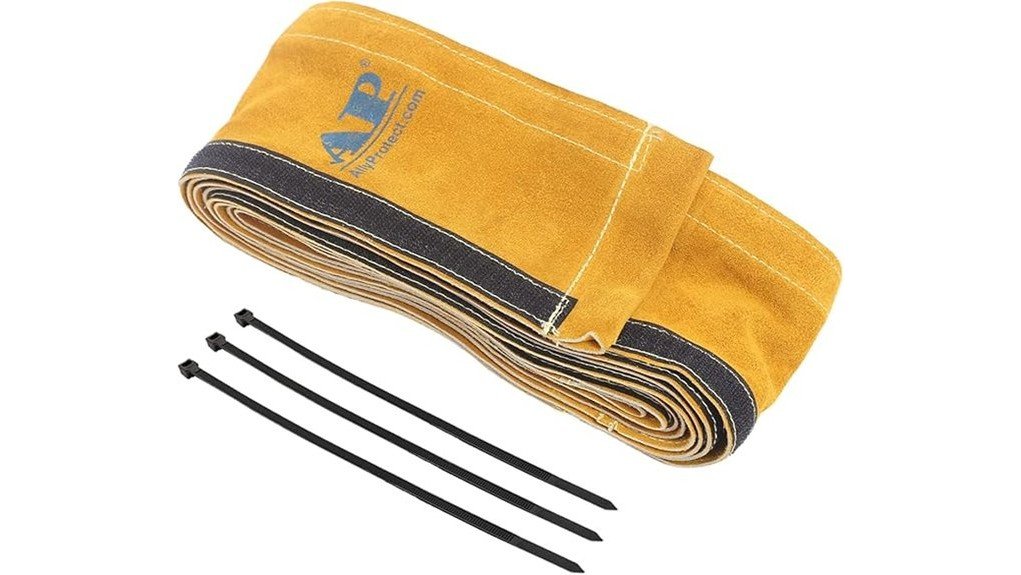
Welding leads take abuse from sparks, heat, dragging, and shop debris, so exposed cables can wear faster than you expect. The AP AllyProtect Cable Sleeves are designed to wrap welding leads in split cowhide leather with Kevlar thread stitching and a Hook & Loop closure. This review helps you decide whether the 11.5-foot by 4-inch sleeve size gives you enough protection, convenience, and value for your setup. The main strength is rugged coverage for common welding environments, while the main tradeoff is that you still need to confirm fit, warranty terms, and seller details before you buy.
Quick Verdict
Rating: 8.3/10, Recommended with caveats
Best For: Welders who want leather coverage for welding leads, torch hoses, or shop cables exposed to sparks and abrasion.
Bottom Line: The AP AllyProtect Cable Sleeves make sense if you want split cowhide leather, Kevlar stitching, and quick wrap-around installation. Skip them if your cables need a different size, if you need verified industrial certification, or if you expect a sleeve to replace cable inspection and safe welding practices.
Key Takeaways
- The AP AllyProtect Cable Sleeves use split cowhide leather to help protect welding leads from sparks, heat exposure, and abrasion.
- The sleeve measures 11.5 feet long and 4 inches wide, giving you broad coverage for many welding cable setups.
- Kevlar thread stitching adds durability in high-wear shop conditions.
- The Hook & Loop closure helps you wrap and remove the sleeve without threading the cable through a tube.
- This is protective gear for cables and hoses, not a substitute for damaged cable replacement, PPE, or safe welding setup.
| Specification | Detail |
|---|---|
| Brand | AP AllyProtect |
| Product type | Welding cable sleeve / welding lead protector |
| Design | Wrap-style sleeve with Hook & Loop closure |
| Dimensions | 11.5 feet long by 4 inches wide |
| Weight | Approximately 2.5 pounds, based on the source article |
| Material | Split cowhide leather |
| Stitching | Kevlar thread stitching |
| Best use | Protecting welding leads, cables, and hoses from sparks and abrasion during welding work |
| Safety note | Not fireproof and not a replacement for damaged cable repair, PPE, or proper welding safety procedures |
What Are the AP AllyProtect Cable Sleeves?
The AP AllyProtect Cable Sleeves are leather protective wraps made for welding leads and similar shop cables. They use split cowhide leather, which gives the sleeve a tough outer layer for handling sparks, spatter, and abrasion during welding tasks.
The 11.5-foot length gives you more coverage than a short patch sleeve, while the 4-inch width helps wrap around common cable bundles. The Hook & Loop closure makes the sleeve easier to place around existing leads because you do not need to disconnect the entire cable first.
This product is best viewed as an add-on protection layer. It can help reduce wear on leads, but it cannot make unsafe cables safe, stop all heat damage, or replace regular inspection before each welding job.
Before You Buy: Measure your cable run and the bundle diameter before ordering. The 11.5-foot by 4-inch size may not cover every lead setup, and thick cable bundles may need a wider or longer protector.
Who Should Buy It?
Best For
- Welders who want extra protection for leads near sparks, slag, or hot work areas.
- Shop users who drag cables across floors, benches, or metal edges during daily work.
- Buyers who prefer a wrap-style sleeve that opens and closes with Hook & Loop fastening.
Skip If
- You need verified certification, temperature ratings, or jobsite compliance documentation.
- Your welding lead is already cracked, exposed, or unsafe and needs replacement.
- You need full-length coverage for a cable run longer than 11.5 feet.
Material and Durability
The main appeal is the split cowhide leather construction. Leather works well for welding cable protection because it resists everyday abrasion better than thin fabric and gives cables a tougher barrier against sparks.
Kevlar thread stitching is another useful detail. Stitching often becomes a weak point on protective sleeves, so reinforced thread helps the sleeve hold together when you bend it, wrap it, and move it around the shop.
The sleeve is still a consumable protection layer. Heat, spatter, sharp edges, and repeated dragging can wear any cover over time, so you should check the leather and stitching regularly.
Design and Usability
The wrap-style design matters because welding leads are not always easy to disconnect. With the Hook & Loop closure, you can open the sleeve, place it around the cable, and close it without feeding the whole lead through a narrow tube.
The 4-inch width gives you room to cover a lead or a smaller cable bundle, depending on cable thickness. A snug wrap can reduce movement, but an overly tight fit may strain the closure or leave gaps.
At about 2.5 pounds, the sleeve adds some weight to the cable setup. That extra weight may feel minor in a fixed shop layout, but you may notice it more when you move leads around frequently.
Pro Tip: Wrap the sleeve around the cable section closest to sparks, hot metal, or floor drag first. That usually protects the highest-wear area better than spreading coverage too thin.
Effectiveness in Protection
The AP AllyProtect Cable Sleeves are built to reduce cable exposure during welding work. The leather layer helps shield the lead from sparks and light spatter, while the sleeve also helps limit scuffs from concrete, work tables, and metal edges.
The protection works best when the sleeve fully covers the risk area and closes securely along the length. Gaps, twisted placement, or loose closure can expose sections of cable, so correct setup matters.
You should not treat the sleeve as fireproof armor. Keep leads routed away from direct flame, molten metal, pinch points, and sharp corners whenever possible.
How It Performs in Real Use
For Shop Welding
In a garage or small fabrication shop, the 11.5-foot length can protect the section of lead that gets dragged near the work zone. The leather shell helps reduce surface wear when cables rub against floors or benches.
For Mobile Repair Work
For repair jobs where leads move between vehicles, equipment, or outdoor work areas, the Hook & Loop closure helps with fast setup. You can remove the sleeve for inspection or reposition it when the cable route changes.
For Cable Storage
The sleeve can stay on the lead during storage if it does not create tight bends. Coil the cable loosely, and avoid crushing the closure under heavy tools or equipment.
For Long-Term Use
Long-term performance depends on inspection and care. Check for worn stitching, hardened leather, burn marks, or trapped debris because these issues can reduce protection over time.
How to Use It Correctly
Start by inspecting the welding lead before installing the sleeve. If you see cracked insulation, exposed conductor, heat damage, or loose connections, fix or replace the cable before adding a cover.
Place the sleeve around the highest-risk section of the lead, then close the Hook & Loop strip evenly. Avoid leaving openings near the workpiece, where sparks and hot debris are most likely to reach the cable.
After welding, let hot work areas cool before handling or storing the sleeve. Brush off debris and check that the closure still grips well before the next use.
Compatibility and Safety
The sleeve is a practical fit for welding leads and similar shop cables when the 4-inch width can wrap the cable securely. It may also work around some hose or cable bundles, but you should measure before buying instead of assuming universal fit.
Because this is welding-related gear, safety depends on the full setup. Use proper PPE, keep cables away from direct heat, and follow your welder, torch, and workplace safety instructions.
The sleeve can help protect equipment, but it cannot fix damaged insulation or remove the need for cable inspections. Replace unsafe leads instead of covering them.
Cleaning and Maintenance
Clean the leather gently with mild soap and water when needed, then let it dry away from direct heat. Avoid soaking the sleeve or placing it near open flame, a heater, or a hot workpiece to speed up drying.
Regular maintenance should include a quick check of the Hook & Loop closure, leather surface, and stitching. If the sleeve becomes stiff, deeply burned, torn, or difficult to close, it may no longer protect the cable well.
Pros and Cons
Pros
- Split cowhide leather gives welding leads a tough protective layer.
- 11.5-foot length covers more cable than a short spot protector.
- 4-inch width supports wrap-around coverage for many cable setups.
- Hook & Loop closure makes installation and removal easier.
- Kevlar thread stitching improves durability at a common wear point.
Cons
- May not cover a full cable run if you need more than 11.5 feet of protection.
- Not a replacement for damaged welding leads or unsafe insulation.
- External certification and current warranty details should be verified before purchase.
Is It Worth the Price?
The AP AllyProtect Cable Sleeves are worth considering if you want a leather welding lead protector with a simple wrap-around design. The value comes from the split cowhide material, Kevlar stitching, long coverage area, and easy closure.
This is a strong value for the price if your cables regularly sit near sparks, rough floors, or metal edges. You get less value if you only weld occasionally or if your main issue is damaged cable insulation that should be repaired or replaced.
Check the current listing before buying because warranty terms, seller details, and package notes can change. Avoid choosing any cable sleeve based only on price if your work requires verified safety ratings or jobsite documentation.
How It Compares to Alternatives
Compared with thin fabric cable covers, the AP AllyProtect sleeve offers a tougher leather barrier for welding environments. Compared with rigid guards or heat sleeves, it is easier to open, reposition, and remove because of the Hook & Loop design.
A fiberglass welding blanket may make more sense when you need to cover a larger area around the workpiece. The AP AllyProtect Cable Sleeves make more sense when you want focused protection directly around welding leads or hoses.
Frequently Asked Questions
What size are the AP AllyProtect Cable Sleeves?
The sleeve is listed as 11.5 feet long and 4 inches wide. Measure the cable section you want to cover before ordering, especially if you need full-length lead protection.
Can I use these sleeves on different welding equipment?
You can use them on many welding leads or similar shop cables when the sleeve fits securely. Check cable thickness and bundle size because the 4-inch width may not suit every setup.
Are the sleeves fireproof?
No cable sleeve should be treated as fireproof unless the listing clearly proves that rating. These sleeves are described as flame-resistant, so keep them away from direct flame, molten metal, and unsafe cable routes.
How do I clean the AP AllyProtect Cable Sleeves?
Use mild soap and water for gentle cleaning, then let the sleeve dry away from direct heat. Do not soak the leather or place it beside a heater, open flame, or hot workpiece.
Can these sleeves be used outdoors?
They can be useful for outdoor repair or fabrication work when you keep them dry and inspect them after use. Store leather sleeves indoors when possible to reduce moisture damage and stiffness.
What common mistake should I avoid?
Do not use the sleeve to hide a damaged welding lead. Inspect the cable first, replace unsafe leads, then use the sleeve as added protection for a safe setup.
What is the warranty period?
The source article states a one-year warranty. Confirm the current warranty and seller support details on the Amazon listing before you buy because terms can vary by seller or over time.
The Bottom Line
The AP AllyProtect Cable Sleeves are a smart buy if you want split cowhide leather, Kevlar stitching, and wrap-around coverage for welding leads. They are best for welders who need extra cable protection around sparks and abrasion, but they are not ideal if you need certified ratings, longer coverage, or a fix for damaged leads.