Disclosure: As an Amazon Associate, we earn from qualifying purchases. If you click a link on this page and make a purchase, we may receive a small commission at no extra cost to you.
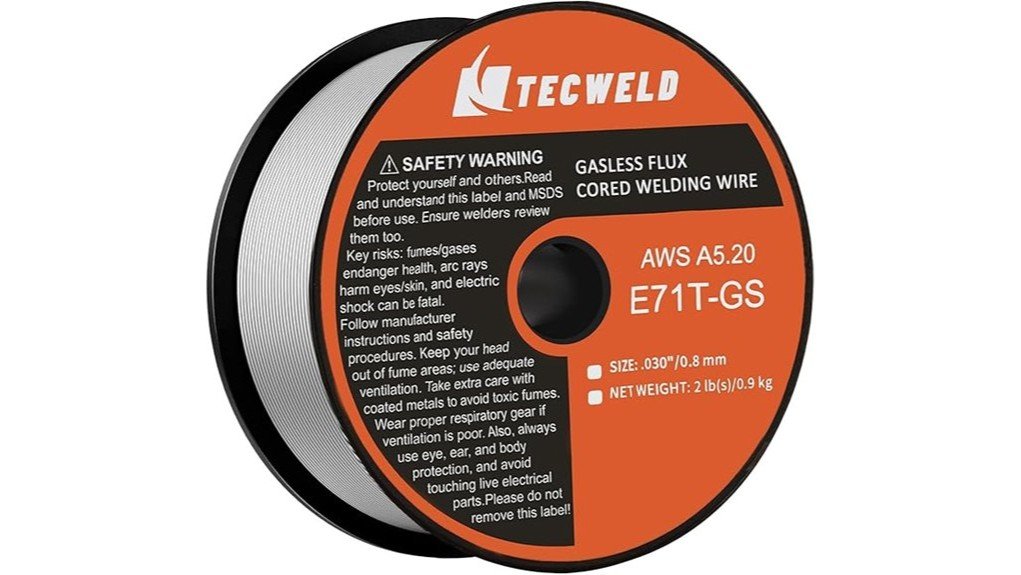
Gasless MIG wire can save you from hauling a shielding gas bottle, but it also changes how your weld looks, cleans up, and handles thin metal. The E71T-GS Gasless Welding Wire is a 0.030-inch flux-cored wire made for welders who want a simpler setup for repairs, outdoor work, and small fabrication jobs. This review helps you decide if its gasless convenience is worth the extra smoke, slag, and cleanup that come with flux-core welding. It is a practical choice for many DIY and field repairs, but it is not the right wire for every metal, finish standard, or structural job.
Quick Verdict
Rating: 8/10, Recommended with caveats
Best For: DIY welders, outdoor repairs, farm maintenance, gate work, and basic mild-steel fabrication
Bottom Line: The E71T-GS Gasless Welding Wire gives you a portable 0.030-inch flux-core setup without external gas. You should expect more smoke, slag removal, and tuning than a clean gas-shielded MIG setup.
| Specification | Detail |
|---|---|
| Product Name | E71T-GS Gasless Welding Wire |
| Product Type | Flux-cored gasless MIG welding wire |
| Wire Diameter | 0.030 inches |
| Design | Self-shielded flux-core wire for welding without external shielding gas |
| Shielding Type | Gasless flux-core shielding |
| Best Supported Material Use | Mild steel and similar steel repair or fabrication work |
| Welding Positions | Flat, vertical, and overhead use, when your machine settings and technique are correct |
| Welder Compatibility | Most flux-core capable MIG welders that support 0.030-inch wire |
| Common Use Cases | Outdoor repairs, farm equipment, gates, brackets, auto patching, and DIY fabrication |
| Packaging Note | Vacuum-sealed packaging is listed for moisture protection |
| Storage Note | Keep the spool dry and sealed when not in use |
| Safety Note | Use ventilation, proper PPE, and your welder manual for setup and polarity guidance |
What Is the E71T-GS Gasless Welding Wire?
The E71T-GS Gasless Welding Wire is a 0.030-inch flux-cored MIG wire designed for welding without a separate shielding gas tank. The flux inside the wire creates shielding while you weld, which helps protect the weld puddle from outside air.
This design makes the wire useful when you need portability or when outdoor wind would make gas-shielded MIG welding harder to control. It fits best in general repair work, small fabrication tasks, and mild-steel projects where convenience matters more than a polished cosmetic bead.
You still need a compatible MIG or flux-core welder, the right contact tip, correct wire feed tension, and the settings recommended for your machine. Gasless wire is easier to carry than a full gas setup, but it asks more from your cleanup routine and technique.
Who Should Buy It?
Best For
- DIY welders who want to avoid buying or carrying shielding gas
- Outdoor repair work where wind can interfere with gas-shielded MIG welding
- Farm, fence, bracket, gate, and light fabrication jobs on mild steel
Skip If
- You need clean, show-quality welds with minimal slag
- You are welding critical structural parts that require certified procedure control
- Your welder does not support 0.030-inch flux-cored wire
Key Features You Should Know
Gasless Flux-Core Design
The main reason to choose this wire is its self-shielded flux-core design. You do not need a gas cylinder, regulator, hose, or wind-sensitive external shielding gas setup.
That makes the wire easier to use for quick jobs away from your main shop area. The tradeoff is that flux-core welding produces slag over the bead, so you need to chip or brush the weld after each pass.
0.030-Inch Wire Size
The 0.030-inch diameter is a common size for smaller MIG and flux-core machines. It can work well for many light repair jobs when your welder supports that wire size and your contact tip matches it.
Before you load the spool, check the machine door chart or manual for the recommended voltage, wire feed speed, polarity, and drive roll setup. A mismatch can cause poor feeding, spatter, porosity, or weak bead shape.
All-Position Welding Capability
The article-supported claim is that this wire can support flat, vertical, and overhead welding. That flexibility helps when you cannot rotate a gate, bracket, frame piece, or repair area into the easiest position.
Out-of-position welding still takes practice. You may need shorter stickout, better travel angle control, and test beads before you weld the actual workpiece.
Low-Spatter Claim and Cleanup
The original product description presents this wire as a lower-spatter option compared with basic flux-core wires. That can help reduce grinding time, but it does not remove the normal cleanup that comes with gasless flux-core welding.
You should still expect slag, smoke, and brushing after the weld cools. If you want the cleanest finish for visible projects, solid MIG wire with shielding gas may be easier to finish.
Sealed Packaging for Storage Stability
Vacuum-sealed packaging is a useful detail because welding wire can suffer when exposed to moisture. Dry storage helps protect wire feed consistency, arc stability, and weld quality.
After opening the package, keep the spool away from damp air, dust, and shop debris. If you weld only occasionally, store unused wire in a sealed bag or dry container.
Before You Buy: Do not treat E71T-GS gasless wire as a universal wire for every metal. Use it mainly for mild-steel repair work unless the spool label and your welder manual clearly support your exact material, thickness, polarity, and process.
Compatibility and Safety
This wire should be considered compatible only with MIG or flux-core capable welders that can run 0.030-inch flux-cored wire. The article mentions common welder brands such as Lincoln, Miller, and Forney, but brand names alone do not guarantee compatibility.
Check your welder manual for wire diameter range, drive roll type, contact tip size, and polarity requirements. Many gasless flux-core setups need a different polarity than gas-shielded solid MIG wire, so confirming the machine setup matters before you strike an arc.
Flux-core welding also creates smoke, sparks, hot slag, and UV exposure. Wear a welding helmet, gloves, flame-resistant clothing, and eye protection during cleanup, and work with enough ventilation for the material you are welding.
How It Performs in Real Use
Outdoor Welding
The gasless design is the biggest advantage outdoors. Since the shielding comes from the wire’s flux, you do not have to fight the same gas coverage problems that can happen when wind pushes shielding gas away from the weld puddle.
This makes the wire practical for gates, fences, brackets, and small field repairs. You still need clean metal, stable grounding, and correct machine settings to avoid porosity and rough bead shape.
Auto Repair Work
This wire can help with basic automotive patching when you need portability and all-position access. It may be useful around non-cosmetic repair areas where setup speed matters.
Use extra caution on thin sheet metal because flux-core wire can run hotter than expected. For structural frame repairs, safety-critical components, or work that must pass inspection, use a qualified welder and the correct procedure.
Farm and Equipment Maintenance
Farm work often involves outdoor repairs on brackets, guards, gates, and steel supports. Gasless flux-core wire suits those jobs because you can move the welder without moving a gas bottle at the same time.
The rougher finish is usually less of a concern on utility repairs than on visible fabrication. The important steps are surface prep, correct settings, enough penetration for the job, and full slag removal between passes.
DIY Fabrication and Practice
For home projects, the wire gives you a simpler way to practice MIG-style welding without buying gas. It is a good match for learning travel speed, bead control, and basic joint fit-up on mild steel.
Beginners should expect trial and error. Your first beads may look rough until you adjust voltage, wire feed speed, stickout, and travel angle.
Pro Tip: Run test beads on scrap metal of the same thickness before welding the real part. Adjust one setting at a time, then brush off slag so you can see the true bead shape.
Setup Tips Before First Use
Install a 0.030-inch contact tip before loading the wire. A worn or wrong-size tip can create feeding problems, unstable arc starts, and inconsistent bead shape.
Set the drive roll and wire tension for flux-cored wire if your welder gives you that option. Too much tension can deform the wire, while too little tension can cause slipping and burnback.
Clean paint, rust, oil, and heavy mill scale from the weld area before starting. Flux-core wire can tolerate some field conditions, but dirty metal still increases the chance of porosity, spatter, and weak fusion.
Follow the spool label and welder manual for polarity. Do not assume the settings from solid MIG wire will work with gasless flux-core wire.
Pros and Cons
Pros
- No shielding gas required, which keeps the setup simpler and easier to move
- 0.030-inch diameter fits many small MIG and flux-core capable welders
- Useful for outdoor repairs where wind can affect gas-shielded MIG welding
- Supports practical repair positions such as flat, vertical, and overhead work
- Vacuum-sealed packaging helps protect the wire before first use
Cons
- Produces slag and smoke, so cleanup and ventilation are part of the job
- May require trial and error with voltage, wire feed speed, and polarity
- Not the best fit for polished cosmetic welds or certified structural work
Want a Simple Gasless Setup?
Check the product page before buying to confirm spool size, listing details, and current seller information.
Is It Worth the Price?
The E71T-GS Gasless Welding Wire fits best as a budget-friendly to mid-range consumable for welders who value portability and simple setup. It can be a strong value for the price if you use it for outdoor repairs, small steel projects, and general maintenance work.
You get the most value if your welder already supports 0.030-inch flux-cored wire and you do not want to invest in a gas cylinder setup. The wire can also reduce the number of accessories you need for occasional welding jobs.
It is not the best fit if you need the smoothest bead appearance, low smoke, or minimal cleanup. For shop work where finish quality matters, a gas-shielded MIG setup may be worth the extra equipment.
How It Compares to Alternatives
Compared with solid ER70S-6 MIG wire used with shielding gas, this E71T-GS wire is easier to take outdoors and simpler to set up. Solid wire usually gives you a cleaner weld appearance, less slag, and easier cleanup when the gas coverage stays stable.
Compared with other self-shielded flux-core options, such as E71T-11 wires or premium brand flux-core spools, the main buying difference is usually arc smoothness, packaging, spool size, and consistency. The E71T-GS Gasless Welding Wire makes the most sense if you want a basic 0.030-inch gasless wire for repair-focused use.
Frequently Asked Questions
Can I use this wire without gas?
Yes. This is a gasless flux-cored wire, so it does not need an external shielding gas cylinder for normal use.
What type of welder do I need?
You need a MIG or flux-core capable welder that supports 0.030-inch wire. Check your machine manual for contact tip size, drive roll setup, polarity, and recommended settings.
What materials should I use it on?
It is best treated as a mild-steel repair and fabrication wire unless the spool label says otherwise. For stainless steel, galvanized steel, or safety-critical work, confirm the correct wire and procedure first.
Is it good for beginners?
Yes, it can be beginner-friendly because it removes the gas bottle from the setup. Beginners should still practice on scrap metal because flux-core wire needs correct settings and slag cleanup.
Does it work outdoors?
Yes, outdoor use is one of the strongest reasons to choose gasless flux-core wire. It is less dependent on external shielding gas, so it is more practical in light wind than gas MIG welding.
Why do my welds look rough with flux-core wire?
Rough welds can come from incorrect voltage, wire feed speed, stickout, dirty metal, or poor travel angle. Chip and brush the slag first before judging the bead, then adjust settings on scrap metal.
Who should skip this wire?
Skip it if you need show-quality weld appearance, low smoke, or certified structural results. A gas-shielded MIG setup or a job-specific welding procedure may be better for those needs.
The Bottom Line
The E71T-GS Gasless Welding Wire is a solid fit for DIY welders, outdoor repairs, and general mild-steel maintenance jobs where portability matters. Its biggest strength is gasless convenience, while its main limitation is the extra smoke, slag, and tuning that flux-core welding requires.
Buy it if you want a simple 0.030-inch flux-core option for practical repair work. Skip it if you need a cosmetic finish, verified material-specific performance, or a certified process for safety-critical welding.