Last updated: July 20, 2026
Disclosure: This article contains Amazon affiliate links. We may earn a commission from qualifying purchases at no extra cost to you.
Choosing the wrong angle grinder can mean poor control, slow material removal, incompatible accessories, or unnecessary fatigue. The right tool should match your wheel size, power source, switch style, safety features, and typical workload.
This guide compares cordless and corded models from 4.5 to 7 inches. Each pick serves a different use case, from portable weld cleanup and pipe cutting to sustained shop grinding and larger masonry or steel work.
Top Picks at a Glance
| Category | Product | Why It Stands Out |
|---|---|---|
| 🏆 Best Kickback Protection | DEWALT DCG413B | Kickback brake and cordless balance |
| 💰 Best for V20 Users | CRAFTSMAN CMCG451B | Good V20 value and 3-position handle |
| ⭐ Best For Professionals | Milwaukee 2880-20 | Professional M18 braking grinder |
| 🔰 Best 6-Inch Grinder | Bosch GWS14-60 | Variable-speed 6-inch corded capacity |
| 🎨 Best DIY Kit | Makita 9557PBX1 | Useful starter accessory kit |
| 🚀 Best Variable-Speed 5-Inch | Bosch GWS14-50 | Variable-speed 5-inch corded power |
| 🔧 Best Dust Protection | DEWALT DWE402 | Dust-management features and easy guard changes |
| 🔰 Best Slide-Switch Metabo | Metabo W 11-125 | Slide switch, safety clutch, and M-Quick system |
| 🏅 Best 7-Inch Option | DEWALT DW840 | Large 7-inch wheel for heavier work |
| 🎯 Best Paddle-Switch Metabo | Metabo WP 11-125 | Non-locking paddle switch and safety clutch |
How We Picked These Angle Grinders
We compared wheel capacity, no-load speed, motor type, switch design, guard adjustment, kickback-control features, dust management, battery-platform compatibility, and included accessories. Product specifications were checked against manufacturer information where available. We also considered recurring buyer concerns, but we did not use changing star ratings or review totals as permanent ranking evidence.
The order reflects buyer fit rather than one universal winner. A compact 4.5-inch grinder is easier to handle for common metalwork, while 5-inch and 6-inch models add capacity and often more speed control. A 7-inch grinder is heavier and should be reserved for work that genuinely benefits from the larger wheel.
The DEWALT DCG413B is a strong all-around cordless option for metal cutting, weld cleanup, and field work. Its brushless motor reduces routine brush maintenance, while the paddle switch and Kickback Brake add useful control when the wheel pinches, stalls, or binds. It is still a compact battery grinder, so sustained heavy grinding will require battery planning.
It handles metal cutting, pipe trimming, light masonry with a compatible wheel, and weld bead cleanup for common applications. The paddle switch is comfortable for extended sessions. Heavy nonstop grinding will drain a single battery fast, so keep a spare charged if you plan to run it all day.
Pros & Cons
- Pro: Kickback Brake reduces wheel coast-down and reacts to detected bind-up
- Pro: Brushless motor eliminates routine carbon-brush replacement
- Pro: Compact cordless design is easier to carry between work areas
- Pro: Cordless mobility for field and site work
- Con: Battery and charger not included: factor in kit cost
- Con: Heavy continuous use depletes battery faster than corded alternatives
Best for: Welders, fabricators, and contractors who need a portable grinder with useful control features for cutting metal, trimming masonry, and weld cleanup away from a power outlet.
Skip if: You need hours of continuous grinding without managing batteries; a corded model is usually more practical for that workload.
Common Buyer Feedback
Common buyer comments highlight how reliable and powerful this grinder feels for a cordless unit. Many mention the balanced feel and the confidence the kickback brake adds on the job. Some comments note that heavy nonstop use drains batteries quickly during demanding work and that tool-only and kit contents can differ, so the listing should be checked carefully.
Feedback pattern: Mostly positive, with limitations noted above.

Ease of Use
| Feature | Practical Note |
|---|---|
| Paddle Switch | Direct on-off control |
| Tool Weight & Balance | Battery size affects balance |
| Wheel Changes | Remove the battery first |
| Battery Management | Spare battery helps on long jobs |
Versatility
Works well for metal fabrication, cutting pipe, light masonry, and welding cleanup: essentially anything where portability is an advantage over corded reach. For extended heavy grinding, keep spare batteries or a corded backup on hand.
The CRAFTSMAN CMCG451B makes the most sense when you already use V20 batteries. Its brushless motor supports common cutting and grinding tasks, the 3-position side handle helps you adjust your grip for different work angles, and the paddle switch offers direct on-off control.
Use it for pipe cuts, metal fabrication touch-ups, sanding and weld cleanup, or quick yard and shop jobs. Plan for spare batteries when the job involves extended cutting or grinding.
Pros & Cons
- Pro: Brushless motor eliminates routine carbon-brush replacement
- Pro: Three-position handle adapts to awkward cuts and tight angles
- Pro: Paddle switch for comfortable, controlled operation
- Pro: Uses the CRAFTSMAN V20 battery platform
- Con: Tool-only purchase requires a compatible V20 battery and charger
- Con: Runtime depends on the battery capacity and workload
Best for: DIYers and light trade users who want a capable cordless grinder and already own compatible V20 batteries.
Skip if: You need sustained heavy grinding with minimal battery interruptions; compare a higher-output cordless setup or a corded grinder.
Common Buyer Feedback
Common buyer comments mention how powerful and well balanced the grinder feels for a cordless unit. Many appreciate the paddle switch and the flexible handle positions that make awkward cuts easier. Buyer feedback generally describes runtime as workable for shorter jobs, though continuous heavy use means you’ll want backups on hand.
Feedback pattern: Mostly positive, with limitations noted above.

Ease of Use
| Feature | Practical Note |
|---|---|
| Paddle Switch | Direct on-off control |
| Handle Positions | Three side-handle positions |
| Disc Removal | Remove the battery first |
| Weight & Balance | Battery size affects balance |
| Battery Swapping | Uses compatible V20 batteries |
Versatility
Handles light fabrication, trimming metal, cutting small masonry pieces, and general shop cleanup. A go-to for field work where a cord is a nuisance, though for long stretches of heavy grinding you’ll want additional batteries or a corded alternative.
The Milwaukee 2880-20 M18 FUEL is built for demanding cordless cutting and grinding. Its POWERSTATE brushless motor, 8,500 RPM no-load speed, electronic clutch, and M18 battery compatibility make it a practical professional option for users already invested in the platform.
The no-lock paddle switch stops driving the tool when released, while the RAPIDSTOP brake reduces wheel coast-down time. The compact body is easier to position in tight work areas, but sustained grinding still requires a suitable battery and backup-power plan.
Pros & Cons
- Pro: POWERSTATE motor delivers strong cordless performance for demanding work
- Pro: RAPIDSTOP brake reduces wheel coast-down time
- Pro: Works with any M18 battery: integrates into large tool fleets
- Pro: Compact body helps with positioning in tight work areas
- Con: Tool only: battery and charger extra cost
- Con: Full-day heavy use demands multiple batteries
Best for: Professional fabricators, ironworkers, and tradespeople who rely on M18 tools and need a cordless grinder that can keep up with demanding site conditions.
Skip if: You’re a casual DIYer who will not benefit from its braking system, electronic clutch, or M18 platform compatibility.
Common Buyer Feedback
Many buyer comments praise the grinder for feeling powerful and well built, calling out the brake and balance as confidence boosters on the job. Reviewers also like how it integrates with other M18 tools. The practical note from daily users is that regular heavy use means spare batteries are important for uninterrupted work.
Feedback pattern: Mostly positive, with limitations noted above.

Ease of Use
| Feature | Practical Note |
|---|---|
| Power & Control | Electronic clutch assists control |
| Brake System | Reduces wheel coast-down time |
| Wheel Changes | Tool-free accessory adjustment |
| Battery Management | Heavy work needs backup power |
| Portability | Cordless M18 platform |
Versatility
Strong for metal cutting, weld cleanup, pipe work, and field repairs where a cord would be inconvenient. Versatile enough for both casual DIY jobs and daily trade tasks, though full-day heavy grinding benefits from a backup battery strategy.
You get steady corded power and a 6-inch disc that removes more material per pass than a standard 4.5-inch grinder. The anti-vibration handle reduces fatigue during longer runs, and Bosch’s cooling and dust protection engineering helps the motor hold up under regular workshop demands.
The slide switch and covered speed dial keep the body compact but may feel less intuitive than a paddle switch. KickBack Control and overload protection are useful safety-control features. This is the right choice when you want sustained corded performance for metal, masonry, and polishing tasks in a workshop setting.
Pros & Cons
- Pro: 13-amp motor with variable speed up to 9,700 RPM
- Pro: Anti-vibration handle reduces fatigue on longer jobs
- Pro: KickBack Control and overload protection add control under abnormal load
- Pro: Enhanced cooling and dust protection support regular workshop use
- Con: Slide switch may be less comfortable than a paddle switch for some users
- Con: Speed control placement is less accessible mid-job
Best for: Workshop users who need a step up from 4.5-inch capacity without going to a 7-inch grinder, particularly for metal fabrication and concrete finishing.
Skip if: You prefer a paddle switch: the slide switch on this model is a clear ergonomic tradeoff.
Common Buyer Feedback
Buyer comments mention Bosch build quality and the amount of power this grinder delivers for its size. Reviewers appreciate the ergonomics and vibration control for longer sessions. The common caveat is the slide switch and speed control placement, which some users find less convenient than a paddle switch.
Feedback pattern: Mostly positive, with limitations noted above.

Ease of Use
| Feature | Practical Note |
|---|---|
| Slide Switch | Lock-on slide-switch control |
| Variable Speed | 2,400 to 9,700 RPM |
| Vibration Control Handle | Anti-vibration side handle |
| Cooling & Dust Access | Keep vents clear during use |
Versatility
Well suited for medium-weight cutting and grinding, including metal fabrication, concrete edge work, and polishing with compatible accessories. A strong workshop option when variable speed and sustained corded power matter.
The Makita 9557PBX1 is useful when you want a corded grinder and a practical accessory kit in one purchase. The package includes grinding wheels, cutting and grinding guards, a metal case, and a diamond blade. Its 7.5-amp motor reaches 11,000 RPM, while the compact barrel and paddle switch make it easier to control than a larger grinder.
Makita’s labyrinth construction is designed to route dust and debris away from the motor and bearings. The paddle switch with lock-on works well for longer runs. Two genuine limitations: the case may require removing or repositioning the side handle, and the paddle-lock mechanism may take time to get used to.
Pros & Cons
- Pro: Kit includes grinding wheels, guards, a case, and a diamond blade
- Pro: 11,000 RPM motor in a compact 4.5-inch body
- Pro: Labyrinth construction helps protect the motor and bearings from debris
- Pro: Compact, lightweight, well balanced: easy to maneuver in tight spots
- Con: Carry case is a tight fit when side handle is installed
- Con: Paddle lock can be finicky for some users
Best for: DIYers and homeowners who want a complete, ready-to-use grinding kit without hunting for accessories separately.
Skip if: You need heavy industrial grinding: the 7.5A motor is more suited to light-to-medium work than sustained heavy loads.
Common Buyer Feedback
Buyer comments often praise how solid and balanced the Makita feels in the hand. Many appreciate that the kit comes with useful wheels and a diamond blade right out of the box. Common comments mention that the case may require removing the side handle and that the paddle-lock mechanism can take time to get used to.
Feedback pattern: Mostly positive, with limitations noted above.

Ease of Use
| Feature | Practical Note |
|---|---|
| Paddle Switch | Paddle control with lock-on |
| Weight & Grip | Compact barrel grip |
| Wheel Changes | Use the correct guard and wheel |
| Case Storage | Handle may need repositioning |
| Guard Setup | Cutting and grinding guards included |
Versatility
A strong pick for DIYers and tradespeople who need a compact tool for cutting pipe, removing rust, polishing, and light masonry. Small enough for tight spots and supplied with several useful starting accessories, though heavy industrial grinding is better left to larger machines.
The Bosch GWS14-50 combines a 13-amp motor with a variable 2,800 to 11,500 RPM range in a 5-inch corded body. The narrow housing and anti-vibration handle can make longer cutting, grinding, and surface-preparation sessions easier to control.
KickBack Control and soft start reduce surprises when a wheel binds or on startup under load. Enhanced cooling and dust protection are designed to support durability during regular workshop use. The slide switch is the main ergonomic caveat: some users prefer a paddle.
Pros & Cons
- Pro: 11,500 RPM and 13-amp output for fast cutting and material removal
- Pro: Anti-vibration handle reduces fatigue on extended jobs
- Pro: KickBack Control and soft start improve safety and control
- Pro: Enhanced cooling and dust protection for durability under regular use
- Con: Slide switch less ergonomic than a paddle switch for many users
- Con: Corded design limits mobility compared with battery-powered options
Best for: Workshop users who want sustained corded power in a 5-inch footprint for cutting, grinding, and polishing across metal and masonry.
Skip if: You need a paddle switch; that preference is an important buying consideration with this Bosch design.
Common Buyer Feedback
Buyer comments praise the power and build quality, noting it feels like a step up from basic consumer grinders. Many appreciate the ergonomics and vibration control for extended work. The recurring caveat is the slide switch and speed control placement.
Feedback pattern: Mostly positive, with limitations noted above.

Ease of Use
| Feature | Practical Note |
|---|---|
| Slide Switch | Slide-switch control |
| Vibration Control Handle | Anti-vibration side handle |
| Variable Speed Access | 2,800 to 11,500 RPM |
| Cooling & Dust Maintenance | Keep vents clear during use |
Versatility
Handles medium-weight cutting, grinding, and finishing across metal and masonry. A solid workshop tool for projects that need sustained power rather than short cordless bursts, and it adapts well to polishing and surface prep with the right discs.
The DWE402 focuses on practical jobsite features. Its Dust Ejection System helps direct damaging dust and debris away from the tool, the One-Touch guard simplifies guard positioning, and the Quick-Change wheel release speeds up accessory changes without a wrench for the wheel nut.
The 11-amp motor at 11,000 RPM handles cutting, grinding, polishing, and weld cleanup for common applications. The paddle switch supports controlled operation during longer runs. The tool has some weight and torque, so respect it with proper two-hand technique during extended use.
Pros & Cons
- Pro: Dust Ejection System helps direct damaging debris away from the tool
- Pro: One-Touch 360° guard adjusts fast without a tool
- Pro: Quick-change wheel release reduces disc swap time
- Pro: Mature corded design with widely available 4.5-inch accessories
- Pro: Paddle switch includes a safety lock-off and lock-on function
- Con: Weight and torque demand proper two-hand technique
- Con: Corded: limited reach compared to cordless options
Best for: Metalworkers, fabricators, and shop users who run a corded grinder hard and want protection against dust-related motor wear.
Skip if: Portability is your primary need: go cordless instead.
Common Buyer Feedback
Buyer comments often compliment the raw power and solid build, saying it feels like a tool that will last. Many also like the guard design and the tool-less wheel change, which cut setup time. Some comments mention the tool’s torque and weight, so proper two-hand control matters during long runs.
Feedback pattern: Mostly positive, with limitations noted above.

Ease of Use
| Feature | Practical Note |
|---|---|
| Paddle Switch | Lock-off and lock-on functions |
| Guard Adjustment | One-Touch guard adjustment |
| Wheel Changes | Quick-Change wheel release |
| Weight & Torque | Use two-hand control |
| Cord Management | Route the cord away from sparks |
Versatility
Covers cutting, metal and masonry grinding, polishing, and weld cleanup. Compact enough for tight spots yet powerful enough for demanding shop work, making it useful for both regular maintenance tasks and heavier project bursts.
Metabo builds grinders for tradespeople who use them every day. The LongLife motor is designed for demanding service, while the S-Automatic mechanical clutch helps reduce sudden kickback torque if the wheel binds. The tool-free, twist-proof guard adds another practical layer of protection.
The tool-free guard adjustment and M-Quick system make guard and disc changes straightforward. The ergonomic rubberized grip reduces fatigue on long metalwork sessions. This is a strong choice when you need a serviceable corded grinder with a mechanical safety clutch and tool-free accessory changes.
Pros & Cons
- Pro: S-Automatic mechanical clutch helps reduce kickback torque during a bind
- Pro: LongLife motor designed for extended professional service
- Pro: Tool-free, twist-proof guard allows faster guard adjustments
- Pro: Ergonomic rubberized handle reduces fatigue during long sessions
- Con: Costs more than many basic corded grinders
- Con: Seller, packaging, and warranty support can vary
Best for: Professional metalworkers, fabricators, and welders who want a serviceable corded grinder with a mechanical clutch and lock-on slide switch.
Skip if: You’re a casual DIYer: the Makita kit delivers better value at lighter use levels.
Common Buyer Feedback
Buyers frequently highlight how solid and well built this grinder feels, noting it runs smoothly and handles demanding cuts without bogging down. Many comments mention the mechanical safety clutch and ergonomic grip as useful features during longer jobs. Some comments advise checking seller and fulfillment details, but most agree it performs reliably under professional workloads.
Feedback pattern: Mostly positive, with limitations noted above.

Ease of Use
| Feature | Practical Note |
|---|---|
| Guard Adjustment | Tool-free twist-proof guard |
| Slide Switch | Lock-on slide-switch control |
| Wheel Changes | M-Quick disc-change system |
| Grip Comfort | Rubberized grip areas |
| Maintenance | Follow the service manual |
Versatility
Excels at metal fabrication, weld dressing, and surface prep, and adapts well to light masonry. A go-to when you need a dependable corded tool that balances power with control for both workshop and on-site tasks.
When a 4.5-inch grinder runs out of wheel and a 5-inch still isn’t enough, this is the tool. The 7-inch wheel provides more cutting depth for flagstone, pavers, large pipe, and heavier steel work where smaller grinders may require more passes. The rear-handle layout gives you better leverage and control on long cuts through thick material.
The DW840 uses a rear-handle layout, keyless adjustable guard, spindle lock, and external brush caps to support heavier grinding and cutting. It is not a nimble compact grinder. The larger wheel and heavier body call for two-hand control, stable footing, and a workload that actually benefits from 7-inch capacity.
Pros & Cons
- Pro: 7-inch capacity supports deeper cuts in steel, stone, and pavers with suitable accessories
- Pro: Rear-handle design provides better leverage and control on deep cuts
- Pro: External brush caps make brush servicing easier
- Pro: Keyless adjustable guard and spindle lock simplify setup
- Con: Large, heavy body is a poor fit for detail work or prolonged overhead use
- Con: Some setups require additional collars: verify compatibility before buying
- Con: Overkill for light-to-medium jobs where a 4.5-inch handles the work fine
Best for: Contractors, masons, and fabricators who regularly cut through thick material: structural steel, pavers, flagstone, and large pipe, where a smaller disc creates extra passes and extra time.
Skip if: Your jobs are mostly pipe cuts, weld cleanup, and light fabrication: a 4.5-inch is faster and less tiring for that work.
Common Buyer Feedback
Buyers point to the raw power and the machine’s ability to handle bigger jobs where smaller grinders struggle. People like the rear handle and guard design for control and safety, and many appreciate the durability features. A few users mention setup details like required collars or occasional service issues, but many say it’s a heavy-duty tool that gets the work done.
Feedback pattern: Mostly positive, with limitations noted above.

Ease of Use
| Feature | Practical Note |
|---|---|
| Power & Performance | 13-amp motor; 8,000 RPM |
| Guard Adjustment | Keyless adjustable guard |
| Wheel Changes | Spindle lock assists setup |
| Weight & Handling | Heavy two-hand tool |
| Maintenance | External brush caps aid service |
Versatility
Best for heavy cutting and grinding: cutting pavers, shaping stone, and handling larger metal workpieces. Less suited to detailed work and more focused on steady, deeper cuts where capacity and stability matter.
The WP 11-125 Quick is the Metabo model designed around the paddle switch preference. Where the W 11-125 Quick uses a lock-on slide switch, this version uses a non-locking paddle. That is a meaningful control difference for users who want the motor to stop driving when the paddle is released. Everything else carries over: LongLife motor, S-Automatic slip clutch, tool-free guard, and the rubberized grip that reduces fatigue.
If you want Metabo’s mechanical safety-clutch design in a 4.5-5-inch corded body with a non-locking paddle switch, this is the version to compare with the slide-switch W 11-125 Quick.
Pros & Cons
- Pro: Non-locking paddle switch cuts motor power when released
- Pro: S-Automatic slip clutch reduces kickback torque on disc bind
- Pro: LongLife motor for professional-grade durability
- Pro: Tool-free guard adjustment speeds up setup changes
- Con: Costs more than many basic 4.5-inch corded grinders
- Con: Some buyers report seller and fulfillment quality can vary
Best for: Professional metalworkers who want Metabo’s mechanical clutch and specifically prefer a non-locking paddle switch over a slide switch.
Skip if: You’re comparing this to the W 11-125 Quick and don’t have a strong switch preference: choose based on the switch type that fits your working style.
Common Buyer Feedback
Buyer comments often mention smooth operation, a comfortable grip, the safety clutch, and the convenience of the tool-free guard. Check the seller and warranty terms because fulfillment and support can vary.
Feedback pattern: Mostly positive, with limitations noted above.

Ease of Use
| Feature | Practical Note |
|---|---|
| Paddle Switch | Non-locking paddle control |
| Guard Adjustment | Tool-free guard adjustment |
| Wheel Changes | M-Quick disc-change system |
| Grip Comfort | Rubberized grip areas |
| Maintenance | Follow the service manual |
Versatility
Handles metal fabrication, weld dressing, surface prep, and light masonry well. A strong corded choice when you want consistent power and precise control rather than the convenience tradeoffs of cordless.
How to Choose the Right Angle Grinder
Buying checklist
- Wheel size: 4.5 inches covers most cutting, weld cleanup, rust removal, and flap-disc work. Choose 5 or 6 inches for more capacity and reserve 7 inches for heavier applications.
- Power source: Cordless improves mobility. Corded avoids battery interruptions during long grinding sessions.
- Switch style: A non-locking paddle switch cuts motor power when released, although the wheel may continue coasting unless the grinder has a brake. A lock-on slide switch can reduce hand fatigue, but it requires disciplined handling.
- Safety and control: Look for a correctly matched guard, kickback control or a safety clutch, restart protection, soft start, overload protection, and a brake where available.
- Accessories: Confirm wheel diameter, arbor and spindle compatibility, guard type, and the maximum RPM rating of every wheel before use.
Safety note
Keep the correct guard installed and positioned between you and the wheel. Use two hands, secure the workpiece, wear eye and face protection plus hearing protection, and use suitable dust control or respiratory protection when the material creates hazardous dust. Keep sparks away from flammable materials. Inspect every wheel before mounting it, and never use an accessory with a maximum RPM below the grinder’s rated speed.
Angle Grinder FAQ
Corded or Cordless: Which Is Right for You?
Choose corded when you need steady power for long shop sessions and have safe access to an outlet. Choose cordless when mobility, field repairs, outdoor work, or avoiding an extension cord matters more. Staying within a battery platform you already own can lower the total cost, but remember that most tool-only grinders do not include a battery or charger.
What Disc Size Do You Need?
A 4.5-inch grinder is the most practical size for many users because it handles common metal cutting, weld cleanup, flap-disc work, and surface preparation without the weight of a large grinder. A 5-inch or 6-inch grinder adds cutting depth and grinding area. A 7-inch grinder is heavier and makes sense mainly for larger steel, masonry, stone, or production work.
Do You Need Variable Speed?
Variable speed helps when you switch between aggressive grinding and lower-speed tasks such as polishing, some surface-conditioning work, or accessories that require a reduced RPM. For basic cutting and grinding with correctly rated wheels, a fixed-speed grinder can be simpler and less expensive.
What Safety Features Matter Most?
Prioritize a proper guard, a switch you can control comfortably, kickback control or a mechanical safety clutch, restart protection, and a brake where available. Soft start and overload protection can also improve control and help protect the tool. These features reduce risk, but they do not replace correct wheel selection, two-hand use, stable footing, and proper PPE.
Can You Use a Cutting Wheel With Any Grinder?
No. The wheel must match the grinder’s diameter, arbor or spindle arrangement, guard requirements, material, and maximum RPM. Use the cutting guard or clip-on cutting guard required by the manufacturer. Do not mount a damaged wheel, force an oversized wheel onto a small grinder, or remove the guard to gain cutting depth.
How Do You Maintain an Angle Grinder?
Unplug the tool or remove the battery before servicing it. Keep air vents and removable dust screens clear, inspect the cord or battery interface, check the guard and side handle, and replace worn accessories. Store wheels where they will not absorb moisture or be damaged. Follow the model’s manual for brush inspection, lubrication, and approved replacement parts.
What Should You Verify Before Ordering?
Confirm the exact model number, wheel size, switch type, RPM range, included guards, included accessories, battery and charger status, warranty terms, and seller details. Product photos and titles can combine kit and tool-only information, so use the model number as the final reference.
How the Top Picks Differ
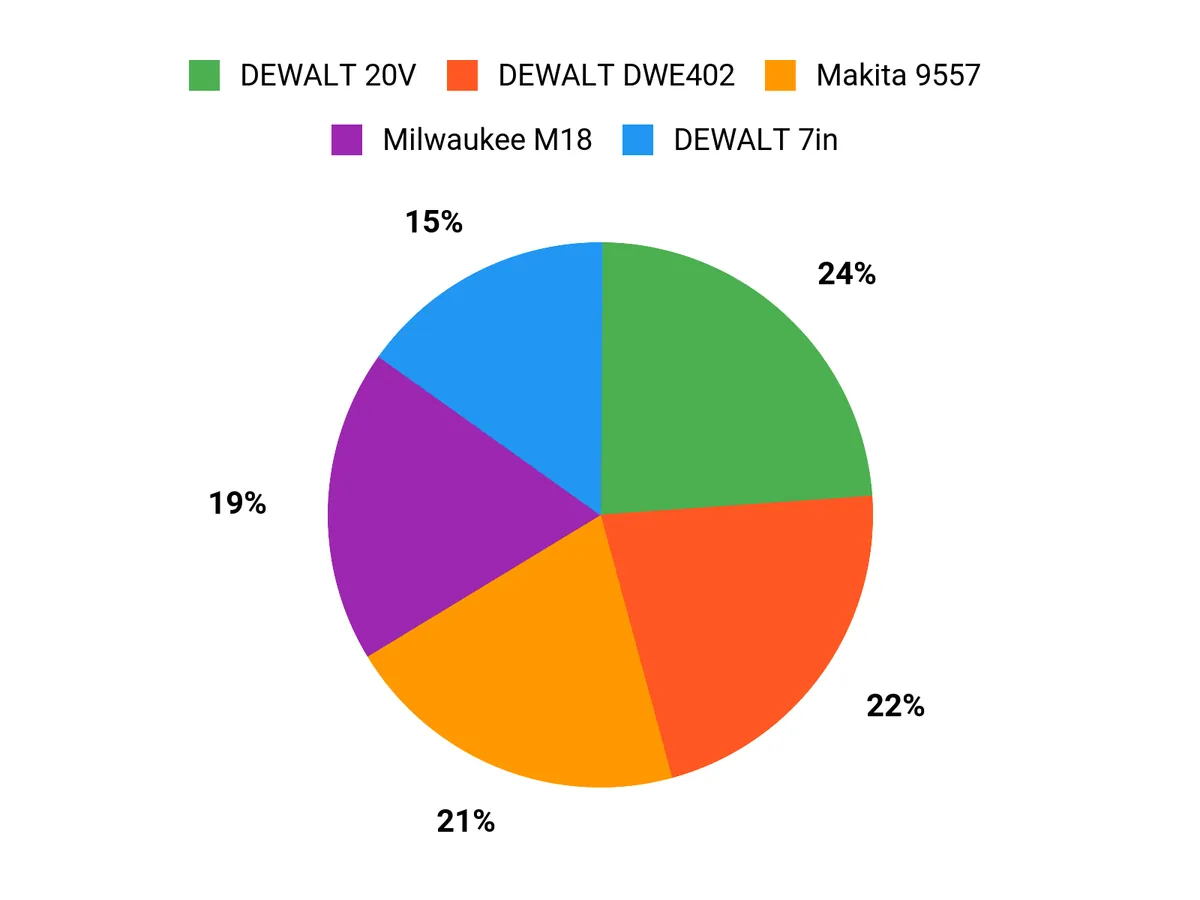
Battery-platform fit is often the deciding factor for cordless buyers. The DEWALT DCG413B emphasizes kickback-brake protection, the CRAFTSMAN CMCG451B offers a 3-position side handle and V20 compatibility, and the Milwaukee 2880-20 is aimed at heavier professional use within the M18 system. For corded work, the DEWALT DWE402 prioritizes dust management and fast adjustments, while the Metabo W 11-125 Quick adds a mechanical safety clutch and M-Quick disc changes.
Full Comparison Table
| Product | Image | Wheel Size | No-Load Speed | Power Source | Switch / Control |
|---|---|---|---|---|---|
| DEWALT DCG413B 20V MAX XR |
 |
4.5 in. | 9,000 RPM | Battery powered | Paddle switch; Kickback Brake |
| CRAFTSMAN CMCG451B V20 |
 |
4.5 in. | 8,500 RPM | Battery powered | Paddle switch; 3-position handle |
| Milwaukee 2880-20 M18 FUEL |
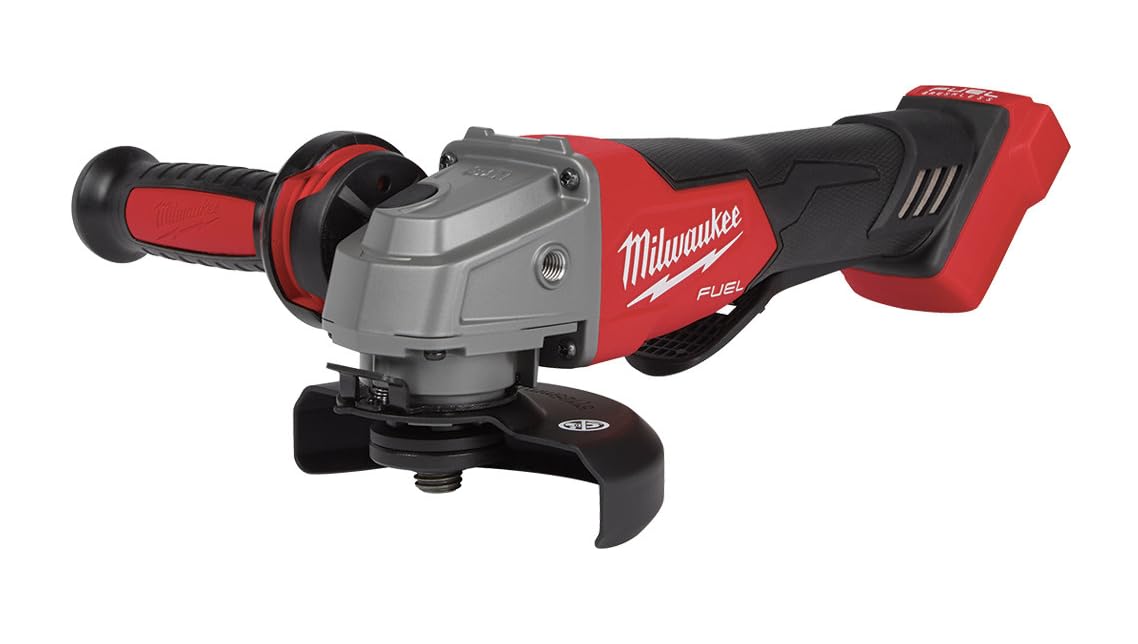 |
4.5 / 5 in. | 8,500 RPM | Battery powered | No-lock paddle; brake and electronic clutch |
| Bosch GWS14-60 |
 |
6 in. | 2,400-9,700 RPM | Corded electric | Slide switch; KickBack Control |
| Makita 9557PBX1 |
 |
4.5 in. | 11,000 RPM | Corded electric | Paddle switch with lock-on |
| Bosch GWS14-50 |
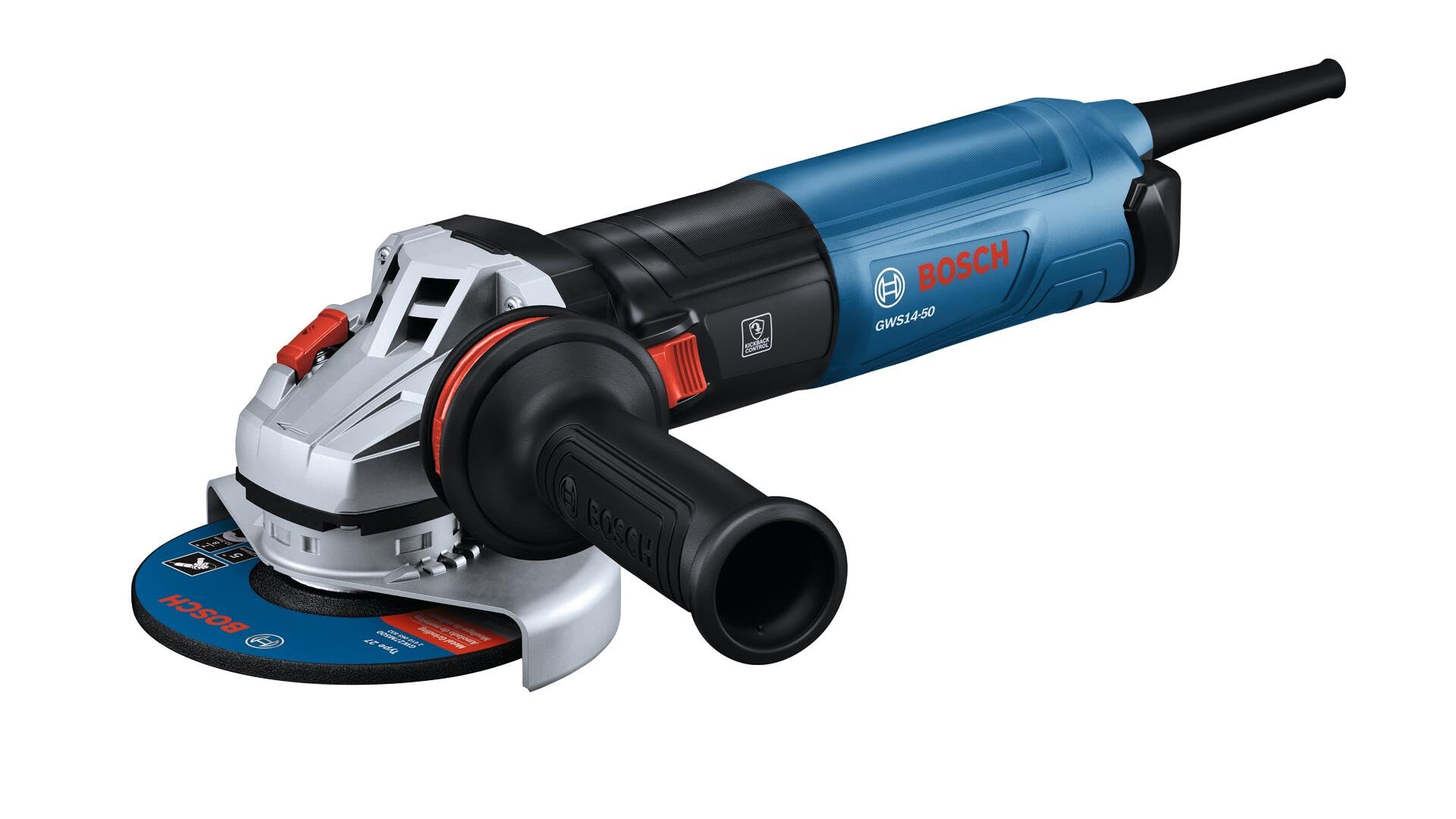 |
5 in. | 2,800-11,500 RPM | Corded electric | Slide switch; KickBack Control |
| DEWALT DWE402 |
 |
4.5 in. | 11,000 RPM | Corded electric | Paddle switch; One-Touch guard |
| Metabo W 11-125 Quick |
 |
4.5 / 5 in. | 11,000 RPM | Corded electric | Lock-on slide; safety clutch |
| DEWALT DW840 |
 |
7 in. | 8,000 RPM | Corded electric | Rear-handle layout; keyless guard |
| Metabo WP 11-125 Quick |
 |
4.5 / 5 in. | 11,000 RPM | Corded electric | Non-locking paddle; safety clutch |
Which Angle Grinder Should You Buy?
Match the grinder to the job rather than buying the largest or most powerful option automatically. Choose the DEWALT DCG413B for a balanced cordless setup with a kickback brake. Choose the Milwaukee 2880-20 when you already use M18 batteries and need a more professional cordless grinder. Pick the DEWALT DWE402 for frequent corded work with dust-management features, or select the Metabo W 11-125 Quick or WP 11-125 Quick when the safety clutch and switch style matter more. Move to the DEWALT DW840 only for work that genuinely benefits from a 7-inch wheel.
Use the comparison table above to match disc size, power source, and safety features to how you actually work, then check the current listing details and price for the model that fits your situation.
This roundup is reader-supported. When you click an Amazon link on this page, we may earn a commission from qualifying purchases at no additional cost to you. Product placement is based on stated specifications, safety and control features, accessory fit, and intended use.