As an Amazon Associate I earn from qualifying purchases. Buying through these links costs you nothing extra.
Stick welding rods differ mainly by classification: E6013 runs smooth and easy on clean mild steel, E6011 and E6010 dig deep on dirty or rusty steel, and E7018 gives strong low-hydrogen welds for structural work. This guide compares nine stick welding rods on Amazon by classification, diameter and best use.
Pack details below come from the Amazon listings and can change, so confirm them on the listing before you order.
Top Picks
| Category | Product |
|---|---|
| Best All Round | YESWELDER E6013 |
| Best Low Hydrogen | YESWELDER E7018 |
| Best For Heavy Beads | YESWELDER 1/8 |
| Best For Penetration | YESWELDER E6011 |
| Alternate 7018 Option | Metal Marlin E7018 |
| Alternate 6011 Option | Metal Marlin E6011 |
| Best Value | STARTECHWELD E6013 |
| Name-Brand 6013 | Hobart 6013 |
| Best For Root Passes | STARTECHWELD E6010 |
What to Check Before You Buy Stick Welding Rods
These picks are based on listing details and the typical use of each rod class, not bench testing. Check these points on each listing:
- Classification: E6013 for tidy beads on clean steel, E6011 or E6010 for penetration on dirty steel, E7018 for strength and low hydrogen.
- Current: E6013 and E6011 run on AC or DC; E6010 needs DC electrode positive; E7018 is normally run on DC electrode positive unless the box says AC is approved.
- Diameter: smaller rods for thin metal, larger rods for thicker joints.
- Packaging: sealed packs keep flux dry, which matters most for E7018.

It strikes reliably once you’ve got your machine dialed in and tends to lay a smooth, tidy bead that needs minimal cleaning.
The 3/32″ size is versatile for thin to medium steel, and the packaging helps keep the rods dry until you need them. If you want a dependable everyday electrode that’s forgiving for hobbyists and useful for pros doing routine work, this is a solid choice.
Versatility
This electrode handles most home and shop jobs: thin sheet repairs, bodywork, fence and gate fixes, and medium plate tack welding. You can run it on standard inverter welders and transformer machines, and it performs across common welding positions, though it’s best used where extreme penetration isn’t required.
Key Benefits
- Steady arc with easy bead control
- All‑position capability for general tasks
- Secure packaging that preserves shelf life
- Good for handheld and inverter machines

You get a low‑hydrogen electrode designed for stronger, cleaner weld deposits when you need them most. It’s suited to structural work, repairs on farm equipment, and any job where toughness and reduced cracking risk matter. The rod runs well once the arc is established and the pack helps keep the electrodes protected until you use them.
If your projects include load‑bearing joints or you want a more robust deposit than everyday general‑purpose rods, this one is a practical pick.
Versatility
Use it for structural repairs, chassis work, and general fabrication where you want welds with higher ductility and lower hydrogen content. It works on transformer and inverter machines and across common welding positions when matched with the right amperage.
Key Benefits
- Low‑hydrogen formulation for stronger welds
- Consistent arc for controlled bead appearance
- Good for structural and repair work
- Sealed packaging to protect shelf life

It lays a smooth bead that’s easy to clean up and adapts well to handheld inverters and transformer machines. The size gives you a bit more melt for thicker joints while remaining forgiving enough for routine repairs, bodywork, and light fabrication.
Packaged to keep rods protected, it’s a practical choice if you want an everyday electrode that performs reliably on a range of projects.
Versatility
This rod handles medium-thickness plate, structural touch-ups, and general repair tasks. You can use it in multiple positions and it behaves predictably on both small inverter welders and larger transformer rigs, making it a flexible option for home and shop work.
Key Benefits
- Smooth, controllable bead for cleaner finishes
- Good melt for medium plate and repair work
- Works well with common inverter and transformer machines
- Protective packaging helps prevent moisture pickup

You’ll reach for this E6011 when you need strong penetration and a forgiving arc on less-than-perfect surfaces. It’s suited to repair work, maintenance tasks, and any situation where the joint needs to soak heat for solid fusion. The rod behaves well on handheld inverter welders and transformer machines once you’ve got the arc established, and its fast-freezing characteristic helps when you’re working vertical or overhead.
If your projects include farm gear, structural touch-ups, or quick shop repairs, this is a practical rod to have in your box.
Versatility
This rod shines on repair jobs, patching, and structural touch-ups where penetration matters. You can use it across common welding positions and on both small inverter units and larger transformer machines, making it a solid choice for shop and field work.
Key Benefits
- Deep penetration for strong welds
- Fast-freezing arc that handles vertical work
- Performs well on handheld inverters and transformers
- Packaged to reduce moisture exposure
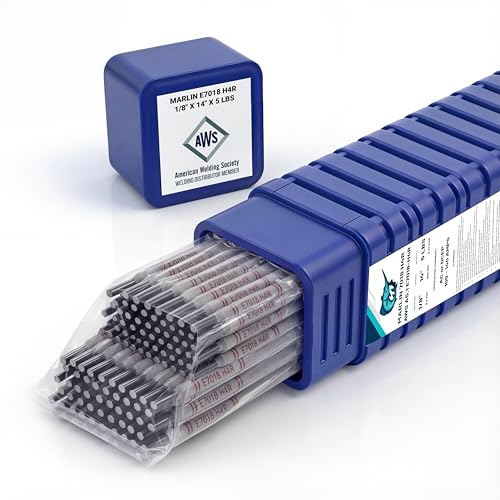
You get a low‑hydrogen rod built for tougher work where weld cleanliness and strength matter. The vacuum‑sealed packaging keeps moisture out so the rods are ready when you are, and the electrode strikes and runs smoothly across common machines.
It handles quarter‑inch plate at modest amps and is a practical alternative to premium low‑hydrogen options for structural repairs, chassis work, and routine shop fabrication. If you want a dependable rod for load‑bearing joints without fuss, this one fits that role.
Versatility
Use it for structural repairs, plate welding, chassis and farm equipment work where ductility and low hydrogen content are important. It behaves predictably in multiple positions and on standard inverter or transformer welders.
Key Benefits
- Low‑hydrogen deposits for tougher, less brittle welds
- Vacuum‑sealed, waterproof packaging for long shelf life
- Easy arc strike and stable burn across amps
- Performs well on both inverter and transformer machines

You’ll reach for this E6011 when you need dependable penetration on repair work or tougher joints with imperfect fit‑up. The fast‑freezing arc helps control weld shape on vertical and overhead passes, and the vacuum‑sealed box keeps rods ready to use even if you don’t finish a full pack at once. It performs well on small inverter machines and larger transformers, so whether you’re patching farm equipment, tackling structural touch‑ups, or doing routine shop repairs, this rod gives predictable results and saves you time on cleanup.
Versatility
This rod handles maintenance welding, patch jobs, and structural touch‑ups where penetration and fast freeze are needed. It’s useful in multiple positions and adapts to both portable inverter rigs and stationary transformer setups.
Key Benefits
- Deep penetration for solid fusion
- Fast‑freezing arc suited to vertical work
- Vacuum‑sealed packaging for moisture protection
- Works well on both inverter and transformer welders

You’ll like this E6013 if you want a rod that burns smoothly and lays an even bead with minimal fuss. It’s a solid go-to for everyday repairs, light fabrication, and bodywork where a clean appearance matters. The electrode behaves predictably across common machines and positions, so it’s easy to adapt whether you’re using a portable inverter or a shop transformer. For routine shop jobs and weekend projects, it’s a dependable choice that keeps things simple.
Versatility
This rod handles thin to medium plate, general shop repairs, fence and gate fixes, and light fabrication. It’s useful in multiple positions and adapts well to both portable inverter units and larger transformer machines.
Key Benefits
- Smooth, consistent burn for tidy beads
- Even melting that helps reduce cleanup
- All‑position capability for general tasks
- Works well on common inverter and transformer welders

You’ll reach for this Hobart 6013 when you need a reliable everyday electrode for maintenance, hobby projects, and general shop work. It’s forgiving on joints with poor fit-up, lays a tidy bead that’s easy to clean, and behaves predictably whether you’re using a portable inverter or a transformer machine. Because it works in all positions and across common polarities, it’s a solid go-to for fence repairs, trailer fixes, light fabrication, and routine welding tasks where consistent results matter.
Versatility
Use this rod for general repairs, bodywork, fence and gate fixes, and medium-thickness fabrication. Its all-position capability and compatibility with common power sources make it a flexible option for both home workshops and light professional use.
Key Benefits
- All‑position capability for versatile use
- Predictable arc and tidy bead appearance
- Works on AC and DC polarities
- Good choice for routine repairs and shop tasks
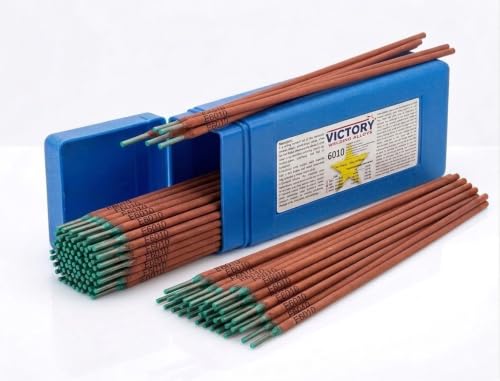
You’ll reach for this E6010 when you need deep penetration and a rod that holds a steady arc for tougher joints. It’s useful for root passes, maintenance work, and situations where fit‑up isn’t perfect, since it helps fuse parts reliably. The electrode strikes reasonably easily and runs well on both portable inverter units and transformer machines.
If your projects demand fast, consistent penetration rather than cosmetic finishes, this rod is a practical, no‑nonsense choice.
Versatility
This electrode is ideal for repair work, structural touch‑ups, and root pass welding where penetration is the priority. It works across typical welding positions and adapts to both portable inverters and larger transformer setups.
Key Benefits
- Deep penetration for solid fusion
- Stable arc suited to root passes and repairs
- Performs on inverter and transformer welders
- Reliable for rough fit‑ups and field work
Related guides: stick welding amperage chart | how to store low-hydrogen electrodes | more welding rods on Amazon
FAQ
How Do I Choose The Right Rod?
Pick the rod based on the job, the finish you want, and the material thickness. For tidy, easy‑to‑clean beads that work well on sheet and light plate, reach for a 6013; for deeper penetration on repairs and rusted or dirty joints, consider 6011 or 6010; for structural work and reduced cracking risk choose a low‑hydrogen E7018.
Also match diameter to thickness: smaller diameters for thin material, larger for thicker joints, and pick an electrode rated for the positions you need.
How Should I Store And Care For Rods?
Keep rods dry and in their original or similar sealed packaging to prevent moisture pickup. Vacuum‑sealed boxes and zip bags help extend usable life, and if you suspect a pack has absorbed moisture follow the manufacturer’s guidance for drying or using a rod oven rather than improvising.
For low‑hydrogen rods, proper storage and reconditioning matter because moisture can compromise weld ductility.
Will These Rods Work With My Welder?
Most of these electrodes run fine on common inverter and transformer machines, but you should confirm your machine supports the polarity and amperage range the rod needs. As a general guide, a 3/32″ rod often runs in the mid amp range and a 1/8″ needs more heat, so adjust your dial and test on scrap until the arc feels steady.
Practice striking and maintaining the arc on scrap before you weld the part to get consistent bead appearance.
What is the difference between E6013 and E7018?
E6013 is an easy-running rod for clean mild steel and light repairs, and it works on AC or DC. E7018 is a low-hydrogen rod for structural and crack-sensitive work. It is normally run on DC electrode positive and needs dry storage.
Which stick rod is best for beginners?
E6013 is the usual starting point because it strikes easily and runs smoothly on clean steel. Move to E6011 or E6010 for rusty or dirty joints and to E7018 once you can control arc length and travel speed.
Wrapping Up
Choose a rod that matches your machine, the metal thickness and the finish you want. An all-round E6013 is the easy starting point for clean mild steel. Choose E6011 or E6010 for dirty or rusty joints, and low-hydrogen E7018 for structural parts. Keep rods dry in sealed packaging and set your amperage for the rod diameter.
| Product Name | Image | Brand | Size | Item Weight |
|---|---|---|---|---|
| YESWELDER E6013 3/32” 5LB Welding Rod |
 |
YESWELDER | 3/32″ | 5.21 pounds |
| YESWELDER E7018 3/32” 5LB Welding Rod |
 |
YESWELDER | 3/32″ | 5.19 pounds |
| YESWELDER E6013 1/8” 5LB Welding Rod |
 |
YESWELDER | 1/8″ | 5.26 pounds |
| YESWELDER E6011 3/32” 5LB Welding Rod |
 |
YESWELDER | 3/32″ | 5.24 pounds |
| E7018 H4R Welding Rod 1/8”, 5 lb Pack |
 |
METAL MARLIN | 1/8” | 5.48 pounds |
| E6011 Welding Rod 3/32″, 5 lb Pack |
 |
METAL MARLIN | 3/32″ | 5.39 pounds |
| Victory Welding Alloys 6013 Welding Rod 1/8″ |
 |
STARTECHWELD | 1/8″ | 5.00 pounds |
| Hobart 770466 6013 Stick |
 |
Hobart | 3/32″ | 5.00 pounds |
| Victory Welding Alloys 6010 Welding Rod 1/8″ |
 |
STARTECHWELD | 1/8″ | 5.00 pounds |