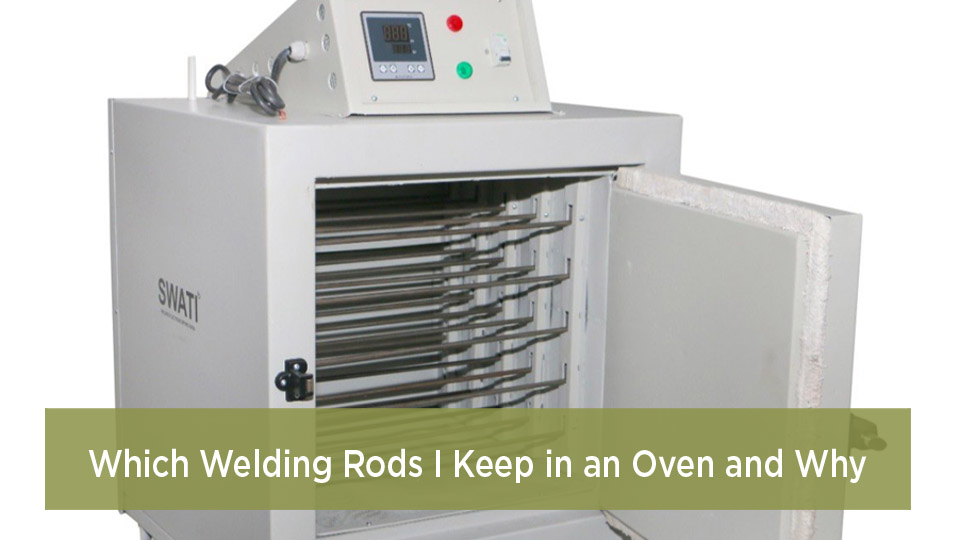
One thing I learned early in my welding career is that how you store low-hydrogen electrodes can make or break the result. I once grabbed a box of E7018 rods that had been sitting open in the shop. The arc was erratic, the bead showed porosity, and I spent more time grinding than welding. Moisture control is not paperwork—it is part of the welding process.
Quick Answer
Keep unopened low-hydrogen electrodes in intact hermetically sealed packaging. After opening, transfer them to a thermostatically controlled rod oven at the manufacturer’s temperature—commonly 225–300°F (107–149°C). Track atmospheric exposure, and redry electrodes only under the product maker’s approved procedure and the applicable welding specification.
Key Takeaways
- An intact hermetically sealed package protects low-hydrogen electrodes until it is opened or damaged.
- A holding oven keeps dry electrodes dry; it is not the same as a high-temperature redrying oven.
- The complete classification matters: E7018, E7018-H4, and E7018-H4R do not communicate identical moisture-performance requirements.
- Exposure limits come from the applicable code, welding procedure specification, project rules, and manufacturer—not from one universal shop rule.
- Discard electrodes with damaged coating, oil or chemical contamination, severe rust, or an exposure history that cannot be accepted under the job procedure.
At a Glance
| Time Required | About 5–10 minutes for receiving, labeling, oven transfer, and logging; redrying takes longer when an approved procedure permits it. |
| Difficulty | Easy for routine storage; controlled technical work for code-governed exposure and reconditioning. |
| Tools Needed | Approved holding oven, heated field quiver when required, temperature indicator or verification device, labels, exposure log, and heat-resistant gloves. |
| Cost | Varies with oven capacity, temperature range, calibration needs, portability, and project documentation requirements. |
Low-hydrogen rods are designed to limit diffusible hydrogen in the weld deposit, but their flux coatings can absorb moisture after the package is opened. That moisture can contribute to porosity, poor operating characteristics, and hydrogen-assisted cracking—especially when the base metal, joint restraint, cooling conditions, and stress level also increase cracking risk.
Proper storage in a rod oven or approved heated holding cabinet is therefore critical for weld integrity. It is also part of complying with a welding procedure specification, often shortened to WPS, when the work is governed by a structural, pressure, customer, or contract requirement.
Photo by keenovens
What Exactly Are Low-Hydrogen Electrodes?
Low-hydrogen electrodes are covered SMAW, or stick-welding, electrodes formulated to deposit weld metal with controlled diffusible hydrogen when they are manufactured, stored, and used correctly. Common carbon-steel classifications include E7015, E7016, and E7018.
The familiar E7018 designation communicates several things. The “E” identifies an electrode, “70” indicates a minimum tensile-strength classification of 70 ksi, “1” indicates all-position capability, and “8” identifies coating and operating characteristics associated with a low-hydrogen iron-powder electrode. The exact approved current and polarity still depend on the product data and WPS.
Supplementary designators matter too. As explained in Hobart Brothers’ E7018 classification guide, H4 and H8 identify maximum diffusible-hydrogen classifications under the applicable test. An “R” suffix means the electrode passed a specified moisture-resistance test. Do not assume that every box marked E7018 is automatically H4R.
Note: Low hydrogen does not mean “no hydrogen,” and the classification is not preserved by the label alone. The electrode must remain within the storage and exposure controls required for the job.
Why Proper Storage Matters in Welding
Moisture in the coating can break down in the arc and add hydrogen to the weld. Hydrogen-assisted cracking is most likely when three conditions overlap: a source of hydrogen, a susceptible microstructure, and enough tensile stress or restraint. The crack may form in the weld or heat-affected zone and may not appear immediately.
I learned this on heavy structural work after electrodes were left exposed overnight. The next shift brought rough arc behavior and suspect welds, followed by removal and rework. That experience taught me an important lesson: bad electrode control can look like a welding-technique problem, but changing amperage or travel speed will not restore a moisture-contaminated coating.
Lincoln Electric’s storage guidance notes that moisture pickup can cause porosity, slag problems, poor appearance, and hydrogen-induced cracking, particularly in higher-strength steels. Some internal porosity cannot be accepted or rejected from appearance alone.
A holding oven preserves electrodes that are already dry. A redrying oven uses a separate, much hotter procedure to recondition electrodes when the manufacturer and job requirements allow it.
Best Practices for Storing Low-Hydrogen Electrodes
Products Worth Considering
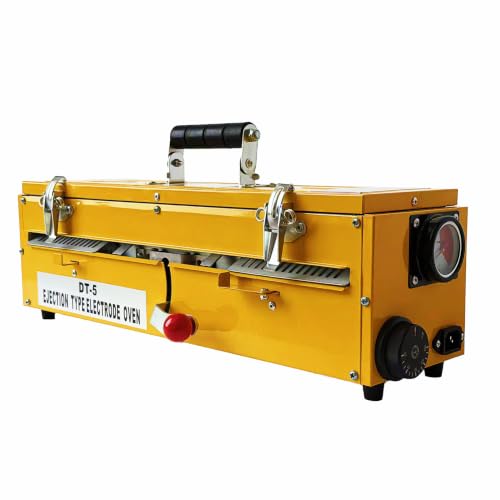
Dispense Without Opening the Lid: This welding rod oven features a crank-and-eject system that allows one-by-one electrode dispensing without opening the lid, helping maintain a sealed, moisture-free environment while improving efficiency on the job site.

Adjustable Temperature - 150°F to 300°F. Temp control prevents welding rods from moisture for 7018, 6018 and 316L rods.
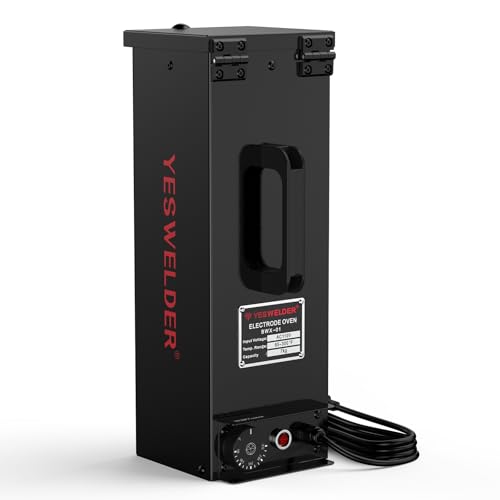
Moisture Protection: Used to prevent moisture from contaminating your welding electrodes to maintain low hydrogen weld deposit properties and ensuring strong, crack-free welds
Keep Sealed Packages Intact
Leave low-hydrogen electrodes in their original hermetically sealed can or vacuum package until they are needed. Store unopened containers indoors in a dry area, protected from rain, condensation, chemical vapors, impact, and floor-level spills.
Inspect each package when it arrives. A puncture, broken vacuum, deep seam damage, or water exposure means the package should not be treated as fully protected. Segregate questionable material until the manufacturer’s instructions and project quality procedure determine whether it can be used.
Transfer Opened Electrodes Immediately
Preheat the holding oven and verify that it is within the required range before opening the package. Transfer the electrodes directly into the oven instead of leaving the can open while the cabinet warms up.
Keep classifications, brands, strength levels, and lot numbers separated. Do not mix E6010 or E6011 cellulosic electrodes with low-hydrogen electrodes in the same heated compartment. Cellulosic coatings contain intentional moisture and can affect low-hydrogen products, while excessive heat can damage the operating characteristics of the cellulosic rods.
Label and Rotate the Stock
Label each batch with the classification, manufacturer, lot or heat identification, package-opening time, and required exposure limit. Use first-in, first-out rotation unless a project procedure says otherwise.
Returned electrodes should go into a marked return container, not directly into clean stock. Record the cumulative exposure time and confirm that the procedure permits their return to the holding oven.
Recommended Temperatures for Electrode Storage
Most manufacturer guidance places opened E7016, E7018, and E7028 electrodes in a holding range around 225–300°F (107–149°C). ESAB publishes that general range, while Lincoln commonly specifies 250–300°F (120–150°C) for its opened low-hydrogen electrodes. The exact package instructions remain controlling.
| Electrode condition | Typical treatment | Important limit |
|---|---|---|
| Intact hermetically sealed package | Dry indoor storage | The protection is lost if the seal or container is damaged. |
| Opened E7016, E7018, or E7028 | Commonly 225–300°F in an approved holding oven | Use the manufacturer, WPS, and project requirement. |
| Field-issued low-hydrogen rods | Approved heated quiver when required | An unheated sealed tube does not stop cumulative atmospheric exposure. |
| E6010 or E6011 | Dry ambient storage unless the manufacturer says otherwise | Do not store or rebake them with low-hydrogen electrodes. |
| Moisture-exposed E7018 approved for redrying | Manufacturer-specific high-temperature procedure; Lincoln lists 650–750°F for one hour at final temperature under its stated conditions | A normal holding oven cannot perform this process. |
| Stainless or alloy electrode | Use the exact product data | Do not copy carbon-steel E7018 redrying temperatures. |
A 250°F setpoint may be suitable for some opened E7018 products, but the displayed setpoint is not proof that every electrode in a crowded cabinet is at the required temperature. Check oven calibration, door seals, loading, airflow, and temperature recovery after the door is opened.
How Long Can Low-Hydrogen Electrodes Be Exposed to Air?
There is no single atmospheric-exposure time for every low-hydrogen electrode and every job. The controlling limit may come from the applicable welding code, WPS, project specification, electrode classification, manufacturer, or quality-control procedure.
Standard E7018 is commonly controlled to about four hours on some structural jobs. Lincoln describes this as supplying standard EXX18 electrodes twice per shift. Moisture-resistant products with an R suffix may be permitted for longer periods; Lincoln states that its moisture-resistant types may be exposed for up to nine hours.
The R suffix does not mean that the rods can be left in any weather for nine hours. It identifies a moisture-resistance qualification that includes exposure under specified temperature and humidity conditions. A project may impose a shorter limit because of humidity, steel strength, restraint, seismic requirements, service conditions, or owner rules.
Note: Time outside the approved heated storage is normally cumulative. Returning a rod to the oven does not automatically erase its earlier exposure unless the governing procedure specifically allows that treatment.
In humid or wet conditions, issue only the amount the welder can use promptly and keep the rest in a powered field quiver. If rain, condensation, or water contacts the coating, stop using the rods and follow the manufacturer and project disposition procedure.
Step-by-Step Guide to Storing Your Electrodes
- Inspect the delivery. Confirm the classification, manufacturer, lot identification, package condition, and any required certificates.
- Store unopened packages correctly. Keep them indoors, dry, off the floor, and protected from impact, water, oils, solvents, and corrosive fumes.
- Prepare the oven first. Bring the holding oven to the required temperature and verify the reading before opening a package.
- Open one controlled batch. Record the package-opening date and time. Do not mix the rods with unidentified or returned stock.
- Transfer the rods immediately. Place them in the holding oven with enough room for heat circulation. Keep the door closed as much as possible.
- Issue a limited quantity. Record the welder, classification, quantity, issue time, and maximum return or discard time.
- Use a heated field container when required. Confirm that the quiver is powered and capable of maintaining the approved holding range.
- Control returned rods. Segregate them, calculate cumulative exposure, inspect the coating, and return them only if the procedure allows it.
- Close the shift properly. Reconcile issued, used, returned, rejected, and discarded electrodes so unknown rods do not re-enter controlled stock.
Pro Tip: Use heat-resistant tags or a simple exposure log with classification, lot, opening time, issue time, return time, and cumulative hours. The log prevents a good-looking but timed-out rod from being mixed back into fresh stock.
Redrying Exposed Low-Hydrogen Electrodes: When and How
Redrying is not the first response to every questionable rod. Start by identifying the exact electrode, how long it was exposed, whether it contacted water, whether the coating is damaged, and whether the applicable job permits reconditioning.
Warning: Never redry welding electrodes in a household food oven. Use equipment designed for electrode reconditioning, follow its electrical and fire-clearance requirements, wear heat-resistant gloves, and keep unauthorized people away from the hot cabinet and rods.
When Redrying May Be Allowed
Clean electrodes that exceeded an atmospheric-exposure limit may be candidates for redrying when the manufacturer and project procedure allow it. Under Lincoln’s published guidance, E7018 electrodes exposed to air for less than one week without direct water contact may be redried at 650–750°F (340–400°C) for one hour at final temperature.
For Lincoln E7018 electrodes exposed to high humidity or direct water contact, the published process adds a 180–220°F (80–105°C) predry for one to two hours before the final high-temperature cycle. This is a product-family example, not a universal recipe.
How to Perform an Approved Redrying Cycle
- Confirm that the exact classification, brand, condition, and job procedure allow redrying.
- Remove the rods from cans, plastic, paper, or other packaging not rated for the oven.
- Inspect for cracked, loose, oily, chemically contaminated, or badly rusted coating. Reject damaged rods.
- Load the oven so heat can circulate. Do not pack the rods into a dense bundle.
- Use the required predry stage if the manufacturer calls for one.
- Bring the electrodes to the specified final temperature. Start the required hold time only after the electrodes reach that temperature.
- Do not exceed the approved temperature, duration, or number of redrying cycles.
- After the cycle, transfer acceptable rods to the approved holding oven and update their status record.
When to Discard the Rods
Discard electrodes when the coating is cracked, flaking, swollen, oily, chemically contaminated, badly rusted, or visibly damaged. Also discard them when their classification or exposure history cannot be established, when they behave differently after an approved cycle, or when the project specification prohibits reconditioning.
There is no safe universal number of redrying cycles for every low-hydrogen electrode. Some manufacturer instructions limit repeated cycles for higher-strength or alloy products because excessive heating can damage the coating or alter deposited-weld properties. Follow the exact data sheet rather than a shop-wide “three times” rule.
Common Mistakes in Storing Low-Hydrogen Electrodes and Fixes
- Mixing E6010 with E7018: Use separate cabinets or fully separated approved compartments.
- Using a sealed but unheated tube as an oven: A tube protects against splashes and dirt but may not meet heated-holding requirements.
- Opening the can before the oven is ready: Preheat and verify the cabinet first.
- Trusting only the thermostat dial: Verify actual chamber temperature and maintain a calibration program where required.
- Overloading the cabinet: Leave room for airflow and avoid repeatedly opening the door.
- Returning unidentified rods to clean stock: Segregate returns and document cumulative exposure.
- Using holding heat as a redrying cycle: Follow the higher, product-specific reconditioning procedure when allowed.
- Accepting rods from a test bead alone: A test bead may reveal rough operation, but it cannot prove hydrogen classification or rule out internal defects.
- Storing rods near oils, solvents, paint, or chemical fumes: Keep consumables in a clean, dedicated area.
Comparing Low-Hydrogen Electrodes to Other Types
Storage rules depend on the coating system. The following comparison is a practical guide, not a replacement for the package instructions.
| Electrode Type | Typical Storage | Hydrogen Classification | Common Uses | Main Advantage | Main Limitation |
|---|---|---|---|---|---|
| Low hydrogen, such as E7016 or E7018 | Hermetically sealed until opened; then commonly 225–300°F holding | May carry H4, H8, and R supplementary designators | Structural, restrained, thicker, higher-strength, or toughness-critical work when specified | Controls diffusible hydrogen when correctly handled | Requires strict moisture and exposure control |
| Cellulosic, such as E6010 or E6011 | Dry ambient storage; do not rebake unless the manufacturer expressly permits it | Not a low-hydrogen classification | Penetrating root passes, field work, and applications specified by the WPS | Strong arc force and deep penetration | Not a substitute where low-hydrogen consumables are required |
| Rutile, such as E6013 | Dry storage; some manufacturers recommend mild heated storage after opening | Not automatically low hydrogen | General light fabrication, sheet, maintenance, and training | Smooth arc and easy handling | May not meet strength, toughness, penetration, or hydrogen requirements for critical work |
Low-hydrogen electrodes are often the right choice when cracking risk and code compliance matter, but the extra storage step is part of the process—not an optional accessory.
When to Use Low-Hydrogen Electrodes in Your Projects
Low-hydrogen electrodes are commonly specified for restrained joints, thicker sections, higher-strength steels, cold-service applications, and structural work where hydrogen-assisted cracking must be controlled. That does not mean E7018 is automatically correct for every carbon or low-alloy steel.
For example, joining A36 to an A572 grade may call for a 70-ksi low-hydrogen filler, but the final choice depends on the exact grade, required strength, toughness, service temperature, joint design, and governing WPS. Never choose filler metal only by matching the first two digits of the electrode classification.
For E7018 amperage, start with the manufacturer’s range for the exact diameter. Some 1/8-inch products list roughly 90–160 A, while larger diameters require substantially more current. Position, polarity, arc length, joint geometry, and the qualified procedure can narrow that range.
For noncritical gates, brackets, or shop projects, properly stored E7018 can provide a smooth, strong weld when it is compatible with the base material and machine. Trailer hitches, lifting devices, vehicle suspension parts, pressure boundaries, and primary structures deserve an engineered or qualified repair procedure rather than an improvised filler choice.
Safety Considerations When Handling Low-Hydrogen Rods
Wear heat-resistant gloves when loading, issuing, or returning hot rods. Keep oven doors, shelves, and heating elements away from combustible material, and follow the oven manufacturer’s required clearance and electrical circuit rating.
Do not use a domestic oven that also prepares food. Electrode ovens operate at temperatures that can cause serious burns, and welding consumables should remain separated from food equipment.
During welding, use proper helmet, eye, skin, electrical, and respiratory protection. The OSHA welding and cutting requirements address protective equipment, ventilation, fumes, fire prevention, and other hot-work hazards. Moisture may affect electrode operation, but all welding fumes must be controlled appropriately—not only fumes from questionable rods.
Warning: For structural, seismic, pressure-boundary, lifting, or other life-safety work, follow the approved WPS, project specification, applicable code, and direction of the responsible welding authority. General internet guidance is not a substitute for those requirements.
Equipment Recommendations for Electrode Storage
A good holding oven should have a stable thermostat, readable temperature indication, insulated construction, sound door seals, enough capacity for air circulation, and a temperature range that matches the consumables being stored. Code or quality programs may also require periodic calibration or independent temperature verification.
A portable heated quiver is useful for field work, but verify its actual rating. Some products merely warm the rods, while others are designed to maintain a specified holding temperature. A sealed PVC tube, toolbox, or capped container protects rods from dirt and splashes but does not perform the same function as a powered holding oven.
A redrying oven is a different piece of equipment. It must reach and control the high temperature required by the approved reconditioning procedure. Do not assume that a 300°F holding cabinet can be turned up enough to redry E7018 safely.
For a small shop, capacity matters less than temperature control and disciplined use. For production work, useful features include multiple compartments, low-temperature alarms, lockable controls, batch shelves, calibrated displays, and enough recovery capacity to handle repeated door openings.
Products Worth Considering
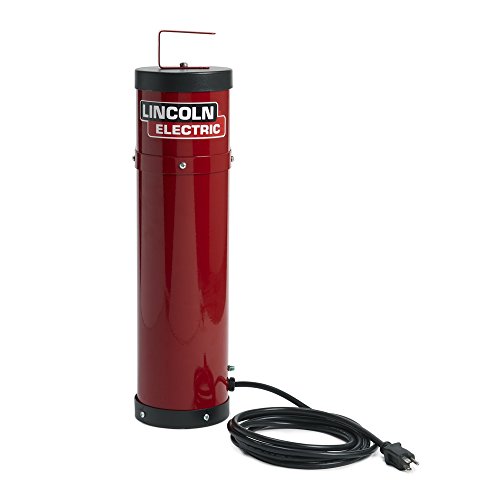
Compact design – Easy to transport to the job site. 10 lb. capacity

Large Capacity: This VEVOR welding rod oven holds up to 10 lbs of 18-inch electrodes. It helps keep welding rods dry, reducing moisture-related cracking and arc instability — extending electrode lifespan and enhancing overall weld quality
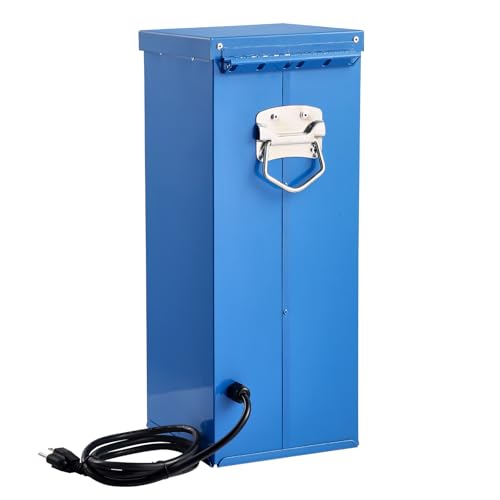
Large Capacity: This VEVOR welding rod oven holds up to 50 lbs of 18-inch electrodes. It helps keep welding rods dry, reducing moisture-related cracking and arc instability — extending electrode lifespan and enhancing overall weld quality
Practical Tips for Machine Settings and Joint Prep with Low-Hydrogen Rods
Good storage cannot compensate for poor joint preparation. Remove standing water, oil, grease, paint, heavy rust, and other contaminants from the weld area. Clean the joint to the standard required by the drawing, WPS, and applicable code.
Do not apply one universal 30–45-degree bevel rule. Groove angle, root opening, root face, backing, and weld sequence depend on the joint design and procedure. Changing them can affect penetration, weld volume, heat input, distortion, and qualification status.
For a 1/8-inch E7018, a starting point around 110–130 A falls inside many published product ranges, but it is only a starting point. Confirm the exact electrode data, polarity, position, and WPS. Too little current can contribute to an unstable arc and poor fusion; too much can cause undercut, excessive fluidity, difficult control, and excessive heat input.
Preheat is also procedure-specific. A 200°F preheat may be suitable for one material and joint but unnecessary or inadequate for another. Base preheat on steel composition, thickness, restraint, hydrogen control, heat input, ambient conditions, and the governing code or engineering requirement.
Material Compatibility and Filler Choices
E7018 is commonly used on many carbon and low-alloy steels, but compatibility involves more than tensile strength. Check required yield and tensile properties, impact toughness, chemistry, service temperature, postweld heat treatment, coating or galvanizing, and the applicable filler-metal specification.
Stainless electrodes such as E308, E309, or E316 belong to different classification systems and may have very different storage and redrying instructions. Do not place them in a carbon-steel E7018 redrying cycle without the manufacturer’s approval.
Low-hydrogen practice helps control hydrogen-assisted cracking. It does not by itself prevent stainless-steel sensitization, hot cracking, dilution problems, or intergranular corrosion. Dissimilar-metal welds should follow a qualified filler-selection and welding procedure.
Real-World Applications in US Welding Practices
In U.S. fabrication shops and field work, low-hydrogen electrodes are common where a contract, engineer, owner, or code requires controlled hydrogen. The current AWS D1.1/D1.1M:2025 Structural Welding Code—Steel covers commonly used structural carbon and low-alloy steels when that code is invoked.
Pressure-related work may invoke an ASME construction code together with qualified welding procedures and personnel. ASME BPVC Section IX addresses welding, brazing, and fusing qualifications where required by the applicable construction rules.
On farms, maintenance jobs, and hobby projects, the same moisture principles still apply. The difference is the level of documentation and engineering control—not whether a damp coating can affect the weld.
In humid regions, climate-controlled consumable storage can reduce cabinet cycling and condensation risk. Even then, opened low-hydrogen electrodes still belong in their approved heated storage unless the manufacturer or procedure states otherwise.
Troubleshooting Weld Issues Related to Storage
Storage should be checked when the arc or weld suddenly changes, but it is only one possible cause. Polarity, current, arc length, base-metal contamination, joint design, technique, machine condition, and the electrode itself can produce similar symptoms.
| Symptom | Possible storage-related cause | Other checks | Action |
|---|---|---|---|
| External or internal porosity | Moisture pickup or contamination | Arc length, joint contamination, coating damage, polarity | Quarantine the batch and follow the approved disposition; do not accept it from appearance alone. |
| Noisy or wandering arc, excessive spatter | Moisture or coating deterioration | Current, polarity, arc length, poor work lead connection | Compare with fresh controlled electrodes and verify machine settings. |
| Flaking or fragile coating | Excessive or repeated redrying, impact damage, or water damage | Improper handling and oven temperature | Discard the damaged rods and verify the oven procedure. |
| Cracking after welding | Excess hydrogen may be one contributor | Base metal, hardness, restraint, preheat, heat input, joint design, stress | Stop work and obtain qualified inspection and engineering review. |
| Poor slag release or rough bead | Moisture or heat-damaged coating | Travel angle, amperage, arc length, bead shape | Verify technique and settings, then quarantine suspect electrodes if the problem follows the batch. |
A test bead on scrap can help compare arc behavior between a suspect batch and fresh controlled rods. It cannot certify that the electrodes still meet an H4 or H8 classification, satisfy a project exposure limit, or produce internally sound code welds.
Pros and Cons of Using Low-Hydrogen Electrodes
Advantages
- Reduced diffusible hydrogen when the product is stored and used correctly.
- Good mechanical properties for many structural and restrained applications.
- Smooth operation and relatively low spatter with suitable settings and technique.
- Availability in classifications that address strength, toughness, hydrogen, and moisture-resistance requirements.
Limitations
- Requires controlled packaging, heated storage, exposure tracking, and sometimes documented issue procedures.
- Improper redrying can damage the coating or deposited-weld properties.
- A holding oven, portable quiver, and redrying oven may all be needed on demanding jobs.
- E7018 is not automatically compatible with every steel, service condition, current type, or welding procedure.
The storage work is worth it when low-hydrogen performance is required, but the benefit depends on disciplined control from the unopened package to the final weld.
Key Takeaways and Why You’re Ready to Weld Confidently
Proper storage comes down to four controls: keep sealed packages intact, transfer opened rods to the approved holding oven, limit and document atmospheric exposure, and use only manufacturer-approved redrying procedures.
Remember that 225–300°F is a common holding range, not a universal redrying cycle. Standard E7018 is often limited to about four hours in some job programs, while an R-designated product may receive a longer allowance, but the WPS, code, project specification, and manufacturer always take priority.
Finally, do not rely on a smooth test bead as proof that a timed-out electrode is acceptable. For noncritical practice it can reveal operating problems; for structural or pressure work, consumable acceptance belongs to the approved quality procedure.
Frequently Asked Questions
What temperature should E7018 electrodes be stored at?
Opened E7018 electrodes are commonly held at 225–300°F (107–149°C). Lincoln commonly specifies 250–300°F for its products. Always follow the exact manufacturer, WPS, code, and project requirement.
Can you store low-hydrogen electrodes without an oven?
Yes while they remain in an intact hermetically sealed package stored in a dry area. After opening, E7018 and similar low-hydrogen electrodes normally require an approved heated holding oven unless the product or governing procedure states otherwise.
How do you know if low-hydrogen electrodes absorbed too much moisture?
Possible signs include a noisy or wandering arc, excess spatter, porosity, unusual slag behavior, or a damaged coating. These signs are not a reliable acceptance test. Use the exposure record, package condition, manufacturer instructions, and project disposition procedure.
What is the difference between low-hydrogen and moisture-resistant electrodes?
Low-hydrogen describes the electrode’s hydrogen-control classification. An R suffix shows that the product also passed a specified moisture-resistance test. The R suffix may support a longer field-exposure allowance, but it does not eliminate heated storage or override the WPS.
Why can poorly stored low-hydrogen electrodes contribute to cracking?
Moisture in the coating can add hydrogen to the weld. When hydrogen combines with a susceptible steel microstructure and sufficient stress or restraint, delayed cracking can form in the weld or heat-affected zone.
How long can E7018 stay out of a rod oven?
Some job programs limit standard E7018 to about four hours, while some moisture-resistant R-designated products may be allowed up to nine hours. The actual limit must come from the manufacturer, applicable code, WPS, and project specification.
Can I redry E7018 in a household oven?
No. Use a dedicated electrode-redrying oven capable of safely reaching and controlling the specified temperature. Household food ovens are unsuitable for consumables and may create contamination, burn, fire, and temperature-control hazards.
Can unused rods be returned to the holding oven?
Only when the governing procedure permits it and the rods remain within their cumulative exposure limit. Record the return time, inspect the coating, and keep returned rods segregated until their status is confirmed.
Sources
- Lincoln Electric — Storing and Redrying Electrodes — opened-electrode holding temperatures, atmospheric exposure guidance, moisture effects, and E7018 redrying conditions.
- ESAB — Storing and Redrying Stick Electrodes the Right Way — common holding ranges and separation of cellulosic and low-hydrogen electrodes.
- Hobart Brothers — E7018 Welding Rod Classification and Amperage — E7018, H4/H8, R designators, and diameter-dependent current ranges.
- American Welding Society — AWS D1.1/D1.1M:2025 — current structural-steel welding-code scope and requirements.
- ASME — BPVC Section IX — qualification rules for welding, brazing, and fusing procedures and personnel where invoked.
- OSHA 29 CFR 1910.252 — welding protection, ventilation, fumes, and hot-work safety requirements.