One thing every welder learns sooner or later is that not every stick electrode can sit on the bench overnight and still perform the same the next day. Low-hydrogen electrodes can absorb moisture after their sealed package is opened, and that moisture can raise the risk of porosity and hydrogen-assisted cracking in susceptible steel.
The right storage method depends on the electrode classification, its packaging, the manufacturer’s data sheet, the welding procedure specification (WPS), and the code or project specification that applies to the job. This guide explains which welding rods need an oven, which ones should stay at room temperature, and how to hold or recondition them without damaging the flux coating. For more background, see how to store low-hydrogen electrodes.
Quick Answer
After opening, low-hydrogen electrodes such as E7018, E8018, and E9018 usually belong in a holding oven. Many stainless and nickel covered electrodes also need heated storage. E6010 and E6011 do not. Follow the exact holding, exposure, and reconditioning limits on the label, data sheet, WPS, and governing code.
Key Takeaways
- Unopened, intact hermetically sealed cans or vacuum packs normally keep electrodes dry until use.
- Holding and reconditioning are different operations: holding prevents moisture pickup; reconditioning removes absorbed moisture at a higher temperature.
- E6010 and E6011 are cellulosic electrodes and should not be baked like E7018.
- Do not treat 250–300°F holding and 500–800°F reconditioning ranges as universal settings; product instructions control.
- For code or load-bearing work, document package opening time, oven temperature, atmospheric exposure, and any reconditioning cycle.
At a Glance
| Time Required | About 10–15 minutes to inspect, identify, log, and load electrodes; reconditioning may take one or more hours after the electrodes reach temperature. |
| Difficulty | Easy for routine storage; moderate when code traceability or reconditioning is required. |
| Tools Needed | Purpose-built holding oven or heated quiver, separate reconditioning oven when required, verified thermometer, heat-resistant gloves, labels, and an exposure log. |
| Cost | Varies by capacity and temperature rating. Sealed storage is inexpensive; purpose-built holding and high-temperature reconditioning ovens cost more as capacity and controls increase. |
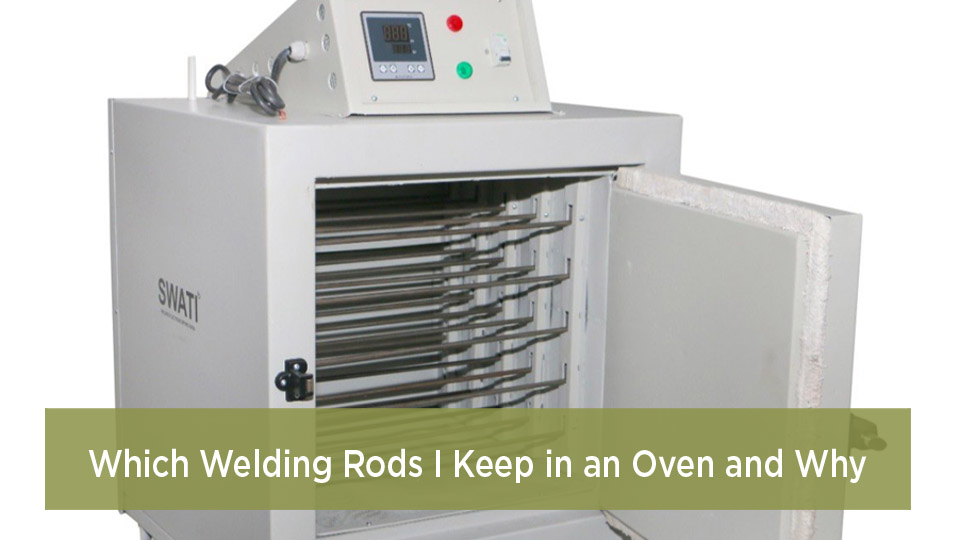
Photo by nova.study
Why Some Welding Rods Need an Oven
“Welding rod” is common shop language, but coated sticks used for shielded metal arc welding are technically electrodes because they conduct current. Their flux coatings are formulated differently. Some coatings need very low moisture; others, especially cellulosic coatings, need a controlled amount of moisture to produce the intended arc.
Low-hydrogen electrodes are packaged to limit moisture pickup because water in the coating can break down in the arc and add hydrogen to the weld. In crack-sensitive steels or highly restrained joints, hydrogen, tensile stress, and a susceptible microstructure can combine to cause delayed cracking in the weld or heat-affected zone.
After an intact hermetically sealed can or vacuum pack is opened, low-hydrogen electrodes are commonly transferred to a holding oven. Manufacturer guidance often places carbon-steel low-hydrogen electrodes in the 225–300°F range, but the exact setting is product-specific. A holding oven is not automatically a reconditioning oven: reconditioning usually requires a higher temperature and a documented soak time.
Note: Let cold cans or cartons warm to shop temperature before opening them. Opening a cold package in warm, humid air can cause condensation on the electrodes and packaging.
Which Welding Rods Require Oven Storage
Low-Hydrogen Electrodes: E7015, E7016, E7018, E8018, E9018, and Similar Classes
Low-hydrogen carbon-steel and low-alloy electrodes need the most careful control after opening. E7018 is common on structural steel, heavy plate, equipment, and other work where hydrogen control matters. Higher-strength low-alloy classes such as E8018 and E9018 can be even less tolerant of uncontrolled atmospheric exposure, so do not copy an E7018 exposure limit onto every “18” electrode.
The last digit in E7018 does not simply mean “low hydrogen.” In the AWS classification system, “E” identifies an electrode, “70” is the minimum tensile-strength class in ksi, “1” indicates all-position usability, and “8” identifies coating and current characteristics. Optional suffixes add more information. Hobart’s AWS classification guide explains these designators, while AWS A5.1/A5.1M:2024 is the classification specification for carbon-steel SMAW electrodes.
H4 means the deposited weld metal meets a diffusible-hydrogen limit of 4 mL per 100 g; R means the coating passed a moisture-resistance test. R does not mean “re-dryable.”
Typical storage: Many manufacturers specify about 250–300°F for opened E7018-type products. For example, the Hobart 7018 XLM data sheet specifies 250–300°F holding and a product-specific reconditioning cycle of 600°F for one hour after a gradual heat-up.
Exposure time: Use the governing project specification or code edition, electrode classification, optional designators, and manufacturer instructions. A four-hour figure sometimes used for standard E7018 should not be presented as a universal limit for E8018, E9018, or every H4R product. The nine-hour test associated with the R designation is a controlled moisture-resistance qualification test, not an automatic jobsite out-of-oven allowance.
Stainless Steel Electrodes: E308L, E316L, and Related Covered Electrodes
Covered stainless electrodes can also absorb moisture and may produce porosity or poor arc performance when stored badly. Critical food, pharmaceutical, chemical, and pressure-service work often uses controlled storage after the package is opened.
Generic charts commonly show 225–260°F holding and 500–600°F reconditioning for stainless stick electrodes, but individual products can differ. For example, the Hobart 308/308L Sterling AP data sheet calls for 215–300°F holding in critical applications and 660°F for two hours when reconditioning after extended exposure. Check the exact E308L or E316L product data sheet instead of relying only on the alloy number.
Nickel, Cast-Iron, Hardfacing, and Other Specialty Electrodes
Many nickel, cast-iron, and hardfacing electrodes also need dry or heated storage after opening, but their temperatures can be far lower than a low-hydrogen carbon-steel rebake. One manufacturer chart, for example, lists nickel electrodes at 225–300°F holding with 400°F for two hours of reconditioning, while cast-iron electrodes are listed at 215–230°F holding and 250–300°F for one hour.
That spread is why “specialty rods” should never be grouped under one 700–800°F rebake rule. Use the label and product data sheet for the exact classification and trade name.
Electrodes That Should Not Go in a Hot Low-Hydrogen Oven
E6010 and E6011 are cellulosic electrodes. Their coatings need moisture for the intended arc force and penetration characteristics. Store them dry at room temperature in closed containers, but do not bake or recondition them like E7018. Manufacturer guidance may also set a maximum storage temperature, such as 130°F.
E6012, E6013, E7014, and E7024 are not handled like low-hydrogen electrodes. They still need protection from water and excessive humidity, and some manufacturers recommend mild heated storage around 100–150°F after opening. That is different from a 250–300°F low-hydrogen holding oven.
Warning: Never put E6010, E6011, cardboard cartons, plastic packaging, or an unknown electrode into a hot oven unless the manufacturer specifically permits it. Excess heat can damage the coating, packaging, or both.
Why Moisture in Welding Rods Causes Problems
Moisture can affect both weld quality and electrode performance. The exact result depends on the electrode, base metal, restraint, heat input, preheat, and other procedure variables.
- Hydrogen-assisted cracking: Cracks may form after the weld cools, especially in hardenable steels, thick sections, high-restraint joints, or work with inadequate preheat.
- Porosity: Gas can become trapped as the weld solidifies, leaving rounded pores or surface pinholes.
- Arc instability and excess spatter: Moisture or damaged coating can make the arc harder to control and may worsen bead appearance.
- Loss of traceability or compliance: Even if a weld looks acceptable, undocumented electrode exposure can violate a WPS, project specification, or quality-control procedure.
Moisture is not the only hydrogen source. Oil, paint, rust, damp base metal, contaminated gloves, and poor cleaning can also contribute. Proper electrode storage works best when it is paired with correct preheat, interpass control, joint preparation, and base-metal cleanliness.
How to Store Welding Rods in an Oven
1. Identify the Electrode and Governing Requirements
Read the full classification and trade name on the package. Then check the product data sheet, WPS, project specification, and applicable code edition. For structural steel, the current American Welding Society publication is AWS D1.1/D1.1M:2025-AMD1, but a contract may legally require a different edition. Follow the edition named by the job documents.
For ASME work, Section IX covers welding, brazing, and fusing qualifications; it is not a stand-alone electrode-storage rulebook. Filler-metal specifications are found in ASME BPVC Section II, Part C, while the construction code, WPS, quality program, and manufacturer instructions can add handling requirements. A National Board inspection article also emphasizes following the rod manufacturer or ASME Section II, Part C, though its reproduced table is from an older ASME edition.
2. Inspect the Package Before Opening
Check for punctures, a lost vacuum, water staining, crushed cans, damaged seals, or long-term storage in wet conditions. An intact hermetically sealed can or vacuum pack normally does not need a preventive rebake before first use unless the product instructions or job requirements say otherwise.
Do not rely on smell, tackiness, or appearance alone. Moisture pickup may not be obvious. Exposure records and package condition are more reliable than a quick shop-floor guess.
3. Set the Correct Holding Temperature
Use the product’s specified holding range. Typical examples are 225–300°F for many low-hydrogen and stainless covered electrodes, but exact values vary. Verify the actual oven temperature with a calibrated or checked thermometer rather than trusting the dial alone.
Allow the oven to recover after the door is opened. Do not pack it so tightly that air cannot circulate around the electrodes.
4. Load Electrodes Without Heat-Damaged Packaging
Remove cardboard, plastic, and any packaging that is not rated for the oven temperature. Place electrodes on clean shelves or in approved dry metal containers, keeping classifications, sizes, heat or lot numbers, and exposure status separated and labeled.
Never mix cellulosic E6010/E6011 with low-hydrogen electrodes in the same hot oven. Moisture transfer and over-drying can harm both groups.
5. Control and Record Atmospheric Exposure
Remove only the quantity needed for the shift or immediate task. On field work, use a heated portable quiver when required. Record the time the package was opened, the time electrodes left the oven, the oven temperature, returns to storage, and any reconditioning.
Pro Tip: Use a simple batch card tied to each can or oven compartment. A time log is more dependable than asking several welders how long a handful of electrodes has been on the bench.
6. Recondition Only When the Product Allows It
Reconditioning, also called re-drying or rebaking, uses a higher temperature than routine holding. Follow the exact ramp, final temperature, and time on the package or data sheet. The soak time generally starts after the electrode mass reaches the specified temperature, not when a cold batch first enters the oven.
Do not assume every low-hydrogen electrode needs 700–800°F. Manufacturer examples range from about 500°F to 800°F for one to two hours, and some specific products use a single value such as 600°F for one hour. Stainless, nickel, and cast-iron electrodes can require different cycles.
Discard electrodes when the coating is cracked, flaking, oil-contaminated, water-soaked, badly damaged, or outside the recovery rules for the job. Reconditioning cannot restore every damaged electrode.
Choosing a Holding Oven, Reconditioning Oven, or Portable Quiver
Holding ovens maintain opened electrodes at a moderate temperature. They may not reach or control the high temperature required for reconditioning.
Reconditioning ovens are designed for higher temperatures and should provide even heat, adequate insulation, temperature verification, and enough space to avoid deep stacking.
Portable heated quivers keep a limited quantity warm near the work. They are useful on field jobs but do not replace a high-temperature reconditioning oven.
Choose equipment by electrode capacity, required temperature range, voltage, duty cycle, thermostat accuracy, door seal, portability, and the job’s documentation needs. A homemade cabinet may hold temperature, but purpose-built equipment is easier to verify and is the safer choice for code-controlled work.
How Many Times Can You Re-dry Welding Rods?
There is no universal rebake count for every electrode. Hobart guidance for low-hydrogen electrodes warns against more than one or two reconditioning cycles, while an ESAB storage guide allows up to three for products covered by that guide. A project specification may be stricter and may require disposal after excessive exposure.
Repeated high-temperature cycles can weaken or crack the coating and may increase later moisture pickup. Log each cycle. If the history is unknown, the coating is damaged, or code compliance cannot be demonstrated, do not use the electrodes for critical or code work.
Welding Rod Storage Requirements Comparison
| Electrode Type | Typical Open-Package Storage | Typical Reconditioning Example | Key Caution |
|---|---|---|---|
| E7018, E8018, E9018 and similar low-hydrogen classes | Often 250–300°F | Often 500–800°F for 1–2 hours; product-specific | Exposure limits vary by classification, suffix, code, and job documents. |
| E6010 and E6011 | Dry, closed storage at room temperature | Not recommended | Do not bake like low-hydrogen electrodes; excessive heat can ruin the coating. |
| E6012, E6013, E7014, E7024 | Dry storage; some guides use about 100–150°F | Common examples near 250–300°F for about 1 hour | Do not store at low-hydrogen holding temperatures unless the manufacturer allows it. |
| E308L, E316L and other stainless covered electrodes | Often 215–300°F for critical work | Product examples range from 500–660°F with different soak times | Alloy number alone does not define the storage cycle. |
| Nickel electrodes | One manufacturer example: 225–300°F | One manufacturer example: 400°F for 2 hours | Use the exact trade-name data sheet. |
| Cast-iron electrodes | One manufacturer example: 215–230°F | One manufacturer example: 250–300°F for 1 hour | Do not apply an E7018 rebake schedule. |
These ranges are examples, not substitutes for the package label, product data sheet, WPS, project specification, or governing code.
Products Worth Considering
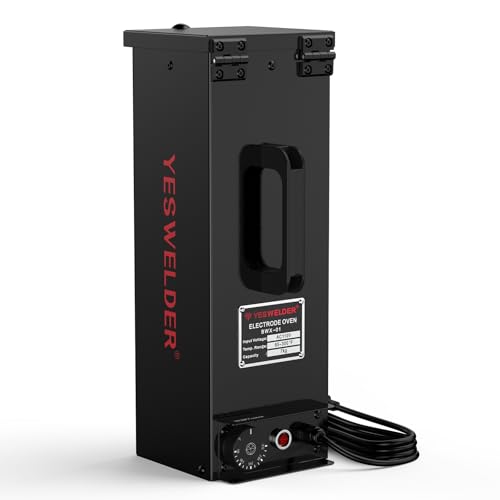
Moisture Protection: Used to prevent moisture from contaminating your welding electrodes to maintain low hydrogen weld deposit properties and ensuring strong, crack-free welds

Extra-Large Capacity: This VEVOR welding rod oven holds up to 200 lbs of 18-inch electrodes. It helps keep welding rods dry, reducing moisture-related cracking and arc instability — extending electrode lifespan and enhancing overall weld quality
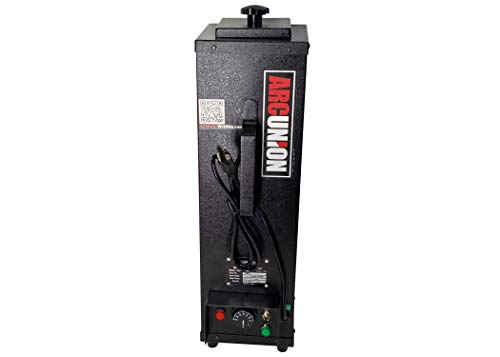
𝐇𝐈𝐆𝐇 𝐐𝐔𝐀𝐋𝐈𝐓𝐘 𝐌𝐀𝐓𝐄𝐑𝐈𝐀𝐋: This Arc Union temperature-controlled welding electrode oven is made of high-quality steel material and has a tough powder-coat finish. This electrode holder confirms being sturdy and durable.
Common Storage Mistakes and Solutions
Leaving Electrodes Out Without Tracking Time
Open containers left on a humid bench make exposure impossible to prove. Solution: Issue small batches, use a heated quiver when required, and log out-of-oven time.
Using One Temperature for Every Electrode
A setting that holds E7018 can over-dry E6010 or be wrong for a stainless, nickel, or cast-iron product. Solution: Separate electrode families and post the approved temperature for each compartment.
Confusing Holding With Reconditioning
A 250°F holding oven may not remove excess moisture, while a 700°F rebake can damage an electrode that only needs mild storage. Solution: label ovens by function and verify that the unit can reach and control the required range.
Heating Cardboard or Plastic Packaging
Original packaging may char, soften, release odors, or contaminate the oven. Solution: remove packaging not rated for the specified temperature and use clean metal shelves or approved containers.
Mixing Electrode Types or Losing Lot Identity
Mixed rods create selection errors and can break traceability. Solution: use separate labeled compartments and retain classification, size, trade name, lot or heat information, opening date, and exposure status.
Relying on a Damp-Smell Test
Moisture pickup is not always visible or detectable by smell. Solution: use package condition, documented exposure, oven records, and manufacturer rules rather than guesswork.
Machine Settings and Rod Compatibility
Storage does not determine welding amperage or polarity. The electrode’s classification, diameter, position, base metal, joint design, and WPS do. Many E7018 products use DCEP or AC, but the product data sheet controls.
For example, Hobart’s 7018 XLM lists 90–160 amps for a 1/8-inch electrode, while its 308/308L Sterling AP lists 80–100 amps for a 1/8-inch electrode in flat and horizontal positions. Those ranges are product examples, not universal values for every E7018 or E308L.
Use a short arc for low-hydrogen and stainless covered electrodes when the product instructions call for it. Keep the base metal free of oil, paint, moisture, heavy rust, and loose scale. Control heat input on stainless steel to limit distortion and metallurgical problems such as sensitization. Joint gap, root face, preheat, interpass temperature, travel speed, and bead width should come from the qualified or approved procedure rather than a blanket 1/16-inch fit-up rule.
Products Worth Considering

E7018 Welding Rod: Diameter: 3/32''; Length: 14"; Weight: 5 lb.

MODEL: E7018 is a low-hydrogen iron powder type electrode that produces high quality x-ray welds. It can be used in all positions on AC or DC reverse polarity welding current.

E7018 Welding Rod: Diameter: 1/8"; Length: 14"; Weight: 10lb.
Safety Considerations
Rod ovens can operate from mild holding temperatures to 800°F or more. Wear heat-resistant gloves, use tongs when appropriate, and keep hot electrodes away from skin, combustible materials, and unprotected work surfaces.
Place the oven on a stable, noncombustible surface with the clearances required by its manual. Inspect the cord, plug, grounding, thermostat, door seal, and heating elements. Do not use a household food oven for welding consumables, and never use an oven with damaged wiring or uncontrolled temperature.
Provide ventilation required by the oven and consumable manufacturer. Remove heat-sensitive packaging before heating. Keep the unit dry, do not overload circuits, and use lockout or unplugging procedures before maintenance.
Warning: Reconditioning temperatures can cause severe burns and fires. Do not improvise a high-temperature rebake in a refrigerator, kitchen oven, plastic container, or unverified cabinet.
Industry Applications
Controlled electrode storage is common anywhere weld quality and traceability are important:
- Structural steel: Project specifications that invoke AWS D1.1 may control low-hydrogen storage, exposure, and rebaking.
- Bridges: Bridge work may use AASHTO/AWS D1.5 and project-specific consumable controls rather than assuming building-code rules apply.
- Oil, gas, and pipelines: Low-hydrogen fill and cap electrodes may need heated storage, while cellulosic E6010, E7010, or E8010 electrodes stay in dry room-temperature containers and are not rebaked like E7018.
- Pressure equipment: The construction code, ASME material specifications, WPS, quality-control program, and manufacturer instructions work together; ASME Section IX primarily addresses qualification.
- Shipbuilding and heavy equipment: Thick, restrained, high-strength weldments often use low-hydrogen consumables with controlled issue and return procedures.
Home and farm shops also benefit from correct storage. If you cannot document the condition of old low-hydrogen electrodes, use a fresh sealed package for a critical trailer, lifting point, structural repair, or other load-bearing job.
Conclusion: Keep the Right Rods Dry Without Overheating the Wrong Ones
Low-hydrogen electrodes such as E7018, E8018, and E9018 usually need heated holding after their sealed package is opened. Many stainless, nickel, cast-iron, and other specialty covered electrodes also need controlled storage, but their temperatures and reconditioning cycles differ.
E6010 and E6011 are the major exception: keep them dry at room temperature and do not bake them like low-hydrogen electrodes. E6013 and similar rutile electrodes need dry storage and may use mild heat, not an E7018 schedule.
The safest rule is simple: identify the exact product, follow the label and data sheet, obey the WPS and job code, verify oven temperature, track exposure, and discard electrodes that cannot be shown to be acceptable. That process produces more consistent welds and avoids both moisture damage and over-dried flux.
Frequently Asked Questions
Why do low-hydrogen rods need to be stored in an oven?
Their coatings can absorb moisture after opening. Heated holding slows moisture pickup and helps preserve the low-hydrogen condition required by the product, WPS, or job specification. Exact temperatures vary by electrode.
Can I use a regular kitchen oven to store welding rods?
No. A food oven can contaminate consumables, may not be designed for continuous industrial holding, and should never be used for both food and welding products. Use a purpose-built rod oven with verified temperature control.
How long can welding rods stay out of the oven?
There is no single limit for every electrode. The allowed time depends on classification, strength level, moisture-resistant designation, atmospheric conditions, manufacturer instructions, and the governing code or project specification. Do not use four hours or nine hours as a universal rule.
Do all welding rods need an oven?
No. Low-hydrogen and many specialty covered electrodes need controlled heated storage after opening. E6010 and E6011 are stored dry at room temperature and should not be rebaked. E6013 may use dry storage or mild heat according to the manufacturer.
What happens if I weld with wet electrodes?
Possible results include porosity, excess spatter, unstable arc behavior, and increased hydrogen-assisted cracking risk. A weld may also fail documentation or inspection requirements even when no defect is visible.
What does a welding rod oven cost?
Cost varies widely with capacity, maximum temperature, portability, insulation, and control accuracy. A small heated quiver costs less than a shop holding cabinet, and a high-temperature reconditioning oven usually costs more than either. Compare current supplier prices after confirming the required temperature range.
Can I store E7018 and E308L in the same oven?
Only when the approved holding ranges overlap and the electrodes remain separated, labeled, and traceable. Never assume two classifications share the same reconditioning cycle. Separate ovens or compartments are safer when their product requirements differ.
What does H4R mean on electrode packaging?
H4 means the deposited weld metal meets a maximum diffusible-hydrogen level of 4 mL per 100 g under the applicable test. R means the coating meets a moisture-absorption resistance test. It does not mean the electrode may automatically stay out for nine hours or that R stands for re-dryable.
What should I do if I do not own a rod oven?
For noncritical work, buy small sealed packages and use them within the manufacturer’s allowed exposure period. For code, structural, pressure, lifting, or other critical work, obtain approved storage equipment or use fresh electrodes under a documented procedure rather than guessing.
How can I tell whether an electrode should be discarded?
Discard it when the coating is cracked, flaking, oil-contaminated, water-soaked, badly rusted, or outside the permitted exposure and recovery rules. For critical work, also discard electrodes with unknown storage or reconditioning history when traceability cannot be restored.
Sources
- American Welding Society — AWS D1.1/D1.1M:2025-AMD1 — current structural-steel code edition and scope.
- Hobart Filler Metals — Oven Storage and Reconditioning of Stick Electrodes — typical storage and reconditioning ranges by electrode family.
- ESAB — Storing and Redrying Stick Electrodes the Right Way — differences between low-hydrogen and cellulosic electrode storage.
- Hobart 7018 XLM Data Sheet — product-specific E7018 holding, reconditioning, polarity, and amperage.
- Hobart 308/308L Sterling AP Data Sheet — product-specific stainless-electrode storage, reconditioning, and amperage.
- ASME BPVC Section II, Part C — specifications for welding rods, electrodes, and filler metals.