Disclosure: As an Amazon Associate, we earn from qualifying purchases. If you click a link on this page and make a purchase, we may receive a small commission at no extra cost to you.
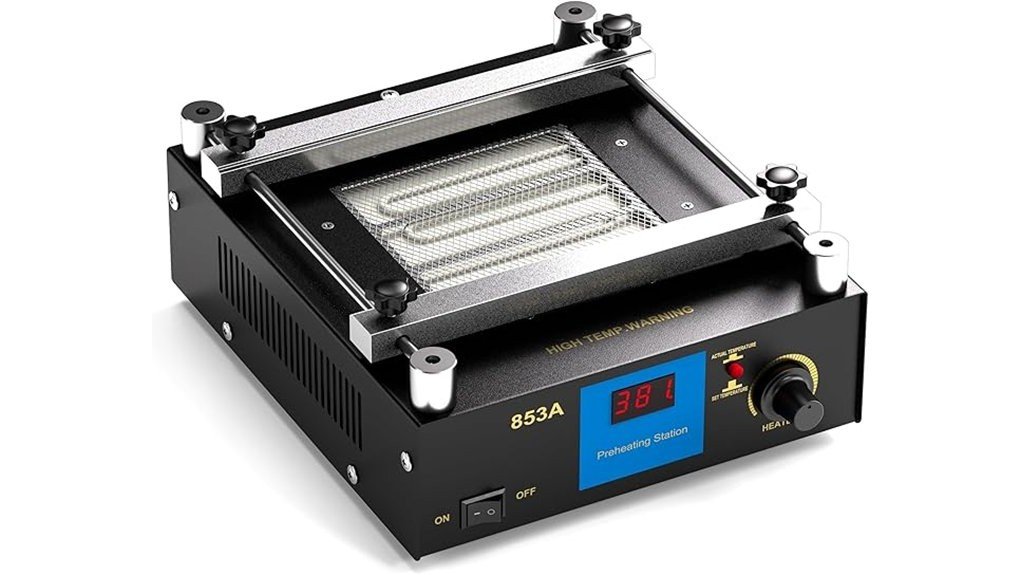
PCB repair gets harder when a board absorbs heat, shifts on the bench, or needs more top-side heat than you expected. The 853A Soldering Hot Plate is built to support that work with a compact heated surface for PCB preheating, SMD rework, and desoldering support. This review helps you decide if its 50-400°C range, infrared ceramic heating, PID control, and 4.72” x 4.72” stainless steel surface fit your repair workflow. It also covers the main limitation: the available product details do not verify the brand, weight, included accessories, or warranty terms.
Quick Verdict
Rating: 8.2/10
Best For: Hobbyists, electronics repair users, and bench technicians who need compact bottom heat for small or medium PCB work.
Bottom Line: The 853A Soldering Hot Plate is worth considering if you want controlled PCB preheating in a small bench setup. Its strongest points are the wide temperature range and digital PID control, while its biggest tradeoff is the small work area and incomplete seller-level details.
Key Specifications
| Specification | Detail |
|---|---|
| Product name | 853A Soldering Hot Plate |
| Model | 853A |
| Product type | Soldering hot plate and PCB preheating platform |
| Heating technology | Infrared heating with ceramic heating elements |
| Temperature range | 50-400°C |
| Control system | Digital display with closed-loop PID temperature control |
| Heating surface | 4.72” x 4.72” working area |
| Surface material | Stainless steel heating surface |
| Board support | Adjustable holding assembly with four thumbscrews |
| Best use | SMD PCB rework, preheating before desoldering, flat IC repair, and bench electronics work |
| Setup style | Stationary bench tool with power access and heat-safe clearance |
| Verification note | Brand, weight, accessories, package contents, and warranty were not verified from the provided article content. |
| Safety note | Use on a stable, heat-safe bench and follow the product instructions for temperature settings, handling, and cooling. |
What Is the 853A Soldering Hot Plate?
The 853A Soldering Hot Plate is a compact bench tool that heats circuit boards and flat electronic parts from below. Instead of relying only on a soldering iron or hot air station, you can use the plate to warm the board before removing parts, reflowing small areas, or working with heat-hungry joints.
Its main article-supported features are infrared ceramic heating, a 50-400°C temperature range, a digital display, and closed-loop PID control. The 4.72” x 4.72” stainless steel surface makes it better for small and medium boards than large laptop boards or wide assemblies. The adjustable holder with four thumbscrews also helps keep the board positioned during careful rework.
Before You Buy: The available product details do not verify the brand, exact weight, included accessories, package contents, or warranty terms. Check the current Amazon listing, seller details, and product manual before ordering if those points matter for your shop.
How We Evaluated It
We evaluated this review around the details supported by the provided article content: heating range, control type, work surface size, board support, and practical repair use. Unsupported claims were kept out, including unverified brand claims, review counts, weight, accessory bundles, warranty coverage, and certifications.
The focus is buyer fit. A compact hot plate can be useful when you already have soldering tools and need bottom heat, but it should not be treated as a full rework station or a large-board preheater.
Who Should Buy It?
Best For
- Electronics repair users who need controlled preheating for small or medium PCBs.
- Hobbyists working on SMD components, flat ICs, and double-sided boards.
- Bench users who want a digital display and PID control instead of a basic fixed-temperature plate.
Skip If
- You need a large preheater for oversized laptop boards or wide workpieces.
- You want a travel-friendly tool for frequent field repair jobs.
- You need confirmed brand, weight, accessory, and warranty information before purchase.
Heating Technology and Efficiency
The 853A uses infrared heating with ceramic heating elements. This helps warm a broader board area from below, which can reduce the amount of direct top heat you need from a soldering iron or hot air tool. For rework on boards that absorb heat quickly, that bottom heat can make the repair process more controlled.
The article-supported 50-400°C range gives you room for gentle warming, stronger PCB preheating, and higher-temperature soldering support. That does not mean you should use the top setting by default. Match the temperature to the board material, solder type, component sensitivity, and product instructions.
Temperature Control and Display
The digital display gives you a clear temperature readout while you adjust the hot plate. This matters when you want repeatable settings across similar repair jobs, such as removing the same type of SMD part or warming several small boards during one bench session.
The closed-loop PID control is designed to keep heating more consistent than a simple on-off control. Stable heat helps when you are working on delicate electronics because sudden swings can make solder behavior less predictable and may raise the risk of overheating nearby parts.
Work Surface and Board Holding
The 4.72” x 4.72” stainless steel heating surface is compact and practical for small PCB work. It can support flat integrated circuits and many small boards, but it is not a full-size preheater. Measure the boards you repair most often before buying.
The adjustable holding assembly uses four thumbscrews to help secure the workpiece. That support is useful when you need to line up a board, keep a component area steady, or use another tool while the board stays in place. Use light pressure, since overtightening can damage delicate board edges.
Compatibility and Safety
This type of hot plate is intended for electronics repair, SMD work, PCB preheating, and desoldering support. Do not use it as a household hot plate, food warmer, or general workshop heater. Keep it on a flat, heat-safe surface with open clearance around the hot area.
The article notes overheating protection, but you should still treat the plate as a high-temperature tool. Keep flammable materials away, avoid touching the stainless steel surface during or after use, and let the plate and board cool before you move them. Wear suitable eye protection and use heat-safe handling tools when your repair process calls for them.
Pro Tip: Start with the lowest temperature that supports the repair, then raise it gradually. This gives you more control and helps limit unnecessary heat stress on small components.
How It Performs in Real Use
For SMD PCB Rework
For SMD work, the 853A makes the most sense when you need the board warmed before applying focused heat from above. The 50-400°C range gives you flexibility for different rework needs, and the digital display helps you return to a setting once you find a safe process for a specific board type.
For Desoldering Support
During desoldering, bottom heat can make stubborn joints easier to work with. The hot plate warms the surrounding board area so your soldering iron or hot air tool does not have to supply all the heat at one point. This can be helpful on boards with ground planes or parts that pull heat away quickly.
For Flat ICs and Double-Sided Boards
The stainless steel surface and holding assembly are useful for flat ICs and some double-sided boards. The compact surface keeps the tool manageable on a bench, but it also means you need to confirm that the heated area matches the part or board you plan to repair.
For Bench Repair Sessions
This hot plate is better for a stable repair bench than a field kit. You need a safe surface, power access, nearby tools, and cooling time after the job. If most of your repairs happen at one workstation, that setup should feel practical.
Setup Tips Before First Use
Place the hot plate on a flat, heat-safe bench with enough clearance around the heating area. Before using it on a valuable board, test your workflow on a scrap board or low-risk part so you can see how quickly the surface heats and cools.
Use the adjustable holder to keep the board stable, but do not clamp delicate edges too tightly. Let the plate reach the set temperature before starting the repair, and give both the board and the plate enough cooling time before handling them directly.
Keep your main soldering tools, tweezers, flux, and heat-resistant handling tools within reach before you start. That reduces rushed movements while the board is hot.
Common Mistakes to Avoid
Do not use the maximum temperature just because the plate can reach 400°C. High heat can make some jobs faster, but it can also increase the risk of board warping, component damage, or accidental burns. Follow the product instructions and use your repair experience to choose a safe working range.
Do not assume the 4.72” x 4.72” work surface will fit every project. If you repair larger boards often, a larger infrared preheater may be a better match. For smaller PCB work, the compact size can be easier to place, manage, and store.
Do not treat bottom heat as a replacement for careful technique. You still need proper solder, flux, airflow or iron control, and safe handling habits.
Pros and Cons
Pros
- 50-400°C temperature range gives you flexibility for different soldering and rework tasks.
- Digital display makes temperature monitoring easier than a basic analog setup.
- Closed-loop PID control supports more consistent heating during bench work.
- Infrared ceramic heating helps with broad PCB preheating from below.
- 4.72” x 4.72” stainless steel surface is useful for small boards, flat ICs, and compact repair jobs.
Cons
- Heating surface may be too small for large boards or wide repair projects.
- Not ideal for fieldwork because it needs a stable heat-safe bench setup.
- Brand, weight, accessories, package contents, and warranty details need seller-level verification.
Is It Worth the Price?
The 853A Soldering Hot Plate can be a strong value if you regularly work on compact PCB repairs and need controlled preheating. It is best for buyers who care about temperature range, a digital readout, and a small work surface more than brand documentation or large-board capacity.
You will get the most value from it if you already use a soldering iron, hot air station, flux, and other electronics repair tools. It is not the best fit if you need a complete professional rework system, a large board preheater, or fully verified manufacturer details before ordering.
How It Compares to Alternatives
Compared with a standard soldering iron alone, the 853A gives you broad bottom heat that can make some desoldering and SMD rework jobs easier. It does not replace a soldering iron, but it can reduce the amount of heat you need to force through one small contact point.
Compared with a hot air rework station, the 853A does not replace focused top heat. It supports that tool by warming the board first, which can make some parts easier to remove or rework.
Compared with larger infrared PCB preheaters, the 853A is easier to fit on a small bench. The tradeoff is work area. Choose a larger preheater if most of your repairs involve laptop boards, large assemblies, or wide workpieces.
Frequently Asked Questions
What is the 853A Soldering Hot Plate best used for?
It is best used for PCB preheating, SMD rework, and desoldering support. It works well when you need a controlled heated surface under a small board or flat component.
Will it replace a hot air rework station?
No. It works better as a support tool. Use it for bottom heat and preheating, then use a soldering iron or hot air station when the job needs focused top-side heat.
Can it be used for lead-free soldering?
The 50-400°C range gives it enough flexibility for many soldering tasks, including jobs that may involve lead-free solder. You should still follow the solder, board, component, and product instructions for safe working temperatures.
How large is the heating surface?
The article-supported heating surface is 4.72” x 4.72”. That size is useful for compact PCB work, but it may not be large enough for oversized boards or wide assemblies.
Does the digital display make a real difference?
Yes. The display helps you monitor and repeat temperature settings more easily. That matters when you want a consistent process across similar boards or components.
Is it portable enough for fieldwork?
It is better suited to bench work than fieldwork. You need a stable heat-safe surface, power access, clearance around the hot area, and time for safe cooling after use.
What safety precautions should you follow?
Use it on a stable heat-safe bench, keep flammable items away, and avoid touching the heated stainless steel surface. Let the plate and board cool before moving them.
What should you verify before buying?
Check the current seller listing for brand, included accessories, weight, warranty, package contents, and any manual details. Those points were not fully verified from the available article content.
The Bottom Line
The 853A Soldering Hot Plate is a recommended option with caveats for hobbyists and electronics repair users who need compact PCB preheating with digital temperature control. Its biggest strengths are the 50-400°C range, infrared ceramic heating, PID control, and bench-friendly design. Skip it if you need a larger work area, strong portability, or fully verified manufacturer details before buying.
Ready to Buy?
Check the latest seller details, package contents, and product information before you decide.