Disclosure: As an Amazon Associate, we earn from qualifying purchases. If you click a link on this page and make a purchase, we may receive a small commission at no extra cost to you.
A dirty soldering tip can slow your work, weaken heat transfer, and make clean solder joints harder to achieve. The AHIER Solder Tip Cleaner is designed to clean your soldering iron tip without a wet sponge, using brass cleaning wire balls inside a compact stainless steel holder. This review helps you decide whether its water-free design, 3-inch size, and simple maintenance make sense for your bench. It is a practical choice if you want fast tip cleaning during electronics work, but it is not a full replacement for safe soldering habits or regular tip care.
Quick Verdict
Rating: 8/10
Best For: Hobbyists, electronics repair users, and bench soldering setups that need quick tip cleaning without water.
Bottom Line: The AHIER Solder Tip Cleaner is a useful add-on if you want to remove oxide and excess solder while keeping the soldering tip hot. The main tradeoff is that you still need safe handling, proper soldering technique, and replacement brass pads when the cleaner wears down.
| Specification | Detail |
|---|---|
| Brand | AHIER |
| Product type | Soldering iron tip cleaner |
| Design | Hemispherical holder with brass cleaning wire balls |
| Diameter | 3 inches, based on the article claim |
| Holder material | Stainless steel, based on the article claim |
| Cleaning material | Brass wire balls or brass pads |
| Water required | No water needed for normal tip cleaning |
| Best use | Removing oxide and excess solder from soldering iron tips |
| Compatibility | General soldering iron tip cleaning, based on article-supported use |
| Safety note | Use in a ventilated area, handle hot tools carefully, and replace brass pads as needed. |
Key Takeaways
- The AHIER Solder Tip Cleaner uses brass cleaning wire balls to remove oxide and excess solder from soldering iron tips.
- Its water-free cleaning method helps you avoid the temperature drop that can happen when using a damp sponge.
- The article-supported design includes a hemispherical stainless steel holder and a compact 3-inch diameter.
- It is best used as a bench accessory for electronics repair, hobby soldering, and regular tip maintenance.
- You still need safe soldering habits, ventilation, and careful handling around hot tools and lead-based solder.
What Is the AHIER Solder Tip Cleaner?
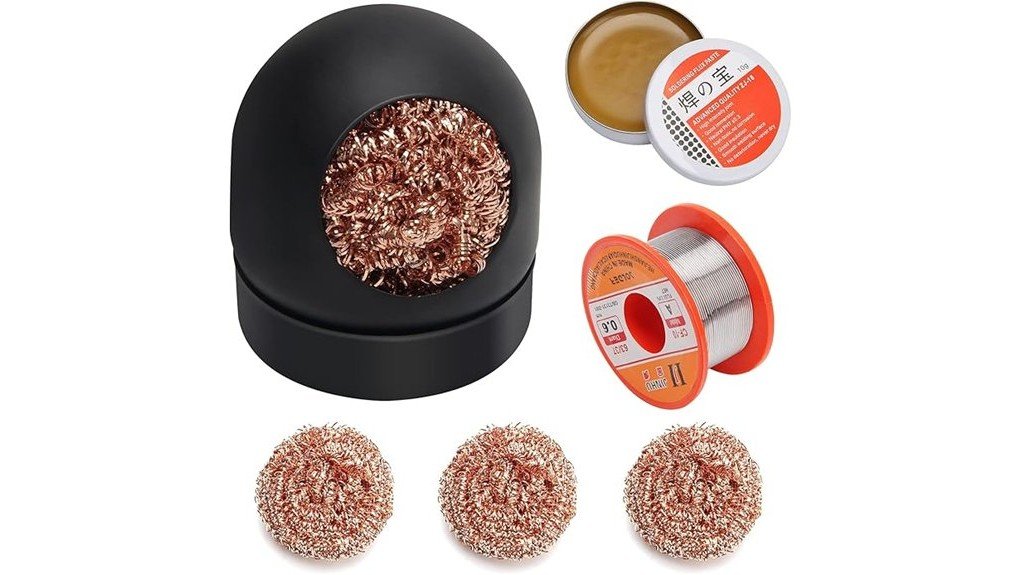
The AHIER Solder Tip Cleaner is a soldering bench accessory that helps remove built-up solder and oxidation from the tip of your soldering iron. Instead of using a damp sponge, it relies on brass cleaning wire balls held inside a hemispherical stainless steel structure.
The main benefit is speed and heat retention. Because the cleaner does not need water, you can wipe the tip during a soldering session without cooling it as much as a wet sponge can. That matters when you are trying to keep consistent heat on small joints, wires, PCB pads, or repair work.
Its compact 3-inch diameter makes it easy to keep near your soldering station. It is most useful for users who clean their tip often and want a simple add-on that does not take much bench space.
Before You Buy: This cleaner helps maintain a soldering tip, but it does not fix a badly damaged, heavily pitted, or worn-out tip. If your tip no longer tins properly after cleaning and re-tinning, you may need a replacement tip.
Who Should Buy It?
Best For
- You want a water-free way to clean your soldering iron tip during bench work.
- You use a soldering iron often enough that a regular sponge feels slow or messy.
- You need a compact cleaner for electronics repair, hobby projects, or small workshop use.
Skip If
- You need a full soldering station, iron, stand, or fume-control setup.
- Your soldering tips are already damaged beyond normal cleaning.
- You prefer a wet sponge and do not mind the temperature drop during cleaning.
Features and Benefits of the AHIER Solder Tip Cleaner
The biggest feature is the brass cleaning wire. When you insert the soldering tip into the brass ball, the soft metal helps scrape away oxidation and excess solder without needing water. That makes the process quick, simple, and less disruptive during a soldering job.
The hemispherical stainless steel holder gives the brass wire a stable place to sit on your bench. This helps keep the cleaning material contained, which is useful if you work around small components, wire trimmings, solder, flux, and other bench clutter.
The design also helps reduce solder ball breakage compared with rougher or poorly supported cleaning methods. For you, that means less mess around the work area and a cleaner tip between joints.
Design and Build Quality
The article-supported build includes a stainless steel structure and brass cleaning wire balls. Stainless steel is useful for the holder because it gives the cleaner a firmer shell, while brass is useful for the contact area because it cleans without needing the pressure or moisture of a sponge.
The 3-inch diameter makes it a small bench accessory rather than a large station. You can place it near your soldering iron stand, beside your solder spool, or next to your work mat so you do not have to move far between joints.
The design is simple, which is a benefit. There are no controls, cords, batteries, or setup steps. You place it on the bench, use the brass wire to clean the tip, and replace the brass pad when it becomes too dirty or worn to clean well.
Cleaning Performance
The AHIER cleaner is made to remove two common problems: oxide buildup and excess solder. Oxide can make a soldering tip less effective, while excess solder can leave messy joints or make the tip harder to control. Cleaning the tip often helps you keep better contact with the workpiece.
Because it does not rely on water, the cleaner helps your soldering iron hold temperature better during repeated tip wipes. That can be helpful when you are working through a row of components or joining several wires in one session.
The cleaner works best as part of a normal soldering routine. Clean the tip, re-tin it when needed, and avoid letting the iron sit hot for long periods with a dry or dirty tip.
Comparison With Traditional Cleaning Methods
Traditional tip cleaning often uses a damp sponge or cloth. That method can work, but moisture can cool the soldering tip and may slow you down if you need steady heat for repeated joints. A wet sponge also needs water nearby, which can be inconvenient on a compact electronics bench.
The AHIER cleaner avoids that problem by using brass cleaning wire instead. You can clean the tip without adding moisture, which helps preserve heat and makes quick touch-ups easier during active soldering.
A damp sponge may still be useful for some users, especially if you already have one built into your soldering stand. The AHIER cleaner makes more sense if you want a cleaner, drier, and faster bench process.
Pro Tip: Keep the cleaner close enough that you can wipe the tip before each important joint. A clean, lightly tinned tip usually gives you better heat transfer than a dirty tip with old solder crusted on it.
How It Performs in Real Use
For Electronics Repair
For electronics repair, the AHIER cleaner is useful because you often need quick control over small solder joints. Cleaning the tip between joints helps reduce old solder buildup and gives you a cleaner contact point on wires, terminals, and PCB pads.
For Hobby Projects
For hobby work, the simple design is easy to understand. You do not need to wet a sponge, prepare a separate cleaning cup, or change your full setup. You can keep it beside your soldering iron and use it whenever the tip starts looking dull or overloaded with solder.
For Longer Bench Sessions
During longer soldering sessions, the water-free design becomes more useful. Since you are not repeatedly touching the tip to a damp sponge, the iron is less likely to lose heat during cleaning. That can help you keep a steadier workflow.
For Small Workspaces
The 3-inch diameter makes the cleaner a good fit for small desks, repair benches, and compact hobby stations. It is not a large organizer or stand, so you still need a safe place to rest the hot iron between uses.
How to Use It Correctly
Place the AHIER cleaner on a stable, heat-safe work surface near your soldering iron stand. When the tip needs cleaning, hold the iron by its insulated handle and gently insert the tip into the brass wire. A few light wipes are usually better than pressing hard.
After cleaning, check whether the tip still looks dull or oxidized. If needed, add a small amount of solder to re-tin the tip before continuing. A clean and tinned tip helps heat transfer more evenly.
Do not touch the brass wire or holder while your iron is hot, and do not grab used brass pads right after a soldering session. Let the cleaner cool before handling, emptying, or replacing the cleaning material.
Safety Considerations and Usage Tips
Soldering safety still matters, even with a simple tip cleaner. Always work in a well-ventilated area, especially when using flux or lead-based solder. A cleaner tip can improve your work, but it does not remove fumes from the air.
Keep the cleaner away from children, pets, loose paper, fabric, and other clutter. The cleaner itself does not power on or heat up, but it can become hot when used repeatedly with a soldering iron.
If you use lead solder, wash your hands after soldering and avoid eating or drinking at the workbench. Follow the instructions for your soldering iron, solder, flux, and cleaner so you do not create unsafe habits around hot tools or metal residue.
Cleaning and Maintenance
The brass cleaning wire should be replaced when it becomes packed with solder waste, loses its shape, or stops cleaning effectively. Keeping worn brass pads in place too long can make the cleaner less useful and may leave more residue on the tip.
Let the cleaner cool before maintenance. Then remove the brass pad carefully and replace it with a compatible brass cleaning pad. Avoid washing the brass wire with water unless the product instructions allow it, since the main advantage of this cleaner is dry use.
Store the cleaner in a dry place when not in use. This helps keep the holder and cleaning material ready for your next soldering session.
Pros and Cons
Pros
- Brass cleaning wire removes oxide and excess solder without water.
- Helps preserve soldering iron tip temperature better than a damp sponge.
- Compact 3-inch design fits easily on most small workbenches.
- Stainless steel holder keeps the brass cleaning material contained.
- Simple design has no power, controls, or setup steps.
Cons
- Brass pads need replacement when they become dirty or worn.
- Does not replace a soldering iron stand, fume control, or proper tip care.
- May not restore tips that are already badly damaged or heavily pitted.
Is It Worth the Price?
The AHIER Solder Tip Cleaner looks like a strong value for the price if you solder often and want a cleaner tip without using a wet sponge. Its value comes from its simple design, compact size, and water-free cleaning method rather than advanced features.
You will get the most value from it if you work on electronics, wires, repairs, or hobby projects where tip condition affects your results. It is also worth considering if you want a cleaner bench process with fewer water-related steps.
It is not the best fit if you only solder once in a while or already prefer a sponge built into your soldering station. You may also need to buy replacement brass pads over time, so treat it as a small maintenance accessory.
How It Compares to Alternatives
Compared with a damp sponge, the AHIER cleaner is better for dry cleaning and heat retention. A sponge can still work, but it needs water and can cool the tip more during repeated cleaning.
Compared with generic brass wool cups, the AHIER model stands out because the article-supported design includes a stainless steel hemispherical holder and compact 3-inch diameter. If you want the lowest-cost option, a basic sponge may be enough. If you want faster dry cleaning at your bench, the AHIER cleaner makes more sense.
Frequently Asked Questions
How long does the AHIER Solder Tip Cleaner last?
The holder should last a long time with normal bench use, but the brass cleaning wire will wear down with repeated cleaning. Replace the brass pad when it becomes packed with solder waste, loses its shape, or stops cleaning the tip well.
Can I use it with any soldering iron?
The article supports general use with soldering irons, but you should still use it carefully with the size and shape of your tip. Avoid forcing delicate or specialty tips into the brass wire with heavy pressure.
Is it better than a wet sponge?
It can be better if you want to clean the tip without water and avoid the temperature drop that can happen with a damp sponge. A sponge may still be fine for occasional soldering or for users who already like that method.
Is it easy to replace the brass pads?
Yes, replacement is straightforward in normal use. Let the cleaner cool first, remove the worn brass pad, and insert a compatible replacement pad so the cleaner can keep removing old solder effectively.
Does it clean a badly oxidized soldering tip?
It can help remove normal oxide buildup and excess solder, but it may not save a tip that is badly damaged or no longer tins properly. If cleaning and re-tinning do not restore the tip, replacement may be the better choice.
What maintenance does the cleaner need?
Check the brass wire after your soldering sessions and replace it when it becomes too clogged to work well. Keep the holder dry, let it cool before handling, and avoid using it as a place to rest a hot iron.
Who should skip this solder tip cleaner?
Skip it if you need a complete soldering station, iron holder, or fume extractor rather than a small cleaning accessory. You may also skip it if your current sponge setup works well and you rarely solder.
The Bottom Line
The AHIER Solder Tip Cleaner is a smart buy for everyday soldering if you want a compact, water-free cleaner that helps remove oxide and excess solder from your iron tip. It is best for hobbyists and electronics repair users who clean their tip often, but you should skip it if your tip is already damaged or you need a full soldering station instead of a small bench accessory.