Disclosure: As an Amazon Associate, we earn from qualifying purchases. If you click a link on this page and make a purchase, we may receive a small commission at no extra cost to you.
Messy flux application can make small electronics repairs harder than they need to be. Too much paste can spread across nearby pads, while too little can leave dull joints, poor wetting, or extra rework. The ALLECIN No Clean Soldering Flux 558 is built for controlled PCB soldering with a 10CC syringe, press-style plunger, and needle dispensing tips. This review helps you decide whether its low-smoke rosin paste formula fits your repair bench, hobby kit, or small component rework needs.
Quick Verdict
Rating: 8/10, recommended with caveats
Best For: PCB repair, SMD work, BGA touch-ups, IC removal, and precision electronics soldering
Bottom Line: The ALLECIN 558 gives you precise flux placement in a compact 10CC syringe, which helps when you work around small pads and tight components. It is not the right choice for heavy industrial soldering, and no-clean residue may still need light cleaning on sensitive boards.
| Specification | Detail |
|---|---|
| Brand | ALLECIN |
| Model | AEC-558-SFP |
| ASIN | B0D2D7F8XB |
| Product Type | No-clean soldering flux paste |
| Form | 10CC / 10mL syringe paste |
| Material | Rosin synthetic resin flux paste |
| Flux Color | White |
| Control Method | Press-style syringe plunger |
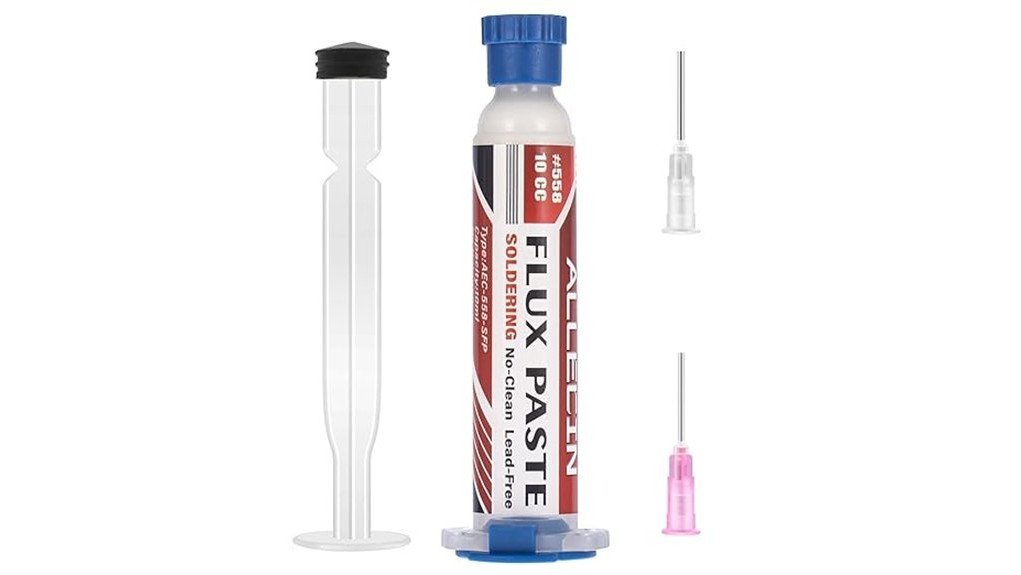
| Included Accessories | Plunger and two needle dispensing tips |
| Key Traits | Lead-free, non-corrosive, non-conductive, moisture-proof, low volatility, less smoke |
| Applications | PCB, BGA, SMD, IC removal, and electronics repair work |
| Package Dimensions | 5.59 x 2.13 x 1.26 inches |
| Item Weight | 1.41 ounces |
| Power Requirement | No batteries required |
What Is the ALLECIN No Clean Soldering Flux 558?
The ALLECIN No Clean Soldering Flux 558 is a white rosin-based flux paste for electronics soldering and circuit board repair. It comes in a 10CC syringe, so you can press out a small amount instead of brushing flux across a wide area.
The AEC-558-SFP model is made for PCB, BGA, SMD, and IC-related work. That makes it most useful for small repair jobs, rework, hobby electronics, and component-level soldering where control matters.
Its main selling point is precision. The included plunger and two needle tips help you place flux near small pads, pins, and joints without flooding the board.
Key Features and Benefits
This flux focuses on controlled application, cleaner working behavior, and electronics-friendly residue control. It is not meant to replace every type of flux, but it gives you a practical option for common bench repairs.
Precision Syringe Application
The 10CC syringe design gives you better control than a wide-mouth tub or brush bottle. You can place a small dot of paste on a pad, IC leg, or solder joint without coating nearby traces.
This matters when you work on dense boards. Over-application can make inspection harder, attract dust, or leave more residue than you want.
Rosin-Based Paste Formula
The listing describes the flux as a rosin synthetic resin paste. Rosin flux is common in electronics because it helps reduce oxidation and supports smoother solder wetting during heating.
The paste format also stays where you put it better than many thin liquid fluxes. That helps when you work on small pads or need flux to remain in place until the iron touches the joint.
Low Smoke and Low Volatility
ALLECIN markets this flux as less-smoke and low-volatility. That can make small repair work more comfortable, especially when you solder several joints in one session.
You should still use ventilation. Flux fumes can irritate some users, and a small fan or fume extractor is a smart part of any electronics bench.
No-Clean Residue Control
No-clean flux is designed to leave residue that usually does not require a full wash step after soldering. That can save time during basic repairs and hobby projects.
No-clean does not mean no residue at all. Clear or white residue may still appear depending on heat, dosage, solder type, and board surface condition.
Pro Tip: Start with a pinhead-sized amount on each joint. You can always add more flux, but removing excess paste from tight PCB areas takes extra time.
Compatibility and Best Use Cases
The ALLECIN 558 makes the most sense for electronics work, not plumbing, stained glass, or heavy metal soldering. Its listing points to PCB, BGA, SMD, and IC removal tasks, so keep it focused on circuit board repair.
You can use it for small pads, component leads, rework points, and desoldering assistance. It is especially useful when solder refuses to wet a pad evenly or when an older joint needs fresh flux before reflow.
Before You Buy: This is flux only, not solder paste. You still need solder wire, solder paste, or another solder source to complete the joint.
How to Use It Correctly
Clean the work area first, especially if the board has dust, oil, or old burnt residue. Flux helps solder flow, but it cannot fix a damaged pad, wrong soldering temperature, or dirty metal surface by itself.
Attach the needle tip, press the plunger gently, and apply a small amount to the joint or pad. Heat the joint with your soldering iron, add solder if needed, and inspect the result under good light.
After soldering, check the board for excess residue. For sensitive work, fine-pitch components, or boards that will see humidity, light cleaning with isopropyl alcohol may still be a good idea.
Common Mistakes to Avoid
- Do not cover a large board area when only one joint needs flux.
- Do not touch the needle tip to a hot soldering iron.
- Do not assume no-clean residue is invisible or always acceptable.
- Do not use flux to hide weak technique, overheated pads, or poor solder choice.
- Do not store the syringe uncapped, because paste can dry near the tip.
Safety and Handling Notes
The listing describes this flux as lead-free, non-corrosive, and non-conductive. Those traits suit electronics repair, but you should still handle it like a soldering chemical instead of a household paste.
Work in a ventilated area, avoid skin and eye contact, and wash your hands after use. Keep the syringe capped and store it away from children, pets, food surfaces, and direct heat.
If you repair critical equipment, medical electronics, automotive control modules, or expensive boards, follow the product label and your normal professional inspection process. Flux can improve solder flow, but it does not replace proper testing.
How It Performs in Real Use
For PCB Repair Work
The fine dispensing tips help you apply flux near small pads without spreading paste across the full board. That is useful when you reflow a dull joint, repair a broken lead, or touch up a connector.
For SMD Components
The paste consistency helps the flux stay in place around small surface-mount parts. It can help solder wet component ends more evenly when you use the right iron temperature and a clean tip.
For BGA and IC Rework
The listing includes BGA and IC removal as intended applications. For simple IC leg work, the syringe format gives you better placement control than a brush, but advanced BGA repair still needs proper tools and experience.
For Hobby Electronics Projects
Beginners can use this flux for kits, small repairs, and practice boards. The syringe helps reduce waste, but new users should practice dosing because too much flux can still make joints messy.
Who Should Buy It?
Best For
- Electronics repair hobbyists who need controlled flux placement
- PCB, SMD, BGA, and IC rework tasks on small boards
- Users who prefer syringe paste over liquid flux pens or brush bottles
Skip If
- You need plumbing flux, brazing flux, or heavy industrial soldering flux
- You want a fully water-washable flux system for production cleaning
- You expect no-clean flux to leave no visible residue in every situation
Pros and Cons
Pros
- 10CC syringe helps place flux on small joints with less waste
- Includes a plunger and two needle tips for controlled dispensing
- Rosin paste format stays in place better than many thin liquids
- Lead-free, non-corrosive, and non-conductive claims fit electronics work
- Useful for PCB, SMD, BGA, and IC repair tasks
Cons
- Not suitable for plumbing, large metal joints, or heavy industrial soldering
- No-clean residue may still need alcohol cleaning on sensitive boards
- Syringe dosing takes practice if you are new to paste flux
Need Precision Flux for PCB Work?
Check the current product details before you add it to your repair kit.
Is It Worth the Price?
The ALLECIN 558 is best viewed as a budget-friendly bench supply for electronics repair, small projects, and occasional rework. You get a 10CC syringe, plunger, and dispensing tips in a compact package, which gives it practical value for controlled soldering jobs.
It offers strong value if you want a small amount of flux for PCB repairs instead of a large workshop container. The main limitation is that it depends on correct dosage, clean working technique, and proper storage after opening.
If you repair electronics often, this can be a smart add-on to your soldering wire, wick, iron tips, and cleaning supplies. If you only solder large metal parts, you should choose a flux made for that material and process.
How It Compares to Alternatives
Compared with liquid flux pens, the ALLECIN 558 gives you more controlled placement and less spreading. A flux pen can be faster for broad pad areas, but it is less precise around tight IC pins.
Compared with open tubs of gel flux, the syringe is cleaner to store and easier to dose. Compared with solder paste, this product does not contain solder alloy, so you still need a separate solder source.
Frequently Asked Questions
Is ALLECIN No Clean Soldering Flux 558 safe for PCB electronics?
Yes, it is designed for PCB and electronics soldering. The listing describes it as non-corrosive and non-conductive, but you should still use careful dosing and inspect the board after soldering.
Does no-clean flux mean I never have to clean the board?
No-clean flux is made to reduce cleaning needs, not to guarantee a spotless board. You may still want to clean visible residue with isopropyl alcohol on sensitive, fine-pitch, or high-reliability repairs.
Is this the same as solder paste?
No. This is flux paste, not solder paste with metal alloy mixed in. You still need solder wire, solder paste, or another solder source to form the joint.
What soldering tasks is it best for?
It works best for PCB repair, small component soldering, SMD touch-ups, BGA-related work, and IC removal support. It is not the right choice for plumbing or large metal soldering jobs.
Can beginners use this flux?
Yes, beginners can use it for practice boards and small repairs. The key is to apply a very small amount first, because excess flux can make the board harder to inspect and clean.
What comes in the package?
The listing describes a 10CC / 10mL syringe-style flux paste with a plunger and two different needle dispensing tips. That setup helps you apply flux more precisely than a brush or open container.
Can I use it with lead-free solder?
The product is marketed as lead-free and intended for electronics soldering. For best results, match your flux, solder alloy, iron temperature, and board material to the job you are doing.
How should I store the syringe after opening?
Keep the syringe capped and store it in a cool, dry place away from heat, dust, children, and pets. Wipe the tip before capping it if paste remains around the needle opening.
The Bottom Line
The ALLECIN No Clean Soldering Flux 558 is a strong choice if you need precise, low-smoke rosin flux for PCB repair, SMD work, and small electronics projects. You should skip it if you need heavy-duty industrial flux, plumbing flux, or a water-washable system for full post-process cleaning.
Its biggest strength is the controlled 10CC syringe format with needle dispensing tips. Its main limitation is that no-clean flux can still leave residue, so careful application and inspection matter.