By Alfred Chase · Published September 28, 2025 · Last updated August 7, 2026
One of my biggest shop wake-up calls came when a soldered stainless joint failed after I used a flux that was not made for the base metal. The joint looked acceptable at first, but the solder had not wetted the surface correctly. That experience taught me to check the flux chemistry, solder alloy, base metal, and cleanup requirements before applying heat.
The important distinction is that this guide covers soldering flux. Soldering flux removes surface oxides, limits new oxidation during heating, and helps molten solder wet the joint. It does not control a MIG or TIG arc, replace shielding gas, or make soft solder suitable for structural repairs.
Quick Answer
The main soldering-flux families are rosin or resin flux, no-clean flux, water-soluble organic-acid flux, plumbing acid flux, and tinning flux. Choose by the base metal, solder alloy, cleanup method, and end use. Electronics and plumbing fluxes are not automatically interchangeable, and brazing requires a separate high-temperature flux system unless the specified filler and base-metal combination is designed to be self-fluxing.
Key Takeaways
- Rosin, resin, and many no-clean products are common choices for electronics, but the exact IPC classification matters more than the marketing name alone.
- Water-soluble electronics flux normally needs thorough cleaning. It is not the same thing as every water-flushable plumbing paste.
- Plumbing acid and tinning flux should never be used on circuit boards unless a product manufacturer expressly approves that use.
- Stainless steel, aluminum, brazing alloys, and other difficult metals need a flux specifically formulated for those materials and temperatures.
- Never use soft solder as a substitute for a specified engineered repair on an axle, suspension part, frame, pressure vessel, lifting component, or other safety-critical structure.
Which Type of Soldering Flux Should You Use?
The fastest way to choose flux is to start with the application, not the color, texture, or label word “paste.” The chemistry must match the base metal and solder, while the residue must match the cleanup process and finished service environment.
| Job | Flux to Start With | Cleanup Rule |
|---|---|---|
| PCB, wire, connector, or electronics hand soldering | Documented electronics-grade rosin, resin, or qualified no-clean flux | Follow the exact flux data sheet; clean when required by reliability, coating, inspection, or residue condition |
| Washable electronics assembly | Electronics-grade water-soluble organic-acid flux when the process is designed for it | Prompt, validated washing and complete drying |
| Copper plumbing | Plumbing flux approved for the tube, fitting, solder, and service; ASTM B813-compatible flux is commonly specified for copper tube work | Wipe and flush according to the product and plumbing requirements |
| Stainless steel | Stainless-specific activated flux matched to the exact alloy and solder | Remove residue exactly as the manufacturer specifies |
| Aluminum | Aluminum-specific flux and solder system | Expect product-specific residue removal; some aggressive aluminum fluxes are unsuitable for electronics |
| Brazing | Brazing flux matched to the filler and base metals, unless the approved filler/base-metal combination is specified as self-fluxing | Follow the brazing-filler and flux procedure rather than soldering-flux instructions |
At a Glance
| Time Required | About 5–30 minutes to select, prepare, solder, clean, and inspect a small joint; larger plumbing work takes longer |
| Difficulty | Beginner to intermediate, depending on the material and joint |
| Tools Needed | Compatible soldering iron or torch, correct flux and solder, cleaning supplies, eye protection, heat-resistant work surface, and local fume extraction |
| Cost | Varies by flux chemistry, package size, compatible solder, and required cleaner; check current product pricing before buying |
)
Image by Lazada [VERIFY: confirm image license and required attribution]
What Is Soldering Flux and What Does It Do?
Metal surfaces begin forming oxides when they are exposed to air. Heating speeds up oxidation, and molten solder does not wet a heavily oxidized or contaminated surface well. Instead of spreading across the joint, the solder may bead up, pull away, or form a weak-looking lump.
Soldering flux supports the joint in three main ways:
- Oxide removal: Its activators loosen or chemically react with surface oxides.
- Protection during heating: The flux limits contact between the hot metal and oxygen while the solder flows.
- Improved wetting: A properly selected flux helps molten solder spread across compatible, clean metal surfaces.
Flux does not replace mechanical cleaning, correct joint clearance, adequate heat, or a compatible solder alloy. It also does not guarantee that every residue is harmless. Some residues may remain only when the product and completed process have been designed and qualified for that condition.
The safest rule is to use the least aggressive flux that reliably wets the joint and still meets the finished product’s cleanup and service requirements.
Warning: Heated flux can irritate the eyes and respiratory system. Keep your face out of the plume and capture fumes close to the work with local exhaust. Wear eye protection, follow the safety data sheet, and do not assume that a small room fan provides adequate control. NIOSH identifies inhalation and respiratory irritation hazards from heated rosin-core solder flux products. If you are comparing bench fume-control equipment, see our solder smoke absorber review.
Soldering, Brazing, and Welding Flux Are Different
Soldering, brazing, and welding may all join metals, but they use different temperatures, filler materials, joint designs, and flux products.
| Process | What Melts | Flux Guidance |
|---|---|---|
| Soldering | A low-melting filler metal; the base metal remains solid | Use soldering flux approved for the base metal, solder alloy, and cleanup process |
| Brazing | A higher-temperature filler metal; the base metal remains solid | Use brazing flux with the required active temperature range, unless the specified filler is self-fluxing on the exact base-metal combination |
| Welding | The base metal is normally melted and fused | Shielding may come from gas, electrode coatings, or flux inside welding wire; do not apply soldering paste to a weld joint |
The Copper Development Association’s brazing-flux guidance states that brazing fluxes differ in composition from soldering fluxes and that the two cannot be used interchangeably. Flux requirements also depend on the filler and metals: some BCuP-series fillers are self-fluxing for specified copper-to-copper joints, while BAg-series fillers and other material combinations require the appropriate brazing flux.
How Do IPC Soldering-Flux Classifications Work?
For electronics, the current IPC J-STD-004D standard classifies and characterizes soldering flux materials used for electronic interconnections. Revision D is the current revision and was published in December 2023. A classification such as ROL0 communicates more than a marketing term such as “rosin” or “no-clean.”
The code is built from three parts:
- RO, RE, OR, or IN: Rosin, resin, organic, or inorganic chemistry
- L, M, or H: Low, moderate, or high activity
- 0 or 1: The product’s halide-content category under the standard’s test limits
The final digit should not be treated as a universal “zero-halogen” marketing claim. A manufacturer can provide an IPC classification such as ROL0 while separately reporting halogen-related formulation information. Use the product’s technical data sheet for the exact chemistry, compatible alloys, process temperatures, cleaning instructions, storage conditions, and residue qualifications.
Note: “No-clean” is a process and residue designation, not a single flux chemistry. A no-clean product may be rosin-based, resin-based, organic, or another qualified formulation. Likewise, “paste,” “gel,” “pen,” and “cored wire” describe physical forms rather than activity levels.
Rosin and Resin Flux for Electronics
Rosin flux is traditionally made from refined pine-derived material. Synthetic resin flux serves a similar role in many modern products. These fluxes are widely used for circuit boards, terminals, connectors, switches, and tinned wire because they can provide controlled activity without the aggressiveness of plumbing acid.
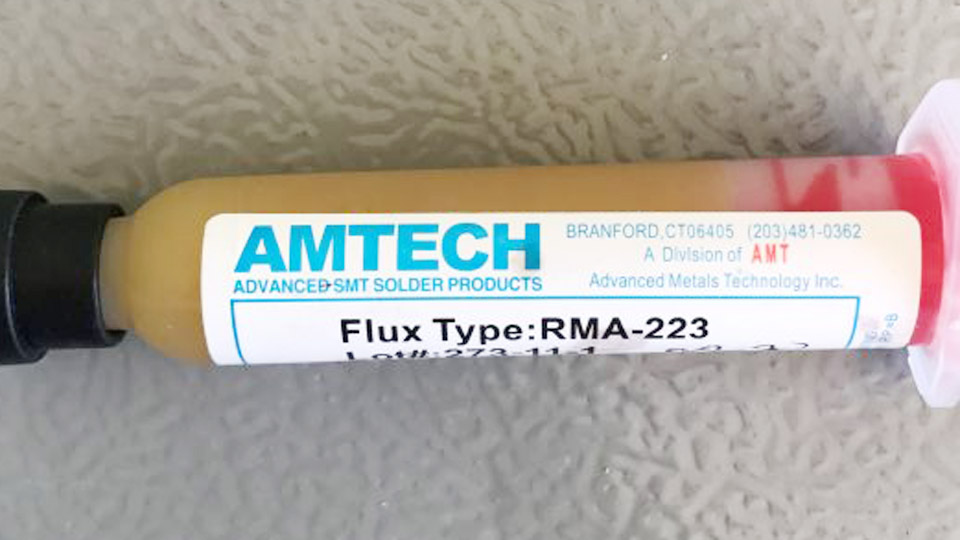
Older labels include R, RMA, and RA for rosin, mildly activated rosin, and activated rosin. Modern electronics products often provide an IPC code such as ROL0 or ROL1. Use the product’s current data sheet rather than assuming that every rosin flux has the same activity or residue.
| Aspect | Advantages | Limitations |
|---|---|---|
| Typical activity | Available in mild through activated formulas | Mild products struggle with dirty or heavily oxidized surfaces |
| Cleanup | Some qualified residues may remain | Residue may interfere with coating, testing, appearance, or high-impedance circuits |
| Applications | PCBs, wires, connectors, and general electronics repair | Usually unsuitable for plumbing, aluminum, or stainless unless the product says otherwise |
For hand soldering, use an iron with enough thermal capacity for the joint and the lowest practical tip temperature that completes the connection promptly. A small conical tip at very high temperature often performs worse than a correctly sized chisel tip at a controlled temperature.
Pro Tip: Tin the iron tip with fresh solder, place the tip so it contacts both surfaces, and feed solder into the heated joint rather than melting a large blob directly on the tip.
No-Clean Flux for Electronics and Wire Harnesses
No-clean flux is designed so its correctly processed residue can remain on an assembly when the product is used within its approved process window. It is common in electronics manufacturing, wire harnesses, rework, and prototypes where a separate cleaning process may be impractical.
The name does not mean that the flux vanishes or that any residue is safe under every condition. Incomplete heating, contamination, excessive flux, moisture, tight component standoffs, conformal coating, optical surfaces, and high-impedance circuits can all change the decision.
Kester’s research on no-clean flux residue explains that board cleanliness and acceptable residue depend on the assembly, process, and service environment. Residues that are incompletely processed or trapped under difficult geometries can contribute to leakage and electrochemical-migration risk.
For a product-specific example of how these claims should be evaluated, see our no-clean soldering flux paste review.
| Aspect | Advantages | Limitations |
|---|---|---|
| Process | Can eliminate a dedicated wash step | Must be applied and heated within the approved process |
| Residue | Often low, clear, and dry after correct processing | May still require removal for coating, optics, inspection, testing, or harsh service |
| Best use | Clean, solderable electronics and harness components | Not a cure for corrosion, oil, dirt, or severe oxidation |
When cleaning is required, use a cleaner and method approved for that exact flux and assembly. Isopropyl alcohol removes some residues but can smear or incompletely dissolve others.
Water-Soluble Flux: Electronics and Plumbing Are Not the Same
The phrase “water-soluble flux” can cause confusion because it is used around both electronics and plumbing products. The products may differ greatly in chemistry, residue, application, and regulatory listing.
Water-Soluble Organic-Acid Flux for Electronics
Electronics-grade organic-acid flux is usually more active than mild rosin or many no-clean formulations. It can improve wetting on difficult electronic surfaces, but its residues normally require prompt and thorough cleaning with the specified water process, often using controlled water quality such as deionized water.
Use it only when the assembly can be washed and fully dried. Avoid it on transformers, switches, cables, porous components, unsealed parts, or assemblies that can trap rinse water unless the manufacturing process has been validated for them.
Water-Flushable Plumbing Flux
Plumbing paste is formulated for copper tube and fittings, not circuit boards. A suitable plumbing flux may be water-flushable, petroleum-based, or supplied as a tinning formula. Follow the flux, solder, fitting, and local-code requirements as one complete system.
For U.S. plumbing that supplies water for human consumption, the EPA’s Safe Drinking Water Act guidance defines lead-free solder and flux as containing no more than 0.2% lead for covered applications. Confirm that the products are approved and certified for the intended potable-water system.
Warning: Never put plumbing acid or tinning paste on an electronic circuit board. The residue can corrode conductors, damage components, and create leakage paths even when the joint initially looks good.
| Aspect | Advantages | Limitations |
|---|---|---|
| Activity | Good oxide removal and wetting when matched to the job | Residue may remain corrosive if the required wash is incomplete |
| Cleanup | Designed for a defined water-cleaning or flushing process | Water alone does not make every product interchangeable or safe |
| Applications | Available for electronics or plumbing as separate product families | The label must expressly match the application |
Inorganic Acid Flux for Sheet Metal and Difficult Surfaces
Inorganic acid flux may contain zinc chloride, ammonium chloride, or other strong activators. It can remove oxides from difficult non-electronic metal surfaces, but it leaves residues that require careful removal.
Common applications include selected sheet-metal work, gutters, radiators, galvanized sheet, and other non-electronic assemblies when the product manufacturer approves the base metal and solder. It should not be treated as a general-purpose solution for stainless steel, cast iron, exhaust systems, or structural steel.
| Aspect | Advantages | Limitations |
|---|---|---|
| Activity | Aggressive oxide removal on approved metals | Can attack metal and finishes if misused or left behind |
| Cleanup | Effective when the manufacturer’s wash procedure is followed | Mandatory and product-specific |
| Applications | Selected plumbing and sheet-metal work | Never for circuit boards or an unapproved food-contact surface |
Do not assume that the residue neutralizes itself as it cools. Do not improvise a vinegar or baking-soda bath unless the manufacturer specifically instructs you to use it. Follow the technical data sheet and safety data sheet, including rinse temperature, cleaner concentration, and disposal instructions.
Heating galvanized metal can create hazardous zinc-containing fumes. OSHA’s welding, cutting, and brazing requirements include specific ventilation provisions for zinc-bearing metals. Use an approved procedure, control fumes at the source, and avoid heating coatings that the product instructions do not address.
Tinning Flux for Copper Plumbing
Tinning flux contains solder powder suspended in the flux. As the fitting is heated, the particles melt and leave a thin tinned layer that can improve wetting on properly prepared copper. Oatey describes its No. 95 Tinning Flux as a petrolatum-based flux containing tinning powder to help pre-tin pipe.
It is useful on approved copper plumbing fittings, larger joints, and situations where an installer wants visible pre-tinning. It does not fill a badly fitted joint, repair deep corrosion, or turn soft solder into a structural filler.
| Aspect | Advantages | Limitations |
|---|---|---|
| Wetting | Deposits a thin solder layer as the joint heats | Does not correct poor cleaning or improper clearance |
| Cleanup | Follows the product’s plumbing cleanup instructions | Excess residue can contribute to corrosion |
| Applications | Copper tube, fittings, and approved plumbing work | Not intended for precision electronics |
Do not mix tinning flux 50/50 with another flux. Mixing products can change their activity, viscosity, residue, shelf life, and regulatory suitability. Use the product as supplied unless its manufacturer publishes a different instruction.
Specialty Flux for Stainless Steel, Aluminum, and Jewelry
Stainless steel and aluminum form tough, stable oxide layers. A flux that works well on copper wire may do almost nothing on these metals. Use a specialty solder and flux system that names the exact base metal.
- Stainless steel: The British Stainless Steel Association notes that aggressive flux is generally needed to remove stainless-steel oxide. Use a product matched to the stainless grade and remove residue as directed.
- Aluminum: Aluminum rapidly forms a tenacious oxide layer. Indium Corporation’s aluminum-soldering guidance uses aluminum-specific flux and solder systems and warns that some aggressive aluminum fluxes are not suitable for electronic applications.
- Jewelry and precious metals: Match the flux to the solder alloy, metal, finish, and heating process. Keep products containing fluorides or other aggressive compounds within their labeled temperature range.
- Silver brazing: Use brazing flux rather than rosin electronics flux, unless the filler and base-metal manufacturer expressly specifies a flux-free process.
Always test an unfamiliar specialty product on scrap of the same alloy and finish before working on a valuable part. For a safety-critical part, use only a joining method specifically approved for that application.
Products Worth Considering

Specialized Core: Designed for soldering aluminum, stainless steel, nickel sheets, and zinc flakes.

Designed for Stainless Steel & Tough Metals – Specially formulated for stainless steel, nickel, brass, and other hard-to-solder surfaces where general fluxes fail.

Country Of Origin: Mexico
Does Flux Form Matter? Liquid, Gel, Paste, Pen, and Flux-Core Solder
Flux chemistry tells you how the product reacts with oxides and what residue it leaves. Physical form tells you how the flux is delivered. A gel is not automatically no-clean, and a paste is not automatically plumbing flux.
- Liquid flux: Spreads easily over multiple pads, wires, or larger areas. It can be applied with a bottle, brush, or dispenser.
- Gel or tacky flux: Stays where it is placed and is useful for rework, surface-mount parts, and localized hand soldering.
- Paste flux: A broad physical description used for different chemistries, including plumbing and specialty products. Read the label rather than choosing by texture.
- Flux pen: Provides controlled application on small electronics areas, provided the chemistry is appropriate for the board.
- Flux-cored solder wire: Carries flux inside the solder wire so flux is delivered as the solder melts. Additional flux may still be useful for rework or oxidized surfaces, but it is not automatically required for every clean joint.
The practical rule is to select the chemistry and IPC classification first, then choose the delivery form that gives you the application control you need.
Products Worth Considering


✔️EXCELLENT QUALITY :High purity, Advanced RMA -Rosin Midly Activated- Liquid flux formula, RoHS Certificate Compliant, Organic, Environmental friendly soldering liquid flux . Formulation for electronic soldering applications. It is effective in removing oxides from Tin-Lead, Lead-free, Gold, Silver and Copper alloys.

1.This Solder Wick And Solder Flux Paste Can Be Used To Correct Mistakes With Small Boards On Pcbs, Remove Relays And Other Components From Printed Circuit Boards, Re-Solder Mechanical Keyboard Switches, Unsoldering Old Wire From Devices, Desoldering Computer Parts Such As A Motherboard.
Soldering Flux Comparison Chart
| Flux Type | Best For | Typical Activity | Cleanup | Main Caution |
|---|---|---|---|---|
| Rosin or resin electronics flux | PCBs, terminals, wires, and connectors | Low to high, depending on classification | Product-specific; some residue may remain | Not automatically suitable for dirty metal or plumbing |
| No-clean electronics flux | Clean electronics and harness assembly | Usually low to moderate | May remain only under the approved process | Residue is not harmless after every heating profile |
| Water-soluble electronics flux | Assemblies that can be thoroughly washed | Moderate to high | Prompt, validated water cleaning | Trapped residue or rinse water can damage assemblies |
| Water-flushable plumbing flux | Copper tube and fittings | Moderate to high | Wipe and flush as directed | Not for electronics |
| Inorganic acid flux | Approved sheet-metal and difficult-metal work | High | Mandatory product-specific cleaning | Highly corrosive residue if left behind |
| Tinning flux | Approved copper plumbing work | Product-specific | Follow plumbing product instructions | Contains solder powder but does not replace final solder |
| Stainless or aluminum specialty flux | The exact alloy named by the product manufacturer | Often more aggressive than ordinary electronics flux | Usually strict and product-specific | Do not assume a mechanical-joining flux is safe for electronics |
| Brazing flux | High-temperature brazing alloys and approved metals | Matched to a defined temperature range | Remove according to the brazing-flux instructions | Not interchangeable with ordinary soldering flux |
How to Choose the Right Flux
- Identify the joining process. Decide whether the work is soldering, brazing, or welding before selecting any consumable.
- Identify every base metal and coating. Copper, tinned copper, brass, stainless steel, aluminum, nickel plating, and galvanized steel do not have the same oxide behavior.
- Choose the solder or brazing filler. Confirm that the filler is compatible with the metals and expected service temperature.
- Check the end use. Electronics, potable water, food-contact equipment, refrigeration, jewelry, and structural work have different requirements.
- Decide whether the assembly can be cleaned. Consider trapped spaces, switches, transformers, cable insulation, porous materials, and conformal coatings.
- Read the technical data sheet and safety data sheet. Confirm IPC classification where applicable, activity, working range, application amount, cleaning method, storage, and shelf life.
- Use the least aggressive effective product. More activity can improve oxide removal, but it also increases cleanup and corrosion risk.
- Test on scrap. Use the same material, finish, joint clearance, filler, and heat source whenever possible.
How to Apply Flux for Electronics Soldering
- Disconnect power. Remove batteries and discharge stored energy according to the equipment service procedure.
- Inspect the surfaces. Replace badly corroded components rather than trying to bury damage under flux and solder.
- Clean as needed. Remove grease, dirt, loose oxidation, old adhesive, and incompatible residue with a material-safe cleaner.
- Apply a small amount of electronics-grade flux. Coat only the surfaces that need to wet.
- Select the right tip. A tip that contacts both sides of the joint transfers heat more effectively than a tiny overheated point.
- Heat the joint. Touch the iron to the pad and lead or both conductors at the same time.
- Feed solder into the joint. Let the heated surfaces melt the solder and draw it across the connection.
- Remove the solder, then the iron. Hold the parts still while the joint solidifies.
- Clean when required. Use the cleaner, water quality, rinse, and drying procedure specified for the flux.
- Inspect and test. Look for complete wetting, correct solder volume, bridges, disturbed joints, damaged insulation, and remaining residue. Perform the appropriate continuity or functional test.
How to Use Plumbing Flux on Copper Tube
The Copper Development Association’s Copper Tube Handbook provides detailed soldering and brazing guidance. The following sequence is a general overview; the fitting, solder, flux, torch, and local code instructions control the job.
- Shut off, drain, and make the work area safe. Keep combustible materials away and use a heat shield where needed.
- Cut the tube square. Ream the inside and remove outside burrs without reducing the tube wall.
- Dry-fit and check engagement. Damaged, loose, oval, or badly corroded parts should be replaced.
- Clean the mating surfaces. Brighten the outside of the tube and inside of the fitting with the approved abrasive or brush.
- Apply a thin, even coat of compatible flux. Avoid packing the fitting with excess paste.
- Assemble the joint fully. Wipe away visible excess from the outside.
- Heat the fitting evenly. Keep the flame moving and protect nearby valves, wiring, finishes, and combustible surfaces.
- Touch solder to the joint. When the joint is hot enough, the solder should melt from joint heat and be drawn around the fitting.
- Remove heat and let the joint cool naturally. Do not move the assembly while the solder solidifies.
- Clean and flush as directed. Remove external residue and complete any required system flushing before service.
- Inspect and test. Follow the applicable pressure-test procedure only after the joint and surrounding components are ready.
Pro Tip: If the solder will not draw into a clean copper fitting, stop adding solder. Uneven heat, moisture in the line, poor surface preparation, damaged parts, or burned flux are more likely causes than a shortage of solder.
Flux Cleanup Guide
| Flux Family | General Cleanup Approach |
|---|---|
| Rosin or resin electronics flux | Use the specified flux remover or approved solvent. Verify compatibility with plastics, markings, coatings, and adhesives. |
| No-clean electronics flux | Leave only when the product and process allow it. If removal is needed, use a cleaner proven to dissolve that residue rather than merely spreading it. |
| Water-soluble electronics flux | Wash promptly using the specified water quality, temperature, pressure, and drying process. |
| Plumbing flux | Wipe external residue and flush the system according to the product, installation, and code requirements. |
| Inorganic acid or specialty flux | Follow the manufacturer’s complete cleaning and neutralization instructions. Do not substitute an improvised chemical bath. |
After cleaning, inspect around component bodies, wire strands, fitting edges, seams, and other places where residue can hide. An assembly is not clean merely because the visible surface looks shiny.
Common Flux and Soldering Problems
Solder Beads Up or Refuses to Wet
Likely causes include the wrong flux, oxidation, grease, a non-solderable finish, inadequate joint heat, or an incompatible solder alloy. Stop and identify the material rather than adding more flux blindly.
Flux Turns Dark or Crusty Before Solder Flows
The joint may be overheating, heating too slowly, or using a flux outside its working range. Use a larger, correctly shaped iron tip or a better heating method instead of raising the temperature without limit.
A Board Becomes Sticky or Develops White Residue
The cleaner may be incompatible, the residue may have been only partly dissolved, or rinse contamination may remain. Repeat the approved cleaning process and verify that the board is fully dry.
Corrosion Appears After Soldering
Suspect an aggressive flux, incomplete cleaning, trapped moisture, incompatible materials, or contamination from tools. Remove the part from service until the damage and remaining residue are evaluated.
A Copper Plumbing Joint Leaks
Common causes include water remaining in the line, poor cleaning, burned flux, uneven heating, damaged tube or fitting, movement during cooling, or inadequate solder flow. Reheating a contaminated joint repeatedly may make the problem worse; disassemble and remake it when necessary.
A Joint Cracks Under Load
Confirm that soldering is an approved joining process for the load and temperature. Soft solder is not a structural repair method for trailer axles, suspension parts, frames, lifting equipment, pressure vessels, or other safety-critical components.
Flux in Welding, HVAC, and Hybrid Fabrication Work
When soldered electronics are mounted near a part that will later be welded, keep the electronics and flux residue away from the weld zone. Welding heat, arc current, electromagnetic interference, spatter, and grounding paths can damage sensors and wiring.
- Remove soldering residue, oil, paint, plating, and other contaminants from the weld-preparation area.
- Disconnect or physically remove sensitive electronics before welding whenever the equipment manufacturer requires it.
- Attach the welding return clamp as directed and close to the work to reduce unwanted current paths.
- Do not expect soldering flux to improve a TIG or MIG weld.
Refrigerant piping is a separate high-risk application. Copeland instructs technicians to flow nitrogen during assembly brazing to prevent internal copper-oxide formation. Its service guidance also warns that if refrigerant is recovered from only one side of a system, a pressurized refrigerant-and-oil mixture can remain and may ignite if it escapes into a brazing flame. See the Copeland brazing and service guidance.
For a fuller procedure focused on that application, see our guide to brazing HVAC copper lines without leaks.
Warning: Do not heat, solder, braze, cut, or open a charged refrigerant system unless you are qualified and authorized to perform the work. Recover refrigerant from all required parts of the system and follow the equipment manufacturer’s procedure and applicable law.
How to Store Flux
Flux shelf life and storage conditions vary by formulation. Some solder pastes require refrigeration, while many liquid, gel, rosin, and plumbing products specify controlled room-temperature storage. Use the printed expiration date and technical data sheet.
- Keep the container tightly closed and clearly labeled.
- Prevent contamination from used brushes, solder particles, abrasives, and other fluxes.
- Do not add water, alcohol, solvent, or another flux unless the manufacturer authorizes it.
- Do not return dispensed material to the original container.
- Discard flux that is expired, separated beyond the manufacturer’s recovery instructions, contaminated, crystallized, or otherwise outside specification.
A warm-water shake is not a universal way to revive expired flux. It may introduce moisture or change the concentration and residue behavior.
Frequently Asked Questions
What is the best flux for electronics soldering?
There is no single best flux for every electronic assembly. For normal hand soldering and repair, start with a documented electronics-grade rosin, resin, or qualified no-clean flux with an IPC classification suited to the process. If you choose a water-soluble electronics flux, make sure the assembly can be thoroughly washed and dried. Reliability requirements, component geometry, solder alloy, and cleanup capability should decide the final choice.
Can I solder without separate flux?
Yes, when enough compatible flux is already present in flux-cored solder wire or solder paste. That is different from soldering with no flux at all. Most conventional exposed metal surfaces oxidize, so a compatible flux is normally part of a reliable soldering process. Extra flux is most useful during rework, desoldering, or when the existing flux supply is not enough for the joint.
Can I use the same flux for soldering and brazing?
Generally, no. Soldering and brazing fluxes are designed for different temperature ranges, filler alloys, and base metals. Use the flux specified by the brazing-filler or process manufacturer. Ordinary rosin electronics flux is not a general-purpose silver-brazing flux.
What is the difference between soldering flux and welding flux?
Soldering flux cleans and protects surfaces so a low-melting filler can wet them. Welding flux, such as the material inside flux-cored welding wire or on a coated electrode, helps shield the molten weld and may form slag. The products are not interchangeable.
How do I clean flux residue without damaging the work?
Use the cleaning method in the flux technical data sheet. Some rosin residues need a compatible solvent, water-soluble electronics flux normally needs a controlled water wash, and plumbing or acid flux requires its specified wipe, rinse, or neutralization process. Test cleaners on plastics, coatings, markings, and adhesives first.
Is flux necessary for every soldering project?
Most practical soldering processes use flux, including flux contained inside cored solder wire or solder paste. A separate application may not be needed when enough compatible flux is already present, but soldering without any flux is unreliable on most exposed metal surfaces.
Does flux expire, and should I refrigerate it?
Flux does expire, but there is no universal shelf life or storage temperature. Follow the label and technical data sheet. Refrigerate only when the manufacturer requires it, and allow refrigerated material to reach the specified working temperature before opening to reduce condensation risk.
Can I use plumbing flux on electronics?
No, unless the manufacturer expressly lists the exact product for electronics. Plumbing acid and tinning flux can leave corrosive or conductive contamination that damages circuit-board traces, component leads, wire strands, and connectors.
What flux should I use for stainless steel or aluminum?
Use a specialty flux and solder system that specifically names the alloy. Stainless and aluminum develop difficult oxide layers, and ordinary rosin or plumbing flux may not work. Some aluminum and stainless fluxes are aggressive and may be unsuitable for electronics, so follow the exact residue-removal procedure.
Does no-clean flux mean I should never clean it?
No. It means the correctly processed residue may be allowed to remain under defined conditions. Cleaning may still be required for conformal coating, high-impedance circuits, optics, testing, harsh environments, appearance, or residue that was not heated correctly.
Conclusion
The best flux is not simply the strongest one on the shelf. It is the least aggressive product that reliably wets the chosen metal and solder while meeting the finished assembly’s safety, cleanup, code, and service requirements.
For electronics, begin with a documented electronics-grade rosin, resin, or qualified no-clean flux suited to the required reliability level. Use water-soluble electronics flux only when you have a complete washing and drying process. For copper plumbing, choose a flux and lead-free solder approved for the system. For stainless, aluminum, brazing, refrigeration, or structural work, stop relying on general rules and follow the material and equipment manufacturer’s procedure.
I still test unfamiliar combinations on scrap before committing to the real part. The difference now is that the test starts with the product classification and technical data sheet—not a guess based on the color, texture, or marketing name of the flux.
Sources
- IPC J-STD-004D: Requirements for Soldering Fluxes — current electronics flux classification and characterization standard
- Kester: Why Clean a No-Clean Flux — residue, cleanliness, and reliability considerations
- NIOSH Pocket Guide: Rosin Core Solder Pyrolysis Products — exposure routes, symptoms, and occupational guidance
- OSHA 29 CFR 1910.252 — ventilation and flux/fume requirements for welding, cutting, and brazing operations
- U.S. EPA Safe Drinking Water Act Lead Limits — lead limits for solder and flux used in covered drinking-water plumbing
- Copper Development Association: Copper Tube Handbook — preparation, soldering, brazing, flux application, and copper-tube installation guidance
- Copper Development Association: Brazing Fluxes — distinction between soldering and brazing flux and filler-specific flux guidance
- British Stainless Steel Association: Soldering Stainless Steels — stainless preparation and flux guidance
- Indium Corporation: Soldering to Aluminum — aluminum oxide, specialty flux, solder, and cleanup considerations
- Oatey No. 95 Tinning Flux — manufacturer documentation for solder-containing tinning flux
- Copeland Application Bulletin AE4-1472 R2 — nitrogen brazing guidance, refrigerant recovery, and fire precautions