Disclosure: As an Amazon Associate, we earn from qualifying purchases. If you click a link on this page and make a purchase, we may receive a small commission at no extra cost to you.
Small electronics repairs often fail because the solder does not wet the joint cleanly, especially on oxidized pads, tiny SMD parts, or rework areas. The ALLECIN No Clean Soldering Flux is a 559-style, 30CC/30mL rosin flux paste made for electronics soldering, circuit board maintenance, and home appliance repair work. Its press-style syringe design helps you place flux where you need it instead of flooding the board. This review helps you decide if it is a practical choice for your bench, and where a more specialized flux or professional repair support may still make sense.
Quick Verdict
Rating: Recommended with caveats
Best For: Hobbyists, electronics repair users, and technicians who want a no-clean rosin flux in a controlled syringe applicator.
Bottom Line: ALLECIN No Clean Soldering Flux is useful for PCB, BGA, SMD, SMT, IC removal, and small electronics repair tasks where precise placement matters. The main tradeoff is that “no clean” does not mean residue-free, so sensitive boards may still need careful inspection and cleaning based on the job.
| Specification | Detail |
|---|---|
| Brand | ALLECIN |
| Model / Type | No Clean Soldering Flux 559 |
| Product type | Electrical soldering flux paste for electronics |
| Volume | 30CC / 30mL |
| Flux color | White |
| Material | Rosin |
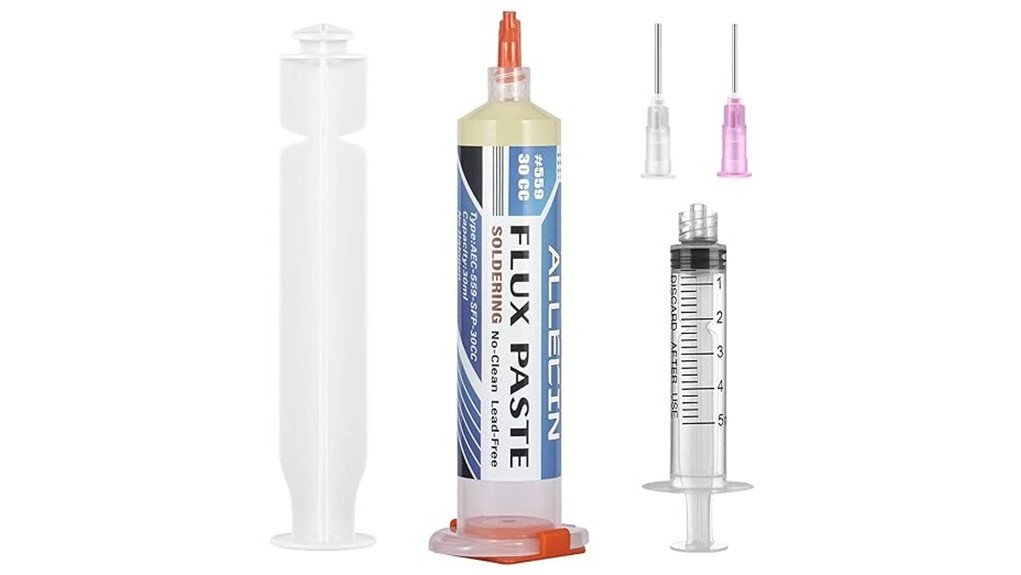
| Applicator design | Press / pusher-style syringe with needle dispensing tool |
| Package quantity | Pack of 1 piece |
| Listed applications | PCB, BGA, SMD, SMT, IC removal, home appliance repair, and meter repair |
| Battery requirement | No batteries required |
Key Takeaways
- ALLECIN No Clean Soldering Flux 559 is a 30CC/30mL rosin flux paste for electronics repair and circuit board work.
- The press-style syringe and needle dispensing tool help you apply flux to pads, pins, and small repair areas with better control.
- It is listed for PCB, BGA, SMD, SMT, IC removal, home appliance repair, and meter repair tasks.
- The no-clean formula can reduce routine cleanup, but visible or sticky residue may still need removal on sensitive boards.
- It is a smart bench supply for hobby electronics and repair work, but it is not a substitute for solder, wick, hot air, or proper ventilation.
What Is the ALLECIN No Clean Soldering Flux?
The ALLECIN No Clean Soldering Flux 559 is an electrical soldering flux paste packaged in a 30CC/30mL press-style syringe. Flux helps solder flow, wet metal surfaces, and bond more cleanly during electronics repair. This version uses a rosin material and is designed for circuit board and component-level work.
The listing positions it for PCB soldering, BGA work, SMD and SMT tasks, IC removal, home appliance repair, and meter repair. That makes it more suitable for electronics benches than plumbing-style fluxes, which should not be used on circuit boards.
The main buying appeal is controlled placement. Instead of dipping a brush into a jar or spreading too much flux across a board, you can use the needle dispensing tool to place a small amount near the joint.
Before You Buy: This is a flux paste, not solder. You still need the correct solder wire or solder paste, a suitable soldering iron or hot air station, ventilation, and basic electronics repair tools.
Who Should Buy It?
Best For
- Hobbyists repairing small electronics, wires, pads, and through-hole joints.
- Technicians working on PCB, SMD, SMT, BGA, or IC removal tasks.
- Buyers who want syringe-style flux instead of a jar or brush bottle.
Skip If
- You need a complete soldering kit with solder, wick, tips, and cleaning tools.
- You want a fully documented professional flux with a published technical data sheet.
- You are repairing high-value boards and cannot test on a scrap board first.
Features and Benefits of ALLECIN No Clean Soldering Flux
ALLECIN No Clean Soldering Flux focuses on practical bench use. The 30CC/30mL syringe gives you enough product for repeated small jobs, while the pusher control helps limit waste when you only need a small dot of flux.
The product is described as lead-free, stable in performance, and low in volatility. That can make it easier to work around small components, but you should still use ventilation because soldering fumes can come from flux, solder, board coatings, and heated residue.
This 559-style rosin flux is best viewed as a precision aid for electronics soldering, not as a cure-all for poor heat control, dirty pads, or damaged components.
Design and Applicator Control
The press-style syringe is the strongest day-to-day feature. You open the tube cover, install the needle, open the bottom cover, attach the pusher, place the needle near the soldering area, and press gently. This setup helps you apply flux to tight spots without coating the whole board.
That control matters for SMD parts, IC pins, and small pads. Too much flux can spread under nearby parts and make inspection harder. A needle applicator helps you use less product and keep the work area easier to manage.
The tradeoff is that syringe flux can be messy if you press too hard or leave the cap off. Keep the needle capped when you are done, and store it upright when possible.
Pro Tip: Apply a tiny amount first, then add more only if the solder still refuses to wet the pad. Excess flux can hide bridges and make cleanup harder.
Flux Performance for Electronics Repair
For everyday electronics work, this flux is most useful when solder looks dull, balls up, or refuses to flow onto a pad. Flux helps remove light oxidation and supports smoother wetting when your iron temperature, solder alloy, and surface prep are correct.
It is listed for PCB, BGA, SMD, SMT, and IC removal work. Those are tasks where controlled flux placement matters because pads and component leads sit close together. You still need steady heat control and the right tip size for the job.
For larger home appliance and meter repairs, the flux can help on small boards, connectors, and wire joints. It is not intended for plumbing, cookware, automotive battery terminals, or structural metal work.
No-Clean Residue and Cleanup
No-clean flux is designed to reduce the need for routine post-solder cleaning. That is useful when you are doing quick repairs, reflowing a joint, or working on a board where aggressive cleaning could disturb tiny parts.
Still, no-clean does not mean invisible or residue-free. Flux residue may remain as a thin film, glossy patch, or tacky area. On sensitive circuits, high-impedance areas, RF sections, or boards that need a clean finish, inspect the area after soldering and clean only with methods that are safe for that board.
When cleaning is needed, follow the board maker’s guidance or use electronics-safe cleaning practices. Avoid water, harsh household cleaners, or scraping around fragile components unless you know the board can handle it.
Compatibility and Safety
This product is made for electronic soldering flux use, and the listing mentions PCB, BGA, SMD, SMT, IC removal, home appliances, and meters. Use it only on electronics repair work where rosin no-clean flux is appropriate.
Work in a ventilated area and avoid breathing fumes directly. Gloves, eye protection, and an ESD-safe setup are smart choices when you handle boards, heated tools, and chemical residues. Keep the syringe capped and away from children, pets, and food-prep areas.
Do not use this as a substitute for training on high-voltage devices. If you are repairing power supplies, appliances, or equipment with large capacitors, discharge and safety procedures matter more than the flux you choose.
Applications and Use Cases
The versatility of ALLECIN No Clean Soldering Flux makes it useful for several common electronics repair jobs. It can support cleaner solder flow on PCB pads, component leads, and repair areas where oxidation makes soldering harder.
It also suits SMD and SMT work because the syringe can place flux near small joints without covering the entire board. That helps when you are touching up a component, adding solder to a pin, or preparing a part for removal.
Home appliance boards and meters can also benefit from a small amount of flux during connector repair or joint rework. Just make sure the board is powered off, discharged, and safe to handle before you start.
How It Performs in Real Use
For PCB Touch-Ups
For dull or uneven solder joints, a small amount of this flux can help solder reflow more smoothly. It is most helpful when the pad is still intact and the problem comes from oxidation, poor wetting, or not enough flux in the original solder.
For SMD and SMT Components
The needle-style applicator helps you place flux along small component pads and pins. That control is useful when you want to reduce solder bridges and keep the repair area easier to inspect.
For IC Removal and Rework
When you use hot air or a soldering iron for IC removal, flux can help solder joints heat and release more evenly. Use it sparingly, protect nearby parts, and avoid overheating the board.
For Home Appliance and Meter Repairs
The flux can help with board-level repairs inside appliances and meters, especially around connectors and small solder joints. It will not fix cracked boards, failed components, or unsafe electrical faults by itself.
How to Use It Correctly
- Clean the area first: Remove dust, loose debris, and obvious contamination before applying flux.
- Use a small amount: Place flux directly on the pad, pin, or joint instead of spreading it across the board.
- Match your heat to the job: Use the right soldering iron tip, temperature range, and contact time for your solder and component.
- Inspect after soldering: Look for bridges, dull joints, lifted pads, and leftover residue near sensitive parts.
- Cap it after use: Close the syringe and needle when you finish so the flux stays easier to dispense later.
User Experience and Feedback
Buyer feedback for this type of flux often focuses on controlled application and improved solder flow. The ALLECIN design supports that by combining a 30mL supply with a press-style syringe and needle dispensing tool.
Users who work on circuit boards will likely appreciate the ability to target small areas. That is especially useful for SMD pads, IC pins, connector rework, and appliance board repairs where broad flux application can make cleanup more difficult.
The main user-experience limitation is documentation. The listing provides key product details, but buyers who need a detailed data sheet, exact chemistry, or process-controlled production specs may want a professional-grade flux from a brand with published technical documents.
Pros and Cons
Pros
- 30CC/30mL size gives you a practical amount for repeated small electronics jobs.
- Needle dispensing tool helps with precise placement on pads, pins, and tight board areas.
- Listed for PCB, BGA, SMD, SMT, IC removal, appliance repair, and meter repair.
- Rosin no-clean formula can reduce routine cleanup after many repair tasks.
- No batteries or powered setup needed, so it fits easily into a basic soldering kit.
Cons
- No-clean flux can still leave residue, so some boards may need inspection or careful cleaning.
- It does not include solder, solder wick, tweezers, a soldering iron, or hot air equipment.
- Not ideal if you need a flux with a detailed technical data sheet for production work.
Is It Worth the Price?
ALLECIN No Clean Soldering Flux is worth considering if you want a focused electronics flux in a syringe applicator. The value comes from the 30mL volume, controlled press design, and broad repair use across PCB, SMD, SMT, BGA, IC removal, appliance, and meter work.
It makes the most sense for hobbyists and repair users who do small jobs often enough to need more than a tiny trial tube. It is less compelling if you only need flux once, already have a trusted professional flux, or require complete technical documentation for controlled production.
Do not judge value by volume alone. A flux that dispenses cleanly and helps you avoid rework can save time, but only when you pair it with proper soldering technique and safe board handling.
How It Compares to Alternatives
Compared with brush-bottle flux, the ALLECIN syringe design gives you more placement control around small pads and component pins. Compared with tiny 10CC syringes, the 30CC/30mL size may suit users who solder more often.
If you need a flux with published process data, brands such as MG Chemicals or Kester may be worth comparing. If you only do heavy wire soldering or non-electronics work, a different flux type may fit better. The ALLECIN option makes the most sense when you want a simple no-clean rosin flux for electronics repair and board rework.
Frequently Asked Questions
Is ALLECIN No Clean Soldering Flux good for PCB repair?
Yes, it is listed for PCB soldering and electronic repair work. The syringe applicator helps you apply flux around pads, pins, and small solder joints without coating the whole board.
Does no-clean flux mean I never need to clean the board?
No. No-clean flux is designed to leave residue that often does not require routine cleaning, but residue can still remain. Sensitive boards, visible residue, or high-reliability repairs may still need inspection and electronics-safe cleaning.
Can I use this flux for SMD and SMT soldering?
Yes, the listing names SMD and SMT applications. Apply a small amount near the pads, then inspect for bridges after soldering because tiny components can hide excess flux and solder.
Is it safe for sensitive electronics?
It is intended for electronics soldering, but “safe” depends on the board, component, temperature, cleaning method, and repair skill. For high-value or sensitive equipment, test on scrap parts first or follow professional repair procedures.
What comes in the package?
The listing describes one 30CC/30mL syringe of ALLECIN No Clean Soldering Flux 559 with a needle dispensing tool. It does not list solder wire, solder wick, tweezers, or a soldering iron as included accessories.
Can I use it for BGA or IC removal?
Yes, BGA and IC removal are listed applications. You still need proper heat control, shielding for nearby parts, and careful inspection after removal because flux alone cannot prevent pad damage.
What common mistake should I avoid?
Avoid using too much flux. Start with a small amount, solder the joint, then inspect the area before adding more. Excess flux can spread under components and make bridges harder to spot.
Who should skip this soldering flux?
Skip it if you need a full soldering kit, a production-grade flux with detailed technical documents, or a flux for non-electronics work. It is best for small electronics repair and board-level soldering tasks.
The Bottom Line
ALLECIN No Clean Soldering Flux 559 is a useful choice if you want a 30CC/30mL rosin flux paste for PCB, SMD, SMT, BGA, IC removal, appliance board, and meter repair work. Buy it if you value precise syringe placement and a no-clean electronics formula, but skip it if you need a full kit or formal technical documentation for production use.