Disclosure: As an Amazon Associate, we earn from qualifying purchases. If you click a link on this page and make a purchase, we may receive a small commission at no extra cost to you.
Cracked plastic parts can be frustrating because glue often fails, replacement parts can be expensive, and not every repair needs a professional shop. The Allturn Plastic Welder 2 in 1 is made for DIY plastic repairs on items such as car bumpers, dashboards, radiators, and other broken plastic pieces. This review looks at its size, handling, staple-and-rod setup, safety features, and real-world limits so you can decide if it fits your repair needs. It looks most useful for small to medium plastic repair jobs, but it is not a shortcut for every plastic type or every structural repair.
Quick Verdict
Rating: 8.2/10, Recommended with caveats
Best For: DIY users who want a compact plastic repair tool for automotive trim, bumper, dashboard, radiator, and household plastic fixes.
Bottom Line: The Allturn Plastic Welder 2 in 1 gives you a lightweight, easy-to-hold repair tool with included staples and rods for different plastic repair needs. The main tradeoff is that success still depends on the plastic type, damage location, and careful heat control.
| Specification | Detail |
|---|---|
| Brand | Allturn |
| Model | Plastic Welder 2 in 1 |
| Product type | Plastic repair welder with staples and welding rods |
| Weight | 1.5 pounds |
| Length | 12 inches |
| Handle | Ergonomic rubber handle |
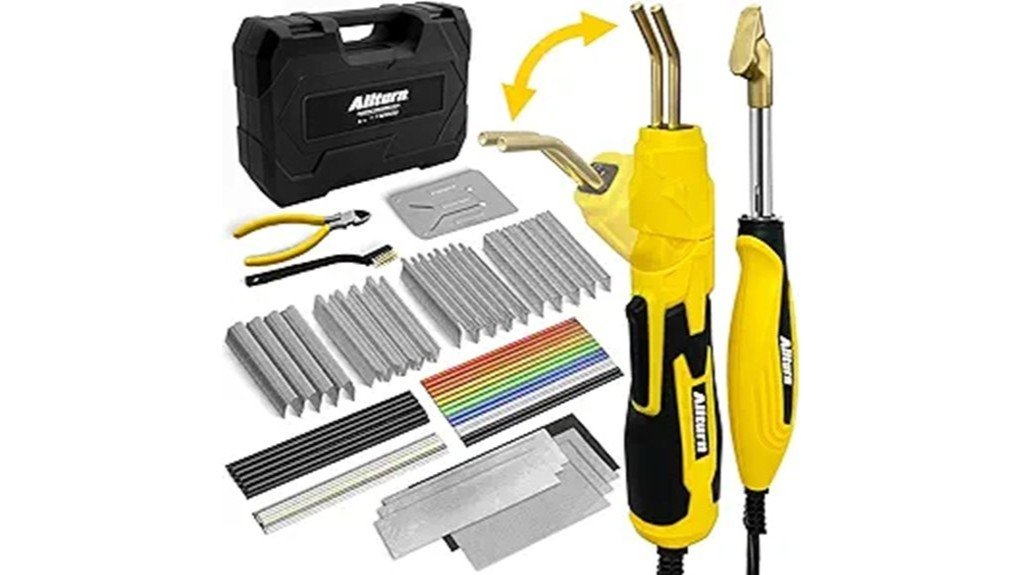
| Included repair media | Four types of plastic welding staples and plastic welding rods |
| Common uses | Car bumper repairs, dashboard fixes, radiator restorations, and other plastic item repairs |
| Safety feature | Internal overheating protection that halts operation when temperatures rise too high |
| Best use | DIY plastic restoration where the part can be safely repaired instead of replaced |
What Is the Allturn Plastic Welder 2 in 1?
The Allturn Plastic Welder 2 in 1 is a compact repair tool designed to help you restore cracked or broken plastic parts. It uses plastic welding staples and rods, giving you more repair options than a basic glue-only fix.
At 1.5 pounds and 12 inches long, it is sized for handheld work. The rubber handle is meant to reduce hand strain during longer repair sessions, which matters when you are working around curved bumpers, interior panels, or uneven plastic edges.
The kit is aimed at DIY users who want to repair plastic parts at home, especially automotive plastic such as bumpers, dashboards, and radiator-related pieces. It can also be useful for general plastic items, as long as the part is suitable for heat-based repair and you follow the product instructions carefully.
Before You Buy: This tool is not a guaranteed fix for every plastic part. Check the plastic type, damage location, and safety risk before repairing, and avoid using it on parts where a failed repair could create a driving, electrical, pressure, or heat hazard.
Who Should Buy It?
Best For
- DIY users who repair cracked automotive plastic, such as bumpers, dashboards, and trim pieces.
- Home garage users who want a lightweight tool for occasional plastic restoration work.
- Buyers who want both staple-based reinforcement and plastic welding rods in one kit.
Skip If
- You need verified professional-shop specifications, such as exact power output, temperature range, or certification details.
- The damaged part is structural, pressurized, load-bearing, or safety-critical.
- You prefer a no-heat repair method, such as adhesive patching or full part replacement.
Product Features and Functionality
The Allturn Plastic Welder 2 in 1 combines plastic welding staples and rods in one repair setup. This gives you two useful repair approaches: staples can help reinforce cracked areas, while rods can help fill or rebuild damaged plastic where suitable.
The kit includes four types of welding staples and rods. That matters because plastic cracks do not all form in the same shape. A straight crack on a flat bumper needs a different approach than a curved split near a corner or edge.
The welder is described as suitable for car bumper repairs, dashboard fixes, radiator restorations, and other plastic repairs. For a buyer, the main benefit is flexibility. You are not buying a tool for one narrow repair, but you still need to match the method to the part and damage.
Design and Build Quality
The 1.5-pound weight makes the Allturn plastic welder manageable for handheld work. A lighter tool is easier to guide when you are working inside a vehicle cabin, under a panel, or around an awkward bumper edge.
The 12-inch length gives you enough body to grip and control the tool without making it feel oversized for small repairs. The ergonomic rubber handle is also a practical detail because plastic repairs often require slow, steady placement rather than quick pressure.
The article-supported durability claim is that the tool is built to help create repairs that can withstand shock and twist. That is useful for plastic parts that flex during normal use, but you should still avoid assuming a repaired part will perform like a new one.
Ease of Use
The Allturn Plastic Welder 2 in 1 is designed for quick and easy operation, and the original article notes that no prior training is required. That makes it more approachable for a DIY user who has never used a plastic repair welder before.
Still, easy operation does not remove the need for care. You need to align the broken plastic, choose the right staple or rod, work slowly, and avoid overheating the surrounding area. Rushing the repair can weaken the finish or distort the plastic.
Pro Tip: Practice on scrap plastic before working on a visible bumper, dashboard, or trim piece. This helps you learn pressure, angle, and heat timing before the repair matters.
Fit and Compatibility
This tool is most relevant for plastic parts that can be repaired with heat, staples, or welding rods. The article mentions use on car bumpers, dashboards, radiators, and other plastic items, which makes it especially appealing for automotive DIY repairs.
Compatibility is the key limitation. Some plastic parts repair better than others, and some parts should be replaced instead of welded. If the part is near high heat, pressure, fluid containment, electrical components, or vehicle safety systems, check the product manual and consider professional help before repairing it.
Safety and Durability
Safety is one of the stronger article-supported points for the Allturn Plastic Welder 2 in 1. The tool includes internal overheating protection that halts operation when the temperature rises excessively. That feature can help reduce risk during longer repair sessions.
The tool is also described as durable enough to restore broken plastic parts and extend their service life. This is most useful when you are repairing non-critical plastic that would otherwise be thrown away or replaced.
| Feature | What It Means | Buyer Benefit |
|---|---|---|
| Overheating protection | Operation stops if heat rises too high | Adds a safety layer during repair work |
| Rubber handle | Designed for a more comfortable grip | Helps reduce hand fatigue |
| Staples and rods | Supports multiple plastic repair approaches | Improves flexibility across repair shapes |
How It Performs in Real Use
For Car Bumper Repairs
For cracked bumper plastic, the included staples can help reinforce a split from behind or along the damaged area. This makes the tool useful when the main goal is to reconnect and support the crack before finishing the surface.
For Dashboard and Interior Plastic
The light weight and rubber grip help when you are working inside a vehicle, where space can be tight. You still need careful hand control because interior plastic can be visible and easy to mark if you use too much heat or pressure.
For Radiator-Related Plastic Repairs
The article lists radiator restorations as one use case, but this is an area where caution matters. If the damaged part holds coolant, pressure, or heat, a DIY plastic weld may not be the safest long-term solution. In that case, replacement or professional guidance may be the better choice.
For Household Plastic Items
The tool can also make sense for non-automotive plastic repairs where the part is not safety-critical. Examples include cracked plastic panels, covers, bins, or other items where a reinforced repair is acceptable and appearance is not the only concern.
How to Use It Correctly
Start by cleaning the damaged area so the plastic is free from dirt, grease, and loose pieces. Align the cracked edges before applying heat, because poor alignment can leave the repair weak or uneven.
Choose a staple or rod that matches the crack shape and repair goal. Use staples when you need reinforcement across a split, and use rods when the repair needs filling or rebuilding, as long as the plastic type is suitable.
Work in short, controlled steps instead of holding heat in one spot for too long. Let the repaired area cool fully before trimming, sanding, or putting the part back into use. Always follow the product instructions, especially around heat, ventilation, and handling.
Common Mistakes to Avoid
Do not assume every plastic part can be repaired the same way. Thin plastic, brittle plastic, high-heat parts, and pressure-related parts may need a different repair method or full replacement.
Another common mistake is focusing only on the visible crack. If the broken part flexes during use, the back side or stress point may also need support. A repair that looks clean on the surface can still fail if the crack is not reinforced where the stress happens.
You should also avoid using the tool near flammable materials, sensitive electronics, or parts that cannot safely handle heat. If you are unsure, stop and check the product manual or ask a qualified repair professional.
Pros and Cons
Pros
- Lightweight 1.5-pound design is easier to handle during detailed repair work.
- 12-inch body offers practical reach without feeling oversized for smaller repairs.
- Rubber handle improves grip comfort during longer repair sessions.
- Includes four types of welding staples and rods for different repair needs.
- Internal overheating protection adds a useful safety layer.
Cons
- Exact power, temperature range, and certification details are not verified in the article.
- Not suitable for every plastic type or safety-critical part.
- Good results still require careful alignment, heat control, and practice.
Is It Worth the Price?
The Allturn Plastic Welder 2 in 1 is worth considering if you want a compact DIY repair tool for plastic cracks, broken tabs, and automotive plastic restoration. Its value comes from the combination of staples, rods, a manageable 1.5-pound body, and safety-focused overheating protection.
It is a strong value for the price if one or two successful repairs help you avoid replacing a larger plastic part. The tool makes the most sense for buyers who repair plastic more than once, rather than someone who only needs a single cosmetic fix.
The main limitation is that the article does not verify advanced technical specs such as power rating or exact operating temperature. If those details matter for your repair work, check the Amazon listing and product manual before buying.
How It Compares to Alternatives
Compared with basic plastic glue or epoxy kits, the Allturn Plastic Welder 2 in 1 gives you a reinforcement method through staples and rods. That can be better for cracked plastic that needs more support than a surface adhesive can provide.
Compared with larger hot-air plastic welders or professional body-shop repair systems, this tool appears more approachable for home garage use. Choose it if you want a compact DIY repair option, but compare professional systems if you need verified temperature control, heavy-duty daily use, or shop-level repairs.
Frequently Asked Questions
What types of repairs is the Allturn Plastic Welder 2 in 1 best for?
It is best for DIY plastic repairs such as cracked car bumpers, dashboards, radiator-related plastic, and other broken plastic items. It is most useful when the part can be safely repaired with staples or welding rods instead of replaced.
Can this tool be used for non-automotive plastic repairs?
Yes, the article supports use on a range of plastic items beyond automotive parts. Use caution on items that face heat, pressure, electrical contact, or heavy loads.
How long does a typical repair take?
Repair time can range from a few minutes to about an hour, depending on the damage, plastic shape, and your experience. More complex cracks may take longer because you need to align, reinforce, cool, and finish the repair carefully.
Does it come with replacement staples and rods?
The article states that the kit includes four types of plastic welding staples and rods. Replacement availability can vary by seller, so check the current Amazon listing before you buy extra consumables.
Is the Allturn Plastic Welder safe for beginners?
The article describes it as easy to operate without prior training, and it includes overheating protection. Beginners should still practice first, wear suitable protection, work in a safe area, and follow the product instructions.
What is the warranty period for the Allturn Plastic Welder?
The article does not provide a verified warranty period. Check the Amazon product page, seller details, or included documentation before purchase if warranty coverage matters to you.
Who should skip this plastic welder?
Skip it if you need a professional repair on a structural, pressurized, or safety-critical part. You may also want a different tool if you need verified technical specs like exact wattage, operating temperature, or certification details.
The Bottom Line
The Allturn Plastic Welder 2 in 1 is a practical pick for DIY users who want a lightweight, handheld plastic repair tool with staples, rods, a rubber grip, and overheating protection. It is best for small to medium plastic repairs on items such as bumpers, dashboards, and general plastic parts, but you should skip it for safety-critical repairs or jobs that require verified professional specifications.