Disclosure: As an Amazon Associate, we earn from qualifying purchases. If you click a link on this page and make a purchase, we may receive a small commission at no extra cost to you.
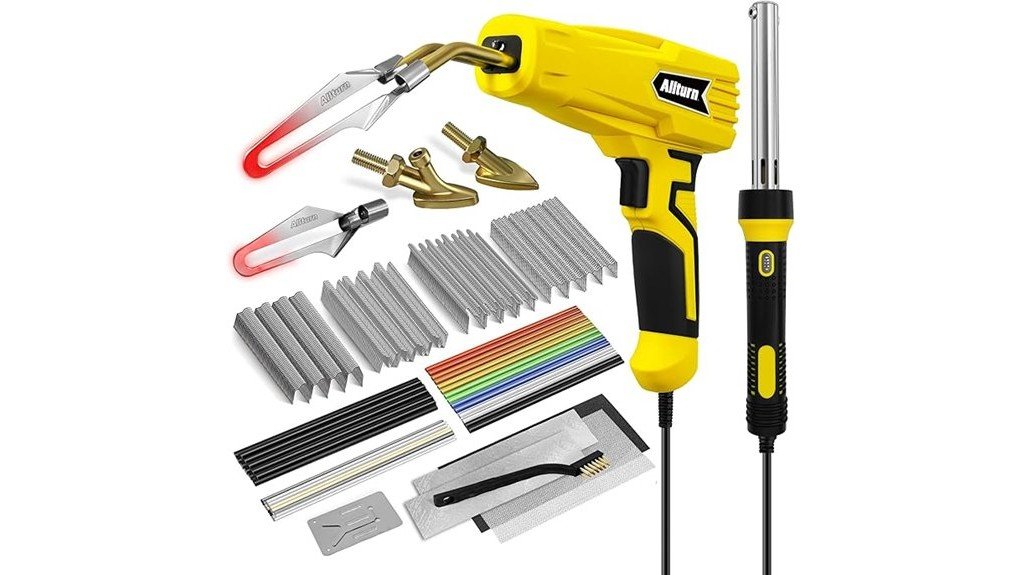
Cracked plastic parts can be frustrating because replacement pieces are often expensive, hard to find, or not worth buying for a small repair. The Allturn Plastic Welder is a 110V repair tool designed for plastic repair tasks such as car bumpers, dashboards, radiators, and other DIY fixes. It weighs 1.5 pounds, includes 1000 plastic welding staples and rods, and has internal overheating protection for safer operation. This review will help you decide if it is a practical repair tool for your garage, workshop, or on-site repair kit, while also pointing out where a handheld plastic welder may not be enough.
Quick Verdict
Rating: 8.1/10, Recommended with caveats
Best For: DIY users who need a lightweight plastic repair tool for bumpers, dashboards, radiators, and general plastic fixes.
Bottom Line: The Allturn Plastic Welder is useful if you want a compact 110V tool with included staples and rods for common plastic repairs. The main tradeoff is that repair strength still depends on the plastic type, crack location, prep work, and whether the damaged part is safe to repair instead of replace.
| Specification | Detail |
|---|---|
| Brand | Allturn |
| Product type | Plastic welder repair tool |
| Power | 110V |
| Weight | 1.5 pounds |
| Included supplies | 1000 plastic welding staples and rods |
| Handle | Rubber handle with ergonomic grip |
| Safety feature | Internal overheating protection |
| Common repair uses | Car bumpers, dashboards, radiators, and general plastic repair projects |
| Best use | DIY plastic repair where the part is repairable and not safety-critical |
What Is the Allturn Plastic Welder?
The Allturn Plastic Welder is a handheld 110V tool made for repairing cracked or damaged plastic parts. The article-supported use cases include car bumpers, dashboards, radiators, and other DIY plastic repair projects.
Its main appeal is the combination of a lightweight 1.5-pound body, a rubber handle, and a large included supply kit with 1000 plastic welding staples and rods. That gives you enough consumables to practice, test, and complete multiple repair jobs before you need to think about refills.
This tool is best viewed as a repair aid, not a magic fix for every broken plastic part. Repair strength depends on the type of plastic, crack size, part thickness, surface prep, and whether the part is exposed to heat, vibration, stress, or moisture.
Before You Buy: Do not use a plastic welder as a shortcut for safety-critical repairs. If the damaged part affects vehicle safety, pressure containment, heat shielding, steering, braking, or crash protection, replace the part or ask a qualified professional before repairing it.
Who Should Buy It?
Best For
- DIY users who repair cracked plastic trim, panels, bumpers, dashboards, or similar parts.
- Garage owners who want a lightweight 110V plastic repair tool with included staples and rods.
- Buyers who want a compact tool for quick fixes without starting from a bare tool kit.
Skip If
- You need to repair a structural or safety-critical vehicle part.
- You want a tool for metal, glass, rubber, or other non-plastic materials.
- You are not willing to test fit, prep the crack, and learn proper staple placement.
Performance and Versatility of the Allturn Plastic Welder
The Allturn Plastic Welder is designed for common plastic repair tasks where a cracked section needs reinforcement. The included staples help bridge damaged areas, while the plastic rods can help with finishing or filling depending on the repair method you use.
For automotive work, the most relevant uses are plastic bumpers, dashboard pieces, trim panels, and radiator-related plastic parts when the damage is suitable for repair. These parts often face vibration and movement, so a repair tool that reinforces the crack can be more useful than surface glue alone.
The 110V power setup makes the tool better suited for a garage, driveway outlet, or workshop than a battery-only field kit. It can still be portable for on-site work, but you will need access to a safe power source.
Build Quality and User Comfort
At 1.5 pounds, the Allturn Plastic Welder is light enough for longer repair sessions without feeling bulky. That matters when you are lining up staples along a crack, holding a panel steady, or working at an awkward angle.
The rubber handle supports grip comfort and control. A comfortable handle is not just a convenience, since better control can help you place staples more evenly and avoid pressing too hard into thin plastic.
The article also notes durable construction. That is useful for a tool you may store in a garage, carry between jobs, or use around rough plastic parts, but you should still keep it dry, clean, and protected from drops.
Durability and Strength in Repairs
Repair strength is one of the main reasons to consider a plastic welder instead of relying only on adhesive. A staple-supported repair can help a cracked section resist movement, shock, and twisting better than a surface-only patch when the plastic type and repair location are suitable.
| Repair Factor | What It Means | Buyer Benefit |
|---|---|---|
| Repair longevity | Helps extend the usable life of damaged plastic parts | May reduce the need for immediate replacement |
| Material compatibility | Made for plastic repair tasks, including common automotive plastics listed in the article | Useful for bumpers, dashboards, radiators, and DIY projects |
| Shock resistance | Reinforced cracks can better handle impact than an untreated crack | Helpful for parts exposed to bumps or vibration |
| Twist resistance | Staples can help hold both sides of a crack together | Adds support when plastic flexes during use |
| User-friendly design | Lightweight body with a rubber handle | Makes careful placement easier during longer repairs |
Keep expectations realistic. A plastic welder can improve a repair, but it cannot turn every damaged part back into a factory-new part. Large missing sections, brittle plastic, heat-damaged pieces, or load-bearing parts may still need replacement.
User Comfort and Safety Features
The Allturn Plastic Welder includes internal overheating protection, which adds a useful safety layer during operation. This does not remove the need for caution, but it helps reduce risk during longer repair sessions.
The lightweight design also helps reduce fatigue. That is helpful when you are working along a long crack or trying to align several staples in a tight area.
- Internal overheating protection supports safer operation.
- The rubber handle helps with grip and control.
- The 1.5-pound weight is easier to manage during longer use.
- The included staples and rods reduce the need for extra starter supplies.
Pro Tip: Before repairing a visible part, practice on scrap plastic first. This helps you learn how fast the tool heats, how much pressure to use, and how deeply the staples should sit.
Setup Tips Before First Use
Start by cleaning the plastic around the damaged area. Dirt, grease, loose fragments, and old adhesive can weaken the repair or make it harder to place staples neatly.
Next, inspect the crack from both sides if you can reach them. A crack that looks small from the front may be longer on the back, especially on bumper covers and interior trim pieces.
Choose a stable work surface and make sure the plastic part will not shift while you work. If you are repairing a part still attached to a vehicle or appliance, keep cords away from hot surfaces, wet ground, moving parts, and sharp edges.
How to Use It Correctly
Use the Allturn Plastic Welder slowly and carefully. The goal is to reinforce the damaged area, not to force too much heat into the plastic.
Place staples across the crack with enough spacing to support the weak area. Thin plastic may need a lighter touch, while thicker plastic may need more careful heat control so the staple seats properly without pushing through the surface.
After the repair sets, trim or smooth any sharp staple ends or rough plastic as appropriate for the project. Always follow the product instructions and use suitable eye protection, hand protection, and ventilation for the repair setting.
How It Performs in Real Use
For Car Bumper Repairs
For bumper cracks, the tool is most useful when the damaged section can be aligned and reinforced from the back. Staples can help hold both sides of the crack together, which may make the repair more stable than a cosmetic patch alone.
For Dashboard and Interior Trim
Dashboard and trim repairs often need a careful hand because visible plastic can mark easily. The lightweight body and rubber handle help with control, but you should test on a hidden area or scrap material before working on a visible surface.
For Radiator-Related Plastic Parts
The article lists radiators as a possible repair use, but you should be cautious. Plastic parts connected to coolant, heat, or pressure may not be safe to patch without professional guidance. If the part holds pressure or affects engine cooling, replacement is often the safer choice.
For Mobile or On-Site Repairs
The 1.5-pound body makes the tool easy to carry for on-site work. The main limit is power access, since the tool is listed as 110V, so you need a safe outlet or compatible power setup before starting.
Compatibility and Safety Notes
Plastic welding results vary by plastic type. Some plastics accept heat and reinforcement better than others, while brittle, oily, thin, or heavily weathered plastics may be harder to repair cleanly.
Do not use the tool in wet conditions or near flammable materials. Keep the hot tip and heated staples away from skin, wiring, upholstery, fuel vapors, and painted surfaces you do not want to mark.
For automotive parts, think about what the damaged part does before you repair it. Cosmetic trim is one thing. A pressure part, safety component, or part exposed to high heat is another, and those repairs may need a professional inspection or full replacement.
Pros and Cons
Pros
- 110V design fits garage and workshop use.
- 1.5-pound weight helps reduce hand fatigue.
- Includes 1000 plastic welding staples and rods for multiple repairs.
- Rubber handle improves grip during careful staple placement.
- Internal overheating protection adds a useful safety feature.
Cons
- Not suitable for every plastic type or every damaged part.
- Needs careful prep and correct staple placement for good results.
- Not a replacement for professional repair or part replacement on safety-critical components.
Is It Worth the Price?
The Allturn Plastic Welder is worth considering if you regularly deal with cracked plastic parts and want a starter-friendly tool that includes a large supply of staples and rods. The value is strongest for DIY users who can avoid replacing minor plastic parts by making careful repairs at home.
It offers strong value for the price if you plan to use it more than once, especially for car trim, bumper covers, dashboards, and similar repair jobs. If you only need to fix one small item, compare the tool cost against the cost of a replacement part before buying.
The honest limitation is that the tool does not remove the need for judgment. If the damaged part is structural, pressurized, heat-exposed, or safety-related, the better value may be a professional repair or full replacement.
How It Compares to Alternatives
Compared with plastic epoxy, the Allturn Plastic Welder gives you a way to physically reinforce a crack with staples instead of relying only on surface bonding. Epoxy may be cleaner for small cosmetic repairs, but it may not add the same mechanical support across a split.
Compared with a basic soldering-iron-style plastic repair tool, the included staples and rods make this kit more useful for crack reinforcement. Compared with full professional plastic welding equipment, it is more approachable for DIY use, but it may not match the control or strength needed for demanding repairs.
Common Mistakes to Avoid
One common mistake is using too much heat or pressure. This can distort thin plastic, leave visible marks, or push staples too far into the part.
Another mistake is skipping surface prep. Clean plastic, good alignment, and stable clamping can make a bigger difference than adding more staples.
You should also avoid treating every cracked part as repairable. If a plastic part carries load, holds pressure, seals fluid, or protects people, do not rely on a DIY repair without professional guidance.
Frequently Asked Questions
What types of plastic can the Allturn Plastic Welder repair?
The article lists plastic repair tasks such as car bumpers, dashboards, radiators, and DIY projects. Results still depend on the plastic type, part thickness, crack size, and whether the damaged part is safe to repair.
How long do repairs take to set?
The source article describes the repair setting time as just a few minutes. Actual working time can be longer because you still need to clean the part, align the crack, place the staples, trim rough edges, and inspect the repair.
Is the Allturn Plastic Welder portable enough for on-site repairs?
Yes, the 1.5-pound weight makes it easy to carry. Since it is listed as a 110V tool, you still need safe access to power before using it away from a workshop.
Can you use it outdoors?
You can use it for outdoor repairs only when conditions are safe for a corded 110V tool. Keep it away from rain, wet ground, flammable materials, and unstable work areas.
Does it replace glue or epoxy?
Not always. A plastic welder can reinforce cracks with staples, while glue or epoxy may still be useful for finishing, sealing, or cosmetic work depending on the material and repair type.
What comes with the Allturn Plastic Welder?
The article states that the unit comes with 1000 plastic welding staples and rods. Check the current seller listing before purchase because package contents can vary by seller or kit version.
What is the warranty period?
The source article says the warranty typically spans one year. Because warranty terms can vary by seller, confirm the current warranty details on the product page before buying.
Who should skip this plastic welder?
Skip it if you need to repair a safety-critical part, a pressure-bearing part, or a material other than plastic. You should also skip it if you want a no-prep repair, since good results require cleaning, alignment, and careful placement.
The Bottom Line
The Allturn Plastic Welder is a good fit if you want a lightweight 110V tool for common plastic repair tasks and like the value of a kit that includes 1000 staples and rods. Its main strengths are portability, included supplies, a rubber handle, and internal overheating protection. Skip it for safety-critical parts, uncertain plastic types, or repairs that should be handled by a professional.