JOUNJIP Standard Plastic Welding Kit Review
A cracked bumper tab, kayak hull, or plastic storage bin can be expensive to replace, but a repair only makes sense when the material can be welded safely. The JOUNJIP Standard Plastic Welding Kit gives you an 80W corded iron, repair rods, reinforcement mesh, tape, and finishing tools in one compact package. Its main advantage is convenience for occasional thermoplastic repairs, while its main limitation is that the fixed-temperature iron and included rods are not right for every plastic or every load-bearing part. This review explains what is verified, where the kit fits, and when you should use a different repair method.
Quick Verdict at a Glance
Rating: 8/10, recommended with caveats
Best For: DIY users repairing compatible nonstructural plastic parts such as trim, bins, toys, kayaks, and outdoor furniture
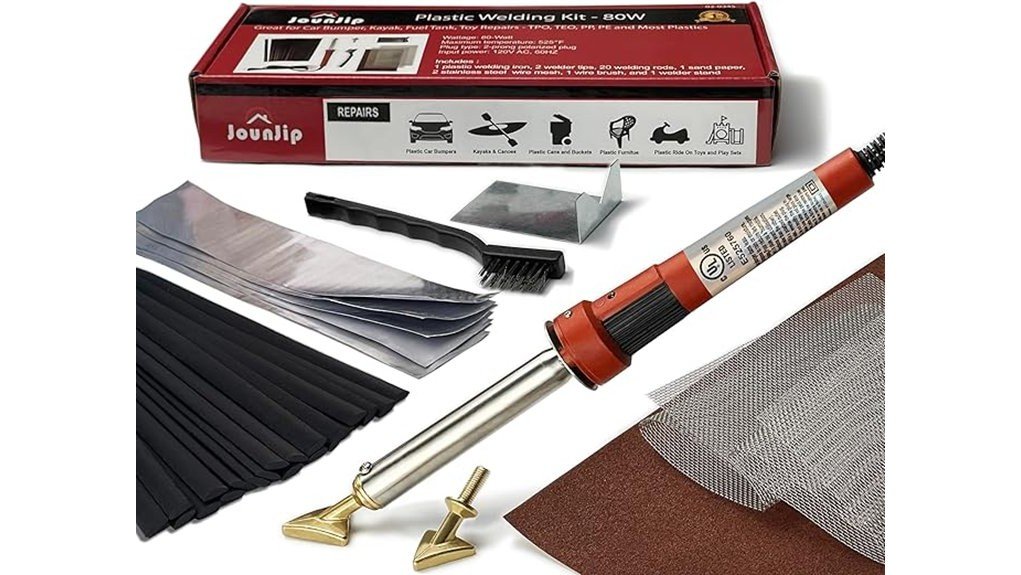
Bottom Line: The 80W iron, 525°F maximum heat rating, 20 PolyPlaz rods, two tips, mesh, tape, stand, brush, and sandpaper make this a well-rounded starter kit. You still need to identify the base plastic, practice your technique, and avoid safety-critical repairs.
Key Specifications
| Specification | Detail |
|---|---|
| Brand | JOUNJIP |
| Model | JJ-Pwelder-Kit |
| ASIN | B07RG8K18D |
| Product Type | Corded plastic welding iron and repair accessory kit |
| Voltage | 110 to 120V |
| Power | 80W |
| Maximum Heat Rating | Up to 525°F |
| Tip Material | Brass |
| Tool Weight | 1.1 lb |
| Cable Length | 71 inches |
| Package Dimensions | 11.69 x 4.49 x 1.85 inches |
| Manufacturer-Highlighted Plastics | TPO, TEO, and PP rigid thermoplastics |
| Included Accessories | 20 PolyPlaz rods, 2 welder tips, 2 stainless steel mesh pieces, 5 aluminum repair tape strips, iron stand, wire brush, and sandpaper |
| Certification | Manufacturer lists the welder as UL certified |
| Batteries | Not required |
Key Takeaways
- The kit is built around an 80W corded iron that reaches up to 525°F.
- The standard package includes the main repair supplies needed to practice, reinforce, weld, and finish a compatible crack.
- The manufacturer specifically highlights TPO, TEO, and PP, and does not recommend the included rods for old polyurethane or polycarbonate.
- The tool is best for nonstructural DIY repairs, not fuel systems, pressure vessels, critical vehicle components, or parts whose failure could cause injury.
- Your results will depend more on plastic identification, surface preparation, rod compatibility, and technique than on wattage alone.
What Is the JOUNJIP Standard Plastic Welding Kit?
The JOUNJIP Standard Plastic Welding Kit is a compact airless repair system that melts and shapes thermoplastic with a heated brass tip. Unlike a hot-air welder, it transfers heat through direct contact. That makes it simple to set up for small jobs, but it also gives you less temperature control and less airflow control than a professional hot-air station.
JOUNJIP packages the 80W iron with 20 PolyPlaz rods, two welder tips, two stainless steel mesh pieces, five aluminum tape strips, a stand, a wire brush, and sandpaper. The included PolyPlaz rods are described by the manufacturer as reinforced rods intended for rigid thermoplastics such as TPO, TEO, and PP.
The kit makes the most sense when you have several repairable items and want the basic supplies in one box. You should not treat it as a universal solution, because plastics that look alike can have very different melting behavior and bonding requirements.
Who Should Buy It?
Best For
- DIY users repairing compatible plastic trim, bins, toys, furniture, or recreation gear
- Owners who want rods, reinforcement mesh, tape, prep tools, and a stand in one kit
- Beginners willing to practice on scrap material before working on an important part
Skip If
- You need adjustable temperature, hot-air flow, or production-level control
- The damaged item is structural, safety-critical, pressurized, fuel-related, or electrically critical
- You cannot identify the plastic or confirm rod compatibility
Before You Buy: Check the molded recycling or material code on the part before you order. The manufacturer highlights TPO, TEO, and PP, and says the included rods are not recommended for old polyurethane or polycarbonate.
Feature-by-Feature Review
80W Corded Iron and 525°F Heat Rating
The 80W iron is powerful enough to soften many thin and medium plastic repair areas without needing a compressor or gas supply. It plugs into a 110 to 120V outlet and is rated to reach up to 525°F. For occasional bench or garage work, that simple corded design keeps setup straightforward.
The tradeoff is control. The published specifications do not list an adjustable temperature dial, so you must regulate heat through contact time, pressure, and movement. Thin plastic can deform quickly, while thick material may need slower, repeated passes.
PolyPlaz Welding Rods and Plastic Compatibility
The 20 included PolyPlaz rods add filler material across cracks, holes, and worn edges. JOUNJIP describes them as reinforced with carbon and glass fibers for strength and flexibility, with primary compatibility for rigid TPO, TEO, and PP thermoplastics.
That broad utility is useful for common automotive and outdoor plastics, but the rod still needs to bond with the base material. A repair can look smooth while remaining weak if the filler and part are chemically incompatible.
Two Welder Tips and Brass Contact Surface
The two supplied tips let you melt, press, and spread material during different stages of a repair. The brass construction transfers heat quickly, which helps with shaping, but it also means you should avoid leaving the tip stationary on a thin panel.
JOUNJIP warns against changing a tip while it is hot. Let the tool cool fully, then remove and replace the tip according to the product instructions.
Mesh, Tape, Stand, Brush, and Sandpaper
The accessory package is one of the kit’s strongest points. Stainless steel mesh can reinforce the back of a crack, while aluminum tape can help support or protect the work area. The wire brush helps clean residue from the tip, and the sandpaper helps prepare and finish the surface.
The included stand gives you a safer place to rest the hot iron between passes. It does not replace a heat-resistant work surface, careful cord placement, or supervision.
Portability and Storage
At 1.1 lb with package dimensions of about 11.69 x 4.49 x 1.85 inches, the kit is easy to store in a cabinet or tool drawer. The 71-inch cable gives you moderate reach at a workbench, though larger vehicle or boat repairs may still require a properly rated extension cord.
How It Performs in Real Use
For Bumper Covers and Automotive Trim
The kit can work well on clean cracks, tabs, and nonstructural trim when the material is compatible. Reinforcing mesh on the hidden side can add support, while the rod fills the visible side. You should remove paint, dirt, oil, and loose plastic before applying heat.
Do not use a DIY weld as the only repair on a part tied to crash protection, steering, braking, restraint systems, lighting mounts, or another safety function. A body shop or qualified repair technician is the better choice when failure could affect vehicle safety.
For Kayaks, Canoes, and Outdoor Gear
Many kayaks and outdoor items use weldable thermoplastics, so the kit can be useful for small cracks or gouges after you confirm the material. A watertight-looking surface is not proof of a durable repair. Inspect both sides, test for leaks, and avoid relying on an unproven repair in conditions where failure could leave you stranded.
For Bins, Furniture, Toys, and Plastic Containers
Storage bins, outdoor furniture, rigid toys, buckets, and similar items are good practice projects because the repair area is often accessible from both sides. The fixed 525°F maximum heat rating still demands a light touch on thin walls, corners, and molded details.
Do not repair food-contact containers, chemical containers, pressure vessels, or fuel containers unless the product manufacturer and a qualified professional approve the method. Heat can damage coatings, release residue, or weaken areas beyond the visible crack.
For Clean Cosmetic Results
The tool can create a functional repair before it creates a factory-looking finish. A smooth result takes repeated light passes, full cooling time, careful sanding, and sometimes refinishing. Practice on scrap plastic of the same type so you can learn how quickly it softens.
How to Use It Correctly
- Identify the plastic. Look for a molded material code and confirm that your filler rod is compatible.
- Clean and dry the area. Remove paint, grease, oxidation, dirt, and loose fragments without thinning the part more than necessary.
- Support the crack. Align the edges and use the included mesh or tape only where the product instructions and repair shape support it.
- Work from the back when possible. Reinforcing the hidden side first can help hold alignment and preserve the visible face.
- Use short, controlled passes. Soften the base plastic and rod together instead of pressing the rod onto a cold surface.
- Let the repair cool naturally. Avoid bending or loading the area before the material has fully set.
- Inspect and finish. Check the bond from both sides, then sand only after cooling.
Pro Tip: Practice on a hidden scrap from the same type of plastic. Use that test to judge heat time, rod flow, surface distortion, and bond strength before touching the actual part.
Compatibility and Safety
Plastic identification is the first safety and performance check. The manufacturer highlights TPO, TEO, and PP, and does not recommend the included rods for old polyurethane or polycarbonate. If the material code is missing or unclear, contact the part manufacturer or use a repair method designed for that exact material.
Work in a well-ventilated area, keep the hot tip away from skin and flammable materials, and use eye protection and heat-resistant gloves that do not reduce your grip. Keep children and pets away from the work area. Place the iron in its stand when you pause, unplug it after use, and allow it to cool before cleaning or changing a tip.
Do not use the kit on fuel tanks, pressurized containers, live electrical parts, medical devices, child safety equipment, or structural components. When a repair affects vehicle safety, watercraft integrity, or another high-consequence system, have it inspected by a qualified professional.
Pros and Cons
Pros
- 80W corded iron reaches a listed maximum of 525°F
- Includes 20 rods, two tips, mesh, tape, stand, brush, and sandpaper
- Compact 1.1 lb tool is easy to store and carry
- 71-inch cable provides useful bench reach
- Official specifications and package contents are clearly published
Cons
- No verified adjustable temperature control, so technique matters
- Included rods are not suitable for every plastic
- Not appropriate for structural, pressurized, fuel-related, or safety-critical repairs
Is It Worth the Price?
The JOUNJIP kit offers strong value for the price when you expect to complete several small repairs and want a ready-to-use accessory bundle. The iron, rods, tips, mesh, tape, stand, brush, and sandpaper reduce the need to buy separate starter supplies.
You get the most value when your parts are compatible and accessible from both sides. It is less compelling for a one-time high-risk repair, for plastics outside the stated compatibility range, or when you need adjustable temperature and professional hot-air control.
Because online prices and package details can change, compare the current listing with the manufacturer’s stated contents before you buy. The provided sources do not confirm a specific warranty period, so check the seller’s current warranty and return terms.
How It Compares to Alternatives
The Massca 80W Plastic Welding Kit is a close alternative if you want another iron-style bundle with rods and reinforcement mesh. The Chicago Electric 80 Watt Iron Plastic Welding Kit is worth comparing when local store pickup and a simpler tool-only purchase matter more than JOUNJIP’s published accessory set.
If you need more control for repeated fabrication or professional repairs, a Polyvance 80W TPO, TEO, and PP kit or a hot-air system may be the better fit. The JOUNJIP makes the most sense when you want a compact, well-equipped starter kit for occasional compatible repairs.
Frequently Asked Questions
What plastics can the JOUNJIP Standard Kit repair?
JOUNJIP specifically highlights TPO, TEO, and PP rigid thermoplastics for the included PolyPlaz rods. Check the molded material code on your part because appearance alone cannot confirm compatibility.
Can it repair a car bumper?
It can repair some compatible bumper covers, tabs, and trim areas. Confirm the plastic code first, and use professional repair for crash-related, mounting, lighting, restraint, or other safety-critical areas.
Can you use it on a kayak or canoe?
The manufacturer lists kayaks and canoes as possible uses when the plastic is compatible. Test the repair for leaks and strength before use, and do not depend on an unproven repair where hull failure could create a safety risk.
What comes in the standard package?
The official package list includes one welder, 20 PolyPlaz rods, two tips, two stainless steel mesh pieces, five aluminum repair tape strips, a stand, a wire brush, and sandpaper. Check the current seller listing in case package contents change.
Does the welder have adjustable temperature?
The verified specifications list 80W power and heat up to 525°F, but they do not list an adjustable temperature control. You must manage heat with contact time, pressure, and movement.
How do you change the welder tip safely?
Unplug the iron and let the tip cool completely before removal. JOUNJIP warns that hot metal can become brittle, so do not unscrew or tighten a tip while the tool is hot.
Is this a good first plastic welding kit?
Yes, when you want a compact iron-style kit and are willing to practice. The included supplies cover basic reinforcement, filler, cleaning, and finishing, but the fixed heat output requires careful technique.
What warranty does JOUNJIP provide?
The verified product information does not state a specific warranty period. Review the current Amazon seller terms, JOUNJIP support information, and return policy before you order.
The Bottom Line
The JOUNJIP Standard Plastic Welding Kit is a recommended starter option for occasional, nonstructural repairs on compatible thermoplastics. Its main strength is the complete 80W accessory bundle, while its main limitation is the need to identify the plastic and control a fixed-heat iron through technique.
Buy it when you want to repair trim, outdoor gear, bins, toys, or similar items and can practice first. Skip it when the part is safety-critical, the plastic is unknown, or you need adjustable temperature and professional hot-air control.
Ready to Buy?
Check the latest price, package contents, and seller terms before you decide.