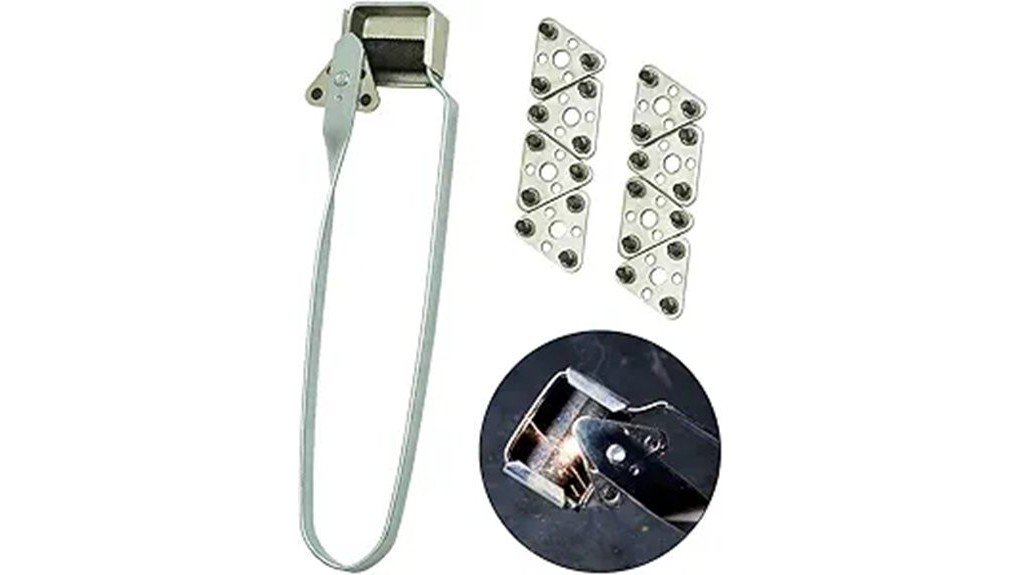
The Ally Tools triple flint striker is a hand-squeezed spark lighter for oxy-fuel torches, Bunsen burners and similar gas flames. It is worth buying if you want a cheap, battery-free igniter with replaceable flints, and it is not a substitute for a windproof or waterproof lighter.
Per the listing it carries nine rotatable flints in a zinc-plated body. Always confirm that your torch or appliance manual allows a spark striker.
Ally Tools Triple Flint Striker at a Glance
| Item | Per the listing |
|---|---|
| Type | Manual flint striker (spark lighter) for gas ignition |
| Flints | Triple-flint design with nine rotatable flints (per the listing) |
| Body | Zinc-plated construction (per the listing) |
| Refillable | Yes, worn flints can be replaced (per the listing) |
| Typical uses | Oxy-fuel and propane torches, Bunsen burners, gas appliances that allow a spark igniter |
| Power | None needed; it makes sparks mechanically |
Who Should Buy It
- Welders and brazers who light oxy-acetylene or oxy-propane torches and want a spare striker in the cart.
- Lab, shop or camp users who need a simple spark source for a gas burner or stove.
- Anyone tired of disposable butane lighters near hot work.
Skip it if
- You need a windproof, waterproof or emergency lighter.
- Your appliance requires a built-in igniter or a different ignition method.
- Children or unsupervised users will handle it.
How to Light a Torch Safely with a Striker
- Check hoses, regulators and connections for leaks, and work in a ventilated area away from flammables.
- Hold the striker just beside the torch tip, not in front of the opening.
- Crack the fuel gas valve slightly, then squeeze the striker to throw a spark across the tip.
- Once lit, adjust the flame and open the oxygen valve as your torch manual describes.
- Store the striker dry, and rotate the flints as they wear.
Follow the instructions for your torch and regulator. A striker only supplies the spark; safe gas handling is still your job, and a leaking hose or fitting should be fixed before you light anything.
Pros and Limitations
Pros
- No battery or fuel to run out.
- Multiple flints extend the time between replacements.
- Replaceable flints keep the tool in service.
- Zinc plating helps resist rust (stored dry, it will last longer).
Limitations
- It throws sparks only; it does not hold a flame, so it will not work for tasks that need a pilot light.
- Sparks can be weak in wind, and wet flints may not fire.
- Not suitable for appliances that require an electronic igniter.
Alternatives to Consider
A single-flint striker is cheaper and fine for occasional use. A butane torch lighter keeps a flame going but is less suited to oxy-fuel work. Piezo igniters need no flints but can fail with age, and for stoves or lab burners a built-in igniter is often the safest choice.
Related reading: Single flint torch striker review | Gutimore Lightnin Bug torch striker review | Butane torch lighter review
Frequently Asked Questions
What is the Ally Tools triple flint striker used for?
It lights gas torches, Bunsen burners and compatible gas appliances by throwing sparks when you squeeze it. It is common around oxy-fuel welding and brazing setups.
How many flints does it hold?
The listing says nine rotatable flints in a triple-flint design. Check the listing for the current description.
Can I replace the flints?
Yes. The listing describes it as refillable, so worn flints can be swapped for new ones of the correct size.
Is it safe to use with an acetylene torch?
Strikers are the standard way to light oxy-fuel torches, but only with leak-free fittings, the fuel valve opened slightly first, and your torch manual followed. Never strike in a gas-filled space.
Will it work in the wind or when wet?
Not reliably. Sparks can be blown away, and damp flints fire poorly. Dry it off and shield the tip.
The Bottom Line
The Ally Tools triple flint striker is a simple, low-cost spark igniter for torches and gas burners. Buy it for shop use, keep spare flints on hand, and pick a different lighter if you need wind or water resistance.