Disclosure: As an Amazon Associate, we earn from qualifying purchases. If you click a link on this page and make a purchase, we may receive a small commission at no extra cost to you.
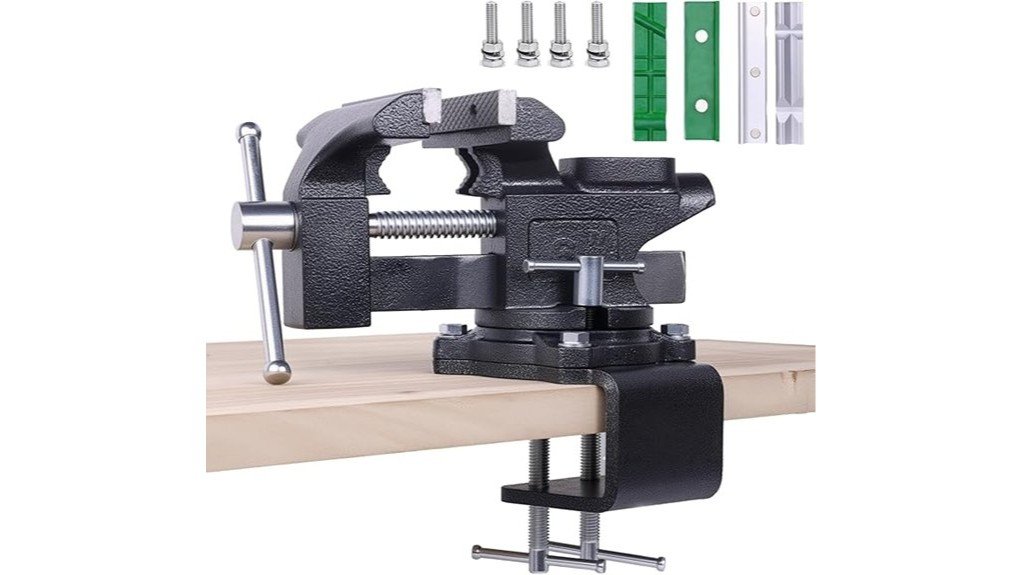
A bench vise should hold your work steady without making your workbench harder to use. The ZGJDYSM Bench Vise is a 6-inch clamp-on table vise made for DIY repairs, woodworking, light metalworking, welding prep, and home workshop tasks. Its main advantage is flexibility: you get a clampable base, a 270° swivel design, and two jaw options for different materials. The tradeoff is that its clamp-on base depends on your bench thickness and stability, so it is not the same as a permanently bolted industrial vise.
Quick Verdict
Rating: 8.1/10
Best For: DIY users, home workshops, woodworkers, hobby makers, and light-duty metalworking setups that need a portable vise.
Bottom Line: This ZGJDYSM bench vise is worth considering if you want a 6-inch jaw width, clamp-on mounting, soft jaw protection, and a swivel base in one tool. Skip it if you need a heavy shop vise that stays permanently bolted to a bench for high-force work.
| Specification | Detail |
|---|---|
| Brand | ZGJDYSM |
| Product Type | Clamp-on bench vise / table vise |
| Style | Bench Vise |
| Color | Black |
| Jaw Width | 6 inches |
| Maximum Jaw Opening | 3.6 inches |
| Base Clamping Range | Up to 2.3 inches |
| Weight | 17.92 lb, listed as 8.17 kg |
| Base Design | Clampable base with dual-screw support |
| Swivel Base | 270° swivel base |
| Jaw Options | Aluminum alloy jaws with V-grooves and soft rubber jaws |
| Body / Jaw Materials | Listing describes high-strength cast iron / high-carbon steel body construction and heat-treated high-hardness steel jaws |
| Best Use | Woodworking, DIY repairs, welding prep, light metalworking, and home workshop clamping |
| Warranty / Service | 2-year unconditional replacement for malfunctions under normal use, according to the listing |
Key Takeaways
- The ZGJDYSM Bench Vise uses a 6-inch jaw width and a 3.6-inch maximum jaw opening, giving you enough clamping space for many DIY and workshop tasks.
- The clampable base avoids drilling into your workbench, which helps renters, hobby users, and small-shop owners who need a removable setup.
- The two jaw options give you more control: aluminum alloy jaws with V-grooves help grip round or irregular workpieces, while rubber jaws help protect delicate parts.
- The 270° swivel base improves access when you need to reposition wood, metal, plastic, or small repair parts.
- The 17.92 lb weight makes it more substantial than a mini craft vise, but still portable enough for flexible home workshop use.
What Is the ZGJDYSM Bench Vise?
The ZGJDYSM Bench Vise is a clamp-on workbench vise with a 6-inch jaw width, a 3.6-inch maximum jaw opening, and a 270° swivel base. It is made for users who want a stronger hold than a small hobby clamp but do not want to drill mounting holes into a bench.
This vise is designed around flexibility. The base clamps to a workbench, the dual-screw structure helps stabilize the mount, and the included jaw options let you switch between firmer gripping and surface protection. That makes it useful for woodworking, light metalworking, welding prep, equipment repair, plastic parts, and general DIY tasks.
The most important limitation is the mounting style. A clamp-on vise can be very useful, but it relies on the thickness, strength, and flatness of your workbench. For repeated hammering, heavy pipe work, or high-torque shop jobs, a bolted vise may still be the better long-term choice.
Before You Buy: Check your workbench edge before ordering. The base clamping range is listed up to 2.3 inches, so the vise may not fit very thick benches, rounded table edges, weak folding tables, or surfaces that cannot handle clamping pressure.
Who Should Buy It?
Best For
- DIY users who need a removable vise for a garage, basement, shed, or small workbench.
- Woodworkers and hobby makers who want a 6-inch jaw width for holding small to medium workpieces.
- Users who work with mixed materials and need both firmer jaws and soft rubber jaws.
Skip If
- You need a permanently mounted industrial vise for heavy hammering, pipe cutting, or high-torque shop work.
- Your workbench edge is thicker than the listed 2.3-inch clamping range.
- You need a larger jaw opening than 3.6 inches for oversized stock or wide assemblies.
Key Features of the Bench Vise
6-Inch Jaw Width and 3.6-Inch Opening
The 6-inch jaw width gives you a broader gripping surface than many compact tabletop vises. That extra width helps when you need to hold wood blocks, brackets, small metal parts, plastic pieces, or repair components with better side-to-side support.
The 3.6-inch maximum jaw opening is useful for many small and medium DIY jobs. It will not fit every large board, pipe, or assembly, but it covers common workshop tasks such as filing, sanding, cutting, gluing, drilling prep, and light shaping.
Two Jaw Options for Different Materials
The vise includes aluminum alloy jaws with V-grooves and soft rubber jaws. The V-groove shape helps hold round or irregular pieces more securely than flat jaws alone, which matters when you work with pipe-like parts, rods, dowels, or uneven workpieces.
The rubber jaws are better when you want to reduce scratches or crushing on fragile surfaces. They are especially useful for plastics, glass-like materials, precision parts, and finished pieces where a bare metal jaw could leave marks.
Use the metal jaws when grip strength matters most, and use the rubber jaws when surface protection matters more than maximum bite.
Clampable Base With Dual-Screw Support
The clampable base is one of this vise’s biggest advantages. You can attach it to a workbench without drilling holes, which makes it easier to move, store, or use in a shared workspace.
The listing also notes a dual-screw design for better clamping stability. That helps reduce unwanted movement, but your actual results still depend on the bench surface. A thick, flat, solid bench edge will support the vise better than a thin table, hollow desktop, or lightweight folding stand.
270° Swivel Base
The 270° swivel base lets you reposition your work without removing it from the jaws. This is helpful when you need to file one side, rotate the piece for drilling access, or change the angle for sanding, shaping, or inspection.
A swivel base can also make small workshops feel less cramped. Instead of walking around the bench or reclamping the workpiece, you can turn the vise to a more comfortable angle.
Build Quality and Materials
The listing describes the vise body as high-strength cast iron / high-carbon steel construction and the jaws as heat-treated high-hardness steel. It also mentions anti-rust treatment on the vise surface, which helps if you use it in a garage or workshop where humidity can change.
The 17.92 lb weight gives the vise a sturdy feel for a clamp-on design. It is still portable, but it has enough mass to feel more serious than a small craft vise.
Applications in DIY Projects
This bench vise works best as a holding tool for common workshop tasks. You can use it to hold wood, metal, plastic, rods, brackets, and small repair parts while you cut, sand, file, drill, glue, assemble, or inspect them.
Woodworking and Home Repairs
For woodworking, the vise helps keep small boards, blocks, handles, dowels, and trim pieces stable. That can improve accuracy when you sand edges, cut notches, drill pilot holes, or glue parts together.
Use the rubber jaws when you are clamping finished wood or softer surfaces. They reduce the chance of jaw marks, although you should still avoid overtightening delicate pieces.
Light Metalworking and Welding Prep
For light metalworking, the vise can hold brackets, small rods, plates, and hardware while you file, mark, or prep the part. It can also help with welding prep when you need to hold cooled parts for cleaning, alignment checks, or minor adjustments.
Do not treat the rubber jaws as heat-resistant welding protection. Keep direct heat, sparks, and spatter away from the soft jaws, and follow safe welding practices when you work around metal.
Plastic, Precision Parts, and Fragile Materials
The rubber jaws make the vise more useful for fragile or finished parts. They help when you need to grip plastic pieces, precision components, or items that could be damaged by direct steel-jaw contact.
For delicate materials, clamp slowly and test the hold before applying force. A vise can protect your hands and improve control, but too much pressure can still crush or deform fragile workpieces.
Pro Tip: Place a scrap board or protective pad between your workbench and the clamp base if your bench surface scratches easily. Check that the vise sits flat and does not shift before you start cutting, filing, or drilling.
Setup Tips Before First Use
Start by choosing a strong, flat bench edge within the listed 2.3-inch base clamping range. Avoid weak tables, rounded edges, thin particleboard, and surfaces that flex when you tighten the clamp.
Set the vise close enough to the bench edge so the base can grip fully. Tighten the clamp evenly, then test the vise with light pressure before placing a real workpiece in the jaws.
- Check the bench: A stable workbench improves safety and clamping accuracy.
- Match the jaw to the material: Use aluminum alloy V-groove jaws for round or irregular shapes and rubber jaws for delicate surfaces.
- Do not overtighten fragile parts: Increase pressure slowly until the workpiece stops moving.
- Keep the swivel base locked during work: Reposition the vise only when the workpiece is secure and the tool is not under load.
- Clean after dusty jobs: Sawdust, filings, and grit can collect around the screw and moving parts.
Compatibility and Safety Notes
This vise is compatible with workbench edges that fit within the listed clamping range. It is not a universal fit for every bench, cart, table, or countertop.
Always use the vise on a surface that can handle clamping pressure. A weak tabletop can flex, crack, or let the vise shift while you work. For drilling, filing, cutting, or shaping, keep your hands away from the cutting path and wear proper eye protection.
For welding-related tasks, use the vise for setup, alignment, and holding cooled metal parts. Keep heat, arcs, and spatter away from rubber jaws and any surface that is not designed for direct welding exposure.
How It Performs in Real Use
For Daily DIY Repairs
For basic repairs, this vise gives you a stable third hand. It can hold hardware, brackets, tool parts, handles, small wood pieces, and other repair items while you work with both hands.
For Woodworking
In woodworking, the 6-inch jaw width helps support smaller stock better than a narrow mini vise. The rubber jaws are helpful when you need to clamp finished wood or softer materials without leaving deep marks.
For Light Metalworking
For light metalwork, the vise can hold small pieces while you file edges, mark cut lines, or drill pilot points. It is best for controlled bench tasks, not heavy industrial metal shaping.
For Small Spaces and Portable Work Areas
The clamp-on base makes the vise practical for garages, sheds, rental spaces, and small benches. You can remove it after a project instead of dedicating permanent bench space to a mounted vise.
Pros and Cons
Pros
- 6-inch jaw width gives you a useful gripping surface for common DIY and workshop parts.
- Clamp-on base avoids drilling, which works well for temporary benches and shared spaces.
- Two jaw options help you switch between stronger grip and better surface protection.
- 270° swivel base improves access when you need to change the work angle.
- 2-year unconditional replacement service adds reassurance for normal-use malfunctions.
Cons
- Clamp-on design is not as permanent or rigid as a bolted industrial bench vise.
- 3.6-inch jaw opening may be too small for large boards, pipes, or wide assemblies.
- Base fit depends on your bench edge, with a listed clamping range up to 2.3 inches.
Customer Support and Warranty Information
The listing states that if the product malfunctions under normal use within 2 years, the seller promises an unconditional replacement. That is useful for a bench tool because screws, jaws, bases, and clamping parts take repeated stress during normal projects.
Warranty terms can depend on the seller and the exact purchase channel, so review the current Amazon listing and order details before you buy. Keep your order information in case you need to contact support later.
- 2-Year Replacement Service: The listing describes unconditional replacement for malfunctions under normal use within 2 years.
- Normal-Use Coverage: The warranty wording applies to normal-use malfunctions, not misuse or unsafe applications.
- Seller Support: The listing says users can contact the seller for product-related issues.
- Buyer Reminder: Save your Amazon order details and inspect the vise when it arrives.
Cleaning and Maintenance
A bench vise lasts longer when you keep the screw, jaws, and base clean. Wipe away sawdust, metal filings, grit, and moisture after use, especially if you work in a garage or damp shop.
Apply a small amount of machine oil to moving metal parts when operation starts to feel stiff. Avoid over-oiling the rubber jaws because oil can reduce grip and transfer residue to clean workpieces.
- Wipe metal surfaces after use to reduce rust risk.
- Brush debris away from the screw and jaw tracks.
- Check the clamp base before each project.
- Store the vise in a dry place when it is not attached to the bench.
Is It Worth the Price?
The ZGJDYSM Bench Vise offers strong value for the price if you need a portable, clamp-on vise with a 6-inch jaw width and two jaw options. It makes the most sense for buyers who want one vise for mixed DIY tasks rather than a single-purpose tool.
You get the most value from it if your projects involve small to medium workpieces, frequent repositioning, and materials that sometimes need surface protection. The rubber jaws and V-groove aluminum alloy jaws give it more flexibility than a basic fixed-jaw clamp.
It is not the best fit if you need maximum rigidity, a larger jaw opening, or a permanent vise for heavy shop work. In that case, a bolted vise with a larger jaw opening and heavier base may be worth comparing.
How It Compares to Alternatives
Compared with many standard 6-inch bolted vises, the ZGJDYSM Bench Vise is easier to set up and remove because it uses a clampable base. A bolted vise may be better for heavy force, but this model is more convenient for small spaces and temporary workstations.
Compared with compact options such as smaller WORKPRO-style dual-jaw table vises, this ZGJDYSM model gives you a wider 6-inch jaw width and a heavier 17.92 lb build. Compared with heavier VEVOR or PONY 6-inch shop vises, it is better for portability but less ideal for permanent industrial-style use.
Frequently Asked Questions
What is the jaw width on the ZGJDYSM Bench Vise?
The jaw width is listed as 6 inches. That gives you a wider gripping surface than many small tabletop vises, which helps with wood pieces, brackets, rods, and general repair parts.
How wide can the jaws open?
The maximum jaw opening is listed as 3.6 inches. Measure the pieces you plan to clamp before buying, especially if you work with larger boards, pipe, or assembled parts.
Does this bench vise require drilling?
No drilling is required for the clamp-on setup. The vise attaches to a suitable workbench edge, but your bench must fit within the listed 2.3-inch clamping range.
Can it be used for metalworking tasks?
Yes, it can help with light metalworking tasks such as holding, marking, filing, and prep work. For heavy hammering, high-torque pipe work, or industrial metal shaping, a permanently bolted vise is usually a better choice.
What are the two jaw options used for?
The aluminum alloy jaws with V-grooves help grip round and irregular workpieces. The rubber jaws are better for fragile, finished, plastic, or precision parts where you want to reduce scratches and crushing.
How should you maintain this bench vise?
Wipe away dust, filings, grit, and moisture after use. Add a small amount of machine oil to moving metal parts when needed, but keep oil away from rubber jaws if you need maximum grip.
Who should skip this vise?
Skip it if you need a larger jaw opening than 3.6 inches or a permanent industrial vise for repeated heavy-force work. You should also skip it if your bench edge is too thick, rounded, weak, or unstable for clamp-on mounting.
The Bottom Line
The ZGJDYSM Bench Vise is a practical choice if you want a clamp-on 6-inch vise for DIY repairs, woodworking, light metalworking, and flexible home workshop use. Its best strengths are the two jaw options, 270° swivel base, and no-drill setup, while its main limitation is that it cannot match the rigidity of a permanently bolted heavy-duty vise.
Buy it if you need a portable vise for small to medium projects. Skip it if your work demands a larger jaw opening, a fixed industrial mount, or heavy-force clamping every day.