Disclosure: As an Amazon Associate, we earn from qualifying purchases. If you click a link on this page and make a purchase, we may receive a small commission at no extra cost to you.
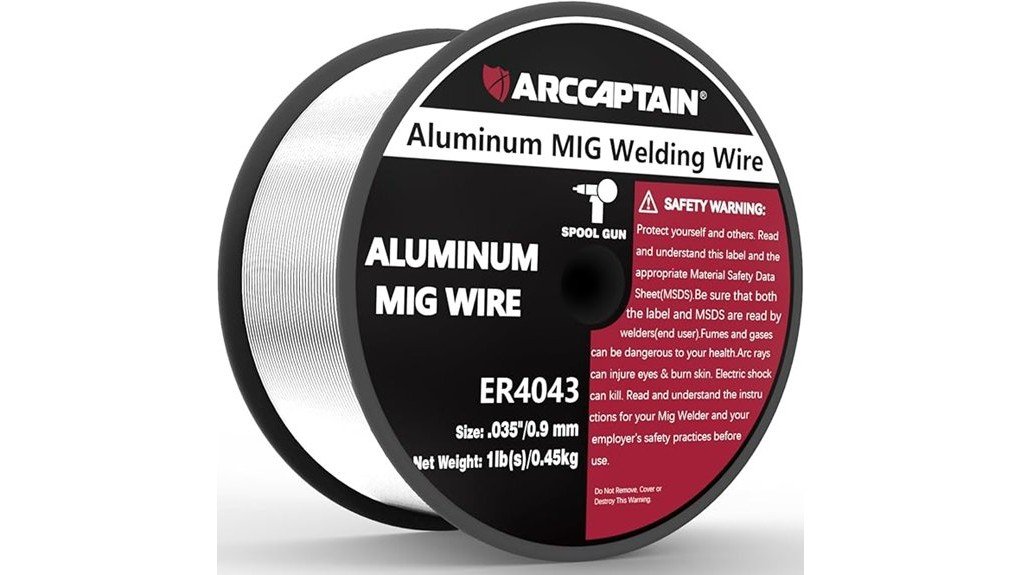
Aluminum MIG welding can get frustrating fast when the wire feeds poorly, burns back, or leaves an uneven bead. The ARCCAPTAIN Silicon Aluminum Welding Wire ER4043 is a 0.035-inch aluminum MIG wire made for welders who need a small 1 lb spool for aluminum repair, fabrication, and practice work. Its ER4043 aluminum-silicon alloy is a practical match for common aluminum grades listed in the article, including 3003, 5052, 6061, and 6063. This review helps you decide if it fits your welder, your alloy, and the type of finish you want.
Quick Verdict
Rating: 8.4/10, Recommended with caveats
Best For: MIG welders who need a compact ER4043 aluminum wire spool for compatible aluminum alloys.
Bottom Line: This ARCCAPTAIN wire is worth considering if you want 0.035-inch ER4043 wire with smooth arc behavior and a clean bead appearance. The main tradeoff is that it is for MIG welding, not TIG, and you still need the right welder setup, feed settings, and alloy match.
| Specification | Detail |
|---|---|
| Brand | ARCCAPTAIN |
| Model / Alloy | ER4043 silicon aluminum welding wire |
| Product Type | Aluminum MIG welding wire |
| Wire Diameter | 0.035 inch |
| Spool Weight | 1 lb |
| Silicon Content | Article-supported claim: 5% silicon |
| Melting Range | 1065 °F to 1170 °F |
| Compatible Aluminum Grades Listed | 3003, 3004, 5052, 6061, and 6063 |
| Casting Alloys Listed | 43, 355, 356, and 214 |
| Finish Note | Post-anodizing color listed as gray |
| Best Use | Aluminum MIG welding when ER4043 is a suitable filler for the base metal and project |
What Is the ARCCAPTAIN Silicon Aluminum Welding Wire?
The ARCCAPTAIN Silicon Aluminum Welding Wire is an ER4043 aluminum MIG wire with a 0.035-inch diameter. It is designed for MIG welding applications where a silicon-aluminum filler is a proper match for the base metal. The article lists its spool weight as 1 lb, which makes it easier to handle than a larger shop spool if you only need wire for smaller jobs, occasional aluminum repairs, or setup testing.
The main appeal is its balance of feedability, arc stability, and bead appearance. The article-supported 5% silicon content helps explain why this wire is positioned for smoother arc behavior and cleaner-looking weld beads. It is not a universal aluminum filler, so you should compare your base alloy, welder setup, and project requirements before buying.
Before You Buy: This is MIG welding wire, not TIG filler rod. Confirm that your welder, drive system, liner, contact tip, shielding gas setup, and base aluminum alloy are suitable for 0.035-inch ER4043 wire before you order.
Who Should Buy It?
Best For
- MIG welders working with compatible aluminum grades such as 3003, 5052, 6061, or 6063.
- DIY users who want a compact 1 lb spool instead of a larger production-size spool.
- Projects where a smooth arc and neat bead appearance matter more than simply choosing the cheapest wire.
Skip If
- You need TIG filler rod instead of MIG wire.
- Your project requires a different aluminum filler alloy, such as ER5356, based on the base metal or finish requirements.
- You need a large spool for high-volume fabrication work.
Key Features of ARCCAPTAIN Silicon Aluminum Welding Wire
The biggest feature is the ER4043 aluminum-silicon formulation. The article lists 5% silicon, which supports smoother arc behavior and improved weld control when the wire is used in the right setup. That matters because aluminum wire can be softer and more sensitive to feeding problems than steel wire.
The 0.035-inch diameter is a common size for aluminum MIG work, but it still requires the correct equipment setup. You should match the wire to your contact tip, drive rolls, torch setup, and welder settings. Good wire helps, but it cannot fix an incompatible machine setup or poor surface prep.
The 1 lb spool is useful for home garages, repair work, and smaller fabrication tasks. It gives you enough wire for practice and light project use without committing to a larger spool. For production welding, the small spool size may become a limitation because you may need replacements more often.
Fit and Compatibility
The article lists compatibility with aluminum grades 3003, 3004, 5052, 6061, and 6063. That range makes this wire useful for many common aluminum repair and fabrication jobs. It also lists casing or casting alloys such as 43, 355, 356, and 214, which adds to its practical range when the filler match is correct.
Compatibility should never be guessed from the package alone. Aluminum alloy, joint design, thickness, strength needs, and finishing plans can all affect filler choice. If the job is structural, safety-critical, or part of a customer repair, confirm the filler metal with the project specification, welder manual, or a qualified welding professional.
Arc Stability and Weld Bead Appearance
Users in the source article report a smooth and stable arc, which is one of the strongest reasons to consider this wire. A stable arc helps you control travel speed, puddle movement, and bead shape. For aluminum, that can make a noticeable difference because heat control is less forgiving than it is with mild steel.
The article also highlights an attractive weld bead appearance. That matters for visible aluminum projects, repair panels, brackets, frames, and practice coupons where you want a cleaner final result. Still, bead appearance depends on more than wire quality. Clean base metal, proper machine settings, and steady torch movement all matter.
Melting Range and Heat Control
The listed melting range is 1065 °F to 1170 °F. This gives you a useful reference when thinking about heat input, puddle control, and how the wire behaves during MIG welding. It does not mean you can ignore machine setup, because voltage, wire speed, travel angle, and material thickness still shape the weld.
For thinner aluminum, too much heat can cause burn-through or a wide, messy bead. For thicker pieces, too little heat can leave poor fusion. Use test pieces when possible before welding the final part, especially if you are switching from steel MIG welding to aluminum.
Pro Tip: Before welding the finished part, run a short test bead on scrap aluminum of the same alloy and thickness. This helps you check feed consistency, arc sound, bead shape, and heat input without risking your project.
How It Performs in Real Use
For Garage Repairs
For small aluminum repairs, the 1 lb spool is easy to store and handle. It makes sense when you do not weld aluminum every day but want a dedicated ER4043 wire available for compatible jobs. The main requirement is careful surface cleaning because aluminum oxide and dirt can hurt weld quality.
For Practice and Setup Testing
This wire is a practical option for dialing in an aluminum MIG setup. The 0.035-inch diameter gives you a useful size for testing feed rate, travel speed, and bead profile. If you are new to aluminum MIG welding, plan on using some wire for practice before you expect clean finished welds.
For Visible Welds
The article-supported feedback on bead appearance makes this wire a reasonable choice for projects where the finished weld will be seen. Brackets, small frames, panels, and hobby fabrication can benefit from a wire that supports a smooth bead. Your prep work still matters because dirty aluminum can create soot, porosity, and uneven results.
For Occasional Use
The small spool size is convenient for occasional welders because it does not take up much space. Store it carefully when you are not using it so moisture, dust, and shop grit do not affect feeding or weld quality. If you weld aluminum often, a larger spool may be more efficient.
How to Use It Correctly
Start by confirming that your machine is set up for aluminum MIG wire. Use the correct contact tip size for 0.035-inch wire and follow your welder manual for drive roll, liner, torch, and shielding gas guidance. Do not force the wire through a setup that is made only for steel wire.
Clean the aluminum before welding. Remove oil, paint, heavy oxidation, and debris from the joint area. Aluminum can look clean while still having surface contamination that affects the puddle and bead.
Keep your feed consistent. The original article notes that users recommend a steady feed rate for best results. If the wire stutters, nests, or burns back, stop and check tension, spool drag, tip size, liner condition, and wire path before continuing.
Compatibility and Safety
This product is welding wire, so your safety setup matters as much as the wire itself. Wear proper welding gloves, a welding helmet, protective clothing, and eye protection. Work in a well-ventilated area and follow your welder manufacturer’s safety instructions.
Do not use this wire for safety-critical repairs unless you are qualified to perform the work and the filler alloy is approved for the job. Trailer parts, load-bearing structures, vehicle repairs, and pressure-containing parts need the right procedure, inspection, and material match. When in doubt, ask a qualified welder or engineer before welding.
Pros and Cons
Pros
- ER4043 aluminum-silicon wire suits several article-listed aluminum grades.
- 0.035-inch diameter is useful for many aluminum MIG welding setups.
- 1 lb spool is easy to handle, store, and use for smaller jobs.
- Article-supported feedback points to smooth arc behavior and clean bead appearance.
- Listed melting range gives buyers a clear reference for aluminum welding use.
Cons
- Not suitable for TIG welding because it is MIG wire.
- Small 1 lb spool may not be ideal for high-volume shop use.
- Requires the right welder setup and alloy match to perform well.
Is It Worth the Price?
This wire is best viewed as a practical small-spool option for buyers who need ER4043 aluminum MIG wire without buying a larger quantity. The value is strongest if you weld aluminum occasionally, need a compact spool for your garage, or want wire for setup practice and light fabrication.
It is worth considering if smooth arc behavior, bead appearance, and compatibility with the listed aluminum grades are your main concerns. It is not the best fit if you need TIG filler, a different aluminum alloy, or a larger spool for frequent production work.
How It Compares to Alternatives
Compared with ER5356 aluminum wire, ER4043 is often chosen when a silicon-aluminum filler is the right match and a smooth bead is a priority. ER5356 may be worth comparing if your project calls for a different filler alloy or different finishing behavior after welding.
Compared with larger aluminum MIG wire spools, this ARCCAPTAIN 1 lb spool is more convenient for smaller jobs and occasional use. A larger spool may make more sense if you weld aluminum daily or need less downtime between spool changes.
Frequently Asked Questions
Is ARCCAPTAIN ER4043 wire for MIG or TIG welding?
This product is for MIG welding. It is not the right choice if you need TIG filler rod for a TIG welding setup.
What aluminum grades does it work with?
The article lists 3003, 3004, 5052, 6061, and 6063 as suitable aluminum grades. Always confirm the filler alloy against your project requirements before welding a final part.
Is the 0.035-inch size right for every welder?
No. Your welder must be set up for 0.035-inch aluminum MIG wire, including the correct contact tip and feed setup. Check your welder manual before buying.
What is the melting range?
The listed melting range is 1065 °F to 1170 °F. This helps explain how the wire behaves in the weld puddle, but your machine settings and base metal thickness still control the final result.
How should you store aluminum welding wire?
Store it in a clean, dry place away from moisture, dust, oil, and grinding debris. Good storage helps protect feed quality and reduces the risk of contamination during welding.
Who should skip this welding wire?
Skip it if you need TIG filler, a different aluminum filler alloy, or a large production spool. You should also skip it if your welder is not set up for aluminum MIG wire.
Can beginners use it?
Yes, but beginners should practice on scrap aluminum first. Aluminum MIG welding is sensitive to feed setup, cleanliness, heat input, and travel speed.
The Bottom Line
The ARCCAPTAIN Silicon Aluminum Welding Wire ER4043 is a smart buy for everyday aluminum MIG use if you need a 0.035-inch, 1 lb spool for compatible aluminum grades. Its main strengths are smooth arc behavior, useful alloy compatibility, and clean bead potential, while its main limitation is that it requires the right MIG setup and is not suitable for TIG welding.
Buy it if you need compact ER4043 MIG wire for smaller aluminum jobs, practice, or garage fabrication. Skip it if your project calls for another filler alloy, a large spool, or TIG filler rod.