As an Amazon Associate, Garage Welding may earn from qualifying purchases. This does not change the price you pay.
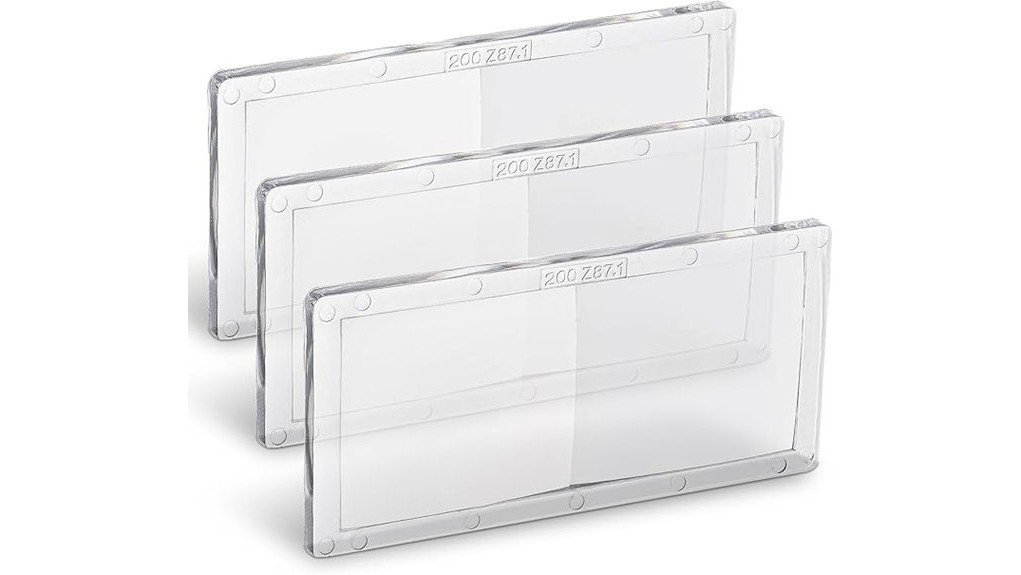
A welding helmet magnifying lens, also called a cheater lens, is a small clear magnifier that sits behind or beside the filter so you can see the weld pool and detail work more clearly. The TRQWH version is listed in 2.0, 2.5 and 3.0 diopter strengths in polycarbonate. It is worth considering if you struggle to see the puddle up close, especially with TIG or fine work. Skip it if your helmet has no way to hold one, or if you need a prescription lens made for your eyes.
This review is based on the seller’s Amazon listing, not hands-on testing. The listing says it fits all helmet makers, which is a broad claim you should verify.
TRQWH magnifying lens at a glance
| Item | Detail |
|---|---|
| Product | TRQWH magnifying (cheater) lens for welding helmets |
| Diopter options (per listing) | 2.0, 2.5 and 3.0 |
| Material (per listing) | Polycarbonate |
| Weight (per listing) | About 2.11 oz |
| Listed dimensions | 12 x 10 x 2 in (likely package size, not the lens) |
| Compatibility (per listing) | Described as fitting helmets that accept a standard cheater lens, verify on yours |
Check current price on Amazon →
What a magnifying lens does and who it suits
A cheater lens works like reading glasses for your helmet. It sits between your eye and the dark filter and magnifies the arc area, making the puddle and joint easier to see. It is common among welders over 40, but anyone with weaker near vision can use one.
A higher diopter number means stronger magnification and a closer focus distance. At 2.0, you see better at about 50 cm; at 3.0, the focus point is much nearer (roughly 33 cm). Most welders work at around 30 to 40 cm, so the right strength depends on your eyes and your working distance.
- Suits: TIG and detail work, anyone who needs reading glasses, and welders who find the puddle blurry.
- Not for: replacing a welding filter, or correcting vision problems that a doctor has not checked.
How to choose the diopter and check the fit
- Start with your reading glasses. Your current reading strength is a good starting point. If you use +2.0 readers at your normal working distance, try 2.0 first.
- Test the distance. Hold a magnifier at your working distance. If you need to lean in to focus, go up a strength. If the work blurs when you back away, drop down.
- Check the holder. Many helmets have a slot or holder for a cheater lens. Others need a clip-in lens or a stick-on option. Check your helmet’s manual.
- Confirm the size. The lens should match your filter opening or the holder dimensions in the listing.
Also see the Qwork magnification welding lens for another magnifier, and the TRQWH welding glass lens for the filter itself.
Check current price on Amazon →
Pros and limitations
Pros
- Three strengths (2.0, 2.5, 3.0) let you tune it to your eyes.
- Polycarbonate is light and impact resistant.
- Inexpensive way to see better without buying a new helmet.
Limitations
- It does not darken the arc, so you still need a proper filter behind or in front.
- Magnifier strengths are not a prescription, and one lens may not suit both eyes.
- A “fits all helmets” claim is hard to rely on. Mounting method varies.
- Higher strengths narrow the useful focus range, so you cannot easily look away from the work.
Using the lens safely
Mount the lens securely so it cannot shift or fall onto the filter while welding. Place it on the inside of the helmet, behind the filter, in most designs, so the filter takes the arc exposure first, unless your helmet instructions say otherwise.
Clean with a microfiber cloth and avoid harsh solvents. If you get headaches or blur, switch to a lower strength and see an optometrist. A cheater lens is not a substitute for prescription correction.
Alternatives and related guides
- Qwork magnification lens for another cheater lens option.
- TRQWH welding glass lens for a fixed-shade filter plate.
- TRQWH large view helmet if you want a bigger view as well.
- Yvacyt lens covers to keep your filter clean.
Frequently Asked Questions
What diopter magnifying lens should I get for welding?
Start with the strength of the reading glasses you use at the same working distance, typically 1.5 to 2.5 for many people. Try the TRQWH 2.0 first if you are unsure, and step up if you must lean in to focus.
Does a cheater lens replace my welding filter?
No. It only magnifies. You still need a proper welding filter or auto-darkening cartridge to protect your eyes from the arc. Never weld with a magnifier alone or without the correct filter in place.
Will the TRQWH lens fit my helmet?
The listing says it fits helmets from all manufacturers that take this style of lens, but mounting varies. Check how your helmet holds a cheater lens, the size of the opening, and whether you need an add-on holder.
Can I use a magnifying lens with prescription glasses?
You can often wear both, but space can be tight. Prescription glasses already correct your vision, so you may only need a low-strength magnifier. Test the combination and talk to your eye doctor if blur or strain persists.
Conclusion
The TRQWH magnifying lens is a low-cost way to sharpen your view of the weld pool, if your helmet can hold it. Choose the diopter by working distance, verify the mount, and keep the proper filter in place.
Check current price on Amazon →