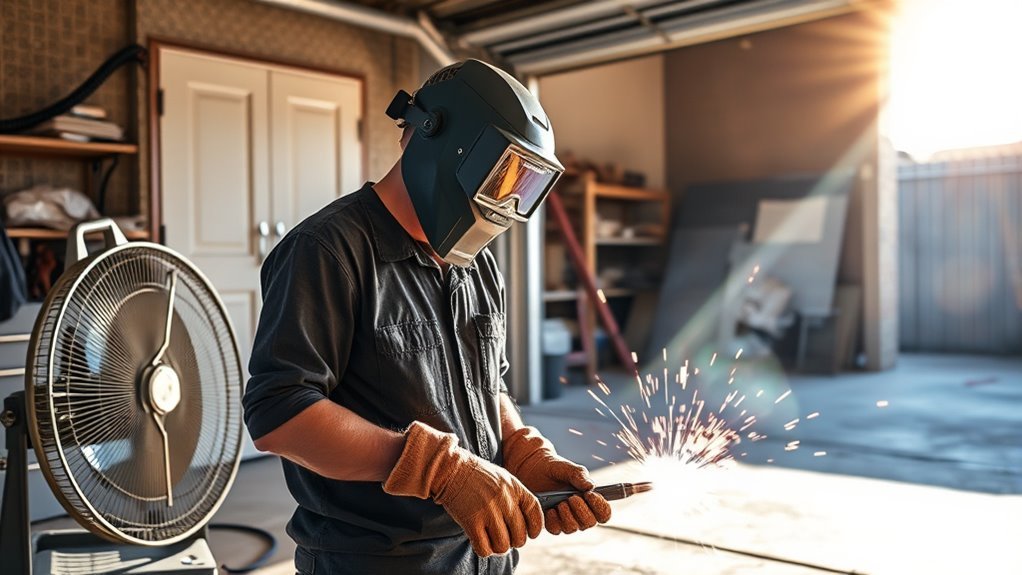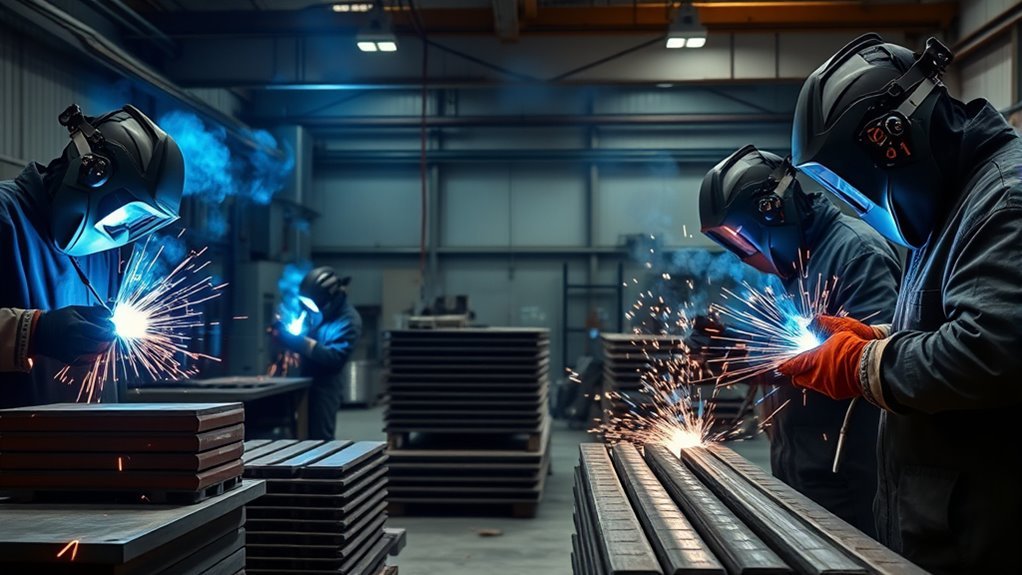
AWS welding certification levels can be confusing because AWS does not use one simple numbered ladder for every welding career. Instead, the American Welding Society offers different credentials for hands-on welders, inspectors, supervisors, educators, engineers, sales professionals, and specialty roles. The right path depends on what you want to prove: your ability to make a sound weld, inspect weld quality, manage production, teach welding, or work in a specialized process such as resistance or robotic arc welding.
Quick Answer
AWS welding certification levels include performance credentials such as Certified Welder, inspection credentials such as CAWI, CWI, and SCWI, and role-based credentials such as CWS, CWE, CWEng, CRWT, CRI, CRAW, and CWSR. Certified Welder proves a specific welding skill. CWI and SCWI focus on inspection, codes, quality control, and compliance.
Key Takeaways
- AWS Certified Welder is a hands-on, performance-based credential tied to a specific process, procedure, code, position, and material range.
- CAWI, CWI, and SCWI are inspection credentials, not welding performance tests.
- CWS, CWE, and CWEng support supervision, teaching, and engineering roles.
- Specialty credentials such as CRWT, CRI, CRAW, and CWSR fit resistance welding, radiographic interpretation, robotic welding, and welding sales roles.
- A certification does not qualify you for every weld. Your test record defines the exact scope you proved.
What Is AWS Welding Certification?
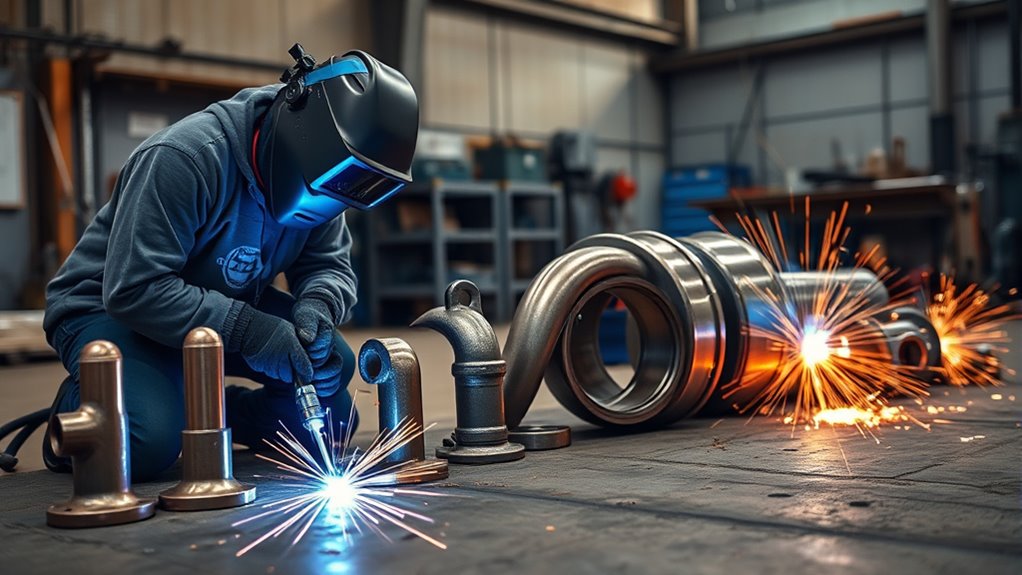
AWS welding certification is a way to document welding-related skill or knowledge under recognized industry requirements. For a hands-on welder, the AWS Certified Welder Program verifies that you can produce an acceptable weld under a defined procedure. For inspection or technical roles, AWS credentials verify knowledge of codes, inspection methods, quality systems, teaching, supervision, engineering, or specialty processes.
The most important point is scope. AWS certification does not mean “certified for all welding.” A Certified Welder test record may be tied to a welding process such as SMAW, GMAW, GTAW, FCAW, or SAW, plus a code, position, base metal, filler metal, thickness range, and joint type. Your documentation shows what you proved.
AWS certification is strongest when you read it as documented scope, not as a blanket license to weld anything.
You usually take a hands-on Certified Welder test through an AWS Accredited Test Facility. A Certified Welding Inspector evaluates the test weld against the applicable Welding Procedure Specification and acceptance requirements. If the weld meets the standard, the test record supports your AWS certification.
Note: AWS certification does not replace employer qualification, job-site safety rules, PPE, ventilation, or code-specific acceptance requirements. Always follow the procedure and the safety rules for the job in front of you.
AWS Certification Levels and Paths
When people say “AWS welding certification levels,” they often mean the different AWS credential paths. These paths are not all levels of the same ladder. They serve different jobs.
| AWS Credential | Best Fit | What It Proves |
| Certified Welder (CW) | Hands-on welders | Ability to make a sound weld under a specific procedure and code. |
| CAWI | Entry inspection roles | Welding inspection knowledge while working under qualified inspection guidance. |
| CWI | Welding inspectors | Code knowledge, practical inspection skill, and ability to evaluate weld quality. |
| SCWI | Senior inspection leadership | Advanced inspection, code interpretation, quality systems, and supervisory expertise. |
| CWS | Shop and field supervisors | Welding supervision, productivity, quality, and workflow control. |
| CWE | Welding instructors | Welding education knowledge, training ability, and instructional credibility. |
| CWEng | Welding engineers | Engineering-level welding knowledge and technical decision-making. |
| CRWT, CRI, CRAW, CWSR | Specialized roles | Resistance welding, radiographic interpretation, robotic arc welding, or welding sales expertise. |
AWS Certified Welder Basics
The AWS Certified Welder path is the most direct credential for a hands-on welder. It is open to candidates who can make the required weld, and it does not require prerequisite courses or earlier AWS credentials. Your test is based on performance, not a classroom-only exam.
During the test, you make a weld using the specified welding process, position, material, and procedure. A Certified Welding Inspector reviews the work against the Welding Procedure Specification and the applicable acceptance rules. The result is documented as a qualification, not a general promise that every future weld will pass.
- You schedule the test through an AWS Accredited Test Facility.
- You weld according to the required procedure and code.
- The test weld is inspected and recorded.
- The ATF submits the certification application to AWS.
- You maintain continuity if you want the certification to remain active.
Certified Welder status can help you show employers what you can do, especially when a job requires documented welding ability. It is also portable because the record follows the code, process, and procedure you tested under.
Which Welding Processes Are Covered?
The Certified Welder Program can be used with common welding processes, depending on the procedure and test facility. Common examples include Shielded Metal Arc Welding (SMAW), Gas Metal Arc Welding (GMAW), Gas Tungsten Arc Welding (GTAW), Flux-Cored Arc Welding (FCAW), and Submerged Arc Welding (SAW).
Your process matters because each process has its own variables. A SMAW test does not automatically qualify you for GTAW. A flat-position test does not automatically prove overhead skill. A carbon steel test does not automatically prove aluminum or stainless work. The test record defines the range.
Pro Tip: Before you pay for a test, ask the employer, union, contractor, or project specification which process, code, position, thickness, and material range they need. Testing for the wrong scope can leave you with a real credential that still does not match the job.
Which AWS Test Codes Apply?
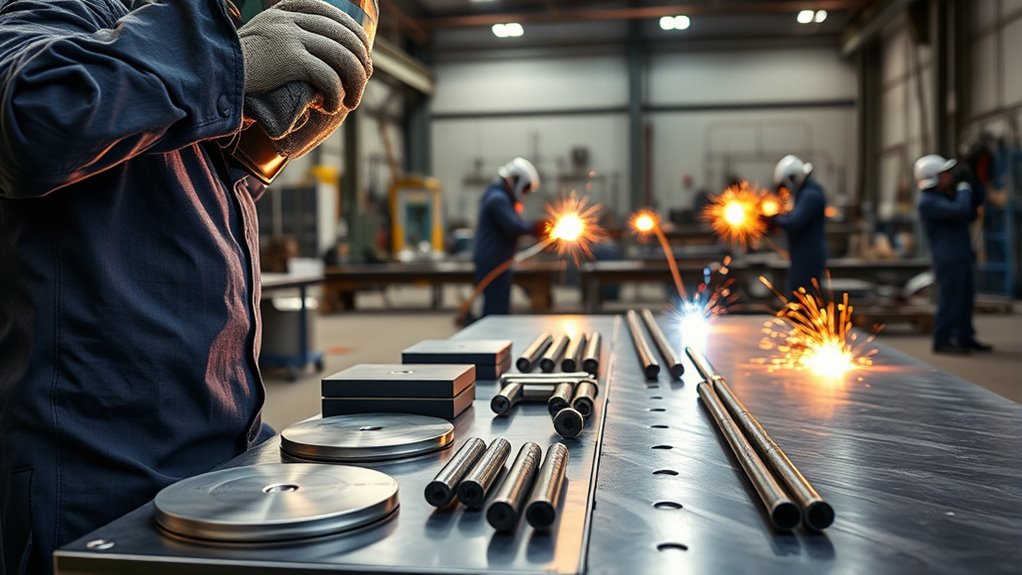
The applicable welding code depends on the industry, material, structure, and contract requirements. For example, structural steel work often points to AWS D1.1, aluminum work may involve AWS D1.2, sheet steel may involve AWS D1.3, bridge work may involve AWS D1.5, and aerospace fusion welding may involve AWS D17.1. Pipeline and pressure work may involve other codes or specifications, such as API 1104 or ASME Section IX.
| Code or Specification | Common Use |
| AWS D1.1 | Structural steel welding. |
| AWS D1.2 | Structural aluminum welding. |
| AWS D1.3 | Sheet steel welding. |
| AWS D1.5 | Bridge welding. |
| AWS D17.1 | Aerospace fusion welding. |
| API 1104 | Pipeline welding. |
| ASME Section IX | Pressure piping, boilers, pressure vessels, and related qualification work. |
| Company or non-code procedure | Employer-specific production or fabrication requirements. |
Process, Position, and Material Scope
Your certification scope is built from several variables. These may include process, position, base metal, filler metal, thickness, joint type, backing, progression, transfer mode, and inspection method. If one of those variables changes beyond the qualified range, you may need another test.
Positions are often described with codes such as 1G, 2G, 3G, and 4G for groove welds, or 1F, 2F, 3F, and 4F for fillet welds. Flat, horizontal, vertical, and overhead positions require different control. A test in one position does not always qualify another position.
QC47 and ATF Compliance
AWS facility accreditation and welder certification have shifted toward the AWS QC47 framework. The important practical takeaway is simple: use an AWS Accredited Test Facility, make sure the test matches the code or procedure you need, and keep your paperwork current through the official AWS certification process.
An ATF can help confirm the test coupon, WPS, inspection method, and application steps before you test. That reduces the risk of passing a test that does not fit your job target.
How AWS Welder Testing Works
AWS welder testing starts before you strike an arc. First, identify the job requirement. Then choose the welding process, code, position, material, and procedure. After that, schedule the test with an AWS Accredited Test Facility.
- Confirm the required code or procedure. Ask for the exact specification instead of guessing.
- Choose the correct process and position. SMAW, GMAW, FCAW, GTAW, and SAW are not interchangeable.
- Schedule with an ATF. Testing fees and availability vary by facility.
- Complete the test weld. Fit-up, assembly, positioning, technique, and workmanship all matter.
- Have the weld inspected. The inspector checks the weld against the WPS and acceptance criteria.
- Submit the application and records. The ATF supports the AWS certification paperwork.
- Maintain continuity. Use WeldCert Pro or the current AWS process to keep your certification active.
Inspection and Retesting
If a Certified Welder test fails, AWS allows retesting, and the ATF can help schedule another test. Use the failure as feedback. Common reasons for failure include lack of fusion, porosity, undercut, poor bead profile, incomplete penetration, incorrect test setup, or failure to follow the WPS.
Retesting is not just about trying again. It should start with correcting the specific cause. Practice the same position, joint, process, electrode or wire, and material range before scheduling another attempt.
Warning: Do not assume a passed test covers all employers or all jobs. Some employers, unions, government projects, aerospace jobs, and pressure work may require their own qualification, documentation, or code-specific test.
How to Maintain AWS Welder Certification
AWS Certified Welder certification remains active when continuity is maintained. AWS requires maintenance documentation every six months confirming that you continue to use the welding process for which you were certified. If continuity is not maintained, the certification can lapse and you may need to retest.
The current AWS process uses WeldCert Pro for managing welding qualifications. Keep your test records, dates, and employer documentation organized. Do not wait until the deadline to check your status.
- Track your six-month continuity date.
- Document that you are still using the certified welding process.
- Submit maintenance before expiration.
- Keep copies of your test record and maintenance confirmation.
- Retest when the job requires a different process, code, position, or material range.
AWS CAWI, CWI, and SCWI Inspection Paths
AWS inspection credentials are separate from the Certified Welder path. They focus on inspection knowledge, codes, documentation, quality control, and practical evaluation of weldments.
CAWI
The Certified Associate Welding Inspector credential is an entry point for people building an inspection career. A CAWI assists in welding inspection under the guidance of qualified inspection personnel. It can help you gain credibility while working toward CWI eligibility.
CWI
The Certified Welding Inspector credential is one of the most recognized AWS certifications. To qualify, candidates need a vision test plus a combination of education and work experience. The CWI exam includes Part A Fundamentals, Part B Practical, and Part C Code Book.
CWI certification is valid for a nine-year cycle. AWS requires renewal applications at years three and six, and recertification at year nine. This is different from the Certified Welder six-month continuity requirement.
SCWI
The Senior Certified Welding Inspector credential is for experienced inspectors who move into advanced code interpretation, supervision, quality systems, and inspection leadership. AWS updated the SCWI path in 2025, replacing the old single-exam path with a newer endorsement-based route.
If your goal is inspection leadership, the common progression is CAWI to CWI to SCWI. If your goal is hands-on welding, the Certified Welder path may be a better first step.
AWS CWS, CWE, and CWEng Paths

Beyond hands-on welding and inspection, AWS offers credentials for people who guide welding work, teach welding, or handle engineering-level welding decisions.
- Certified Welding Supervisor (CWS): Best for people who manage welding productivity, workflow, quality, and shop or field performance.
- Certified Welding Educator (CWE): Best for instructors who teach welding theory, safety, procedures, and hands-on skills.
- Certified Welding Engineer (CWEng): Best for professionals who work with welding design, metallurgy, procedure development, fabrication engineering, and technical problem solving.
These credentials are useful when your job is no longer only about depositing weld metal. They help show that you can support the welding system around the welder: people, procedures, documentation, quality, and engineering judgment.
Specialized AWS Certifications
AWS also offers specialized credentials for targeted welding-related roles. These are not “higher” or “lower” than Certified Welder. They are different tools for different jobs.
- Certified Resistance Welding Technician (CRWT): Focuses on resistance welding theory, equipment, variables, weld quality, troubleshooting, and production control.
- Certified Radiographic Interpreter (CRI): Focuses on interpreting radiographic film or images used in weld quality evaluation.
- Certified Robotic Arc Welding (CRAW): Focuses on robotic arc welding systems and automated welding environments.
- Certified Welding Sales Representative (CWSR): Focuses on welding product knowledge, customer needs, and technical sales support.
Specialty credentials make the most sense when your work environment demands that specialty. For example, CRWT fits automotive and manufacturing plants that rely on resistance spot welding. CRAW fits automated welding cells. CRI fits inspection and nondestructive examination support.
Which AWS Certification Fits Your Career?
The right AWS certification depends on your current role and your next move. Start by asking what you need to prove.
- If you want to prove hands-on welding ability: choose Certified Welder and test to the code, process, and position your job needs.
- If you want to enter inspection: consider CAWI if you are early, or CWI if you meet the education and experience requirements.
- If you already inspect welds and lead quality work: look at SCWI and relevant endorsements.
- If you manage welders: CWS may fit your day-to-day work.
- If you teach welding: CWE may match your role.
- If you solve welding engineering problems: CWEng may be the better target.
- If your work is specialized: CRWT, CRI, CRAW, or CWSR may be more useful than a general path.
Do not choose a credential only because it sounds advanced. Choose the one that matches the work you want to do, the code you need to satisfy, and the proof an employer or project will actually accept.
Products Worth Considering

🧲 Sticks to Toolboxes & Welders – Heavy-duty magnetic welding chart adheres to metal surfaces like your welding table, toolbox, or wall for instant reference while working.


Costs, Timing, and Practical Planning
AWS certification costs vary by credential, test facility, exam format, membership status, training choice, and retesting needs. Certified Welder testing fees are usually set by the Accredited Test Facility, so contact the facility before scheduling. CWI, CAWI, SCWI, and endorsement prices can change, so always check the current AWS price list before applying.
Plan for more than the exam fee. You may also need practice material, training, travel, vision testing, code books, application fees, ATF fees, or retesting costs.
A practical plan looks like this:
- Get the exact job requirement in writing.
- Match the AWS credential to that requirement.
- Check eligibility before paying.
- Schedule training only if it fills a real skill gap.
- Confirm test location, test code, and retest policy.
- Keep every record after passing.
Products Worth Considering

Richard Finch, Welder's Handbook: A Complete Guide to MIG, TIG, Arc & Oxyacetylene Welding, "Completely Revised and Updated Edition!" paperback


Frequently Asked Questions
What are the AWS welding certification levels?
AWS welding certification levels are best understood as credential paths. Certified Welder is for hands-on welding performance. CAWI, CWI, and SCWI are inspection credentials. CWS, CWE, and CWEng support supervision, education, and engineering. CRWT, CRI, CRAW, and CWSR serve specialized roles.
What is the difference between AWS D1.1 and D1.3?
AWS D1.1 applies to structural steel welding, while AWS D1.3 applies to sheet steel welding. The right code depends on the material, thickness, application, and contract documents. Do not assume a D1.1 qualification automatically covers D1.3 work.
What are F1, F2, F3, and F4 in welding?
F1, F2, F3, and F4 are not welding position codes. In qualification language, F-numbers refer to filler metal groupings. Welding positions are usually shown with position designations such as 1G, 2G, 3G, 4G, or fillet equivalents such as 1F, 2F, 3F, and 4F.
What is a Level 4 welder?
“Level 4 welder” is usually an employer, school, apprenticeship, or local classification, not a universal AWS credential name. AWS records the process, code, position, material, and other qualification variables instead of giving every welder one simple numbered level.
How long does AWS Certified Welder certification last?
AWS Certified Welder certification remains active as long as you maintain continuity. AWS requires maintenance documentation every six months confirming that you continue to perform the welding process for which you were certified.
Is CWI higher than Certified Welder?
CWI is not simply “higher” than Certified Welder because it proves a different skill set. Certified Welder proves hands-on welding performance. CWI proves inspection knowledge, practical inspection skill, code use, and quality control ability.
Conclusion
Choosing the right AWS welding certification starts with the work you want to do. If you need to prove hands-on welding skill, start with the Certified Welder path and test to the exact code, process, position, and material range your job requires. If you want inspection work, compare CAWI, CWI, and SCWI. If your goal is supervision, teaching, engineering, robotic welding, resistance welding, radiographic interpretation, or welding sales, choose the AWS credential built for that role. The best certification is the one that matches the job and gives employers clear proof of what you can do.
Sources
- AWS Certified Welder Program — supports Certified Welder eligibility, ATF testing, performance testing, WeldCert Pro, retesting, and six-month continuity.
- AWS Facility Accreditation — supports Accredited Test Facility and QC47 information.
- AWS Certified Welding Inspector Program — supports CWI eligibility, exam parts, renewal, recertification, and code-book details.
- AWS Senior Certified Welding Inspector Program — supports SCWI role and updated 2025 pathway details.
- AWS Certified Associate Welding Inspector Program — supports CAWI role, entry-level inspection use, and path toward CWI.
- AWS Certified Resistance Welding Technician Program — supports CRWT specialty credential details.