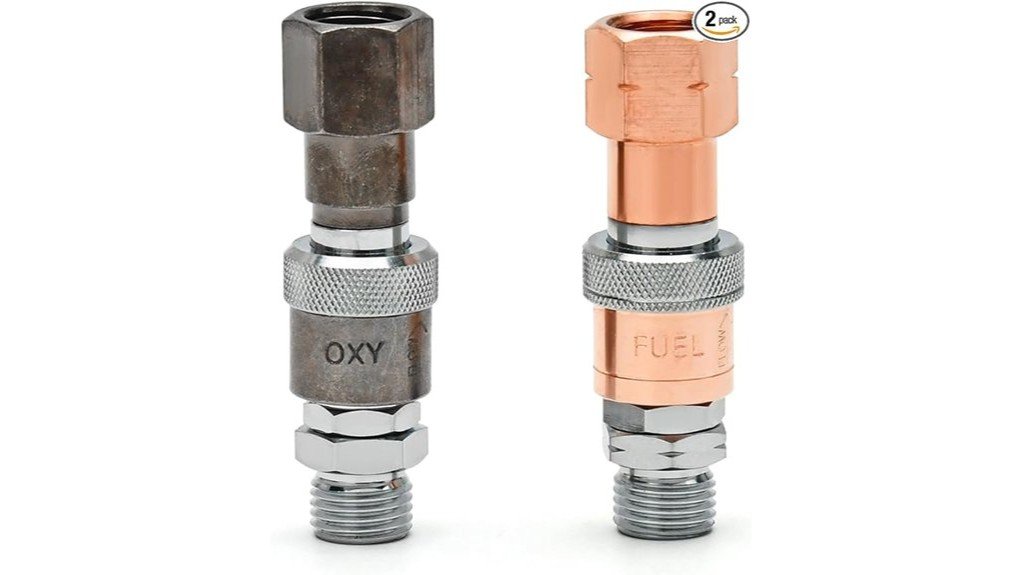
The CAMPFIRE oxy acetylene quick connect is a set of brass-and-stainless couplers that lets you swap between a cutting torch, welding torch and rosebud without unthreading the hoses each time. Per the listing it has a built-in check valve, fits standard 9/16 B fittings and weighs about 0.21 kg (4.84 x 3.54 x 0.91 in). This page was not hands-on tested, so confirm thread type and gas pressure limits against your own torch and regulators before buying.
Quick Specs (per the Listing)
| Item | Listing detail |
|---|---|
| Use | Oxygen and acetylene torch changeovers (cutting, welding, rosebud) |
| Thread | Standard 9/16 B fittings, per the listing |
| Materials | Brass and stainless steel |
| Safety feature | Integrated check valve against gas backflow |
| Size and weight | 4.84 x 3.54 x 0.91 in, about 0.21 kg |
| Stated pressure | Listing quotes 29 PSI fuel gas and 145 PSI oxygen; verify on the listing |
How the CAMPFIRE Oxy Acetylene Quick Connect Works
Each hose end gets a mating plug and each torch gets a matching socket. Pushing the two together makes the connection, and the check valve in the coupler is meant to stop gas flowing back into the hose when the torch is disconnected. That makes it practical if you move between a cutting torch for heavy plate and a welding torch for lighter work in the same session.
It does not replace the flashback arrestors and check valves that belong on the regulator or torch. Treat it as a convenience fitting, not as your only flashback protection.
Compatibility Checklist Before You Buy
- Check that your torch handle and hose ends use 9/16 B (left-hand for fuel, right-hand for oxygen) threads, the usual B-size convention.
- Confirm the fitting is rated for both oxygen and acetylene service; do not use it on other gases.
- Keep acetylene working pressure within safe limits. Standard oxy-fuel guidance caps acetylene at 15 psig no matter what a fitting is rated for; see our oxy-acetylene pressure settings chart.
- Make sure the oxygen and fuel plugs cannot be swapped by mistake (different sizes or keyed ends).
- Use oxygen-safe, oil-free handling. Never lubricate oxygen fittings with oil or grease.
Safety and Care
- Leak-test every new connection with soapy water before lighting the torch.
- Inspect seals and o-rings for cracks or dirt, and keep the plugs capped when stored.
- Replace any coupler that sticks, leaks or looks damaged instead of repairing it.
- Purge hoses and follow your torch maker instructions for shutdown order.
Pros and Limitations
Pros: faster torch changes, compact size, brass and stainless build, check valve per the listing.
Limitations: every extra connection is another place that can leak, the listing details were not independently verified here, and it is not a substitute for flashback arrestors.
Related reading: compare the oxy-acetylene brass quick connect option or see a full cutting torch set that these couplers would suit.
Frequently Asked Questions
Are the CAMPFIRE quick connects compatible with other gases?
They are sold for oxygen and acetylene torch use. Do not use them on other gases unless the manufacturer says so, and check thread type first.
What thread size do they fit?
The listing says standard 9/16 B fittings. Check your torch and hose ends before ordering.
Do they replace a flashback arrestor?
No. The built-in check valve helps stop backflow, but flashback arrestors at the regulator or torch remain the proper protection.
How do I check for leaks?
Pressurize the system and brush soapy water on every joint. Bubbles mean a leak, so shut the gas off and fix it before use.
What pressure can they handle?
The listing quotes 29 PSI for fuel gas and 145 PSI for oxygen. Acetylene should still be kept under 15 psig in use, so verify ratings on the listing and in your manual.