As an Amazon Associate, Garage Welding may earn from qualifying purchases. This does not change the price you pay.
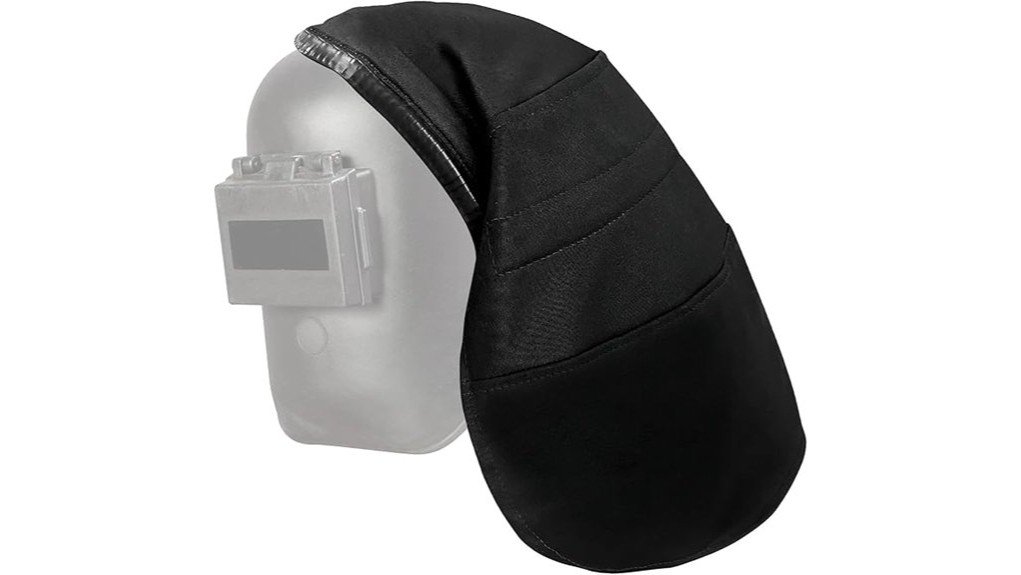
The CODOHI welding helmet cover is a fabric and leather cover that fits over a welding helmet to give the head and neck area extra protection from sparks and slag. It is worth considering if you do overhead or out-of-position work and want a layer between spatter and your hair and neck. Skip it if your helmet already has a built-in neck guard or if you need something that attaches to a specific helmet model.
This page is based on the seller’s Amazon listing, not hands-on testing, so treat the details below as listing claims and confirm them before you buy.
Quick specs at a glance
| Item | Detail |
|---|---|
| Product | CODOHI welding helmet cover |
| Material (per listing) | Flame-retardant cotton and leather |
| Weight (per listing) | About 0.53 lb |
| Listed dimensions | 13.5 x 3.6 x 0.75 in (likely folded or packaged size, check the listing) |
| Listing claims | Hypoallergenic fabric, high-strength stitching, press-fit style design |
| Compatibility | Described as fitting most helmets, verify against your own helmet |
Check current price on Amazon →
What the CODOHI helmet cover is and who it suits
A helmet cover is a soft shell that slips over the outside of the helmet and drapes over the back of the head and neck. It is different from a hood-style liner worn on your head. Think of it as a spatter shield for the parts of you that a hard shell leaves exposed.
According to the listing, the CODOHI cover combines flame-retardant cotton with leather and uses heavy-duty stitching. That mix is common for welding apparel: cotton is light and breathable, while leather takes more punishment from slag.
- Good fit for: welders doing overhead work, hobbyists who want extra neck coverage, and anyone who is tired of sparks landing behind the ears.
- Not ideal for: people who need a certified, helmet-specific accessory, or who weld in very tight spaces where bulk gets in the way.
How to check that it fits your helmet
Fit is the whole question with a universal cover. Before you order, run through this checklist:
- Measure the width and depth of your helmet shell at the widest point and compare with the listing.
- Check that the cover does not block the auto-darkening sensors, the lens opening, or the headgear adjustment knob.
- Make sure it does not interfere with a respirator strap or a hard hat adapter if you use one.
- Confirm the return policy, since universal fit claims vary a lot between helmet shapes.
If you wear a pancake-style hood instead of a rounded helmet, a cover like this may not sit properly. In that case a dedicated hood such as the Sarge pancake welding hood may suit you better.
Check current price on Amazon →
Pros and limitations
Pros
- Cotton and leather construction suits spark and slag exposure.
- Light weight per the listing (about half a pound).
- Adds coverage at the neck and back of the head.
Limitations
- A fabric cover does not protect your eyes or face. It does not replace a proper filter lens.
- The listing mentions anti-glare and splash protection, but no fabric can filter arc light. Only the helmet lens does that.
- Cotton is flame-retardant, not fireproof. Heavy spatter and grinding sparks can still burn through or scorch it over time.
- I could not verify a specific safety standard for this cover, so do not treat it as certified gear.
Using and caring for the cover
Fit it over a clean, dry helmet and pull it down until it sits snug with no gaps where sparks could slip in. Check it before each session for burn holes, thin spots and loose stitching, and retire it once the fabric is compromised.
Keep oil and grease off the fabric, since saturated cotton burns more readily. Spot-clean or hand wash as the seller advises, and let it air dry. Pair it with proper gear: flame-resistant clothing, a good set of gloves, and a neck protector if you weld overhead.
Alternatives and related guides
- Welding helmet cover review for another style of cover to compare.
- Tookie welding helmet cover set if you prefer a multi-piece set.
- Chiciris welding neck protector for dedicated neck coverage.
- Welding helmet bibs if your main concern is the throat and chest area.
Frequently Asked Questions
Does the CODOHI helmet cover fit every welding helmet?
The listing describes it as fitting most helmets, but universal fit is a loose claim. Measure your helmet shell, check that sensors and the adjustment knob stay clear, and confirm the return policy before you buy.
Can a helmet cover replace a neck guard or welding hood?
Not reliably. A cover adds a layer over the helmet shell, but a neck guard or hood is designed to seal the gap around your neck. If you weld overhead, consider using both along with flame-resistant clothing.
Is the CODOHI cover machine washable?
The listing points to hand washing rather than machine washing. Check the product page for care instructions. In general, spot cleaning and air drying are safest for cotton and leather blends used around sparks.
Is flame-retardant cotton the same as fireproof?
No. Flame-retardant fabric resists catching fire and tends to self-extinguish, but it can still scorch, char or burn through under heavy spatter. Inspect the cover often and replace it when it gets thin or holed.
Conclusion
The CODOHI welding helmet cover looks like a simple, light way to add head and neck coverage over an existing helmet, based on the listing. Check fit carefully, do not expect it to replace a lens, hood or neck guard, and inspect it often for burn damage.
Check current price on Amazon →