As an Amazon Associate, Garage Welding may earn from qualifying purchases. This does not change the price you pay.
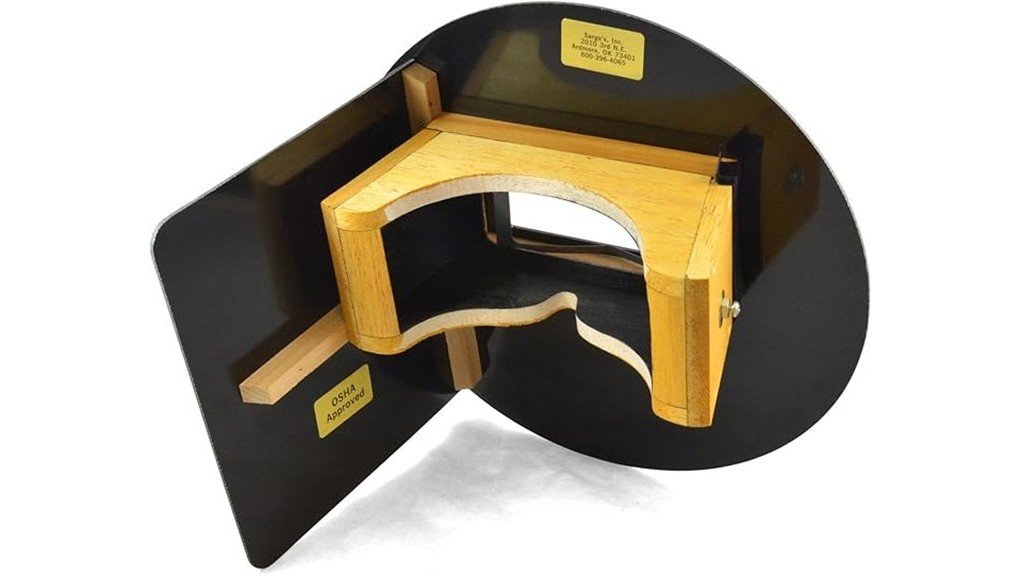
The Sarge’s pancake black welding hood is a lightweight, low-profile hood with a 2 x 4.25 inch viewing window, an adjustable elastic headband and a listed weight of about 12.5 oz. It suits welders who want a classic compact hood and are happy to fit their own filter and cover lenses. The key buying question is lens fit: confirm what lens is included, and which shade you need, before you order.
Sarge’s pancake welding hood at a glance
| Item | Detail |
|---|---|
| Product | Sarge’s pancake black welding hood helmet |
| Viewing window | 2 x 4.25 in, the standard size for many filter plates, per the listing |
| Headband | Adjustable, about 1.5 in wide elastic strap |
| Material | Balsa wood and phenolic (formica-type) laminate, per the listing |
| Listed weight | About 12.5 oz |
| Fit aid | The listing mentions sandpaper for fine-fitting the lens opening |
| Lens | Check the listing for whether a filter lens is included and which shade |
What this hood is, and who it suits
A pancake hood is a flat, compact hood that has been a pipe-welding and shop favorite for decades. Its light weight reduces neck load compared with a bulky auto-darkening helmet, and the low profile lets you work in tight spots, such as under a vehicle or inside a frame.
The cost is a fixed-shade lens: you drop the hood to weld and lift it to see. That is fine for experienced welders and many hobbyists, but it takes practice if you are used to auto-darkening.
How to make sure it fits and works for you
- Check the lens window size. A 2 x 4.25 inch window takes the common 2 x 4-1/4 in plates, but make sure your lens and cover plates match exactly.
- Choose the right shade. Mid-current MIG and stick work is often done around shade 10 to 13. Low-amp TIG may use lighter shades, and plasma or oxy-fuel need different filters.
- Use a clear cover lens in front of the filter, and a retaining system that holds the lens firmly.
- Check the opening for sharp edges or gaps. Light leaks around the lens are an eye hazard, so fill or adjust until the lens sits tight.
- Adjust the elastic band so the hood sits flush but does not squeeze. Check how it fits with your hat or ear protection.
- Look for the maker’s safety marking on any lens you install. ANSI Z87.1 is the usual US mark for eye and face protection.
Pros and limitations
Pros
- Light and compact, with a low profile that fits cramped work.
- Standard 2 x 4.25 in window means lenses are widely available.
- Simple design with nothing electronic to fail.
- Adjustable band for various head sizes.
Limitations
- Fixed-shade operation means you flip the hood for each weld.
- Lens and cover plates may need to be bought separately.
- Wood-based shells need care around heat, wet and heavy spatter.
- Small shell gives less neck and ear coverage than a full-size helmet.
Using a pancake hood safely
- Always use the correct shade and a clean cover lens.
- Wear a cap, flame-resistant clothing and neck protection.
- Wear safety glasses under the hood for chipping and grinding.
- Do not weld with a cracked lens or a lens that moves in its frame.
- Ventilate the area or use an appropriate respirator for fumes. Galvanized or coated steel needs extra care.
- Keep the hood dry and away from open flame, since balsa and laminate shells can be damaged.
To tune the fit, test the lens against a bright light in a dark room. If you see any light leak around the lens, fix it before welding.
Alternatives and related guides
- SturdyShape pancake welding hood – a similar low-profile hood
- Wendy’s pancake welding hood – another pancake style to compare
- Shade 12 welding glass lens – a darker fixed lens for higher current
- YesWelder lens cover – replacement cover lenses; check sizes first
Frequently Asked Questions
What lens size does the Sarge’s pancake hood use?
The listing gives a 2 x 4.25 inch viewing area, which matches common 2 x 4-1/4 in filter plates. Measure the opening and your plates before ordering, and check whether a filter lens is included with the hood.
What shade should I use in a pancake welding hood?
It depends on your process and current. MIG and stick at mid amperage are often done around shade 10 to 13, and low-amp TIG can use lighter shades. Follow the filter maker’s shade chart for your welding.
Is a pancake hood the same as an auto-darkening helmet?
No. A pancake hood normally uses a fixed-shade lens that stays dark, so you flip it down to weld and up to see. An auto-darkening helmet has an electronic filter that switches from light to dark when the arc starts.
How do I stop light leaking around the lens?
Seat the lens firmly in its retainer and fine-fit the opening if needed. Then check in a dim room with a bright light behind the lens. Any gap should be fixed before welding because arc light can burn eyes.
Conclusion
Sarge’s pancake hood is a light, traditional hood for welders who prefer a flip-down design. Confirm the lens and shade you need, seal the lens opening and wear full PPE.